
-
 Granada Hills Homeowner's Guide: Diagnosing and Fixing Epoxy Floor Bubbles
Discover why bubbles form in epoxy floors and how Granada Hills homeowners can fix them. From identifying surface…
❓ Frequently Asked Questions
What concrete surface temperature is too hot for epoxy application in Granada Hills?
Concrete surface temperatures above 85°F create adhesion problems for epoxy coatings. Granada Hills garages in direct sun can reach 115-125°F by midday during summer, requiring early morning application windows when substrate temperatures drop to 70-80°F. Professional installers measure actual concrete temperature with infrared thermometers, not just air temperature, before beginning any epoxy work.
How does Granada Hills' elevation affect garage floor epoxy preparation compared to other valley cities?
Granada Hills spans a 200-300 foot elevation range from valley floor to foothills, creating distinct microclimates within the same city. Upper elevation areas near Knollwood cool faster in mornings and evenings, offering longer application windows than lower Granada Hills South locations. This elevation variation requires neighborhood-specific preparation timing rather than generic valley-wide protocols.
Should I wait until fall to install garage floor epoxy in Granada Hills or can summer work?
Summer installations can succeed in Granada Hills with proper preparation—concrete temperature mapping, early morning application windows (5-8 AM), and moisture vapor testing adjusted for heat conditions. However, fall installations from late September through November offer more forgiving conditions with cooler concrete and longer work windows. Contact Five Star Epoxy & Coatings at (818) 355-3804 for honest assessment of whether your specific garage qualifies for summer installation or benefits from fall scheduling.
Why does grinding garage floors create problems during Granada Hills summer heat?
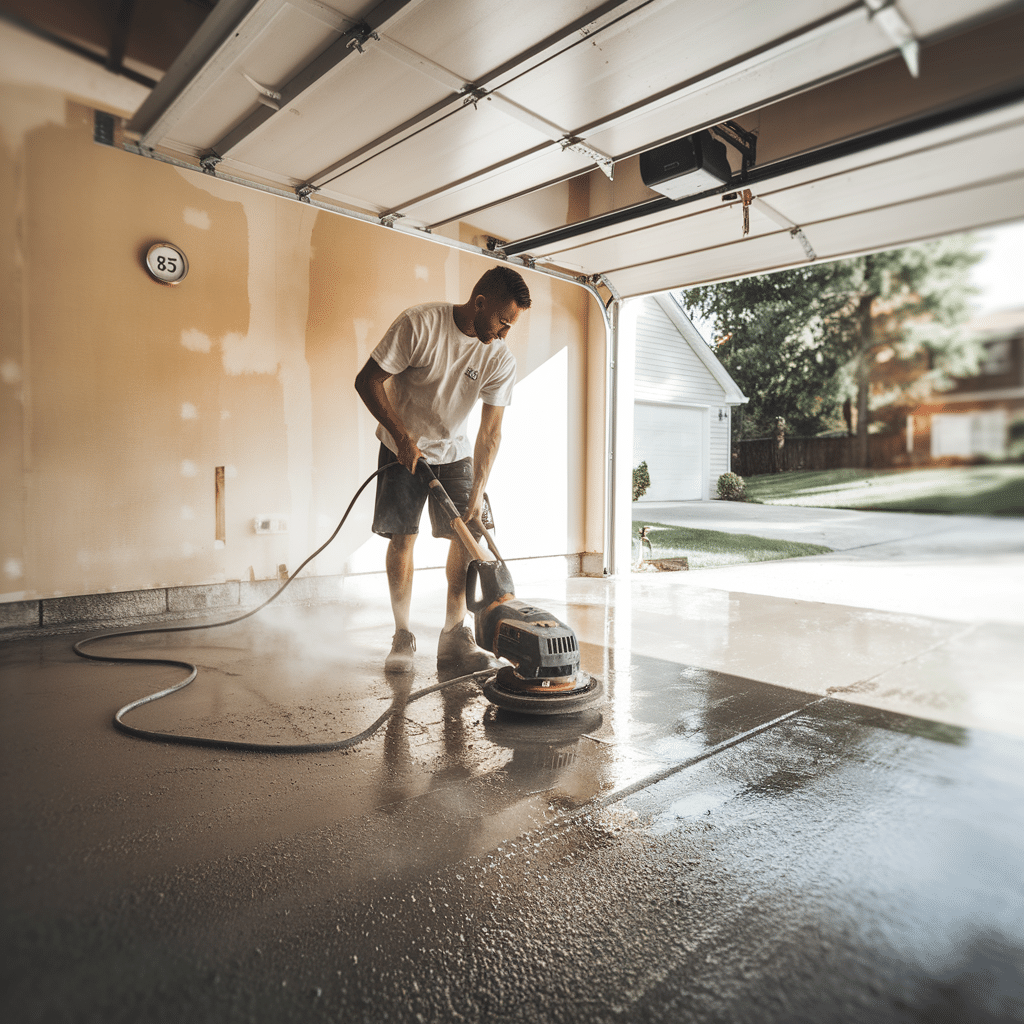
Diamond grinding generates friction heat that can raise concrete surface temperature 15-20°F within minutes, pushing already-warm summer slabs beyond safe epoxy application ranges. Professional preparation requires grinding during coolest hours (5-7 AM) then waiting 2-3 hours for substrate temperature to stabilize before applying primers. Skipping this cooling period causes primers to flash-cure before proper penetration, leading to adhesion failure.