❓ Frequently Asked Questions
What's the ideal surface temperature for applying garage floor epoxy in Northridge during summer?
Concrete surface temperatures should stay between 55°F and 85°F during epoxy application. In Northridge's summer heat, this typically means working between 6 AM and 10 AM before surfaces exceed safe ranges. Professional installers use infrared thermometers to continuously monitor temps and stop application if readings climb above 85°F, as overheated concrete causes rapid curing that traps air bubbles and prevents proper adhesion.
How does summer moisture vapor transmission affect epoxy coating success in Northridge garages?
Summer heat pulls ground moisture upward through concrete slabs at rates three times higher than winter, creating vapor pressure that can cause epoxy delamination weeks after installation. In Northridge, especially near irrigated areas, calcium chloride tests often show emission rates requiring vapor barrier primers or extended drying periods. Five Star Epoxy & Coatings performs comprehensive moisture testing before every summer installation to ensure long-term adhesion.
Can I have epoxy installed in my Northridge garage during July and August?
Yes, but it requires specialized summer protocols including early-morning application windows, enhanced moisture testing, and controlled curing environments. Professional installers schedule work to complete epoxy application before 10 AM, allowing initial cure during cooler overnight hours when Northridge temperatures stabilize in the 70s. This approach compensates for the Valley's extreme diurnal temperature swings that can stress curing coatings.
Why do Northridge garage floors need different prep during summer compared to winter?
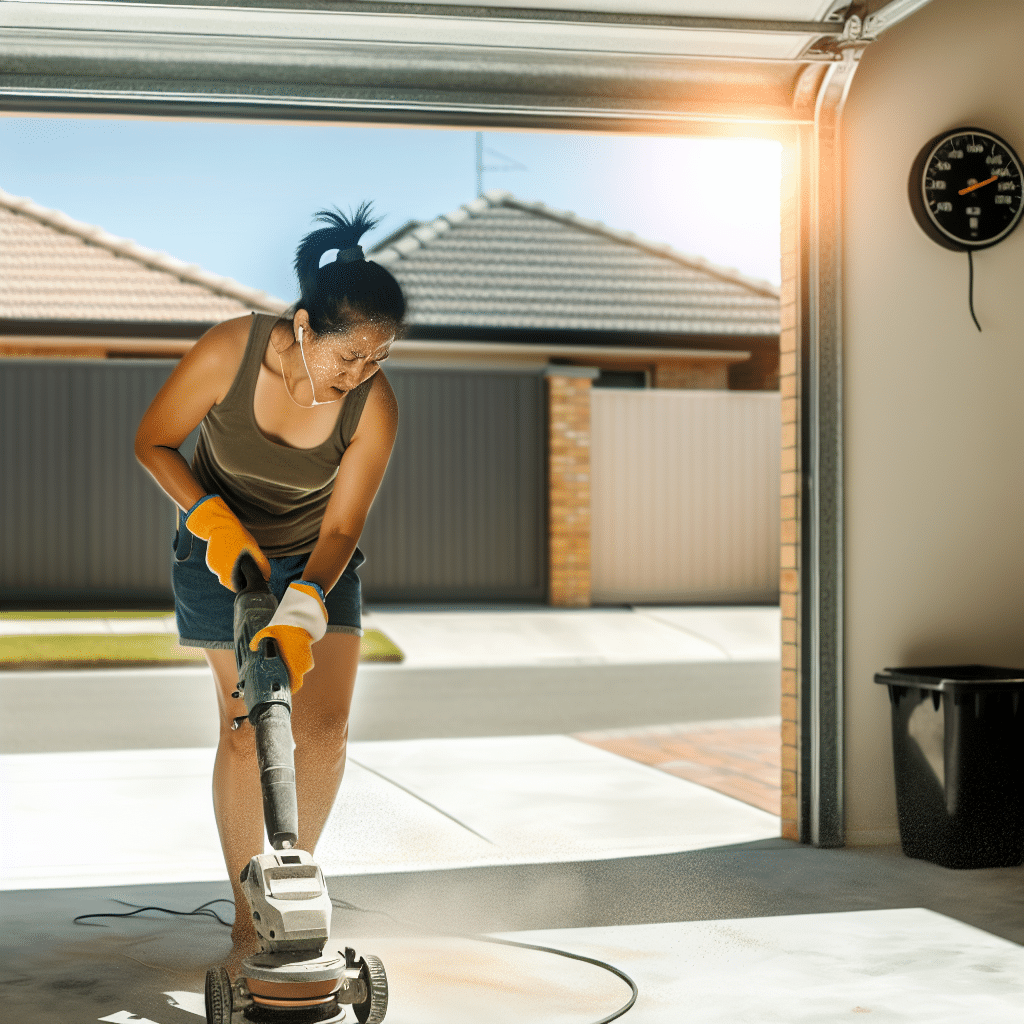
Hot concrete requires modified diamond grinding techniques to prevent thermal shocking and additional dust control measures since dry summer air increases static-driven particle contamination. Starting temperatures of 85°F mean mechanical prep can push surfaces into dangerous ranges, so installers work in sections with cooling breaks and industrial fans. These summer-specific adjustments ensure proper surface profile without compromising coating adhesion—critical for installations that need to last 15+ years.
🏘️ Same Topic in Nearby Cities
❓ Frequently Asked Questions
Why do bubbles keep appearing in my epoxy garage floor weeks after installation in Woodland Hills?
Continuing bubble formation typically indicates ongoing moisture vapor transmission from the concrete slab beneath your coating. In Woodland Hills's climate, temperature fluctuations cause trapped moisture to vaporize and push through the epoxy. This suggests the concrete wasn't adequately dried before installation or lacks proper moisture barrier treatment. Professional moisture testing and mitigation are usually required to stop recurrence.
Can I sand down small bubbles in my epoxy floor without recoating the entire garage?
Yes, minor surface bubbles smaller than a dime can be successfully sanded with 220-grit sandpaper and spot-recoated with matching epoxy topcoat. This works best for cosmetic bubbles that haven't compromised adhesion. Larger bubbles or those indicating delamination require cutting out the damaged section and patching with fresh epoxy to restore structural integrity.
How much does professional epoxy bubble repair typically cost in Woodland Hills?
Professional repair of minor bubble damage in a standard two-car garage runs $200-400 in Woodland Hills, covering materials and labor for patching 10-15 problem areas. Extensive repairs requiring removal and reinstallation cost $2,500-5,000 for 400-500 square feet. Five Star Epoxy & Coatings at (818) 355-3804 provides free assessments to determine the most cost-effective repair approach for your specific situation.
What temperature conditions prevent bubbles when applying epoxy flooring in Southern California?
Concrete surface temperatures should remain between 55°F and 85°F during application and curing, with stable conditions for 24 hours post-installation. In Woodland Hills, morning applications between 7-10 AM offer optimal stability before afternoon heat creates temperature swings. Avoid applying epoxy when forecasts predict temperature fluctuations exceeding 20°F during the cure window, as rapid temperature changes cause the concrete to outgas and create bubbles.
🏘️ Same Topic in Nearby Cities
❓ Frequently Asked Questions
What time should epoxy installers start work in Porter Ranch during summer?
Professional installers in Porter Ranch typically begin surface preparation between 5:30-6:00 AM to complete diamond grinding before concrete substrate temperatures exceed 80°F. The elevation advantage gives Porter Ranch homes cooler morning temperatures than valley floor properties, but this window closes quickly as the sun heats exposed garage slabs. Starting early ensures optimal adhesion conditions and proper working time for epoxy application.
How does Porter Ranch's elevation affect epoxy curing compared to nearby cities?
Porter Ranch sits higher than Northridge and Granada Hills, creating 20-30 degree temperature drops between afternoon and evening that change epoxy cross-linking patterns during cure. This diurnal variation requires installers to time final topcoat application so initial cure happens during stable evening temperatures rather than peak heat, ensuring consistent hardness and durability throughout the coating thickness.
Can moisture tests performed at different temperatures show conflicting results?
Yes—calcium chloride moisture tests performed on Porter Ranch garage floors at 95°F versus 75°F can show dramatically different vapor emission rates, potentially missing moisture problems that cause delamination. Professional contractors use relative humidity probes embedded in the slab for 72+ hours to capture moisture behavior across multiple temperature cycles, especially important for Porter Ranch's extreme day-night temperature swings that accelerate vapor drive through concrete.
What makes Porter Ranch garage floor preparation different from standard San Fernando Valley techniques?
Porter Ranch's elevation creates unique thermal profiles where morning concrete temperatures run 10-15 degrees cooler than valley floor properties, but afternoon solar gain heats slabs more intensely. This requires adjusted diamond grinding speeds, different crack repair timing to account for thermal expansion, and modified degreasing protocols since warm concrete absorbs contaminants more deeply. Five Star Epoxy & Coatings at (818) 355-3804 calibrates preparation techniques to Porter Ranch's specific microclimate conditions for optimal adhesion.
🏘️ Same Topic in Nearby Cities
❓ Frequently Asked Questions
Why do bubbles appear in epoxy floors days after installation in Granada Hills?
Bubbles typically result from concrete outgassing caused by temperature fluctuations. When epoxy is applied during cool Granada Hills mornings and concrete temperatures rise 20-30 degrees by afternoon, trapped air expands and pushes through the curing coating. Moisture vapor from slabs without proper barriers also creates delayed bubbling, especially in older homes.
Can I repair small epoxy floor bubbles myself or should I hire a contractor?
Small surface bubbles under a quarter-inch diameter can be successfully repaired by homeowners using careful sanding, cleaning, and patching techniques. However, bubbles larger than half an inch, those containing moisture, or widespread problems covering more than 10% of the floor should be evaluated by professionals like Five Star Epoxy & Coatings at (818) 355-3804 to ensure proper repair and prevent recurrence.
How much does professional epoxy floor bubble repair cost in Granada Hills?
Professional spot repair for minor bubble issues typically ranges from $200-400 for small areas, while extensive repairs requiring section removal and re-coating run $5-8 per square foot. Complete floor re-coating costs $7-12 per square foot in Granada Hills. The cost depends on damage extent, whether moisture mitigation is needed, and the specific products required to match existing coatings.
What's the best time of year to prevent bubbles when installing epoxy floors?
Late fall through early spring offers optimal conditions in Granada Hills, with stable temperatures between 60-75 degrees and moderate humidity. Avoid summer installations when concrete surface temperatures exceed 85 degrees, and never apply during Santa Ana wind conditions. Schedule work for early morning hours when temperatures are most stable throughout the curing period.