❓ Frequently Asked Questions
How do I know if my garage floor blisters are caused by moisture or poor installation?
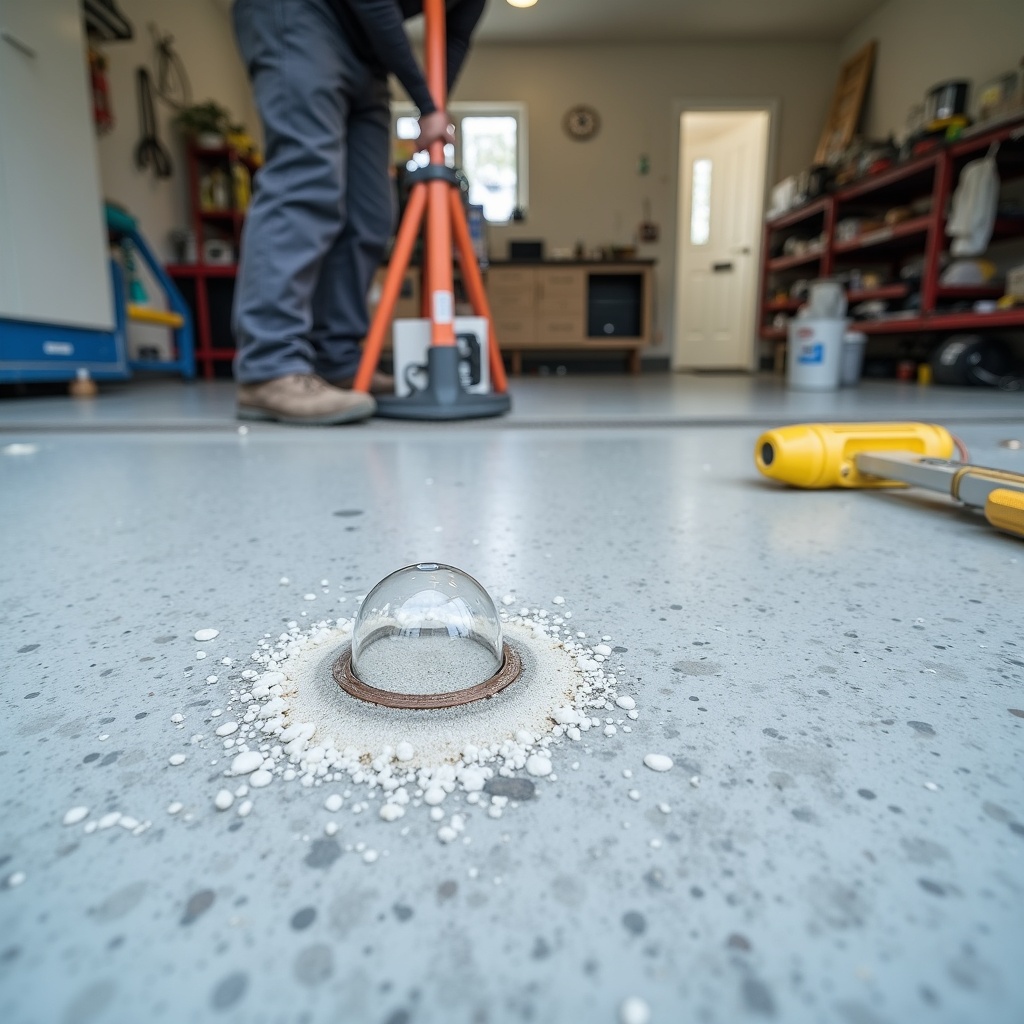
Moisture-caused blisters typically appear weeks to months after installation and contain liquid or feel spongy when pressed, while installation defects usually appear within days and feel hollow. Conduct a calcium chloride test showing MVER above 3 lbs per 1,000 sq ft per 24 hours to confirm moisture as the culprit.
Can I repair epoxy floor moisture blisters myself or should I hire professionals?
DIY repairs work for isolated blisters with MVER under 5 lbs, but professional help from companies like Five Star Epoxy & Coatings at (818) 355-3804 is recommended when moisture exceeds 8 lbs or blistering covers more than 20% of the floor. Professionals have calibrated testing equipment and experience preventing repeated failures.
What causes garage floor epoxy to blister in Woodland Hills specifically?
Woodland Hills's clay-heavy soils retain water longer than sandy compositions, creating elevated groundwater levels that drive moisture vapor through concrete slabs lacking proper vapor barriers. Many older homes in Warner Center and Carlton Terrace were built before vapor barriers became standard, making moisture transmission more common.
How long does vapor barrier primer take to cure before I can apply topcoat epoxy?
Most vapor barrier primers cure in 4-6 hours and require topcoating within 12-48 hours for optimal intercoat adhesion. Exceeding this recoat window means the primer surface becomes too smooth for bonding, requiring light sanding before applying decorative epoxy layers.
🏘️ Same Topic in Nearby Cities
❓ Frequently Asked Questions
How long does it take for clear epoxy to yellow in Woodland Hills showrooms?
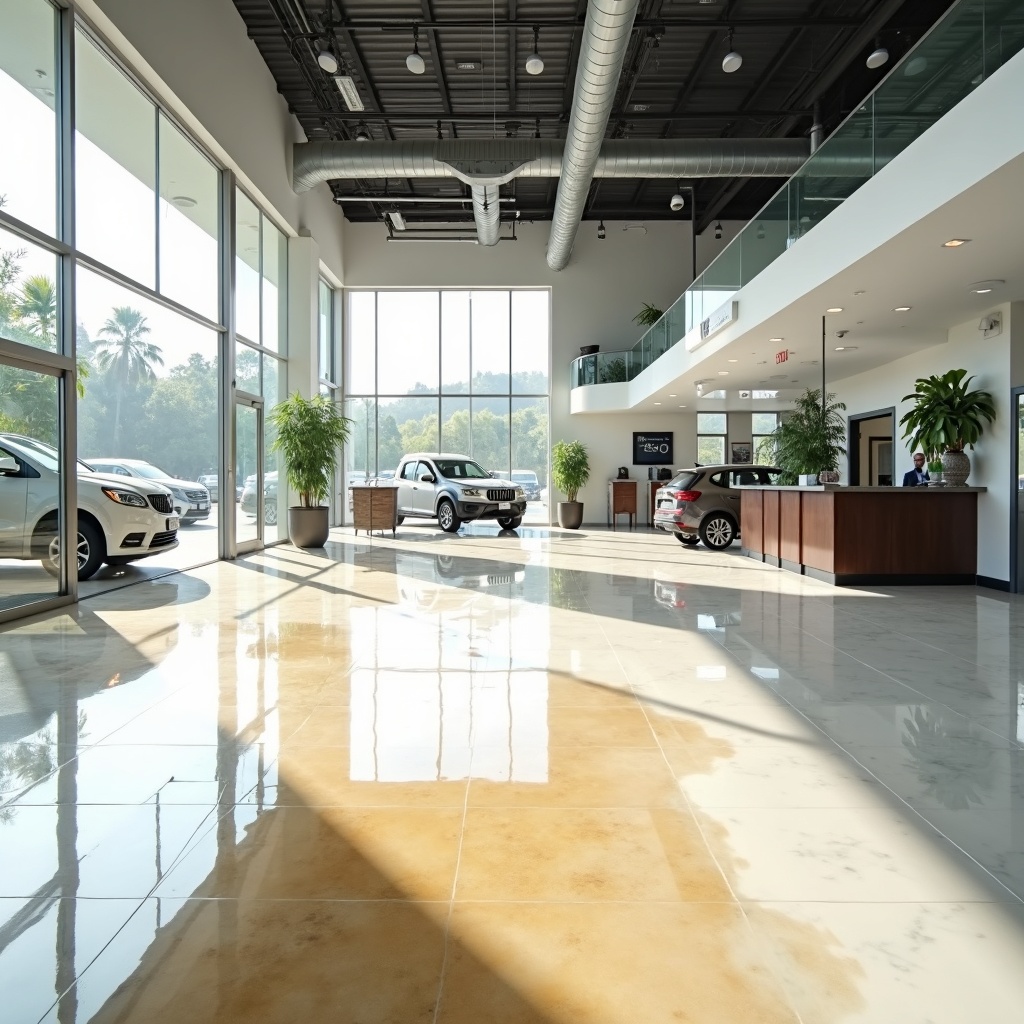
Aromatic epoxy coatings can begin yellowing within 3-6 months when exposed to Woodland Hills' very high UV index, especially in showrooms with large south or west-facing windows. Aliphatic epoxy formulations with UV stabilizers may maintain clarity for 2-3 years, while properly applied polyaspartic topcoat systems can remain clear for 10+ years with appropriate maintenance.
Can I reverse yellowing in epoxy flooring once it has occurred?
No, yellowing is a permanent chemical change in the epoxy's molecular structure caused by UV-induced photo-oxidation. The only way to restore a clear appearance is to physically remove the yellowed layer through sanding or grinding, then apply a fresh UV-resistant coating system. Applying a topcoat over yellowed epoxy will prevent further damage but won't reverse existing discoloration.
Why does my showroom epoxy yellow even without direct sunlight?
Indoor lighting contributes significantly to epoxy yellowing. Fluorescent, halogen, and mercury vapor lights all emit UV radiation that breaks down epoxy's aromatic chemical bonds over time. Even indirect sunlight through windows contains enough UV energy to cause gradual yellowing. Switching to LED lighting and using UV-filtering window films can dramatically reduce this indoor yellowing process.
Should I choose aliphatic polyurethane or polyaspartic topcoat for my Woodland Hills commercial floor?
For high-sun exposure showrooms in Woodland Hills, polyaspartic topcoats offer superior long-term UV resistance and can maintain clarity for 10+ years. Aliphatic polyurethane provides good protection for 5-7 years and costs less, making it suitable for moderate sun exposure. Contact Five Star Epoxy & Coatings at (818) 355-3804 for a site-specific recommendation based on your showroom's exact UV exposure profile.
🏘️ Same Topic in Nearby Cities
❓ Frequently Asked Questions
How much does it cost to repair bubbles in an epoxy garage floor?
DIY spot repairs for minor bubble issues typically cost $50-150 in materials. Professional repairs for moderate problems (affecting 20-30% of the floor) range from $800-1,500 for a two-car garage, while complete coating removal and reapplication costs $2,500-4,500 depending on floor size and system selected.
Can I fix small epoxy floor bubbles myself or should I hire a contractor?
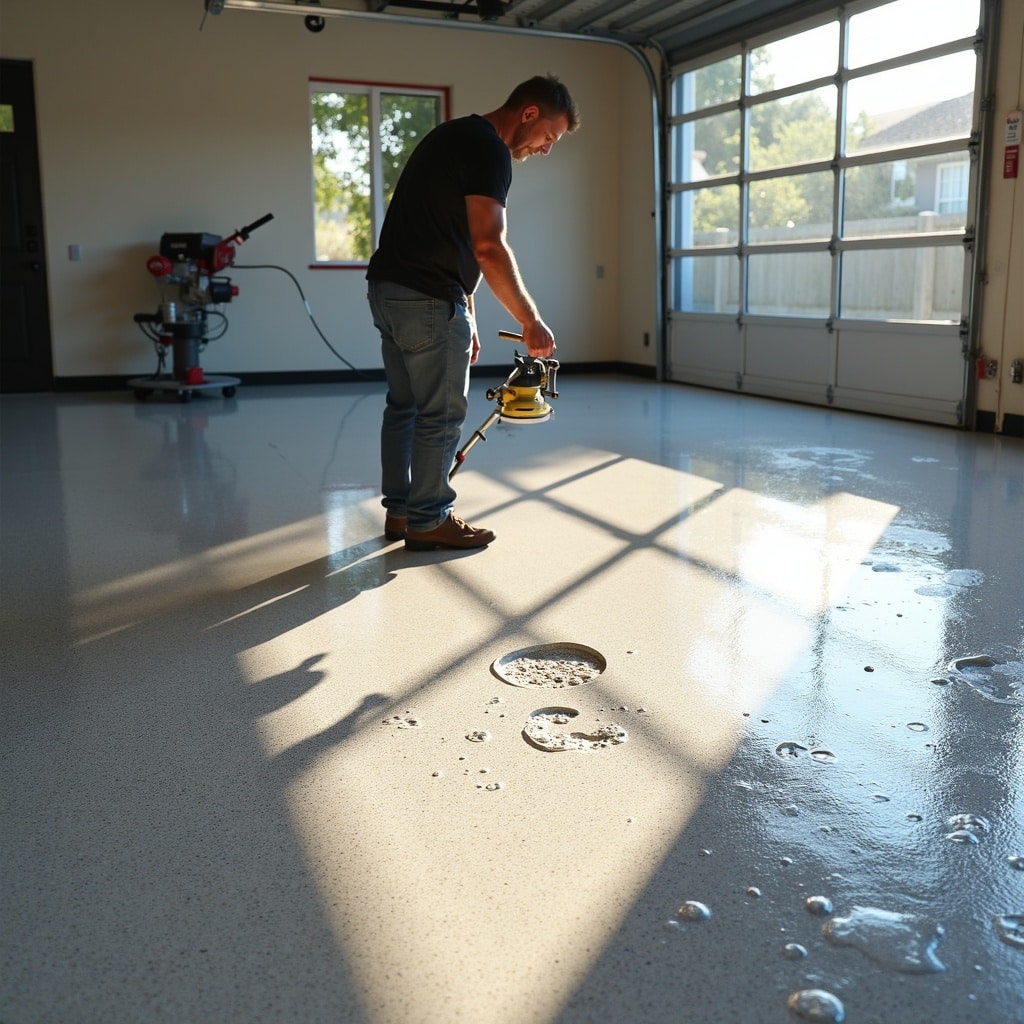
You can successfully repair fewer than 25 small bubbles (under 1/4 inch) yourself using an orbital sander and matching coating material. However, if bubbles cover more than 20% of your floor, show pinholes indicating active gas release, or you discover moisture issues, professional repair from contractors like Five Star Epoxy & Coatings at (818) 355-3804 is necessary.
What causes bubbles to form in epoxy floor coating after installation?
Bubbles typically form from outgassing (trapped air escaping from porous concrete), temperature extremes during application or curing, high humidity during installation, or moisture vapor transmission through the slab. In Woodland Hills, heat-related bubbling is common when garage temperatures exceed 100°F during summer afternoons.
How long do epoxy floor bubble repairs last before needing redoing?
Properly executed repairs that address the underlying cause (moisture, temperature, or substrate porosity) should last as long as the original coating — typically 5-10 years. However, repairs that only fix surface bubbles without solving root problems may fail again within 6-12 months, requiring professional intervention to correct the fundamental issue.
🏘️ Same Topic in Nearby Cities
❓ Frequently Asked Questions
How much does metallic epoxy flooring cost per square foot in Woodland Hills?
Professional metallic epoxy installation in Woodland Hills typically costs $8-15 per square foot, with most residential projects averaging $10-12 per square foot. This includes surface preparation, metallic base coat with artistic manipulation, and protective topcoat layers. A standard 400-square-foot garage runs $4,000-4,800.
Why does metallic epoxy cost more than standard flake epoxy flooring?
Metallic epoxy costs 40-50% more than standard epoxy ($5-8 per square foot) due to expensive metallic pigments and specialized labor. Creating the signature three-dimensional flow patterns requires artistic manipulation during a narrow working window, demanding higher skill levels than straightforward flake applications. The visual impact and uniqueness justify the premium for many homeowners.
What hidden costs should I budget for in a metallic epoxy project?
The most common hidden cost is concrete preparation — significant cracking, oil staining, or unevenness can add $1-3 per square foot for diamond grinding, crack repair, and moisture barriers. Homes over 20 years old often need extra prep work. Budget an additional 10-15% contingency beyond the base quote to cover unexpected concrete issues discovered during surface preparation.
Does metallic epoxy flooring increase home value enough to justify the cost?
In Woodland Hills where median home values approach $925,000, professionally installed metallic epoxy adds $3,000-5,000 to perceived resale value while lasting 15-20 years with minimal maintenance. The real ROI comes from longevity (amortizing to $200-320 annually), reduced maintenance costs, and the lifestyle value of transforming garages and basements into showpiece spaces. Contact Five Star Epoxy & Coatings at (818) 355-3804 for project-specific value assessments.
🏘️ Same Topic in Nearby Cities
❓ Frequently Asked Questions
What garage floor temperature is too hot for epoxy application in Woodland Hills?
Concrete surface temperatures above 85°F begin accelerating epoxy cure rates beyond manufacturer specifications. In Woodland Hills' summer valley heat, garage floors often reach 95-105°F by mid-morning, making only the 5:30-8:30 AM window viable for proper application and chemical bonding.
Can I install garage floor epoxy myself during Woodland Hills summer heat?
While possible, summer DIY installations face compressed working times, accelerated curing, and unreliable moisture testing due to thermal vapor drive. Professional installers use infrared monitoring, climate staging, and adjusted formulations that account for valley-specific heat retention patterns most homeowners cannot replicate.
Why does my Woodland Hills garage floor need different epoxy prep than cooler climates?
Valley floor thermal mass stores and radiates heat independent of air temperature, keeping concrete warm well past sunset. This sustained warmth accelerates moisture vapor transmission through clay-heavy soil, alters acid-etch reaction rates, and requires temperature-specific testing protocols that standard instructions don't address.
Should I wait until fall to install epoxy flooring in my Woodland Hills garage?
October through April installations in Woodland Hills provide stable temperatures, longer working windows, and predictable cure cycles that significantly improve outcomes. Summer installations require dawn-only application, split scheduling, and specialized equipment. Call Five Star Epoxy & Coatings at (818) 355-3804 to discuss seasonal timing strategies for your specific garage conditions.
🏘️ Same Topic in Nearby Cities
❓ Frequently Asked Questions
Why do bubbles keep appearing in my epoxy garage floor weeks after installation in Woodland Hills?
Continuing bubble formation typically indicates ongoing moisture vapor transmission from the concrete slab beneath your coating. In Woodland Hills's climate, temperature fluctuations cause trapped moisture to vaporize and push through the epoxy. This suggests the concrete wasn't adequately dried before installation or lacks proper moisture barrier treatment. Professional moisture testing and mitigation are usually required to stop recurrence.
Can I sand down small bubbles in my epoxy floor without recoating the entire garage?
Yes, minor surface bubbles smaller than a dime can be successfully sanded with 220-grit sandpaper and spot-recoated with matching epoxy topcoat. This works best for cosmetic bubbles that haven't compromised adhesion. Larger bubbles or those indicating delamination require cutting out the damaged section and patching with fresh epoxy to restore structural integrity.
How much does professional epoxy bubble repair typically cost in Woodland Hills?
Professional repair of minor bubble damage in a standard two-car garage runs $200-400 in Woodland Hills, covering materials and labor for patching 10-15 problem areas. Extensive repairs requiring removal and reinstallation cost $2,500-5,000 for 400-500 square feet. Five Star Epoxy & Coatings at (818) 355-3804 provides free assessments to determine the most cost-effective repair approach for your specific situation.
What temperature conditions prevent bubbles when applying epoxy flooring in Southern California?
Concrete surface temperatures should remain between 55°F and 85°F during application and curing, with stable conditions for 24 hours post-installation. In Woodland Hills, morning applications between 7-10 AM offer optimal stability before afternoon heat creates temperature swings. Avoid applying epoxy when forecasts predict temperature fluctuations exceeding 20°F during the cure window, as rapid temperature changes cause the concrete to outgas and create bubbles.