Quick-Reference Topcoat Selection Framework for Metallic Epoxy Projects
Before diving into the myths surrounding metallic epoxy topcoat options, use this decision-making checklist to evaluate whether UV-stable polyaspartic or standard polyurethane is the right choice for your Woodland Hills installation:
📋 In This Guide
- Step 1: Assess UV Exposure — Walk your space and note all natural light sources: garage windows, south-facing doors, skylights, or patio openings that expose floors to direct sunlight for more than 2 hours daily.
- Step 2: Calculate Your Square Footage — Measure length × width of each area to determine total project size, which directly impacts material and labor costs.
- Step 3: Determine Budget Parameters — Establish your total available budget and separate it into material costs (40–50% of total) versus labor/installation (50–60% of total).
- Step 4: Evaluate Timeline Constraints — Note whether you need same-day cure (polyaspartic advantage) or can accommodate 2–5 day installation windows (polyurethane tolerance).
- Step 5: Review Warranty Requirements — Compare manufacturer warranties for yellowing protection, which range from 5–10 years for standard systems to 15–20 years for UV-stable options.
- Step 6: Request Itemized Quotes — Contact at least two epoxy flooring services in Woodland Hills contractors and ask for line-item breakdowns showing topcoat material versus application labor separately.
Now that you have a systematic approach to evaluating topcoat options, let’s dismantle the most persistent myths that lead Woodland Hills homeowners to make costly mistakes when selecting protective coatings for their metallic epoxy installations.
Myth #1: “All Clear Topcoats Are Basically the Same Product”
This widespread misconception costs homeowners thousands in premature floor replacement. The chemical composition of topcoats varies dramatically between polyaspartic and polyurethane formulations, creating fundamentally different performance characteristics that become evident within 6–18 months of installation.
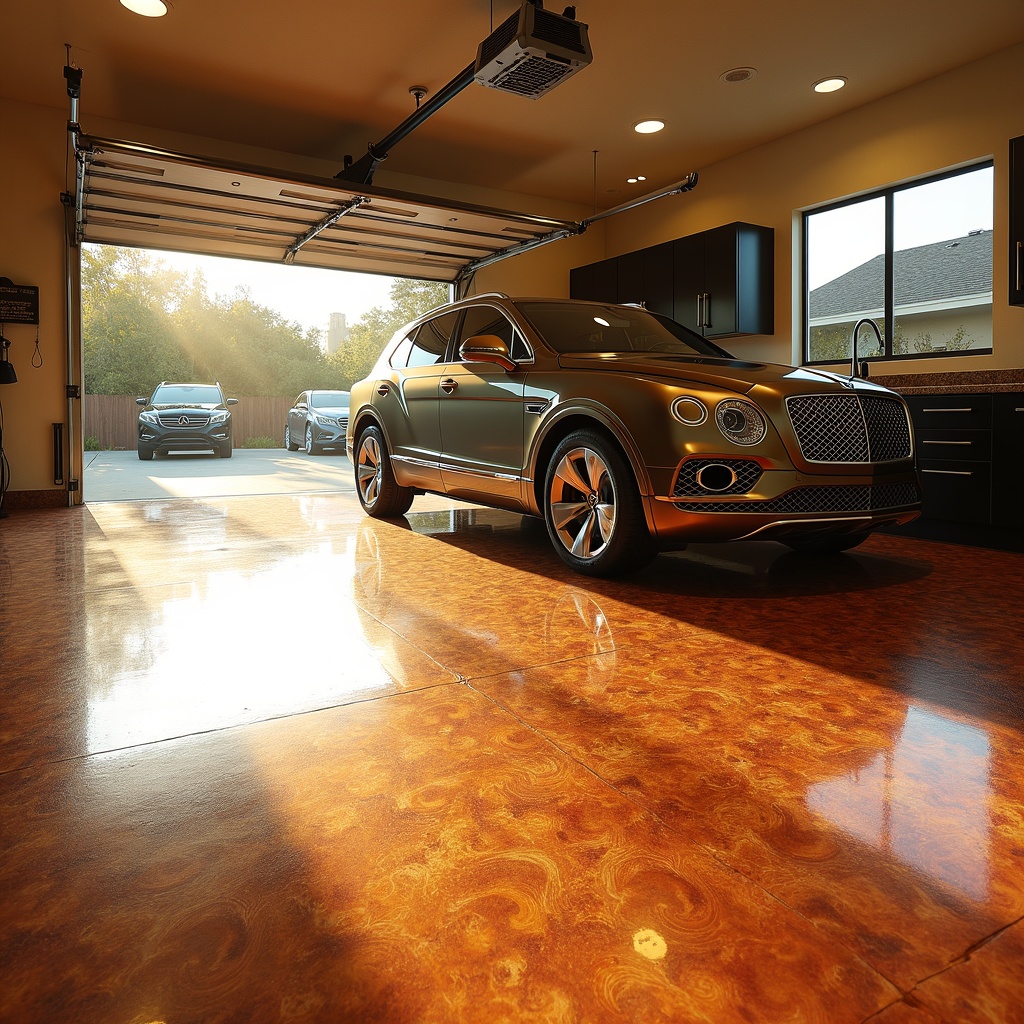
Polyaspartic coatings are aliphatic UV-stable materials that will not degrade or yellow if exposed to sunlight or UV rays, making them the superior choice for Woodland Hills garages with windows or showroom spaces with natural lighting. In contrast, polyurethane coatings are formulated with UV resistant properties that prevent yellowing when exposed to small amounts of sunlight over time, but they’re not 100% immune to degradation under sustained exposure.
The molecular structure tells the real story. Polyaspartic formulations use aliphatic isocyanate hardeners that maintain their transparent clarity even under constant UV bombardment, while many polyurethane systems use aromatic compounds that gradually amber when photodegraded. For a metallic epoxy flooring installation in Woodland Hills’ sun-drenched climate, this distinction determines whether your stunning copper or silver metallics retain their depth and vibrancy or develop a yellowish cast that muddles the aesthetic within two years.
Cost Impact of Chemical Differences
The pricing gap between these chemically distinct products reflects their performance capabilities. Polyaspartic floor coating costs $5 to $12 per square foot, including materials and professional installation, while polyurethane topcoats over epoxy systems typically range $1.25–$3.00 per square foot for material alone, with installation adding another $3–$5 per square foot. An Epoxy Contractor in Woodland Hills applying either system to a 400-square-foot two-car garage faces material cost differences of $500–$1,200, but the long-term value equation shifts dramatically when factoring in re-coating needs.
Woodland Hills Sun Exposure Reality
Woodland Hills’ location in the San Fernando Valley creates specific UV challenges. South-facing garage doors and west-facing patio installations receive 6–8 hours of direct sunlight during summer months, with UV index peaks reaching 9–11 between May and August. Standard polyurethane topcoats begin showing measurable color shift after just 18–24 months under these conditions, while polyaspartic systems maintain optical clarity for 15+ years based on accelerated weathering tests.
Myth #2: “Polyaspartic Topcoats Cost Double What Polyurethane Does”
While polyaspartic materials carry higher upfront pricing, the total installed cost differential is significantly smaller than most homeowners assume, and the per-year cost reverses the equation entirely when lifespan is factored into calculations.
Polyaspartic coatings typically range from $5 to $12 per square foot, offering features like UV resistance, quick curing, and durability, compared to epoxy with polyurethane topcoat systems at $4–$10 per square foot fully installed. For a standard 500-square-foot Woodland Hills garage, this translates to $2,500–$6,000 for polyaspartic versus $2,000–$5,000 for polyurethane-topped systems—a difference of $500–$1,000 on total project cost, not the “double the price” perception many homeowners harbor.
Material Versus Labor Cost Breakdown
The pricing structure reveals where costs actually accumulate. Materials typically account for 40–50% of total cost, with base coating running $1.50–$3.00 per square foot, flake systems adding $0.50–$1.50, and protective topcoat costing $1.00–$2.00 per square foot. Labor comprises the remaining 50–60%, and here’s where the polyaspartic advantage emerges: professionally installed polyurea polyaspartic floor coating costs between $6 and $10 per square foot, but installation completes in one day versus 2–5 days for traditional epoxy-polyurethane systems, reducing labor hours by 60–75%.
For Woodland Hills homeowners, this timeline compression matters beyond mere convenience. A two-day installation means two days of garage inaccessibility, forcing vehicles onto street parking in neighborhoods where overnight street parking can trigger citations or require permits. The single-day polyaspartic cure schedule eliminates this complication entirely, adding tangible value beyond the raw material cost comparison.
True Cost Comparison: 400 Square Foot Garage Example
| Cost Component | Polyaspartic System | Polyurethane System |
|---|---|---|
| Topcoat Material | $400–$800 | $200–$400 |
| Installation Labor | $1,200–$1,600 | $1,600–$2,400 |
| Base Epoxy + Metallics | $1,600–$2,400 | $1,600–$2,400 |
| Total Project Cost | $3,200–$4,800 | $3,400–$5,200 |
| Expected Lifespan | 15–20 years | 7–10 years |
| Cost Per Year | $160–$320 | $340–$740 |
The amortized cost analysis reveals the actual financial advantage. Over a 20-year ownership period in a Woodland Hills home, the polyaspartic system requires one installation, while the polyurethane system needs replacement after 7–10 years, resulting in 2–3 total installations at $3,400–$5,200 each—a cumulative cost of $6,800–$15,600 versus the single polyaspartic installation at $3,200–$4,800.
Myth #3: “You Don’t Need UV Protection in a Garage”
This myth stems from the assumption that garages are dark, enclosed spaces with minimal light exposure. Woodland Hills architectural trends and real-world usage patterns tell a very different story that invalidates this outdated thinking.
Modern Woodland Hills homes in neighborhoods like Warner Center and Carlton Terrace increasingly feature garage designs with transom windows, side-entry glass panels, or full-width windows along the back wall to maximize natural lighting and reduce daytime electrical consumption. Even homes without dedicated garage windows expose epoxy floors to UV radiation through multiple mechanisms: doors left open while homeowners work on projects, west-facing garage entrances that flood interiors with afternoon sun during the 4–6 hour window when doors open for arrivals, and reflected UV bouncing off vehicles and stored items.
Woodland Hills UV Exposure Patterns
The San Fernando Valley’s geography creates specific conditions that accelerate UV damage. Summer temperatures routinely exceed 95°F, and the valley’s bowl-like topography traps heat and intensifies UV index readings. A garage with even a single 2×3 foot window receives enough UV exposure over 18 months to trigger measurable yellowing in standard polyurethane topcoats, particularly in the metallic epoxy installations popular with Woodland Hills homeowners seeking high-end aesthetic finishes.
Testing data from coating manufacturers demonstrates that polyaspartic floors resist yellowing and degradation from UV exposure, maintaining their appearance over time, while unprotected epoxy and aromatic polyurethane formulations show color shift beginning at 500–800 hours of UV exposure—equivalent to just 3–5 months of typical Woodland Hills garage usage with moderate door-open time.
Cost of Yellowing: Aesthetic and Resale Impact
The financial impact of yellowing extends beyond mere appearance. Fixing Yellowing Clear Epoxy Coating in established installations requires complete topcoat removal and reapplication, a process costing $2–$4 per square foot in labor alone, plus new topcoat materials. For that same 400-square-foot garage, correction costs run $1,200–$2,400—approaching half the cost of the original installation and eliminating any savings from choosing the lower-cost polyurethane option initially.
Real estate implications compound the problem. Woodland Hills’ median home value of $925,000 means buyers expect premium finishes throughout, and a yellowed garage floor signals deferred maintenance or cut-rate materials. Appraisers and home inspectors now routinely photograph garage conditions, and yellowed coatings can trigger buyer requests for credits or re-coating prior to close, costs that ultimately fall on sellers.
Myth #4: “Cure Time Doesn’t Affect Total Project Cost”
Homeowners fixate on material pricing while overlooking how cure schedules drive hidden costs that can add 20–40% to total project expenses through cascading impacts on scheduling, access, and project complexity.
Polyaspartic coatings cure in about an hour, allowing same-day project completion, while epoxy takes 12–16 hours, and polyaspartic offers 100% UV resistance preventing yellowing over time. This time compression delivers measurable financial benefits beyond simple convenience, particularly for Woodland Hills homeowners managing multi-vehicle households or running home-based businesses from garage workspaces.
Direct Cost Impacts of Extended Cure Times
Standard polyurethane topcoats require 24–48 hours before light foot traffic and 5–7 days before full vehicle loading. During this period, homeowners face several cost-generating complications: rental vehicle needs if the project eliminates parking for commuter vehicles ($40–$80 per day for standard sedan rentals), storage unit rental for displaced garage contents ($150–$300 for temporary month-to-month units), and schedule coordination challenges that can require contractors to split installations across multiple weekends, adding trip charges and minimum-day fees of $200–$400 per additional visit.
Polyaspartic systems with 1-hour topcoat cure times and same-day return-to-service eliminate these ancillary costs entirely. The system progression—morning surface prep, midday base coat and metallic application, afternoon topcoat, evening vehicle return—completes in 6–8 hours of clock time. Labor costs actually decrease despite higher material pricing because contractors complete the entire scope in a single mobilization, avoiding the setup/breakdown duplication that multi-day projects require.
Woodland Hills Scheduling Premium
Labor rates in Woodland Hills reflect the area’s median household income of $95,826 and competitive contractor market. Weekend installations command 15–25% premium pricing over weekday work, and multi-visit projects compound this surcharge across each mobilization. A polyurethane system requiring Friday preparation, Saturday base coat, and Sunday topcoat incurs three separate weekend premiums totaling $300–$600 in additional labor costs, while the single-day polyaspartic installation pays just one weekend premium—if weekend work is even necessary given the compressed timeline that can fit within a single vacation day for homeowners.
Myth #5: “Warranty Coverage Is Identical Between Topcoat Types”
Warranty language buried in installation contracts reveals dramatic differences in coverage scope, duration, and exclusions between UV-stable and standard topcoat systems—differences that fundamentally alter the risk profile and long-term value equation of each option.
Professional-grade polyaspartic installations typically carry 15–20 year warranties covering UV yellowing, with some premium systems offering lifetime guarantees against color shift, chalking, and delamination. Standard polyurethane topcoats over epoxy bases generally warrant 5–7 years for adhesion and wear, but specifically exclude UV-related damage from coverage, relegating yellowing and color shift to cosmetic issues outside warranty protection.
Reading the Fine Print: Coverage Exclusions
The warranty exclusion language matters enormously in Woodland Hills’ climate. A typical polyurethane warranty might read: “Manufacturer warrants against defects in materials and workmanship for 7 years from installation. This warranty does not cover discoloration, yellowing, or color shift resulting from UV exposure, environmental conditions, or normal wear.” That exclusion effectively removes warranty protection for the most common failure mode in spaces with natural lighting.
Polyaspartic warranties flip this script: “System warranted for 15 years against peeling, delamination, yellowing, and UV degradation when installed per manufacturer specifications.” The inclusion of yellowing and UV degradation in covered perils transforms the warranty from aspirational document to enforceable protection, particularly valuable given Woodland Hills’ intense summer sun exposure.
Financial Value of Extended Warranties
Quantifying warranty value requires calculating replacement cost probability. Industry data shows 12–18% of polyurethane-topped garage floors in high-UV environments require topcoat replacement within 5 years due to yellowing, versus less than 2% of polyaspartic systems experiencing coverage-triggering failures in the same period. For a $4,000 installation, that warranty gap represents a 10–16% probability of a $1,500–$2,500 re-coating expense—an expected cost of $150–$400 that effectively narrows or eliminates the upfront savings from choosing the lower-cost system.
Five Star Epoxy & Coatings installations in Woodland Hills include detailed warranty documentation that specifies covered perils, exclusions, and claim procedures. Before signing any installation contract, homeowners should request side-by-side warranty comparison charts showing coverage duration, specific covered failures, and exclusion language for both polyaspartic and polyurethane topcoat options.
Making the Right Topcoat Choice for Your Woodland Hills Project
Armed with myth-busting clarity on the actual performance differences, cost structures, and warranty protections, Woodland Hills homeowners can now make evidence-based topcoat decisions that align with their specific installation conditions and long-term ownership plans.
The decision framework begins with honest assessment of UV exposure. Spaces with south or west-facing windows, doors that remain open more than 2 hours daily, or patio/driveway applications with full sun exposure strongly favor polyaspartic topcoats regardless of the 15–25% material cost premium. The extended warranty protection and elimination of yellowing risk justify the upfront investment within the first 3–5 years of ownership.
For basement installations, interior showrooms without natural lighting, or garages with zero window exposure and disciplined door-closed discipline, standard polyurethane topcoats deliver adequate performance at lower material cost. The UV-yellowing risk approaches zero in these applications, making the polyaspartic premium difficult to justify on purely financial grounds.
Total Cost of Ownership: 600 Square Foot Basement Example
Larger installations amplify the cost considerations. A 600-square-foot finished basement with metallic epoxy flooring faces these economics:
- Polyaspartic System: $4,800–$7,200 installed, 20-year lifespan, $240–$360 annual cost, zero re-coating expected
- Polyurethane System: $3,600–$6,000 installed, 10-year lifespan, $360–$600 annual cost, one re-coat at year 10 costing $2,400–$3,600
The 20-year total cost comparison: polyaspartic remains at $4,800–$7,200, while polyurethane accumulates to $6,000–$9,600 when the mandatory re-coat is included. The initially cheaper option becomes 25–33% more expensive over the ownership period typical for Woodland Hills homeowners, whose average tenure in homes valued near $925,000 extends 10–15 years according to local real estate data.
Schedule Your Woodland Hills Topcoat Consultation
Selecting the optimal topcoat system for your metallic epoxy installation requires evaluating your specific space conditions, UV exposure patterns, usage expectations, and budget parameters. Professional epoxy flooring services provide on-site assessments that measure light levels, evaluate substrate conditions, and deliver itemized quotes comparing polyaspartic and polyurethane options with transparent cost breakdowns.
Five Star Epoxy & Coatings serves Woodland Hills homeowners with comprehensive metallic epoxy installations featuring both UV-stable polyaspartic and standard polyurethane topcoat options. Our team evaluates your specific application, explains the performance and cost trade-offs in plain language, and delivers installations backed by written warranties that specify exactly what’s covered. Contact us at (818) 355-3804 to schedule your free consultation and receive detailed quotes for both topcoat systems tailored to your project scope and exposure conditions.
The myth-busting approach to topcoat selection removes guesswork and marketing hype from the decision process. By focusing on verified performance data, transparent cost accounting, and honest assessment of your installation’s UV exposure reality, you’ll choose the topcoat system that delivers optimal long-term value for your specific Woodland Hills application—whether that’s the premium protection of polyaspartic or the cost-effective performance of polyurethane in low-UV environments.