Why June Through September Demands a Different Epoxy Installation Strategy in Northridge
Summer in Northridge isn’t just hot—it’s a test of patience for anyone attempting garage floor epoxy installation. When temperatures spike to 95°F or higher in the San Fernando Valley, the concrete beneath your feet can reach 120°F or more by mid-afternoon. This extreme heat fundamentally changes how epoxy behaves during application and curing. The resin kicks faster, the adhesive window shrinks, and moisture vapor drive accelerates—all factors that can turn a professional-grade coating into a disappointing failure if you don’t adapt your approach. For homeowners in Northridge East or near California State University, where garage microclimates vary based on sun exposure and airflow, understanding these seasonal dynamics isn’t optional—it’s the difference between a floor that lasts 15 years and one that fails within months.
📋 In This Guide
- ▸The 6 AM Rule: Why Early Morning Application Windows Save Summer Installations
- ▸Moisture Management When Summer Heat Accelerates Vapor Transmission
- ▸Surface Prep Tactics for Concrete That’s Already Hot to the Touch
- ▸Curing Protocols That Account for Northridge’s Extreme Diurnal Temperature Swings
- ▸Ready to Schedule Your Summer Epoxy Installation in Northridge?
The 6 AM Rule: Why Early Morning Application Windows Save Summer Installations
The most successful epoxy services in Northridge during summer months follow what installers call the “6 AM rule.” This means starting surface preparation no later than sunrise and completing the epoxy coat application before 10 AM. Here’s why this timing matters: concrete surface temperatures need to stay between 55°F and 85°F for optimal epoxy adhesion. In Northridge during July and August, your garage floor might be at 65°F at 6 AM but climb to 95°F by noon. That four-hour window is your entire workable timeframe. Professional installers use infrared thermometers to track surface temps continuously, stopping application the moment readings exceed safe ranges. For garages in Northridge West that face south or west, the thermal gain happens even faster—sometimes hitting critical temps by 9 AM. This isn’t about convenience; it’s about chemistry. Epoxy applied to overheated concrete cures too quickly, trapping air bubbles and preventing proper adhesion at the molecular level.
Moisture Management When Summer Heat Accelerates Vapor Transmission
Summer heat doesn’t just affect surface temperature—it dramatically increases moisture vapor transmission through concrete slabs. In Northridge’s climate, ground moisture from irrigation systems or natural water tables can be pulled upward through your garage floor at rates three times higher than winter months. This creates a hidden installation hazard: even if the surface feels dry, vapor pressure beneath the slab can cause epoxy coatings to delaminate weeks or months after installation. Professional contractors perform calcium chloride tests or relative humidity probe testing, but summer conditions require more stringent thresholds. Where a 3-pound moisture vapor emission rate might be acceptable in February, anything above 2 pounds in August demands remediation. Homes near Dearborn Park or areas with mature landscaping often show elevated readings because irrigation keeps subsurface moisture levels high. The solution involves vapor barrier primers or extended drying periods—sometimes pushing installation timelines by several days to ensure long-term adhesion.
Surface Prep Tactics for Concrete That’s Already Hot to the Touch
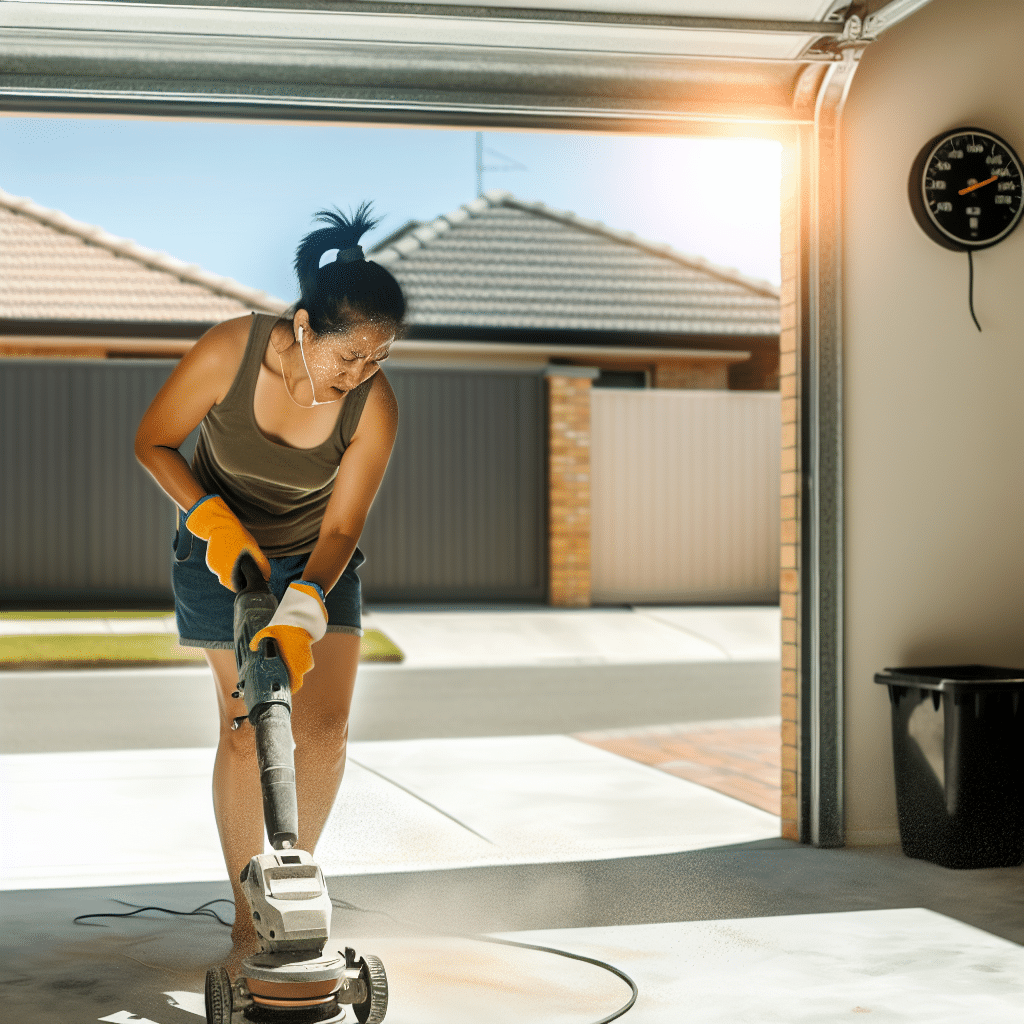
Diamond grinding and shot blasting—the two primary methods for preparing garage floors in Granada Hills and throughout the Valley—generate significant friction heat. When you’re starting with concrete that’s already 85°F, the mechanical prep process can push surface temps well into the danger zone. Experienced installers compensate by working in sections, allowing each area to cool before moving to the next, and sometimes using industrial fans to accelerate heat dissipation. The goal isn’t just to open the concrete’s pores for better adhesion—it’s to do so without thermal shocking the slab or creating conditions that compromise coating performance. Another summer-specific consideration: dust generated during grinding becomes problematic in hot, dry conditions. Static electricity causes fine particles to cling to vertical surfaces, contaminating areas that need to stay pristine for epoxy application. Professional crews use HEPA-filtered vacuums continuously during prep and often lightly mist the air (not the floor) to control airborne particulates. This level of attention to environmental factors separates successful installations from those that bubble or peel within the first year.
Curing Protocols That Account for Northridge’s Extreme Diurnal Temperature Swings
One of Northridge’s defining summer characteristics—something that distinguishes it from Porter Ranch’s slightly cooler elevation—is the dramatic temperature drop after sunset. A garage floor that’s 95°F at 3 PM might plunge to 68°F by midnight. For curing epoxy, this rapid temperature change creates stress within the coating matrix. The resin contracts as it cools, potentially pulling away from the concrete surface if the chemical cross-linking hasn’t advanced sufficiently. Professional installers account for this by timing the application so that initial cure—the critical first 8-12 hours—occurs during the overnight period when temperatures stabilize in the 70s. They also recommend keeping garage doors closed during the first 24 hours to moderate temperature fluctuations, even though this traps heat. The trade-off is worth it: a controlled 85°F environment beats a cycling 95°F to 65°F scenario every time. For homeowners considering DIY installation, understand that summer curing requires you to babysit the floor overnight, monitoring conditions and adjusting airflow as needed—a reality that makes professional installation particularly valuable during these challenging months.
Ready to Schedule Your Summer Epoxy Installation in Northridge?
Summer doesn’t have to mean postponing your garage floor upgrade—it just requires working with installers who understand how to adapt techniques for Valley heat. Five Star Epoxy & Coatings has refined summer installation protocols specifically for Northridge’s microclimate challenges, from early-morning scheduling to specialized moisture management. We’ve completed successful summer installations throughout Northridge East, near the Fashion Center, and in neighborhoods throughout the 91324, 91325, and 91330 ZIP codes. If you’re ready to transform your garage floor despite the heat, call us at (818) 355-3804 to discuss how we’ll customize the approach for your specific property conditions. We’ll perform on-site moisture and temperature assessments, recommend the optimal installation window, and guarantee results that hold up year-round—not just during the season they were installed. Learn more about our proven installation process and see examples of completed work in our project gallery.
❓ Frequently Asked Questions
What's the ideal surface temperature for applying garage floor epoxy in Northridge during summer?
Concrete surface temperatures should stay between 55°F and 85°F during epoxy application. In Northridge's summer heat, this typically means working between 6 AM and 10 AM before surfaces exceed safe ranges. Professional installers use infrared thermometers to continuously monitor temps and stop application if readings climb above 85°F, as overheated concrete causes rapid curing that traps air bubbles and prevents proper adhesion.
How does summer moisture vapor transmission affect epoxy coating success in Northridge garages?
Summer heat pulls ground moisture upward through concrete slabs at rates three times higher than winter, creating vapor pressure that can cause epoxy delamination weeks after installation. In Northridge, especially near irrigated areas, calcium chloride tests often show emission rates requiring vapor barrier primers or extended drying periods. Five Star Epoxy & Coatings performs comprehensive moisture testing before every summer installation to ensure long-term adhesion.
Can I have epoxy installed in my Northridge garage during July and August?
Yes, but it requires specialized summer protocols including early-morning application windows, enhanced moisture testing, and controlled curing environments. Professional installers schedule work to complete epoxy application before 10 AM, allowing initial cure during cooler overnight hours when Northridge temperatures stabilize in the 70s. This approach compensates for the Valley's extreme diurnal temperature swings that can stress curing coatings.
Why do Northridge garage floors need different prep during summer compared to winter?
Hot concrete requires modified diamond grinding techniques to prevent thermal shocking and additional dust control measures since dry summer air increases static-driven particle contamination. Starting temperatures of 85°F mean mechanical prep can push surfaces into dangerous ranges, so installers work in sections with cooling breaks and industrial fans. These summer-specific adjustments ensure proper surface profile without compromising coating adhesion—critical for installations that need to last 15+ years.