
• May 4th, 2026

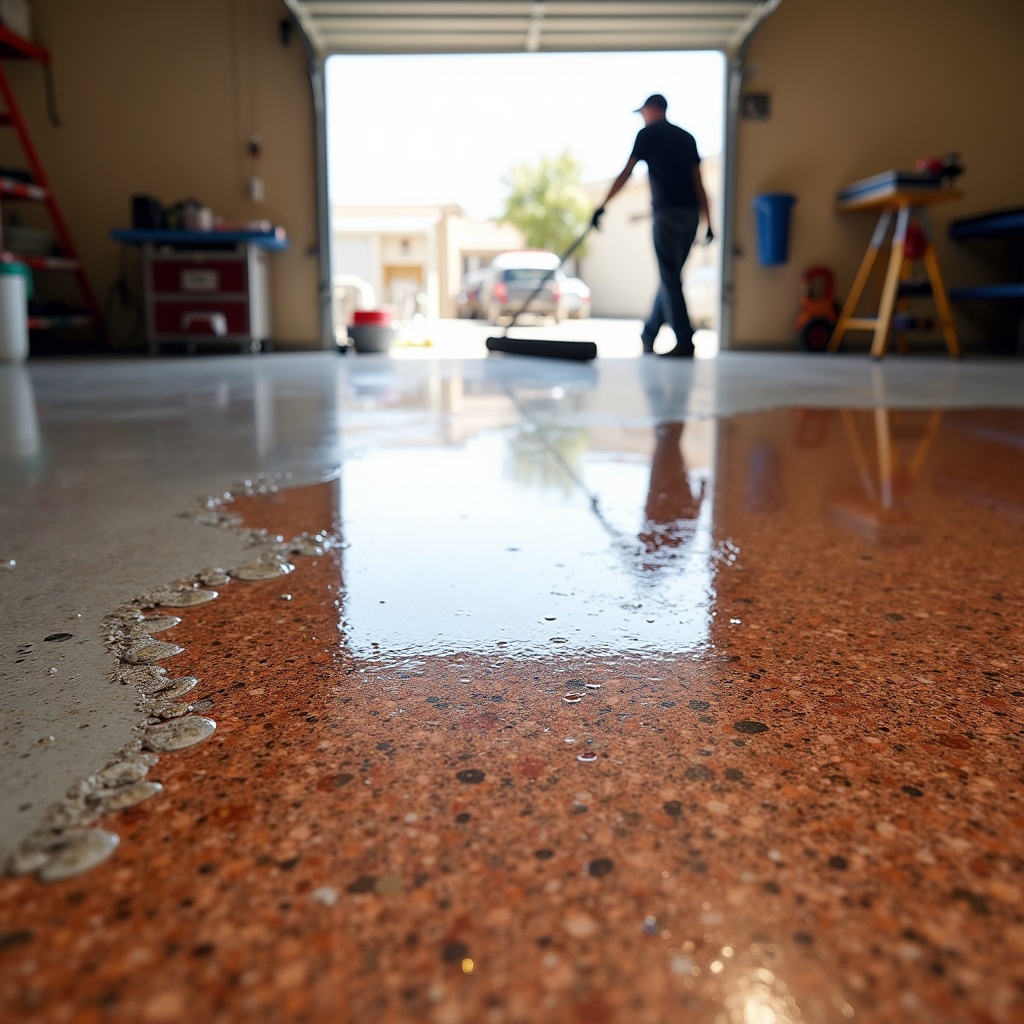
    Metallic epoxy separation leaves blotchy patches instead of stunning swirled finishes—but targeted repairs can salvage your investment. This guide provides Porter Ranch homeowners and contractors with diagnostic steps, proven correction methods, and climate-specific prevention strategies.
  • ❓ Frequently Asked Questions

    How long does metallic epoxy pearl separation repair take in Porter Ranch?

    Minor spot repairs affecting less than 10% of the floor typically cure within 24-48 hours, allowing limited foot traffic. Moderate repairs requiring partial removal take 3-4 days including surface prep, moisture mitigation, recoating, and topcoat curing. Complete removal and reinstallation requires 5-7 days for a standard garage, with timing influenced by Porter Ranch's temperature and humidity conditions.

    Can I fix separated metallic epoxy myself or should I hire a professional?

    Small isolated patches under 5 square feet are DIY-friendly if you have basic epoxy experience and can control application temperature between 65-75°F. Larger repairs or separation accompanied by bubbling, delamination, or moisture issues require professional assessment. An experienced epoxy floor installer can diagnose underlying problems that DIY repairs might miss, preventing costly recurring failures.

    What causes metallic pigments to separate during epoxy curing?

    The primary causes include improper mixing ratios or techniques, substrate moisture vapor, contaminated concrete surfaces, temperature extremes during application, and exceeded pot life before spreading. Porter Ranch's Mediterranean climate with hot, dry summers creates conditions where rapid temperature changes between morning and afternoon can disrupt metallic pigment suspension, particularly in unconditioned garages.

    Is Five Star Epoxy & Coatings experienced with metallic epoxy repairs?

    Yes, Five Star Epoxy & Coatings specializes in correcting metallic epoxy failures throughout Porter Ranch and the San Fernando Valley. Our team diagnoses separation causes, provides detailed cost estimates for repair versus replacement, and executes corrections using professional-grade materials and techniques. Call (818) 355-3804 to schedule an assessment of your separated metallic floor.

  • April 18th, 2026

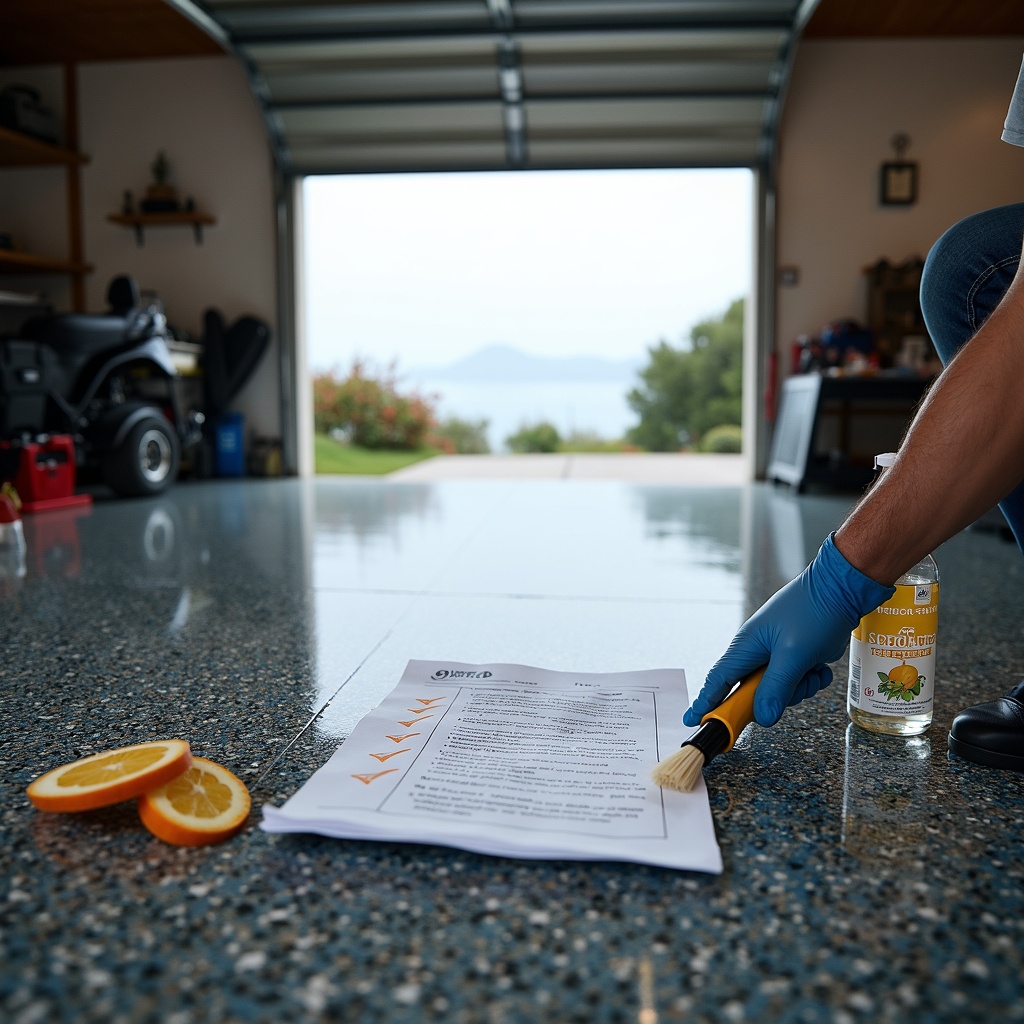
    A Point Dume homeowner's attempt to remove tire marks with acetone resulted in a $3,000 repair bill. This step-by-step checklist shows Malibu residents how to safely diagnose and fix tire marks without damaging their garage floor epoxy.
  • ❓ Frequently Asked Questions

    How long does it take for tire marks to become permanent on garage floor epoxy?

    Tire marks become progressively harder to remove the longer they sit. Fresh marks from plasticizer transfer can often be cleaned within minutes using dish soap, while marks left for several weeks may penetrate the coating surface and require specialized citrus-based cleaners or professional intervention to fully remove.

    Can hot tire pickup happen on properly installed garage epoxy in Malibu's climate?

    Yes, but it's far less common with quality installations. Malibu's moderate coastal temperatures (typically 49°F to 76°F year-round) reduce tire heating compared to inland valleys, but hot tire pickup can still occur if low-grade water-based coatings were used or if the floor wasn't allowed proper cure time before vehicle traffic.

    What's the difference between tire marks and hot tire pickup on epoxy floors?

    Tire marks are surface discoloration from rubber plasticizers that can usually be cleaned with appropriate products. Hot tire pickup is actual coating failure where the epoxy peels away from the concrete, requiring professional repair rather than cleaning. Run your fingernail across the area — if the coating is lifting or peeling, it's hot tire pickup.

    Should I hire Five Star Epoxy & Coatings if my DIY cleaning damaged my garage floor?

    Absolutely. If aggressive solvents or abrasive tools have dulled, scratched, or stripped areas of your epoxy coating, Five Star Epoxy & Coatings can assess the damage and recommend spot repairs or professional recoating. We serve all Malibu neighborhoods and use commercial-grade systems designed to prevent both tire marks and coating failures common with DIY products.

  • April 14th, 2026

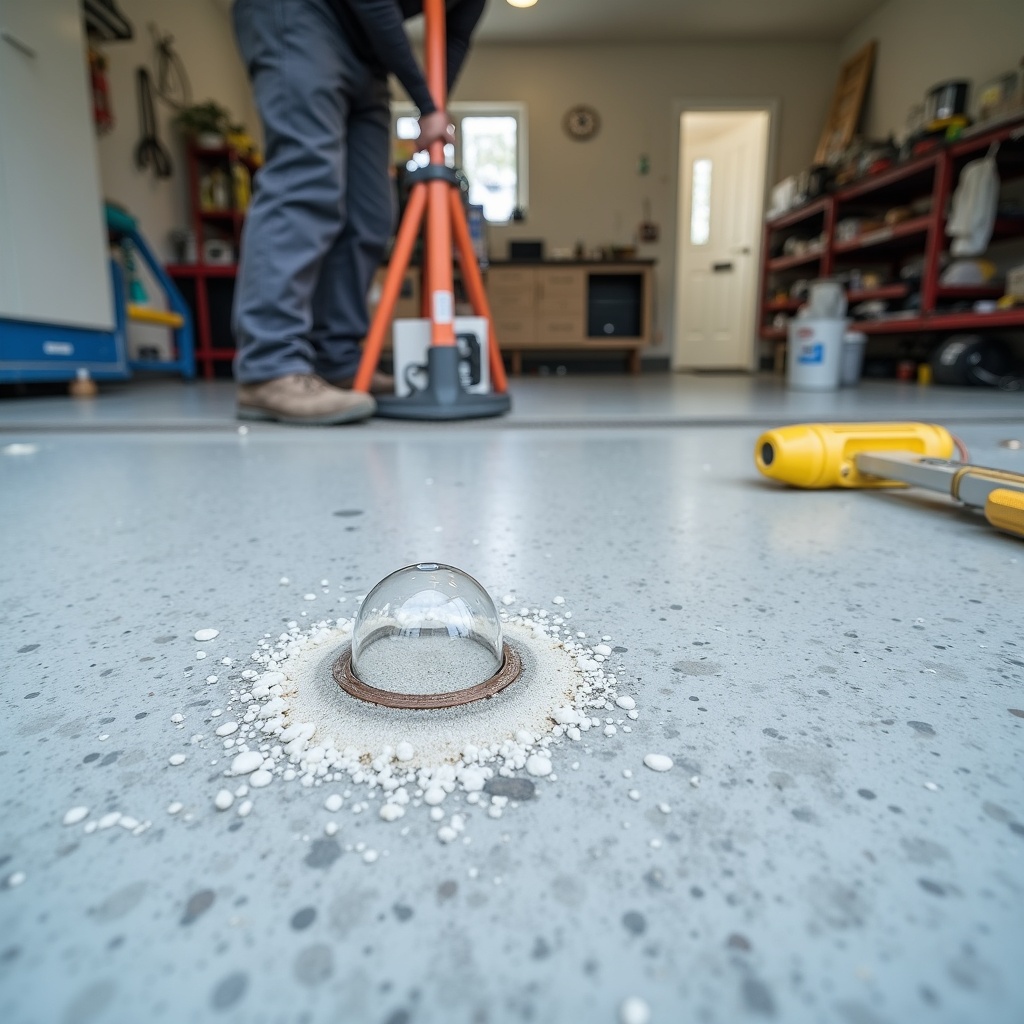
    Moisture blisters in your Woodland Hills garage epoxy signal vapor transmission problems that require proper diagnosis and repair. Learn the decision framework for spot repairs versus complete removal, plus prevention strategies for our local soil conditions.
  • ❓ Frequently Asked Questions

    How do I know if my garage floor blisters are caused by moisture or poor installation?

    Moisture-caused blisters typically appear weeks to months after installation and contain liquid or feel spongy when pressed, while installation defects usually appear within days and feel hollow. Conduct a calcium chloride test showing MVER above 3 lbs per 1,000 sq ft per 24 hours to confirm moisture as the culprit.

    Can I repair epoxy floor moisture blisters myself or should I hire professionals?

    DIY repairs work for isolated blisters with MVER under 5 lbs, but professional help from companies like Five Star Epoxy & Coatings at (818) 355-3804 is recommended when moisture exceeds 8 lbs or blistering covers more than 20% of the floor. Professionals have calibrated testing equipment and experience preventing repeated failures.

    What causes garage floor epoxy to blister in Woodland Hills specifically?

    Woodland Hills's clay-heavy soils retain water longer than sandy compositions, creating elevated groundwater levels that drive moisture vapor through concrete slabs lacking proper vapor barriers. Many older homes in Warner Center and Carlton Terrace were built before vapor barriers became standard, making moisture transmission more common.

    How long does vapor barrier primer take to cure before I can apply topcoat epoxy?

    Most vapor barrier primers cure in 4-6 hours and require topcoating within 12-48 hours for optimal intercoat adhesion. Exceeding this recoat window means the primer surface becomes too smooth for bonding, requiring light sanding before applying decorative epoxy layers.

  • April 4th, 2026

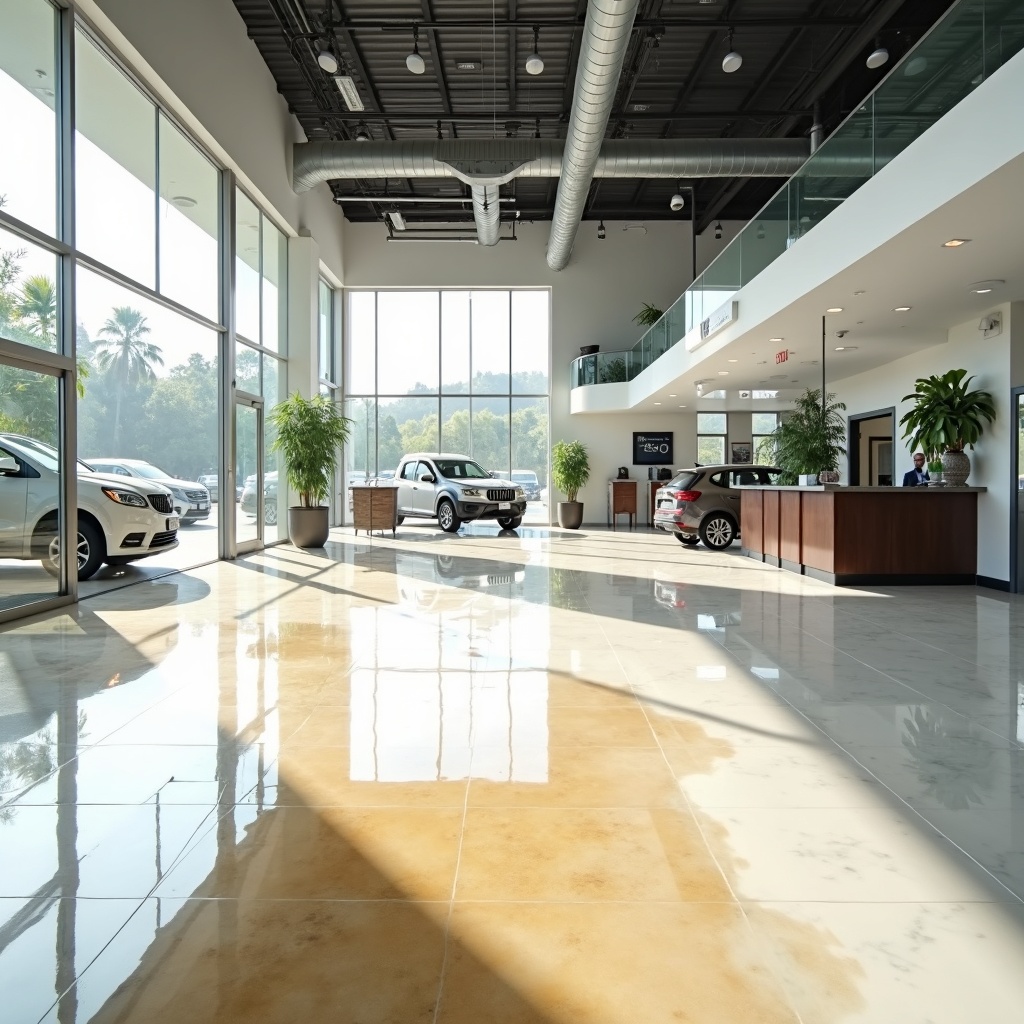
    Discover why clear epoxy floor coatings yellow in Woodland Hills showrooms and learn proven assessment, repair, and prevention strategies. UV chemistry explained with actionable solutions for retail and commercial spaces.
  • ❓ Frequently Asked Questions

    How long does it take for clear epoxy to yellow in Woodland Hills showrooms?

    Aromatic epoxy coatings can begin yellowing within 3-6 months when exposed to Woodland Hills' very high UV index, especially in showrooms with large south or west-facing windows. Aliphatic epoxy formulations with UV stabilizers may maintain clarity for 2-3 years, while properly applied polyaspartic topcoat systems can remain clear for 10+ years with appropriate maintenance.

    Can I reverse yellowing in epoxy flooring once it has occurred?

    No, yellowing is a permanent chemical change in the epoxy's molecular structure caused by UV-induced photo-oxidation. The only way to restore a clear appearance is to physically remove the yellowed layer through sanding or grinding, then apply a fresh UV-resistant coating system. Applying a topcoat over yellowed epoxy will prevent further damage but won't reverse existing discoloration.

    Why does my showroom epoxy yellow even without direct sunlight?

    Indoor lighting contributes significantly to epoxy yellowing. Fluorescent, halogen, and mercury vapor lights all emit UV radiation that breaks down epoxy's aromatic chemical bonds over time. Even indirect sunlight through windows contains enough UV energy to cause gradual yellowing. Switching to LED lighting and using UV-filtering window films can dramatically reduce this indoor yellowing process.

    Should I choose aliphatic polyurethane or polyaspartic topcoat for my Woodland Hills commercial floor?

    For high-sun exposure showrooms in Woodland Hills, polyaspartic topcoats offer superior long-term UV resistance and can maintain clarity for 10+ years. Aliphatic polyurethane provides good protection for 5-7 years and costs less, making it suitable for moderate sun exposure. Contact Five Star Epoxy & Coatings at (818) 355-3804 for a site-specific recommendation based on your showroom's exact UV exposure profile.

  • March 25th, 2026

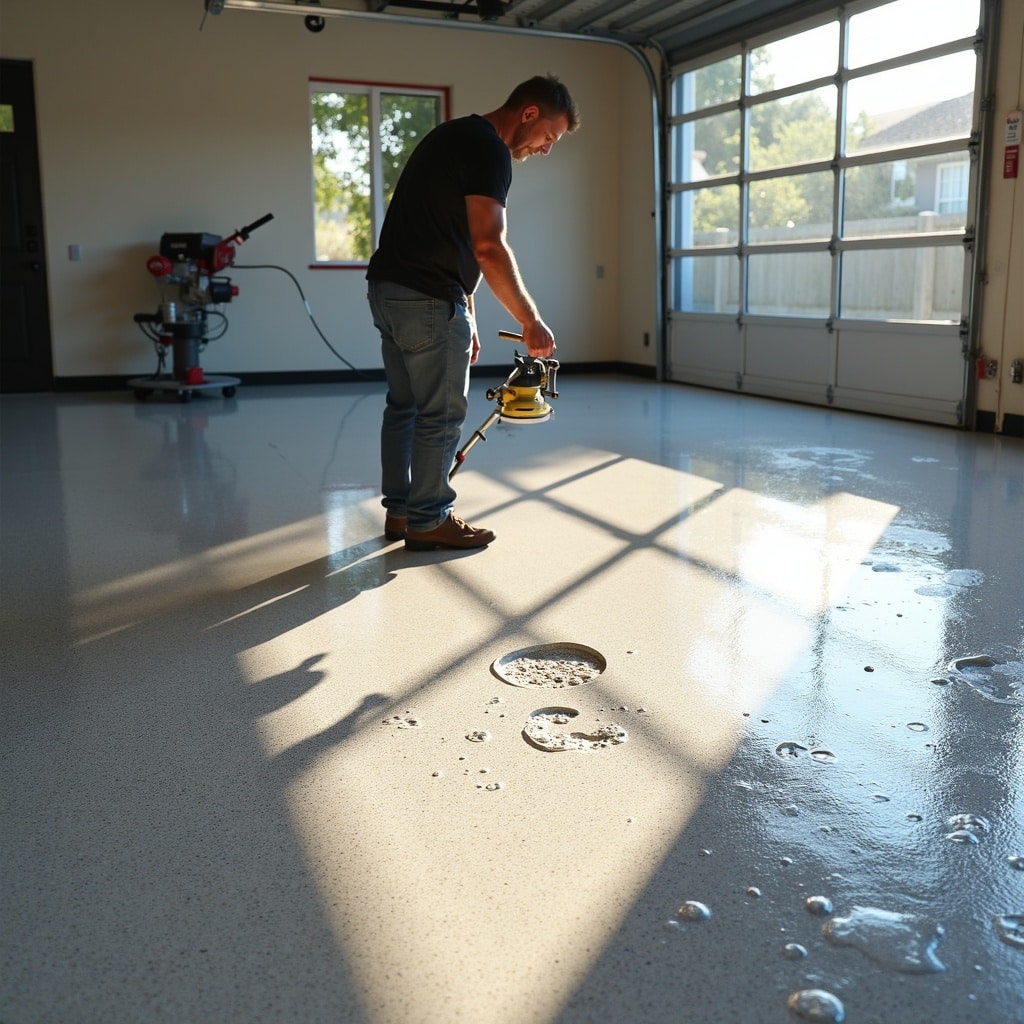
    Discover professional step-by-step methods to fix bubbles in your Woodland Hills epoxy floor coating, from identifying causes to choosing the right repair approach. Learn when DIY fixes work and when expert intervention saves time and money.

  • ❓ Frequently Asked Questions

    How much does it cost to repair bubbles in an epoxy garage floor?

    DIY spot repairs for minor bubble issues typically cost $50-150 in materials. Professional repairs for moderate problems (affecting 20-30% of the floor) range from $800-1,500 for a two-car garage, while complete coating removal and reapplication costs $2,500-4,500 depending on floor size and system selected.

    Can I fix small epoxy floor bubbles myself or should I hire a contractor?

    You can successfully repair fewer than 25 small bubbles (under 1/4 inch) yourself using an orbital sander and matching coating material. However, if bubbles cover more than 20% of your floor, show pinholes indicating active gas release, or you discover moisture issues, professional repair from contractors like Five Star Epoxy & Coatings at (818) 355-3804 is necessary.

    What causes bubbles to form in epoxy floor coating after installation?

    Bubbles typically form from outgassing (trapped air escaping from porous concrete), temperature extremes during application or curing, high humidity during installation, or moisture vapor transmission through the slab. In Woodland Hills, heat-related bubbling is common when garage temperatures exceed 100°F during summer afternoons.

    How long do epoxy floor bubble repairs last before needing redoing?

    Properly executed repairs that address the underlying cause (moisture, temperature, or substrate porosity) should last as long as the original coating — typically 5-10 years. However, repairs that only fix surface bubbles without solving root problems may fail again within 6-12 months, requiring professional intervention to correct the fundamental issue.

    🏘️ Same Topic in Nearby Cities