Should You Repair Concrete Cracks Before Applying Epoxy to Your Garage Floor?
Yes, absolutely. Epoxy coatings bond directly to concrete, and any crack—no matter how small—will telegraph through the finished surface and eventually compromise the coating’s integrity. In Porter Ranch, where soil movement and seismic activity create unique foundation stresses, proper crack repair isn’t optional prep work; it’s the difference between a garage floor that lasts 15+ years and one that fails within months. The key question isn’t whether to repair cracks, but how to assess their severity and choose the right repair method for your specific situation.
📋 In This Guide
Porter Ranch homes, particularly those in neighborhoods like The Vineyards and the hillside areas near Aliso Canyon Park, sit on expansive clay soils that shift with seasonal moisture changes. These soil dynamics create distinct crack patterns that require different repair approaches. Understanding what you’re dealing with—and when to call in structural expertise—protects both your epoxy investment and your home’s foundation integrity.
Assessing Crack Severity: What You’re Really Looking At
Not all cracks signal the same problem. Hairline cracks under 1/16 inch wide that haven’t moved in years present minimal concern. These typically result from concrete curing shrinkage and pose little structural risk. However, cracks wider than 1/4 inch, those showing vertical displacement (where one side sits higher than the other), or cracks that have widened noticeably over time indicate active foundation movement requiring immediate attention.
Walk your garage with a flashlight held at an angle—this reveals crack depth and width better than overhead lighting. Use a crack gauge (a simple plastic card with width measurements) to document dimensions. In Porter Ranch’s $946,500 median home value market, discovering a structural issue early can save tens of thousands in foundation repairs. Mark crack endpoints with tape and date them; if they extend beyond the marks within weeks, you’re seeing active movement that needs professional evaluation before any epoxy services in Porter Ranch can proceed.
Pay special attention to crack patterns. Random, isolated cracks usually stem from localized stress. Parallel cracks running the length of your garage or cracks forming stair-step patterns along walls suggest more serious foundation settlement. Corner cracks radiating from garage door openings are common stress points but rarely indicate structural problems. The pattern tells you whether you’re dealing with surface-level issues or deeper foundation concerns that require structural engineers before any cosmetic work begins.
Repair Methods for Non-Structural Cracks
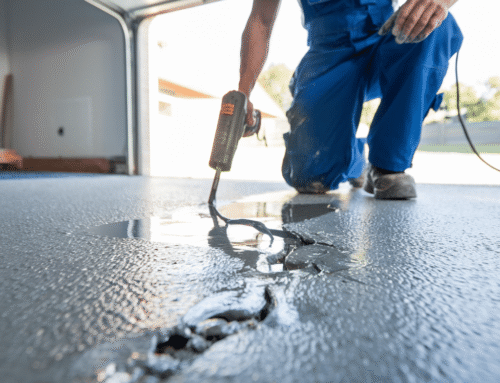
For stable cracks between 1/16 and 1/4 inch wide, epoxy injection provides the strongest bond. This method uses low-viscosity epoxy pumped into the crack under pressure, filling the void completely and actually strengthening the concrete. The epoxy bonds to both sides of the crack, preventing future movement. Professional Five Star Epoxy & Coatings technicians drill injection ports every 8-12 inches along the crack, seal the surface, then inject epoxy from the bottom up until it flows from the next port. This ensures complete fill without air pockets.
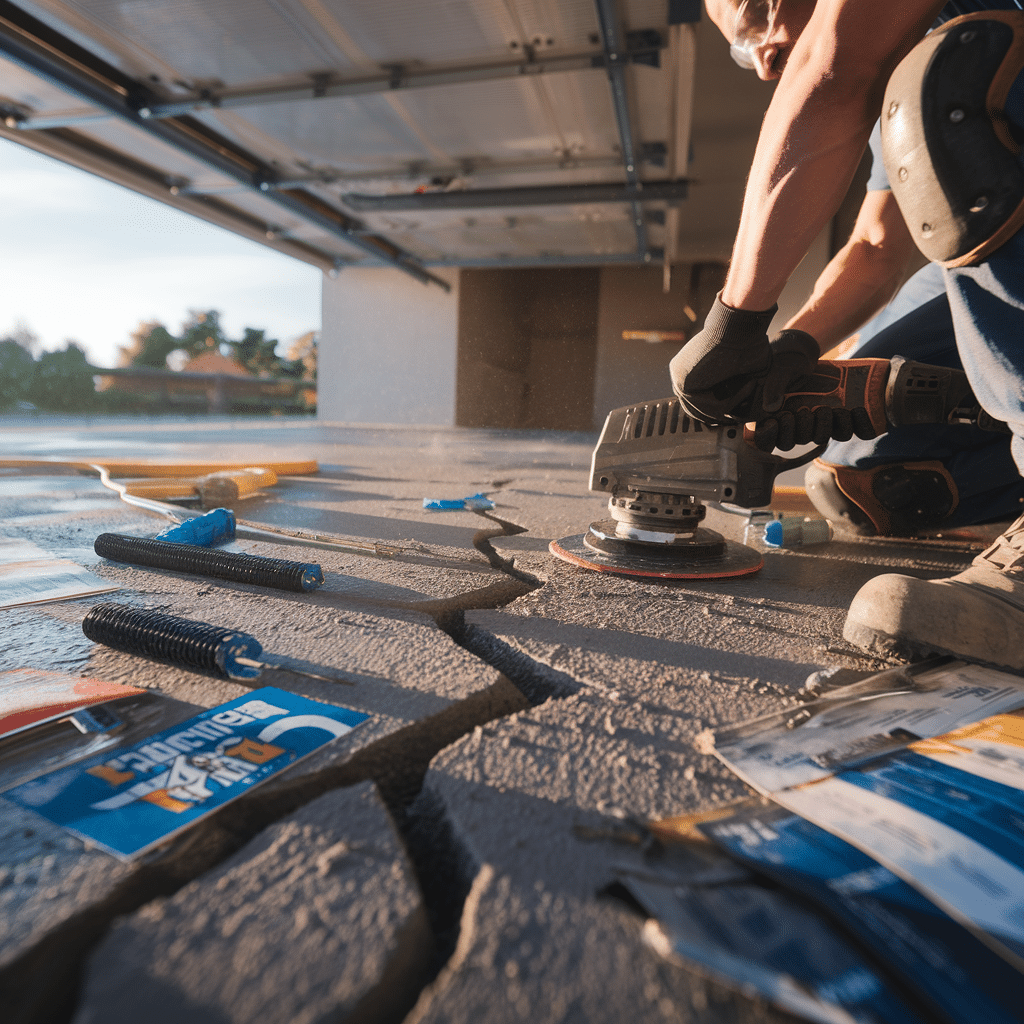
Routing and sealing works well for wider cracks (1/4 to 1/2 inch) that have stopped moving. This technique uses a diamond blade to cut a reservoir along the crack—typically 1/4 inch deep and 1/4 inch wide—creating a clean groove for the repair material. After thoroughly cleaning the routed channel with compressed air and wire brushing, we fill it with flexible polyurea or polyurethane sealant that accommodates minor seasonal movement without cracking. The routed channel provides significantly more surface area for adhesion than simply filling the original crack.
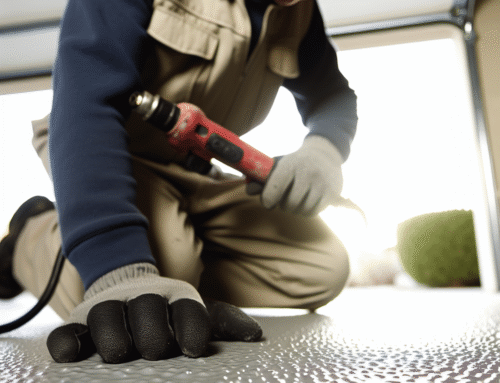
For cracks showing minor vertical displacement (under 1/8 inch difference in height), grinding becomes necessary before other repairs. We use aggressive diamond tooling to level the high side, creating a smooth transition. This prevents the crack edge from creating a visible line through your finished epoxy coating. Combined with routing and sealing, this approach handles most of the crack patterns we encounter in Porter Ranch garages. The preparation work might seem extensive, but it’s far less costly than recoating a failed floor in two years.
When Cracks Require Structural Intervention
Cracks wider than 1/2 inch, those showing continuous growth, or displacement exceeding 1/4 inch vertically signal foundation issues beyond epoxy repair scope. These require structural engineers to diagnose the underlying cause—often related to soil erosion, inadequate compaction during construction, or water intrusion undermining the foundation. In Porter Ranch, particularly in newer developments built on cut-and-fill lots, differential settlement creates these larger cracks as different soil densities settle at varying rates.
Stitching—installing steel reinforcement across cracks—becomes necessary for structural repairs. This involves cutting slots across the crack at angles, installing rebar or carbon fiber staples, and filling with high-strength epoxy. The reinforcement prevents the crack from widening further. However, this work requires engineering specifications and is typically part of a larger foundation stabilization project. Once structural repairs are complete and the engineer confirms the foundation has stabilized, epoxy coating becomes viable—but not before.
Warning signs that demand structural evaluation before any epoxy work in Northridge or Porter Ranch include: doors or windows that suddenly stick or won’t close properly, new cracks appearing in interior walls, gaps between walls and ceilings, or sloping floors. These symptoms, combined with garage floor cracks, indicate your home’s foundation is actively moving. Applying epoxy over these cracks without addressing the root cause wastes money and delays necessary repairs. At (818) 355-3804, we’re honest about when crack patterns exceed our scope and require structural assessment first.
Surface Preparation After Crack Repairs
Crack repairs must cure completely and achieve full strength before epoxy application. Epoxy injection repairs typically cure within 24-48 hours at Porter Ranch’s typical temperatures, though cold snaps can extend this. Polyurethane sealants need 3-7 days depending on humidity and temperature. Rushing this step compromises the repair’s strength and allows the crack to reopen under the epoxy coating.
After curing, the repair area needs aggressive surface preparation to match the surrounding concrete profile. Epoxy repairs create glass-smooth surfaces that won’t bond well to the topcoat without mechanical abrasion. We diamond-grind the entire floor, paying extra attention to repair areas to remove any surface gloss and expose aggregate. This creates the open-pore structure necessary for proper epoxy penetration and adhesion. Testing with the water drop method—where drops should be absorbed within 30 seconds—confirms the surface is ready.
For repairs using polyurethane sealants, we mask the flexible joint before applying rigid epoxy coating. The sealant needs to remain slightly flexible to accommodate seasonal movement, while the surrounding epoxy provides a hard, durable surface. This requires precision application, but it’s the only way to maintain both the crack repair’s integrity and the epoxy coating’s performance. The goal is a floor system where each component performs its specific function without compromising the others.
Testing Readiness for Epoxy Application
Before committing to epoxy coating over repaired cracks, several tests confirm the surface is ready. The moisture meter test checks for elevated moisture levels that can cause epoxy delamination. Concrete should read below 4% moisture content for most epoxy systems. In Porter Ranch, where summer heat drives moisture deep into concrete and winter rains can increase surface moisture, timing matters. We typically see optimal conditions in late spring and early fall.
The scratch test evaluates repair strength. Using a sharp tool, we attempt to scratch or flake the repair material. Properly cured epoxy repairs should be harder than the surrounding concrete and resist scratching. If the repair material flakes or powders, it hasn’t cured adequately. The bond test involves striking the repair area with a hammer handle—a solid, uniform sound indicates good adhesion, while a hollow sound suggests delamination requiring redo.
Pull-off testing, though more technical, provides quantitative data on adhesion strength. This involves gluing a metal dolly to the surface, then using a hydraulic tester to measure the force required to pull it free. Properly prepared concrete with cured repairs should exceed 250 psi in pull-off strength. We use this testing on larger commercial projects or when dealing with questionable existing repairs. For residential epoxy work in Granada Hills and Porter Ranch, visual inspection and the simpler tests usually suffice, but the pull-off test removes any guesswork on critical projects.
Understanding how Porter Ranch’s unique heat patterns change garage floor epoxy prep helps you time both crack repairs and coating application for optimal results. Temperature affects cure rates, working time, and final bond strength.
Protecting Your Investment with Proper Crack Management
Porter Ranch homeowners invest significantly in their properties, and a professionally installed epoxy floor represents both aesthetic enhancement and functional improvement worth protecting. Proper crack assessment and repair forms the foundation—literally—of that protection. Cutting corners on crack repair to save a few hundred dollars often results in coating failure requiring complete removal and reinstallation, costing thousands more than doing it right initially.
At Five Star Epoxy & Coatings, we assess every crack before proposing solutions. Sometimes that means recommending structural evaluation before we proceed with coating work. While that might delay your project, it protects you from investing in cosmetic improvements over unstable foundations. Our reputation depends on installations that perform for decades, not coatings that fail after the warranty expires. Call us at (818) 355-3804 for a thorough assessment of your garage floor’s condition. We’ll identify crack patterns, recommend appropriate repairs, and provide honest timelines for when your floor will be ready for epoxy coating. Our comprehensive services ensure every step—from crack repair through final coating—meets professional standards that protect your investment and enhance your home’s value.