Why Granada Hills’ Microclimate Position Requires Different Summer Epoxy Preparation
Granada Hills sits at a unique elevation transition zone where the San Fernando Valley begins climbing toward the Santa Susana Mountains, creating thermal patterns that differ significantly from neighboring areas like Northridge or Woodland Hills. The foothills of Knollwood and Granada Hills North experience earlier morning cooling than the valley floor, while Old Granada Hills retains heat longer into evening hours. This elevation variance—sometimes 200-300 feet within a few miles—means preparation protocols for epoxy services in Granada Hills must account for microclimates that change dramatically within the same ZIP code. Summer temperatures routinely reach 95-102°F by midday, but the real challenge lies in how concrete absorbs and releases this heat based on your specific neighborhood position. A garage in Granada Hills South near the Northridge border behaves entirely differently from one in the upper elevations near O’Melveny Park. Professional preparation accounts for these distinctions rather than applying generic valley-wide advice.
📋 In This Guide
Concrete Temperature Mapping Before Any Epoxy Product Touches Your Floor
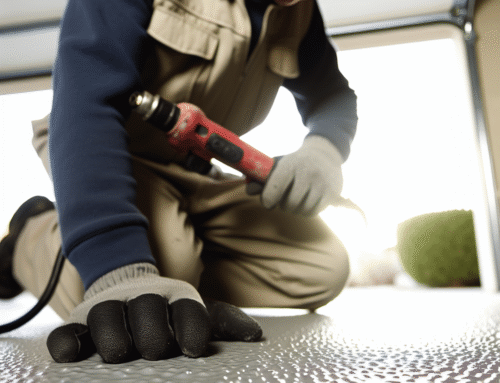
The most overlooked preparation step in Granada Hills summer installations is measuring actual concrete surface temperature, not just ambient air temperature. Concrete in direct sun exposure can reach 115-125°F even when your garage thermometer reads 90°F. Epoxy chemistry becomes unpredictable above 85°F substrate temperature—the resin kicks too fast, reducing penetration and creating surface-level bonding that fails within months. Before scheduling installation, map your garage floor’s thermal behavior over 2-3 days. Record substrate temperatures at 6 AM, 10 AM, and 4 PM using an infrared thermometer in multiple locations. Floors near roll-up doors heat differently than those deeper in the garage. South-facing garages in Granada Hills receive more intense solar gain than north-facing ones. This data determines whether your floor qualifies for summer application or whether waiting until late September makes more sense. For homes built in the 1970s-80s throughout Granada Hills, concrete slabs often lack proper vapor barriers beneath them, compounding heat-driven moisture issues. Understanding your specific floor’s thermal profile prevents the most common summer installation failures: adhesion loss and epoxy floor bubbles that plague rushed summer projects.
Humidity and Moisture Vapor Transmission in 5% Relative Humidity Conditions
Granada Hills summers bring paradoxically challenging moisture conditions—extremely low relative humidity (often 5-15%) combined with heat-accelerated vapor transmission from concrete itself. While dry air seems ideal for epoxy, the reality is more complex. Hot concrete releases trapped moisture vapor faster than cool concrete, and many Granada Hills homes built before 1985 have slabs poured directly on grade without moisture barriers. The calcium hydroxide test—applying a plastic sheet taped to the floor overnight and checking for condensation—becomes unreliable in extreme heat because surface drying happens too quickly to reveal deeper moisture issues. Instead, professional preparation uses calcium chloride moisture vapor emission rate (MVER) testing, which measures grams of moisture per square meter over 72 hours. Acceptable MVER for epoxy is typically below 3 pounds per 1,000 square feet per 24 hours. Granada Hills summer heat can push this to 5-7 pounds in older slabs, requiring moisture mitigation primers before topcoats. Homes near Mission San Fernando built in the 1960s-70s frequently show elevated moisture readings despite the arid climate. The preparation phase must identify these conditions before any epoxy mixing begins, or the entire installation fails within weeks as moisture pushes through the coating from below.
Surface Profiling When Standard Diamond Grinding Creates Flash Heat
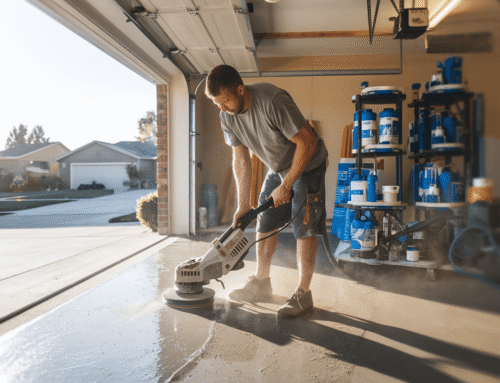
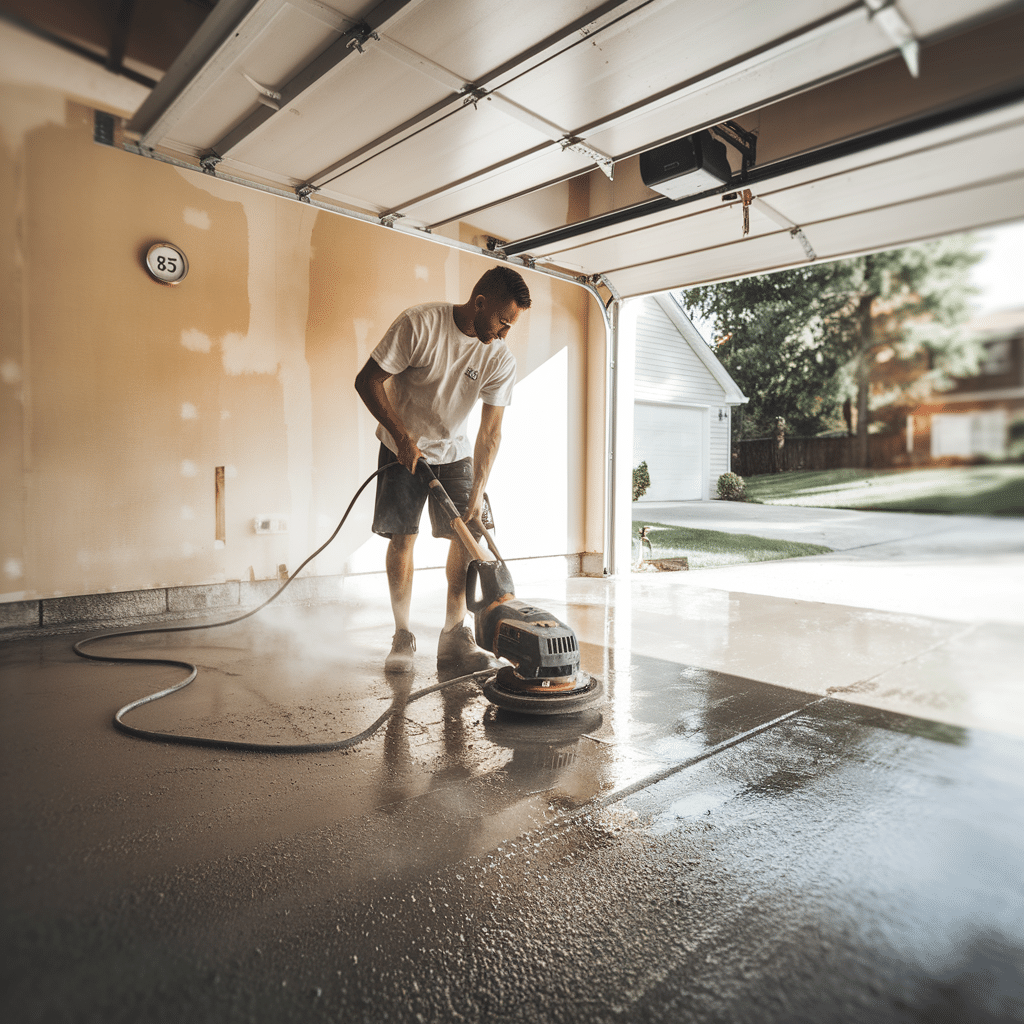
Proper epoxy adhesion requires concrete surface profiling—creating microscopic peaks and valleys for mechanical bonding—but standard diamond grinding generates friction heat that can push surface temperatures beyond safe application ranges. In Granada Hills summer conditions, grinding a 400-square-foot garage floor can elevate substrate temperature by 15-20°F within minutes. The solution involves strategic timing and technique adjustments specific to valley heat. Grinding must occur during the coolest part of the day (typically 5-7 AM in Granada Hills) when concrete still holds overnight cooling. Some professional garage floor coating installers pre-cool the slab by running fans overnight, then complete grinding immediately after sunrise before thermal gain begins. The critical metric is returning to baseline temperature before primer application—waiting 2-3 hours after grinding for the concrete to cool and stabilize. This waiting period gets overlooked in rushed summer jobs, resulting in primers that flash-cure before proper penetration. Granada Hills’ low humidity accelerates primer evaporation, compounding the problem. Preparation protocols must build in this cooling window, which means a true professional installation in summer takes longer than the advertised timeline suggests.
Contamination Assessment in Dust-Storm and Santa Ana Conditions
Granada Hills experiences seasonal Santa Ana wind events that drive fine particulate through garage spaces, creating adhesion barriers invisible to casual inspection. Summer preparation must address contamination beyond the obvious oil stains and tire marks. Concrete naturally accumulates a layer of carbonation and efflorescence—calcium carbonate that migrates to the surface—which intensifies in hot, dry conditions. This powdery layer prevents proper epoxy penetration even on floors that appear clean. Professional preparation includes acid etching or mechanical profiling to remove this contamination layer entirely. The test is simple: run your hand across the floor after initial cleaning—if you pick up white or tan dust, the surface isn’t ready for epoxy. Granada Hills’ position at the base of the Santa Susanas means wind-driven dust accumulation happens faster than in more sheltered valley locations. The week before installation, keep garage doors closed as much as possible and sweep daily. Immediately before primer application, the floor requires vacuum cleaning with HEPA filtration, not just sweeping. Airborne particles settling on wet primer create permanent adhesion failures. These preparation details separate successful summer installations from callbacks six months later when the coating starts lifting at the edges.
Schedule Your Granada Hills Garage Floor Epoxy With Valley Heat Expertise
Five Star Epoxy & Coatings has refined summer installation protocols specifically for Granada Hills’ unique thermal conditions through hundreds of local projects. We adjust preparation timing, product selection, and curing protocols based on your exact neighborhood elevation and exposure. A proper summer installation requires honest assessment—sometimes we recommend waiting until late September when conditions improve rather than forcing a marginal summer installation window. Call (818) 355-3804 for a free consultation that includes thermal assessment of your specific garage conditions. Our preparation checklist accounts for Granada Hills’ microclimate variations, ensuring your investment performs as expected regardless of installation season.
❓ Frequently Asked Questions
What concrete surface temperature is too hot for epoxy application in Granada Hills?
Concrete surface temperatures above 85°F create adhesion problems for epoxy coatings. Granada Hills garages in direct sun can reach 115-125°F by midday during summer, requiring early morning application windows when substrate temperatures drop to 70-80°F. Professional installers measure actual concrete temperature with infrared thermometers, not just air temperature, before beginning any epoxy work.
How does Granada Hills' elevation affect garage floor epoxy preparation compared to other valley cities?
Granada Hills spans a 200-300 foot elevation range from valley floor to foothills, creating distinct microclimates within the same city. Upper elevation areas near Knollwood cool faster in mornings and evenings, offering longer application windows than lower Granada Hills South locations. This elevation variation requires neighborhood-specific preparation timing rather than generic valley-wide protocols.
Should I wait until fall to install garage floor epoxy in Granada Hills or can summer work?
Summer installations can succeed in Granada Hills with proper preparation—concrete temperature mapping, early morning application windows (5-8 AM), and moisture vapor testing adjusted for heat conditions. However, fall installations from late September through November offer more forgiving conditions with cooler concrete and longer work windows. Contact Five Star Epoxy & Coatings at (818) 355-3804 for honest assessment of whether your specific garage qualifies for summer installation or benefits from fall scheduling.
Why does grinding garage floors create problems during Granada Hills summer heat?
Diamond grinding generates friction heat that can raise concrete surface temperature 15-20°F within minutes, pushing already-warm summer slabs beyond safe epoxy application ranges. Professional preparation requires grinding during coolest hours (5-7 AM) then waiting 2-3 hours for substrate temperature to stabilize before applying primers. Skipping this cooling period causes primers to flash-cure before proper penetration, leading to adhesion failure.
📖 More Tips for Granada Hills
-
 Granada Hills Homeowner's Guide: Diagnosing and Fixing Epoxy Floor Bubbles
Discover why bubbles form in epoxy floors and how Granada Hills homeowners can fix them. From identifying surface…