Why Woodland Hills Homeowners Are Pricing Metallic Epoxy Right Now
If you’re researching metallic epoxy flooring costs in early 2025, you’re not alone. Woodland Hills homeowners in Carlton Terrace and Warner Center are upgrading interiors at record rates as property values push toward the $925,000 median. With mortgage rates stabilizing and renovation budgets loosening, this is the window where investing in dramatic, high-impact flooring makes financial sense — before material costs climb again. Metallic epoxy delivers the visual impact of luxury tile or polished concrete at a fraction of the installation time, which matters when you’re balancing home value improvements against carrying costs. This guide breaks down real numbers for metallic epoxy projects in the San Fernando Valley market, what drives price variations, and how to budget smartly for spaces from garages to living rooms.
📋 In This Guide
Base Price Ranges for Metallic Epoxy in the Valley Market
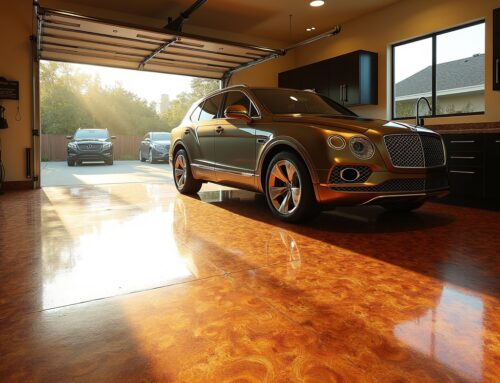
Metallic epoxy flooring in Woodland Hills typically runs $8 to $15 per square foot for professional installation, with most residential projects landing between $10 and $12 per square foot. That price includes surface preparation, primer, metallic base coat, artistic manipulation to create the signature swirl patterns, and a protective topcoat. A standard two-car garage (400 square feet) averages $4,000 to $4,800, while a basement recreation room (600 square feet) typically costs $6,000 to $7,200. Living areas requiring more intricate patterns or multiple metallic pigment blends can push toward the upper range. These figures reflect current San Fernando Valley labor rates and material costs — significantly higher than DIY kit pricing ($3-5 per square foot) but justified by the technical skill required to achieve the three-dimensional depth metallic systems are known for. When you work with epoxy services in Woodland Hills, you’re paying for expertise that prevents costly mistakes like premature curing or uneven metallic distribution.
What Drives Price Variations in Metallic Epoxy Projects
Room size inversely affects per-square-foot costs — larger spaces benefit from economies of scale. A 200-square-foot bathroom might cost $14 per square foot due to setup time and minimum project fees, while a 1,000-square-foot open-concept space could drop to $9 per square foot. Design complexity matters tremendously: a single metallic pigment with basic wave patterns costs less than multi-color blends with custom swirls, cells, or specific artistic effects. Base concrete condition is the hidden cost variable most homeowners underestimate. If your Vista de Oro garage slab has significant cracking, oil staining, or unevenness, expect $1-3 per square foot in additional prep work — diamond grinding, crack filling, and moisture barrier application. The metallic pigment itself ranges from $30 to $80 per pound depending on the effect (standard metallics versus premium pearl or interference pigments), with most 400-square-foot projects requiring 2-4 pounds. Climate timing affects cost indirectly: scheduling installation during optimal temperature windows prevents application issues that create expensive callbacks.
Metallic Versus Standard Epoxy: The Real Cost Difference
Standard solid-color or flake epoxy flooring runs $5 to $8 per square foot in Woodland Hills — roughly 40-50% less than metallic systems. The price gap reflects material costs (metallic pigments are significantly more expensive than color chips) and labor intensity (creating flowing metallic patterns requires artistic manipulation during the working window, while flake systems are more straightforward). For a 400-square-foot garage, you might pay $2,400 for a quality flake system versus $4,400 for metallic. However, the visual impact difference is substantial: metallic epoxy creates a three-dimensional, liquid-metal appearance that looks dramatically different from every angle, commanding attention in ways standard epoxy doesn’t. In Warner Center homes where living spaces flow into view from entryways, that distinction affects perceived home value. The cost premium also buys uniqueness — no two metallic floors look identical due to the organic flow patterns created during installation, whereas flake floors with the same chip blend look similar from home to home.
Labor and Installation Costs in the San Fernando Valley
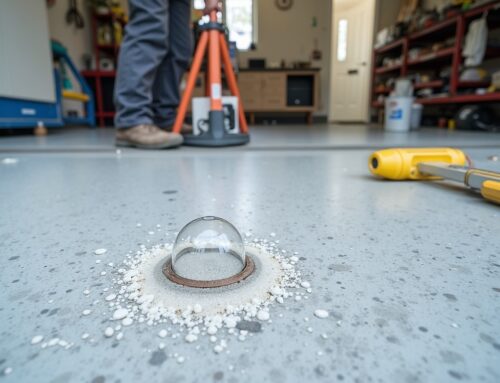
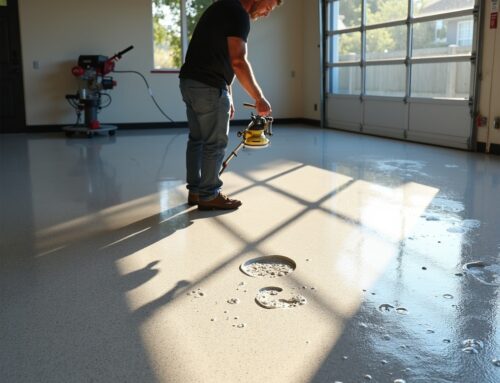
Labor accounts for 50-65% of total metallic epoxy costs in Woodland Hills, reflecting the specialized skill required. Experienced installers charge $40-70 per hour in the Valley market, with most residential projects requiring 16-24 labor hours for a 400-square-foot space when you include surface prep (8-10 hours), primer application (2-3 hours), metallic base and manipulation (4-6 hours), and topcoat layers (2-4 hours). Preparation is where professionals earn their fee: diamond grinding to open concrete pores, acid etching or mechanical profiling to ensure adhesion, repairing cracks with flexible fillers, and applying moisture barriers where needed. The metallic application window is unforgiving — installers have 20-40 minutes to pour, spread, and manipulate the metallic coating before it begins setting, requiring both speed and precision. Topcoat selection affects final cost: basic polyaspartic clear coats add $1-2 per square foot, while high-build polyurethane systems with enhanced UV resistance cost $2-3 per square foot. Valley contractors factor in travel time for properties in hillside neighborhoods like Woodland Hills south of Ventura Boulevard, where access and parking affect setup efficiency.
Room-by-Room Cost Breakdowns for Typical Projects
Garage installations represent the most common metallic epoxy application in Woodland Hills. A standard 400-square-foot two-car garage with minimal cracking and good drainage runs $4,000-4,800 including all prep, materials, and labor. Add $600-1,000 if you need crack repair beyond hairline fissures, or $800-1,200 for extensive oil stain remediation from years of vehicle storage. Basement spaces cost similarly per square foot but often require moisture mitigation — homes in areas with higher water tables may need vapor barriers ($1-2 per square foot) or moisture-resistant primers ($0.75-1.50 per square foot). Kitchen or living area applications enter premium territory: a 300-square-foot open kitchen floor with intricate metallic patterns and furniture-grade finish quality typically costs $4,500-5,400, reflecting the higher stakes of visible living spaces where imperfections show. Bathroom installations carry minimum project fees ($1,800-2,200 for a 150-square-foot space) due to detail work around fixtures, careful waterproofing requirements, and the precision needed in small spaces. Entry foyers and hallways often cost more per square foot ($12-15) because they’re too small to offset setup costs but require the same preparation rigor as larger spaces.
Cost Considerations for Design Complexity and Customization
Single-color metallic applications fall at the lower end of the price spectrum — one metallic pigment in a standard silver, gold, or copper tone applied with basic wave patterns. Multi-color blends add $1-2 per square foot as installers coordinate multiple pigment pours and manipulate their interaction points to create specific color transitions. Custom artistic effects push costs higher: creating the appearance of moving water, geological strata, or specific abstract patterns requires advanced technique and extended working time, adding $2-4 per square foot. Some Woodland Hills homeowners request color matching to existing décor or specific metallic finishes (rose gold, gunmetal, bronze) that require custom pigment blending — expect $200-400 in material surcharges for custom color development. Border designs, geometric patterns, or incorporating logos (popular in home gyms and garages) add $500-1,500 depending on complexity. The topcoat finish affects perceived luxury: standard clear coats provide protection but a semi-gloss finish, while high-gloss automotive-grade finishes that create mirror-like depth cost an additional $1.50-2.50 per square foot. Working with Five Star Epoxy & Coatings allows you to see color samples and pattern examples that help visualize what design elements justify their cost premium.
Long-Term Value and Return on Investment
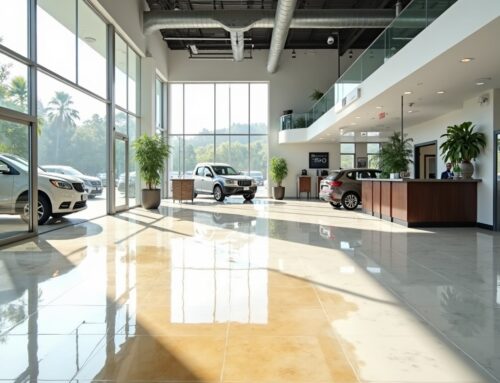
Metallic epoxy flooring delivers measurable ROI in the Woodland Hills market where median home values approach $1 million. A professionally installed metallic garage floor adds $3,000-5,000 to perceived home value during resale — not dollar-for-dollar cost recovery, but a meaningful premium over dated or stained concrete. The ROI comes from multiple sources: first, longevity — properly installed metallic epoxy lasts 15-20 years with minimal maintenance, amortizing the initial cost to $200-320 annually. Second, reduced maintenance costs compared to tile, hardwood, or carpet — metallic epoxy requires only occasional mopping and doesn’t need refinishing, resealing, or replacement during its lifespan. Third, energy efficiency from reflective metallic finishes that reduce lighting needs in garage and basement spaces, saving an estimated $40-80 annually on electricity. Fourth, lifestyle value that’s harder to quantify but real: a dramatic metallic floor transforms spaces you actually use daily, making garages feel less utilitarian and basements more like finished living areas. In Carlton Terrace homes where open floor plans showcase flooring as a design element, metallic epoxy creates visual continuity that buyers notice. The cost-to-impact ratio beats many home improvements — it’s less expensive than kitchen cabinets but creates similar emotional response in buyers.
How to Budget Smart and Avoid Cost Surprises
Start by getting a professional assessment of your concrete condition before budgeting. Many Woodland Hills homeowners underestimate prep costs because they don’t recognize issues like delamination, subsurface moisture, or structural cracks that affect installation. Schedule consultations with contractors who provide detailed line-item quotes — avoid estimates that bundle everything into a single per-square-foot price without breaking out prep work, materials, labor, and topcoat options. Ask specifically about what’s included: does the quote cover moving furniture, protecting adjacent areas, crack repair up to a certain threshold, and cleanup? Clarify the number of topcoat layers (two is standard for durability, but some quotes assume one). Confirm the metallic pigment brand and quantity — premium pigments produce more dramatic effects but cost more, and some contractors substitute standard epoxy with metallic additives that don’t achieve the same depth. Get clarity on cure times and space access — most metallic epoxy requires 24 hours before light foot traffic and 72 hours before full use, which might require temporary living adjustments. Budget an additional 10-15% contingency for unexpected prep work, particularly in homes over 20 years old where concrete may have degraded. Consider scheduling during moderate temperature windows (late spring or early fall) when curing conditions are ideal and contractors have more schedule flexibility, potentially offering better rates. If you’re uncertain about any aspect of pricing or what quality level to expect, call (818) 355-3804 to discuss your specific project parameters and get transparent cost breakdowns.
Understanding metallic epoxy flooring costs in the Woodland Hills market means looking beyond simple per-square-foot figures to the factors that drive real project pricing — room conditions, design choices, contractor expertise, and long-term value. Whether you’re upgrading a garage, transforming a basement, or creating a showpiece living area, accurate budgeting prevents surprises and ensures the investment delivers the dramatic visual impact and durability that makes metallic epoxy worth its premium over standard coatings.