Will Applying a UV-Resistant Topcoat Actually Prevent Yellowing in My Existing Clear Epoxy?
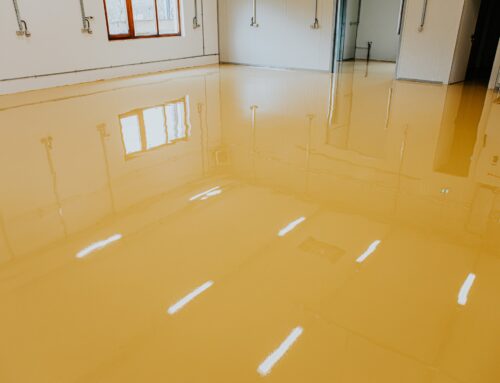
This is the most common misconception about yellowing epoxy floor coating in Woodland Hills showrooms: many business owners believe that applying a UV-resistant topcoat over already-yellowed epoxy will reverse the discoloration. It won’t. Yellowing is a permanent chemical change, not a surface defect, and once epoxy turns yellow, it cannot be reversed. However, a UV-stable topcoat can absolutely prevent further damage and is essential for protecting freshly installed or newly restored epoxy flooring.
📋 In This Guide
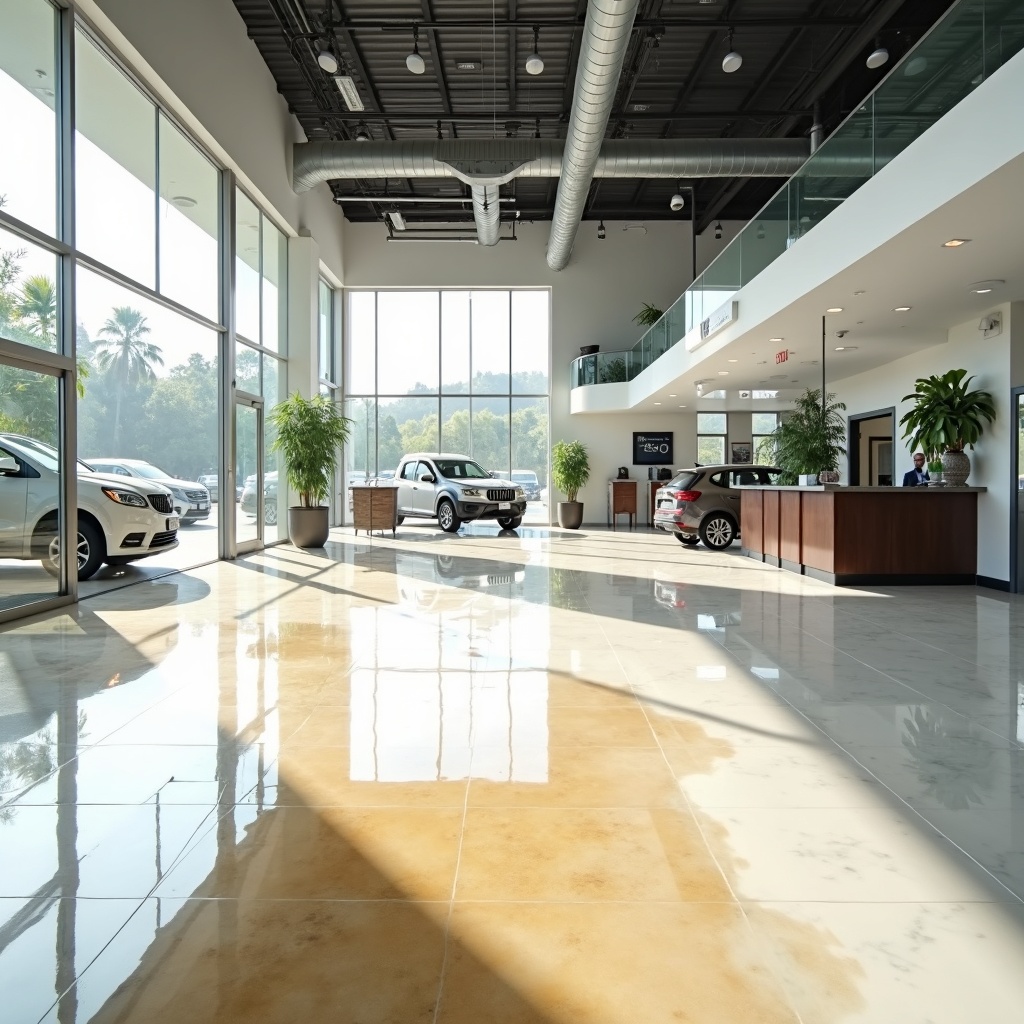
Woodland Hills experiences very high UV index forecasts, creating an aggressive environment for clear epoxy coatings commonly used in retail showrooms, galleries, and commercial spaces throughout Warner Center and the surrounding business districts. The misconception that a simple topcoat will “fix” yellowing leads to wasted money and continued disappointment. Understanding the actual chemistry behind epoxy discoloration is the first step toward making informed repair decisions.
When you’re facing a yellowed clear epoxy floor coating in your Woodland Hills showroom, the reality is straightforward: the only way to remove the yellow is to physically sand down and remove the affected top layer of epoxy, then apply a protective system designed to prevent recurrence. This article answers the key questions business owners ask when confronting this frustrating problem, providing technical solutions backed by chemistry and climate-specific recommendations for our region.
Why Does Clear Epoxy Coating Yellow So Quickly in Woodland Hills Showrooms?
Clear epoxy coatings yellow because of a photochemical process called photo-oxidation. Epoxy’s polymer network is sensitive to ultraviolet (UV) radiation, and over time, UV light can disrupt the polymer structure, causing molecular bonds to weaken and reflect yellow wavelengths instead of clear light. This happens whether your showroom floor receives direct sunlight through storefront windows or indirect UV exposure from artificial lighting.
The chemistry is specific: aromatic epoxy resins contain benzene rings that are sensitive to UV attack and are common, affordable, and used widely but have poor UV stability. When UV rays strike these aromatic compounds, yellowing is a result of radical oxidation reaction which forms chromophores such as carbonyl groups, double bonds and conjugated structures. These chromophores absorb specific wavelengths of visible light, making the coating appear yellow or amber.
Woodland Hills’ climate accelerates this process dramatically. Heat and oxygen accelerate the yellowing process, making sunny or high-temperature environments more vulnerable. Showroom environments with large glass facades facing south or west—common in Westfield Topanga & The Village retail spaces—create ideal conditions for rapid epoxy degradation. Even if aromatic epoxy looks clear when first applied, it will start yellowing within months if exposed to UV light.
Does Indoor Lighting Contribute to Yellowing?
Yes, significantly. Even indoor fluorescent lighting can cause slow yellowing of epoxy over time. Industrial facilities often use high-intensity lamps like halogen or mercury vapor lights, both of which emit UV radiation, and continuous exposure to these sources can accelerate discoloration even in enclosed areas. Showrooms with track lighting, halogen spots, or older fluorescent systems experience yellowing in concentrated patterns directly beneath fixtures.
How Can I Inspect My Showroom Floor to Assess Yellowing Severity?
Before deciding on a repair strategy, you need to assess how deep the yellowing penetrates. Yellowing is not uniform—it typically affects the top layer most severely, with diminishing intensity at depth. Start by examining your floor under consistent natural lighting. Yellowing rarely happens suddenly; the process begins subtly and gradually becomes noticeable over time.
Look for these diagnostic indicators:
- Color variation by exposure zone: Compare areas near windows or skylights to interior sections away from natural light. Significant differences indicate UV-driven degradation rather than contamination.
- Uneven yellowing patterns: Epoxy coating under high-intensity lighting may show uneven yellow patches directly beneath fixtures. This confirms that light exposure, not chemical contamination, is the cause.
- Surface texture changes: Over time, the surface may become more brittle or less flexible, particularly if no UV stabilizers were included in the formulation. Run your hand across severely yellowed sections—if the surface feels rough, chalky, or has lost its gloss, you’re seeing advanced photodegradation.
- Depth assessment: If you have access to a small inconspicuous area, lightly sand a small test spot with 120-grit sandpaper. If fresh, clear epoxy appears within 1-2 mm of sanding, the yellowing is superficial and removal is practical. If yellow persists deep into the coating, a full system replacement may be more cost-effective.
Document your findings with photos taken at the same time of day to track progression. This baseline will help professionals from epoxy flooring services in Woodland Hills provide accurate estimates for remediation.
What Are My Options: DIY Solutions vs. Professional Restoration?
You have three paths forward when dealing with yellowed clear epoxy in your Woodland Hills showroom: superficial removal and recoating, complete system replacement, or preventive protection if yellowing has just begun.
DIY Superficial Removal and Recoating
If yellowing is limited to the top 1-2 mm and your floor is otherwise in good condition, you can attempt removal yourself. Sand down the affected top layer of epoxy to remove the yellow, then once the layer is sanded smooth and clean, apply a new, fresh, clear topcoat of a UV-stable resin or, preferably, a polyurethane/polyaspartic topcoat to prevent rapid recurrence.
You’ll need a floor buffer or orbital sander with 80-120 grit sandpaper, proper ventilation, and dust collection equipment. Work systematically in overlapping passes until you reach clear epoxy. This approach works for small showrooms (under 1,000 square feet) with minor to moderate yellowing. The downside: it’s physically demanding, creates significant dust despite collection systems, and requires the space to be closed for 1-2 days for sanding and recoating.
Professional Complete System Replacement
When yellowing has penetrated deeply, when the existing coating shows chalking or brittleness, or when you’re dealing with a large commercial space, professional replacement is more practical. A qualified commercial epoxy flooring company will mechanically remove the existing coating down to the concrete substrate, address any underlying concrete issues, and install a new system specifically formulated for UV resistance.
Professional teams use diamond grinding equipment that removes coatings uniformly without damaging the concrete, prepare the surface to proper profile standards, and apply commercial-grade systems with proper cure schedules. The investment is higher, but the result is a floor engineered to resist yellowing for years rather than months. For Warner Center office complexes or large retail showrooms, this approach minimizes business disruption through efficient execution and provides warranty protection.
Preventive Protection for Early-Stage Yellowing
If your floor shows only the faintest amber tint—noticeable only in direct comparison to a white reference—you may be able to apply a protective topcoat without removal. You can apply a UV-resistant topcoat to prevent further discoloration. This won’t eliminate the existing slight yellowing, but it arrests the process before it becomes visually objectionable.
This approach works only when yellowing is genuinely minimal. Clean the floor thoroughly, lightly abrade the surface with a fine abrasive pad to promote adhesion, and apply an aliphatic polyurethane or polyaspartic topcoat. The team at Five Star Epoxy & Coatings can assess whether your floor qualifies for this less invasive option by calling (818) 355-3804.
Which UV-Resistant Coating Systems Work Best for Woodland Hills Showrooms?
Not all “UV-resistant” coatings perform equally. The chemistry determines long-term success, and understanding the difference between coating types prevents repeat failures.
| Coating Type | UV Resistance | Best Use Case | Longevity in Woodland Hills Sun |
|---|---|---|---|
| Aromatic Epoxy | Poor—yellows in 3-6 months | Back-of-house areas with no windows | Not recommended for showrooms |
| Aliphatic Epoxy | Moderate—significantly better than aromatic | Interior showrooms with indirect light | 2-3 years before noticeable yellowing |
| Aliphatic Polyurethane Topcoat | Good—blocks most UV radiation | Showrooms with moderate sun exposure | 5-7 years with maintained appearance |
| Polyaspartic Topcoat | Excellent—superior UV blocking | High-sun exposure retail floors | 10+ years with proper maintenance |
Aliphatic epoxy resins are built without aromatic rings, using saturated carbon chains less vulnerable to UV energy, and they cost more but deliver much higher resistance to yellowing and surface degradation. However, even aliphatic systems benefit from topcoat protection in high-UV environments like Woodland Hills.
Polyaspartic is a superior, more durable option often used for garage floors, providing excellent long-term UV and abrasion resistance. For showrooms where appearance is paramount—galleries, high-end retail, automotive showrooms—polyaspartic topcoats represent the best investment. Polyurethane topcoats provide good UV protection and are ideal for commercial spaces, while polyaspartic topcoats offer superior UV resistance, making them ideal for outdoor areas.
What About HALS and UV Absorber Additives?
Advanced formulations include chemical UV protection. Additives such as HALS (Hindered Amine Light Stabilizers) and UV absorbers are increasingly common, and these compounds work synergistically—UV absorbers capture high-energy light, while HALS neutralize the free radicals formed by it, and this two-layer protection dramatically improves the clarity and lifespan of epoxy coatings.
When selecting products or discussing options with contractors, ask specifically whether the coating system includes both UV absorbers and HALS. If you are coating anything creative, special and important, then you need a product that contains HALS in addition to a UV stabilizer, because HALS’s job in the formula is solely to address yellowing, and it scavenges radicals that are produced with UV light exposure, thus diminishing the degradation cycle that causes yellowing. This combination is standard in premium systems but absent from budget products.
Prevention Strategies: Protecting New or Restored Clear Epoxy Coatings
Once you’ve restored your showroom floor or installed new clear epoxy coating, prevention becomes paramount. Woodland Hills’ intense sun requires proactive protection beyond just material selection.
- Install UV-filtering window film: Avoid direct sunlight by using UV-filtering glass or films on windows. Modern window films block up to 99% of UV radiation while maintaining visible light transmission. For storefront windows, this protects both your floor and displayed merchandise from fading.
- Upgrade to LED lighting: Switching to LED lighting dramatically reduces UV output, making it a practical way to extend epoxy clarity in warehouses, factories, and commercial garages, and combined with UV-resistant coatings, this approach creates an environment where color change is minimal even after years of use. LED retrofits pay for themselves through energy savings while eliminating a major yellowing contributor.
- Implement regular maintenance recoating: Even the best polyaspartic topcoats benefit from periodic reapplication. UV-resistant clear topcoats take the UV damage instead of the bulk epoxy and are easier to replace. Schedule light abrasion and recoating every 5-7 years as preventive maintenance rather than waiting for visible yellowing.
- Control heat and humidity: Environmental factors like heat and humidity can accelerate yellowing, as high temperatures encourage oxidation, and humidity adds moisture that can also interfere with the stability of resin. Maintain consistent HVAC operation in your showroom to minimize temperature swings and control humidity levels.
- Use strategic placement: When designing showroom layouts, position high-value displays and customer interaction areas away from direct sun exposure when possible. Reserve window zones for products rather than relying on pristine floor appearance in the harshest light.
For more specialized epoxy solutions and maintenance strategies, explore our resources on metallic epoxy flooring cost considerations and how summer heat affects epoxy application chemistry to understand how temperature and timing impact long-term performance.
When Should You Call Professional Help for Yellowed Showroom Floors?
While some minor yellowing can be addressed through DIY methods, several situations require professional expertise. Contact Five Star Epoxy & Coatings at (818) 355-3804 when:
- Yellowing covers more than 30% of your showroom floor area
- The coating shows chalking, surface brittleness, or loss of gloss in addition to yellowing
- You’ve attempted DIY sanding but can’t reach clear epoxy within reasonable depth
- Your showroom requires continuous operation and you need rapid turnaround
- You’re preparing for a lease renewal, sale, or major marketing event where appearance is critical
- Previous “fix” attempts have failed or made the problem worse
Professional assessment includes concrete moisture testing, existing coating identification, adhesion testing, and detailed system recommendations specific to your showroom’s UV exposure profile. The investment in proper diagnosis prevents repeated failures and ensures your new floor system is engineered for Woodland Hills’ demanding climate.
Commercial spaces in Carlton Terrace, Vista de Oro, and throughout the Warner Center business district require flooring that performs under scrutiny. Clear epoxy coatings provide that high-end appearance when properly specified and protected. Understanding the chemistry of yellowing, recognizing when DIY approaches are appropriate, and knowing when to call professionals transforms a frustrating problem into a manageable aspect of commercial property maintenance. For businesses throughout Woodland Hills, the choice isn’t whether to address yellowing—it’s choosing the right approach for your specific situation and preventing recurrence through informed material selection and proactive protection strategies.
❓ Frequently Asked Questions
How long does it take for clear epoxy to yellow in Woodland Hills showrooms?
Aromatic epoxy coatings can begin yellowing within 3-6 months when exposed to Woodland Hills' very high UV index, especially in showrooms with large south or west-facing windows. Aliphatic epoxy formulations with UV stabilizers may maintain clarity for 2-3 years, while properly applied polyaspartic topcoat systems can remain clear for 10+ years with appropriate maintenance.
Can I reverse yellowing in epoxy flooring once it has occurred?
No, yellowing is a permanent chemical change in the epoxy's molecular structure caused by UV-induced photo-oxidation. The only way to restore a clear appearance is to physically remove the yellowed layer through sanding or grinding, then apply a fresh UV-resistant coating system. Applying a topcoat over yellowed epoxy will prevent further damage but won't reverse existing discoloration.
Why does my showroom epoxy yellow even without direct sunlight?
Indoor lighting contributes significantly to epoxy yellowing. Fluorescent, halogen, and mercury vapor lights all emit UV radiation that breaks down epoxy's aromatic chemical bonds over time. Even indirect sunlight through windows contains enough UV energy to cause gradual yellowing. Switching to LED lighting and using UV-filtering window films can dramatically reduce this indoor yellowing process.
Should I choose aliphatic polyurethane or polyaspartic topcoat for my Woodland Hills commercial floor?
For high-sun exposure showrooms in Woodland Hills, polyaspartic topcoats offer superior long-term UV resistance and can maintain clarity for 10+ years. Aliphatic polyurethane provides good protection for 5-7 years and costs less, making it suitable for moderate sun exposure. Contact Five Star Epoxy & Coatings at (818) 355-3804 for a site-specific recommendation based on your showroom's exact UV exposure profile.
📖 More Tips for Woodland Hills
-
 Rescuing Your Epoxy Floor: Bubble Repair Steps
Discover professional step-by-step methods to fix bubbles in your Woodland Hills epoxy floor coating, from identifying causes to…
-
What Causes Bubbles in Your Garage Epoxy Floor? A Woodland Hills Repair Guide
Discover why bubbles form in epoxy floor coatings and how to fix them. This Woodland Hills homeowner's guide…
-
How Much Does Metallic Epoxy Flooring Actually Cost in 2025? A Woodland Hills Budget Breakdown
Woodland Hills homeowners are pricing metallic epoxy right now as property values climb and renovation budgets loosen. This…
-
Timing Your Woodland Hills Garage Floor Epoxy Installation: What Summer Heat Does to Application Chemistry
Valley floor heat in Woodland Hills compresses epoxy installation windows to three critical morning hours. Understanding how sustained…