How Woodland Hills’ Valley Floor Position Changes Everything About Summer Epoxy Work
Unlike the hillside neighborhoods just north or the coastal areas to the west, Woodland Hills sits squarely in the San Fernando Valley basin where summer heat accumulates differently. The concrete in your Warner Center garage doesn’t just get warm — it radiates stored thermal energy for hours after sunset, fundamentally altering how epoxy resin behaves during application and cure. While Porter Ranch’s elevation creates specific wind patterns and Northridge experiences extreme swings, Woodland Hills presents a third challenge: sustained, even heat that compresses your safe installation window into a narrow band most homeowners miss entirely.
📋 In This Guide
The $925,000 median home value in Woodland Hills means garage floors represent substantial property assets. A failed epoxy installation due to improper summer timing doesn’t just look bad — it costs thousands to remediate and restart. Understanding the chemical relationship between valley heat and epoxy performance isn’t optional; it’s the difference between a floor that lasts twenty years and one that delaminates within eighteen months.
What 95°F-Plus Valley Temperatures Actually Do to Epoxy Chemistry
Epoxy resin systems rely on precise exothermic reactions where two components combine and generate heat during curing. When ambient temperatures in Woodland Hills climb above 85°F — standard from June through September — you’re asking epoxy that’s already generating internal heat to cure on concrete that’s storing 90-100°F of radiant warmth. The chemical result: accelerated cure times that outpace proper penetration and adhesion.
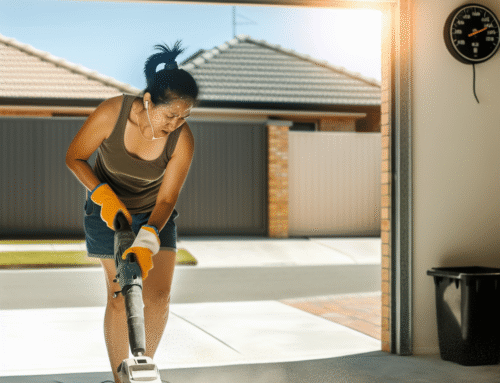
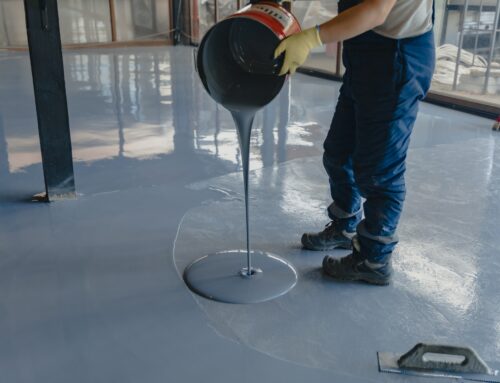
Specifically, every 10°F increase above the manufacturer’s optimal range (typically 60-80°F) cuts your working time nearly in half. A product rated for 45 minutes of pot life at 70°F might give you barely 20 minutes at 95°F. For the multi-car garages common in Vista de Oro or Carlton Terrace, that compressed timeline means incomplete spreading, visible lap marks, and trapped air bubbles that telegraph through the finish coat. Professional epoxy services in Woodland Hills counteract this by either working extremely early mornings or employing climate control equipment most DIY installers lack.
The valley heat also accelerates moisture vapor transmission through your concrete slab. Woodland Hills’ clay-heavy soil retains groundwater differently than hillside properties. During summer, temperature differentials between cool subsurface soil and hot concrete surfaces drive moisture upward at accelerated rates. Testing moisture levels at 2 PM when your garage floor reads 105°F reveals completely different vapor emission rates than the same slab tested at 7 AM when it’s 72°F. This is why bubbles in epoxy floors often appear weeks after installation — moisture that seemed manageable during cool morning testing becomes problematic when heat drives subsurface vapor through the curing epoxy film.
The Three-Hour Installation Window That Makes or Breaks Valley Floor Projects
In Woodland Hills specifically, optimal epoxy installation occurs between 5:30 AM and 8:30 AM from late May through early October. This three-hour window represents the only period when concrete temperatures, ambient air, and humidity levels align with manufacturer specifications. Before 5:30 AM, you’re working in darkness with inadequate lighting for proper inspection. After 8:30 AM, concrete temperatures climb rapidly as the valley floor absorbs direct sunlight.
South-facing garages in Woodland Hills (particularly common in the neighborhoods south of Ventura Boulevard) heat even faster. By 9 AM on a July morning, concrete surfaces can already exceed 85°F despite air temperatures registering only 78°F. Infrared thermometer readings of garage floors reveal what humidity gauges miss — the thermal mass of concrete stores and releases heat independent of air temperature. Professional installers working Five Star Epoxy & Coatings projects in the valley start prep work the evening before, arriving with product pre-staged to maximize that brief cool-temperature window.
This compressed timeline also affects multi-day installations. Unlike climates where you can start at 8 AM and work until 4 PM, Woodland Hills summer projects require split scheduling: surface prep in late afternoon when you’re grinding and profiling (heat doesn’t matter for mechanical prep), followed by coating application in the predawn hours when chemistry matters most. The two-car garage standard in Warner Center typically becomes a three-day project instead of two simply to accommodate proper temperature management.
Surface Preparation When Concrete Retains Heat Into Evening Hours
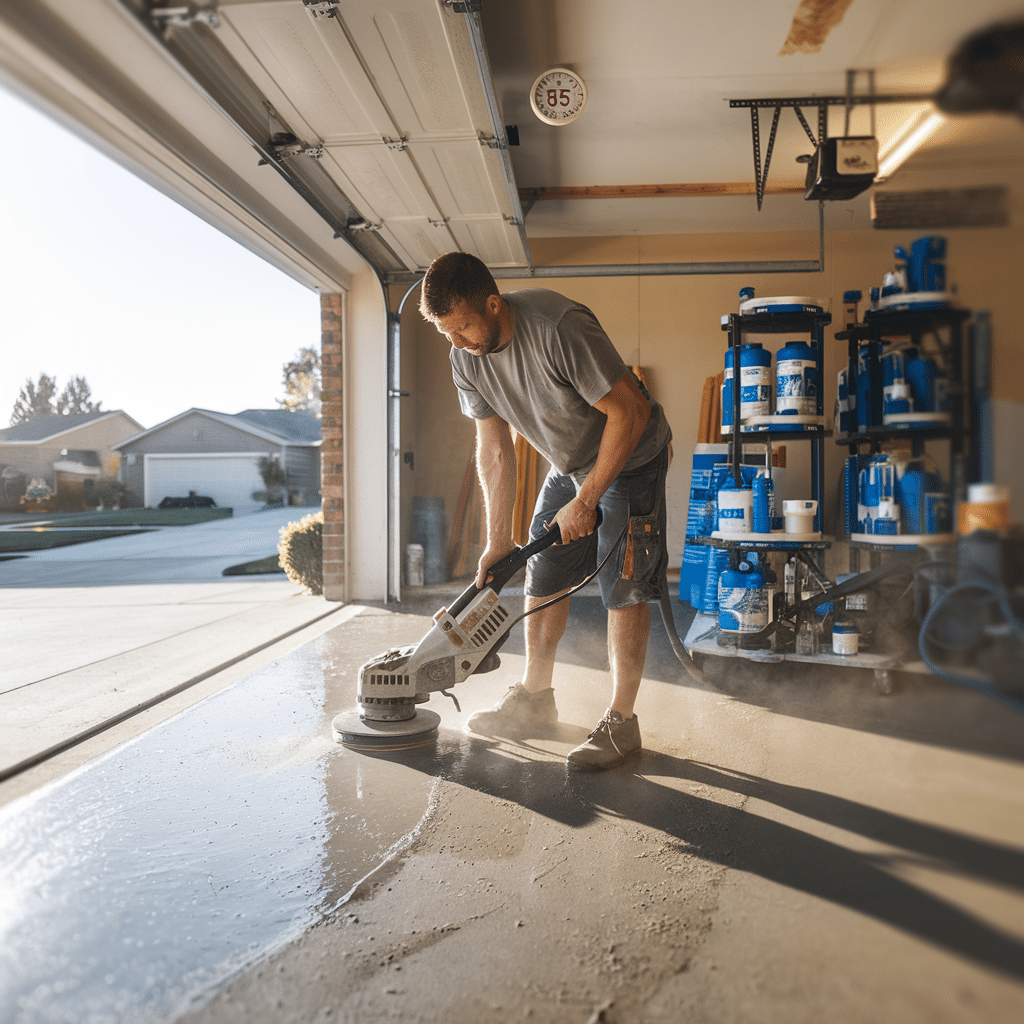
The valley’s thermal retention creates a secondary challenge: evening prep work. Many installers assume they can diamond-grind or acid-etch garage floors in the evening after temperatures drop. But in Woodland Hills, concrete slabs radiate stored heat until well past sunset. A garage floor that measures 95°F at 6 PM might still read 88°F at 10 PM. Attempting to etch concrete with acid at these temperatures causes accelerated chemical reactions that leave inconsistent profiles — some areas over-etched, others barely touched.
Diamond grinding produces better results but generates significant dust that becomes airborne in Woodland Hills’ characteristically still evening air. Without proper ventilation and climate control, dust settles back onto the warm concrete surface, creating a contamination layer that prevents proper epoxy adhesion. The homes in Carlton Terrace and Vista de Oro often have garages attached directly to living spaces, making dust migration into homes a serious concern during prep work.
Moisture testing also becomes unreliable when performed on hot concrete. Calcium chloride moisture tests require consistent slab temperatures within manufacturer ranges (typically 60-80°F). Testing concrete at 92°F produces artificially high moisture emission readings because heat accelerates vapor transmission. The result: installers either postpone projects unnecessarily or — worse — proceed thinking they have acceptable moisture levels when actual cooler-temperature readings would fail specifications. Understanding the complete epoxy installation process includes recognizing when environmental conditions invalidate standard testing protocols.
Why Fall Scheduling Outperforms Summer Rush Projects in Woodland Hills
Middle-income homeowners in Woodland Hills ($95,826 median household income) often attempt summer garage floor projects themselves or hire budget installers to save costs. The hidden expense appears six to eighteen months later when temperature-stressed epoxy begins failing. Delamination, bubbling, and premature wear concentrate along seams and edges where accelerated cure prevented proper chemical bonding.
Professional installations scheduled for October through April in Woodland Hills benefit from stable concrete temperatures, longer working windows, and predictable cure cycles. The same two-car garage that requires split scheduling and dawn applications in July can be completed in a straightforward two-day process in November. Product costs remain identical, but labor efficiency improves significantly, often offsetting the perceived savings of DIY summer attempts.
If summer installation is unavoidable — perhaps you’re preparing a home for sale or completing a remodel on deadline — working with experienced installers who understand valley-specific timing becomes essential. Companies like Five Star Epoxy & Coatings employ climate-controlled staging, infrared temperature monitoring, and adjusted product formulations that account for Woodland Hills’ specific thermal challenges. The phone number is (818) 355-3804 for scheduling consultations that include on-site temperature assessments before committing to summer installation dates.
The investment in proper timing and professional installation protects the broader property value. In a market where garages add measurable resale value to Woodland Hills homes, a failed epoxy floor becomes a disclosure item that raises buyer questions about overall home maintenance. The couple thousand dollars saved on DIY summer installation can easily cost ten times that amount in reduced offers or required repairs during escrow.
❓ Frequently Asked Questions
What garage floor temperature is too hot for epoxy application in Woodland Hills?
Concrete surface temperatures above 85°F begin accelerating epoxy cure rates beyond manufacturer specifications. In Woodland Hills' summer valley heat, garage floors often reach 95-105°F by mid-morning, making only the 5:30-8:30 AM window viable for proper application and chemical bonding.
Can I install garage floor epoxy myself during Woodland Hills summer heat?
While possible, summer DIY installations face compressed working times, accelerated curing, and unreliable moisture testing due to thermal vapor drive. Professional installers use infrared monitoring, climate staging, and adjusted formulations that account for valley-specific heat retention patterns most homeowners cannot replicate.
Why does my Woodland Hills garage floor need different epoxy prep than cooler climates?
Valley floor thermal mass stores and radiates heat independent of air temperature, keeping concrete warm well past sunset. This sustained warmth accelerates moisture vapor transmission through clay-heavy soil, alters acid-etch reaction rates, and requires temperature-specific testing protocols that standard instructions don't address.
Should I wait until fall to install epoxy flooring in my Woodland Hills garage?
October through April installations in Woodland Hills provide stable temperatures, longer working windows, and predictable cure cycles that significantly improve outcomes. Summer installations require dawn-only application, split scheduling, and specialized equipment. Call Five Star Epoxy & Coatings at (818) 355-3804 to discuss seasonal timing strategies for your specific garage conditions.
📖 More Tips for Woodland Hills
-
 Fixing Yellowing Clear Epoxy Coating: Woodland Hills FAQ
Discover why clear epoxy floor coatings yellow in Woodland Hills showrooms and learn proven assessment, repair, and prevention…
-
Rescuing Your Epoxy Floor: Bubble Repair Steps
Discover professional step-by-step methods to fix bubbles in your Woodland Hills epoxy floor coating, from identifying causes to…
-
How Much Does Metallic Epoxy Flooring Actually Cost in 2025? A Woodland Hills Budget Breakdown
Woodland Hills homeowners are pricing metallic epoxy right now as property values climb and renovation budgets loosen. This…
-
What Causes Bubbles in Your Garage Epoxy Floor? A Woodland Hills Repair Guide
Discover why bubbles form in epoxy floor coatings and how to fix them. This Woodland Hills homeowner's guide…