
How to Choose the Best Epoxy Coating Company in Northridge, CA
Choosing the right epoxy coating company in Northridge, CA takes more than a quick Google search. This guide walks you through what to look for, what to avoid, and how to get the best results for your concrete surfaces.
What should you know before hiring an epoxy coating company in Northridge?
Choosing the right epoxy coating company in Northridge, CA is one of the most important decisions you will make for your garage, warehouse, or patio floor. A coating applied over poorly prepared concrete can peel within 12 to 24 months, wasting thousands of dollars. Northridge sits in the San Fernando Valley, where summer temperatures regularly climb above 95°F and the ground dries out fast. That heat cycle causes concrete to expand and contract, which puts serious stress on any coating that was not bonded correctly from the start.
A coating applied over poorly prepared concrete can peel within 12 to 24 months, wasting thousands of dollars.
The ZIP codes around Northridge — including 91324, 91325, and 91326 — are packed with homes built between the 1950s and 1980s. Many of those garages have concrete slabs that have never been coated, sealed, or professionally evaluated. Moisture vapor transmission is a common issue in older slabs, and a qualified contractor will test for it before applying any product.
Southern California’s climate patterns also bring Santa Ana wind events in the fall, which push hot, dry air across the Valley. Those conditions can affect cure times and how a coating bonds if the job is rushed. Knowing these local factors helps you ask smarter questions when you call a contractor.
What factors matter most when choosing a concrete coatings company?
Surface preparation, product quality, and licensing are the three factors that separate a coating that lasts 15 years from one that fails in 18 months. Brand name and price matter less than these three fundamentals. Here is what to evaluate before you sign anything.
Licensing and insurance
Any contractor working on your property in California should be licensed by the California Contractors State License Board (CSLB). Ask for the license number and verify it on the CSLB website in under 2 minutes. Also confirm they carry general liability insurance and workers’ compensation coverage.
Concrete preparation method
Diamond grinding or shot blasting opens the concrete’s pores so the coating bonds at a mechanical level. Acid etching alone is often not enough for high-traffic areas or older slabs. Ask every company you call what specific prep method they use and why.
Product specifications
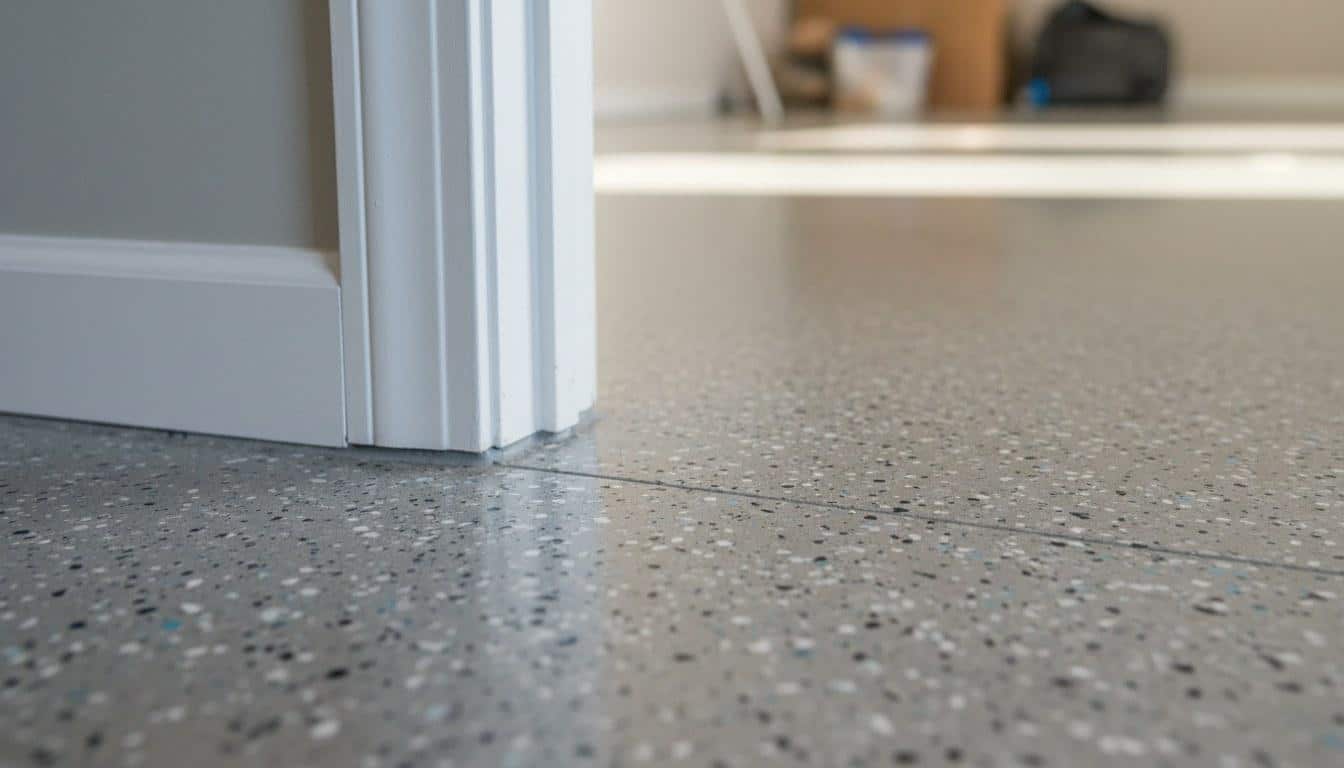
Request the technical data sheet for the epoxy or polyurea product they plan to use. Look for a minimum film thickness of 10 mils for a residential garage floor. Thicker systems, such as a broadcast flake build at 20 to 30 mils, hold up better under vehicle traffic and UV exposure.
Written scope of work
A professional contractor will give you a written proposal that lists the prep steps, number of coats, product names, and warranty terms. If a quote arrives as a single dollar figure with no detail, that is a warning sign.
References and photos
Ask for 3 to 5 local references from jobs completed in the past 12 months. Photos of finished work in the San Fernando Valley or greater Los Angeles area are a good sign the crew knows how to work in this climate.
- CSLB license verification: Confirms the contractor is legally allowed to work in California and has passed trade requirements.
- Diamond grinding or shot blasting: The gold standard for surface prep — opens pores for a mechanical bond rather than relying on adhesion alone.
- Technical data sheet: Tells you the exact product, coverage rate, and expected film thickness so you can compare bids apples to apples.
- Written proposal: Protects you legally and ensures both parties agree on scope before work begins.
- Local references: Confirms the crew has worked in Northridge-area conditions, not just in cooler or wetter climates.
How do the main types of concrete coatings compare?
Epoxy, polyurea, and polyaspartic are the three most common coating systems for residential and commercial concrete in Northridge, and each has a different strength. The right choice depends on your traffic level, sun exposure, and budget. The table below summarizes the key differences.
| Coating Type | Best For | Pros | Cons | Typical Market Cost (per sq ft) |
|---|---|---|---|---|
| 100% Solids Epoxy | Garages, warehouses, interior slabs | Excellent chemical resistance, hard surface, cost-effective base coat | Can yellow under direct UV; needs a topcoat for outdoor use | $3 – $7 depending on prep and thickness |
| Polyurea / Polyaspartic | Patios, driveways, high-UV areas | UV stable, fast cure (often 1 day), flexible, handles temperature swings well | Less working time for installers; higher material cost | $5 – $12 depending on system complexity |
| Epoxy Flake System | Residential garages, showrooms | Decorative, slip-resistant texture, hides imperfections | Requires 3-coat system; longer install time | $4 – $9 for a full broadcast build |
| Concrete Sealer (penetrating) | Driveways, outdoor flatwork | Low cost, easy maintenance, breathable for older slabs | No decorative value; needs reapplication every 3 – 5 years | $1 – $3 for basic sealer applications |
These ranges reflect the regional market for concrete coatings in the Los Angeles area as of 2025. Scope, square footage, slab condition, and custom color choices all move the final number. Always request a custom quote from a licensed contractor before budgeting.
What mistakes should you avoid when hiring a coatings contractor?
The single biggest mistake homeowners make is choosing the lowest bid without understanding what was left out of the scope. A low price almost always means shortcuts on prep, thinner product, or fewer coats. Here are the most common pitfalls to avoid in Northridge.
- Skipping the moisture test: Older San Fernando Valley slabs often have moisture vapor transmission rates above 3 lbs per 1,000 sq ft per 24 hours — the threshold where many epoxy systems will delaminate. A contractor who skips this test is gambling with your money.
- Accepting a verbal quote only: Without a written scope, you have no recourse if the crew uses a thinner product or skips a coat.
- Hiring unlicensed contractors: California law requires a C-33 or C-61/D-62 license for most coating work. Unlicensed work also voids many homeowner insurance policies.
- Coating over cracks without repair: Active cracks wider than 1/8 inch need to be routed and filled before coating. A coating laid over an unrepaired crack will re-crack within one to two seasons.
- Scheduling in extreme heat without planning: Applying epoxy when the slab surface is above 90°F can cause outgassing bubbles that ruin the finish. Reputable contractors in Northridge schedule early-morning starts during July and August to avoid this.
- Ignoring the topcoat: A base epoxy coat without a UV-stable polyaspartic or polyurea topcoat will yellow and chalk within 1 to 3 years of outdoor sun exposure in Southern California.
Our crews at Five Star Epoxy & Coatings see moisture-related failures on roughly 40% of the re-coat jobs we assess in older Northridge neighborhoods — almost all of them were installed without a moisture vapor test or a proper primer coat. Skipping that one step is the leading cause of premature delamination in this market.
Which coating is right for your Northridge home or business?
The best coating system depends on how the space is used, how much sun it gets, and the condition of the existing slab. Use the scenarios below to match your situation to the right product category.
For homeowners with a standard 2-car garage
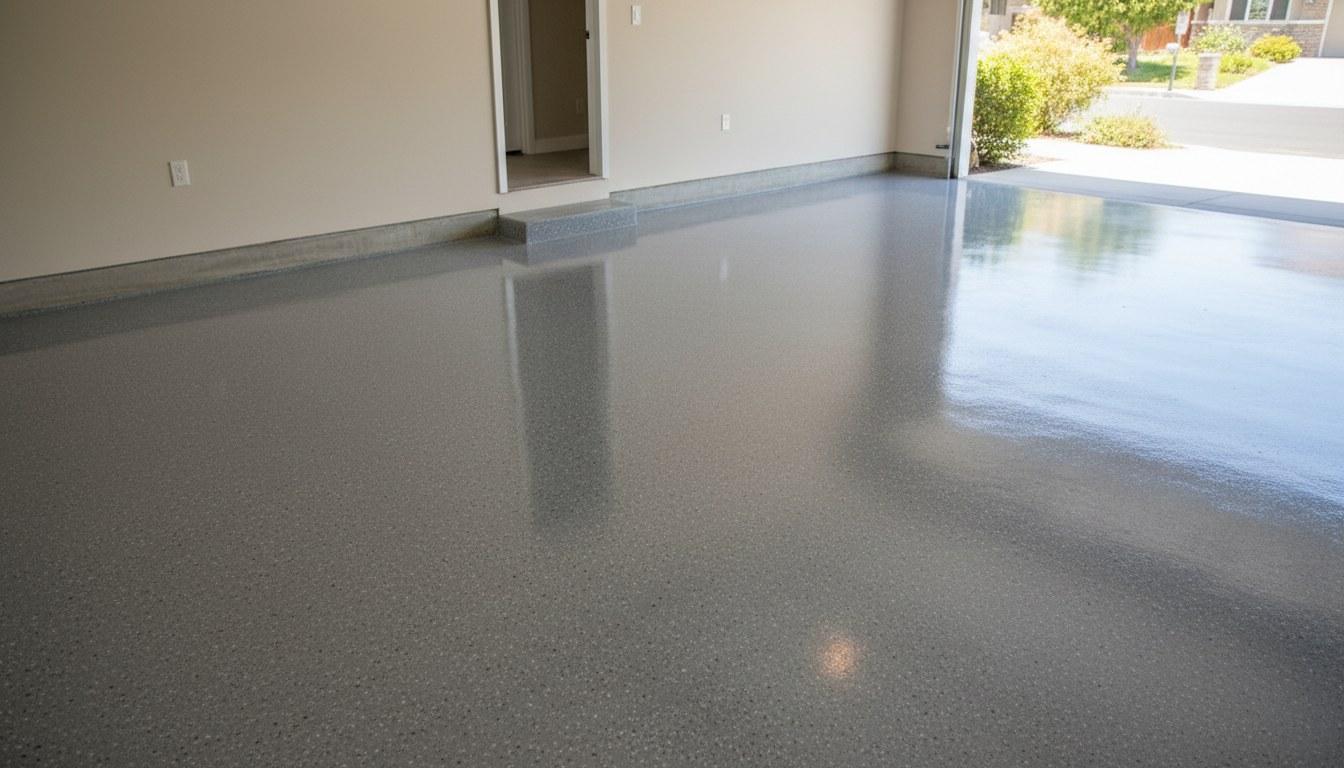
A 3-coat epoxy flake system with a polyaspartic topcoat is the most popular choice in Northridge residential garages. The flake broadcast provides slip resistance, and the polyaspartic topcoat handles UV and hot tire pickup from cars parked after a summer drive on the 118 Freeway. Expect a typical 400 to 500 sq ft garage to take 1 to 2 days for prep and application.
For homeowners with an outdoor patio or pool deck
A 100% polyurea or polyaspartic system is the better fit for outdoor flatwork in Northridge. These coatings cure fast, resist UV yellowing, and stay flexible enough to handle the thermal expansion that comes with 95°F summer afternoons. A penetrating sealer is a lower-cost alternative if budget is a primary concern, though it will need reapplication every 3 to 5 years.
For commercial or industrial floors
High-build epoxy systems at 20 to 40 mils, sometimes combined with quartz or aluminum oxide broadcast, are standard for warehouses, auto shops, and retail spaces. These systems meet the durability demands of forklift traffic and chemical spills. As of 2024, ENERGY STAR reflective floor coatings have also gained traction in commercial buildings trying to reduce cooling loads under California’s Title 24 building energy standards.
For homeowners with a cracked or damaged slab
If the slab has significant cracking, spalling, or previous coating failure, a skim coat or overlay system applied before the topcoat can restore a flat, uniform surface. This adds cost but extends the life of the finished system by 5 to 10 years compared to coating over a compromised substrate.
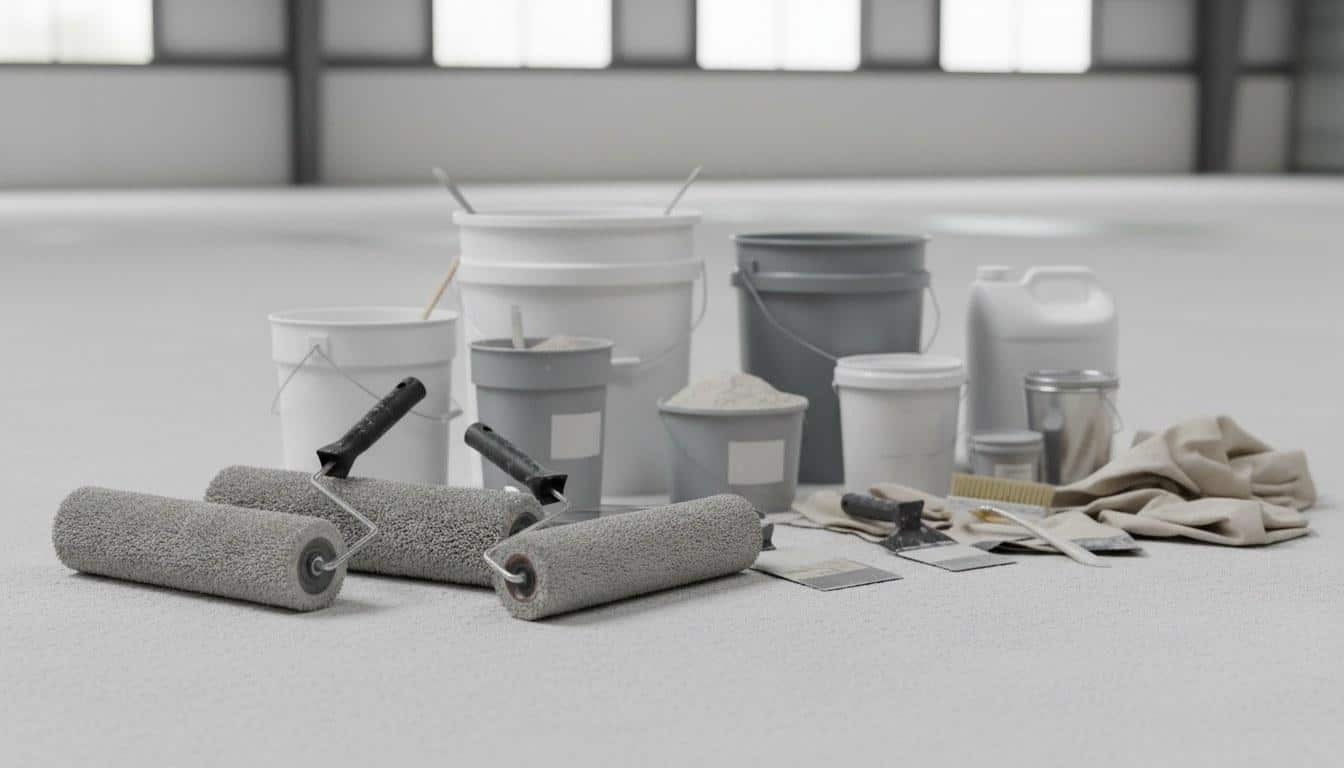
Across the last two full installation seasons, we have applied coatings to more than 200 residential and commercial floors in the Northridge and greater San Fernando Valley area, and the jobs that perform best at the 5-year mark consistently share one trait: diamond-ground prep on a moisture-tested slab, regardless of which topcoat system was chosen.
Get Expert Concrete Coating Advice in Northridge, CA
Schedule a free on-site assessment with Five Star Epoxy & Coatings before you commit to any product or contractor. A qualified technician will measure your slab, run a moisture test, and give you a written quote with product specs included. No guesswork, no surprises.
Call (818) 355-3804 to book your free estimate. Five Star Epoxy & Coatings serves Northridge, CA and the surrounding San Fernando Valley communities. Same-week appointments are available for most residential projects.
Frequently Asked Questions
How much does concrete coating usually cost in Northridge, CA?
In the Los Angeles regional market, concrete coatings typically range from about $3 to $12 per square foot depending on the system, prep work required, and slab condition. A standard 2-car garage in Northridge generally falls in the $1,500 to $4,500 range for a full epoxy flake system with a topcoat. Slab repairs, moisture mitigation, or custom colors will move the price higher. Contact Five Star Epoxy & Coatings at (818) 355-3804 for a written quote specific to your project.
What is a concrete coating and how is it different from a regular sealer?
A concrete coating is a product applied on top of a concrete slab to protect and decorate the surface — common types include epoxy, polyurea, and polyaspartic systems. A sealer penetrates into the concrete to repel water and stains but leaves no visible film. Coatings bond to the surface and create a durable, often decorative layer that can handle vehicle traffic, chemicals, and heavy foot traffic in ways a basic sealer cannot.
How many coats of epoxy do I need on a garage floor?
Most professional garage floor systems in Northridge use 3 coats: a primer or base coat, a decorative broadcast layer, and a clear topcoat. Some high-build commercial systems add a fourth coat for extra thickness. Single-coat DIY kits sold at hardware stores are typically too thin — under 3 mils — and rarely last more than 2 to 3 years on a working garage floor.
How long does a concrete coating last in Southern California?
A professionally installed epoxy or polyaspartic coating in Northridge, CA typically lasts 10 to 20 years with normal maintenance. Outdoor coatings exposed to direct sun last on the shorter end of that range unless a UV-stable topcoat was used. The biggest factor in longevity is surface preparation — coatings applied over poorly prepped or moisture-affected slabs can fail in as little as 12 to 24 months.
Can you coat concrete that already has cracks in it?
Yes, but cracks wider than about 1/8 inch should be routed and filled with a flexible polyurea crack filler before any coating is applied. Coating directly over an active crack without repair will cause the crack to telegraph through the new coating within one to two seasons. A qualified contractor will evaluate your slab during the estimate and recommend the right repair approach before starting the coating work.