How Long Does Epoxy Flooring Last? Lifespan, Wear, and Maintenance Explained
Epoxy flooring typically lasts 5 to 20 years depending on traffic, prep quality, and maintenance. This guide breaks down what affects lifespan and how to get the most from your floor.

How Long Does Epoxy Flooring Last in Residential vs. Commercial Settings?
Epoxy flooring lasts between 5 and 20 years, with residential floors on the longer end and high-traffic commercial floors on the shorter end. The setting, foot or vehicle traffic, and coating system all shape how long your floor performs.
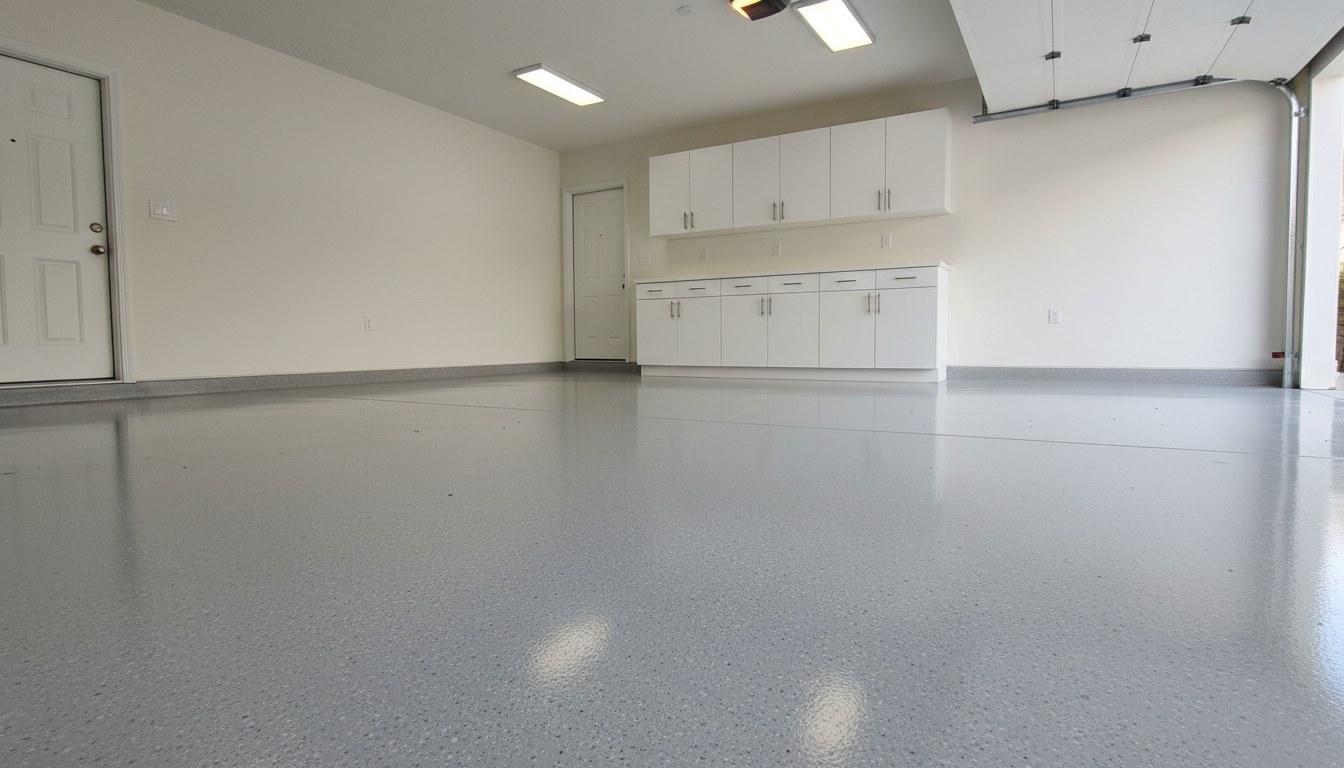
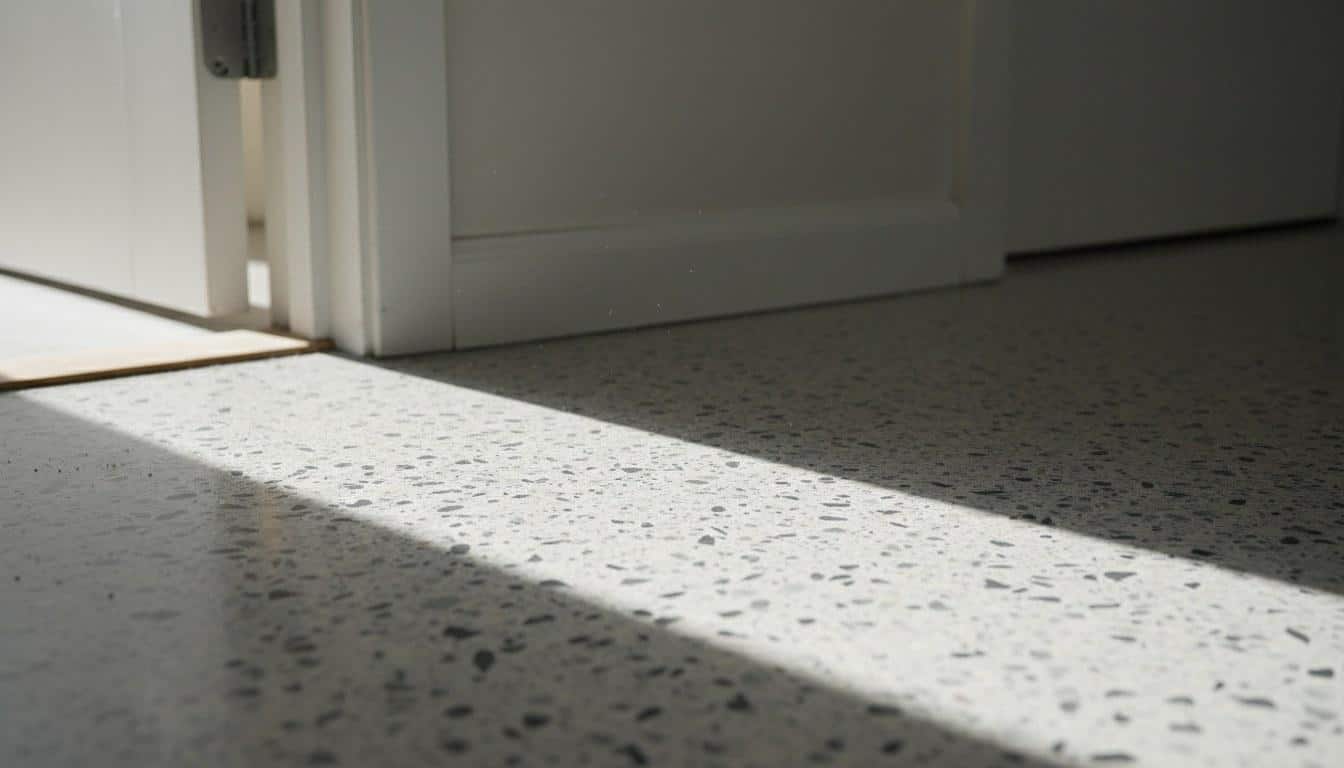
In a home garage with one or two vehicles and normal foot traffic, a properly installed epoxy system can easily last 10 to 20 years before showing significant wear. Our team sees residential chip and flake epoxy flooring installations hold up especially well when a quality polyaspartic or polyurethane topcoat is applied over the base layer.
Commercial floors face a harder life. Warehouses, showrooms, and retail spaces see forklifts, heavy carts, and constant foot traffic. In those settings, a standard epoxy coating may need recoating every 5 to 7 years, though a thicker broadcast system or a commercial-grade urethane topcoat can push that out closer to 10 years.
| Setting | Typical Lifespan | Main Wear Factors |
|---|---|---|
| Residential garage | 10–20 years | Vehicle tires, oil spills, seasonal temperature swings |
| Home interior (basement, laundry) | 15–20 years | Light foot traffic, moisture from below slab |
| Light commercial (showroom, office) | 7–12 years | Foot traffic, rolling chairs, UV exposure near windows |
| Heavy commercial (warehouse, shop) | 5–8 years | Forklifts, heavy loads, chemical spills, abrasion |
| Industrial (manufacturing, food processing) | 3–7 years | Extreme chemical exposure, thermal shock, impact |

What Factors Most Affect Epoxy Floor Lifespan?
Surface preparation is the single biggest factor in how long an epoxy floor lasts. A floor that is diamond-ground or shot-blasted before coating bonds far better than one that is only acid-etched or swept clean.
Concrete must be profiled to at least a CSP (Concrete Surface Profile) level 2 or 3 for most epoxy systems to achieve full adhesion. Skipping this step is the leading cause of early delamination and peeling, often within just 2 to 3 years of installation.
Beyond prep, these factors have the biggest impact on lifespan:
- Coating thickness: A thicker system, typically 20 to 30 mils for a full broadcast, outlasts thin paint-grade products that measure only 3 to 5 mils.
- Topcoat type: Polyaspartic and polyurethane topcoats resist UV yellowing and abrasion far better than a bare epoxy surface left unprotected.
- Moisture vapor: Concrete slabs that emit moisture above 3 pounds per 1,000 square feet per 24 hours can cause bubbling and bond failure without a proper moisture-blocking primer.
- Temperature during installation: Epoxy applied when concrete or air temperatures fall below 50°F or exceed 90°F cures unevenly and weakens the bond.
- Chemical exposure: Automotive fluids, cleaning agents, and industrial solvents break down epoxy resins over time, especially without a chemical-resistant topcoat.
- UV exposure: Standard epoxy yellows under direct sunlight. Outdoor or sun-exposed areas need a UV-stable polyaspartic or polyurethane finish to maintain appearance and integrity.
Across our service calls throughout Southern California, we find that roughly 70% of early epoxy failures trace back to inadequate surface prep or a coating system that was too thin for the actual traffic load.
Roughly 70% of early epoxy failures trace back to inadequate surface prep or a coating system that was too thin for the actual traffic load.
What Are the Signs That Your Epoxy Floor Needs Recoating?
An epoxy floor that is peeling, flaking, or showing bare concrete patches needs attention. Catching wear early and applying a fresh topcoat can extend the floor’s life by another 5 to 10 years without a full tear-out.
Not every worn floor needs to be stripped and redone from scratch. A topcoat refresh is often all that is needed if the base layer is still bonded well. Watch for these warning signs:
- Peeling or delamination: Sections lifting from the concrete indicate a bond failure, often from moisture or improper prep.
- Yellowing or fading: UV damage to a non-UV-stable epoxy layer, most common near garage doors or windows with direct sun.
- Heavy scratching or scuff marks: The topcoat has worn through, leaving the base layer exposed to further damage.
- Pitting or pockmarks: Chemical spills have eaten into the coating surface.
- Loss of gloss: The protective topcoat has thinned to the point where the floor no longer repels liquids effectively.
- Visible bare concrete: High-traffic zones where the coating has worn completely through.
A professional concrete floor coating contractor can test the existing bond with a simple pull test before recommending whether a topcoat or a full recoat is the right call.
How Does Epoxy Flooring Compare to Other Concrete Coating Options?
Epoxy is one of the most durable and cost-effective concrete coating systems available, especially when paired with a polyaspartic or polyurethane topcoat. It outperforms paint-grade sealers and stained concrete in wear resistance and longevity.
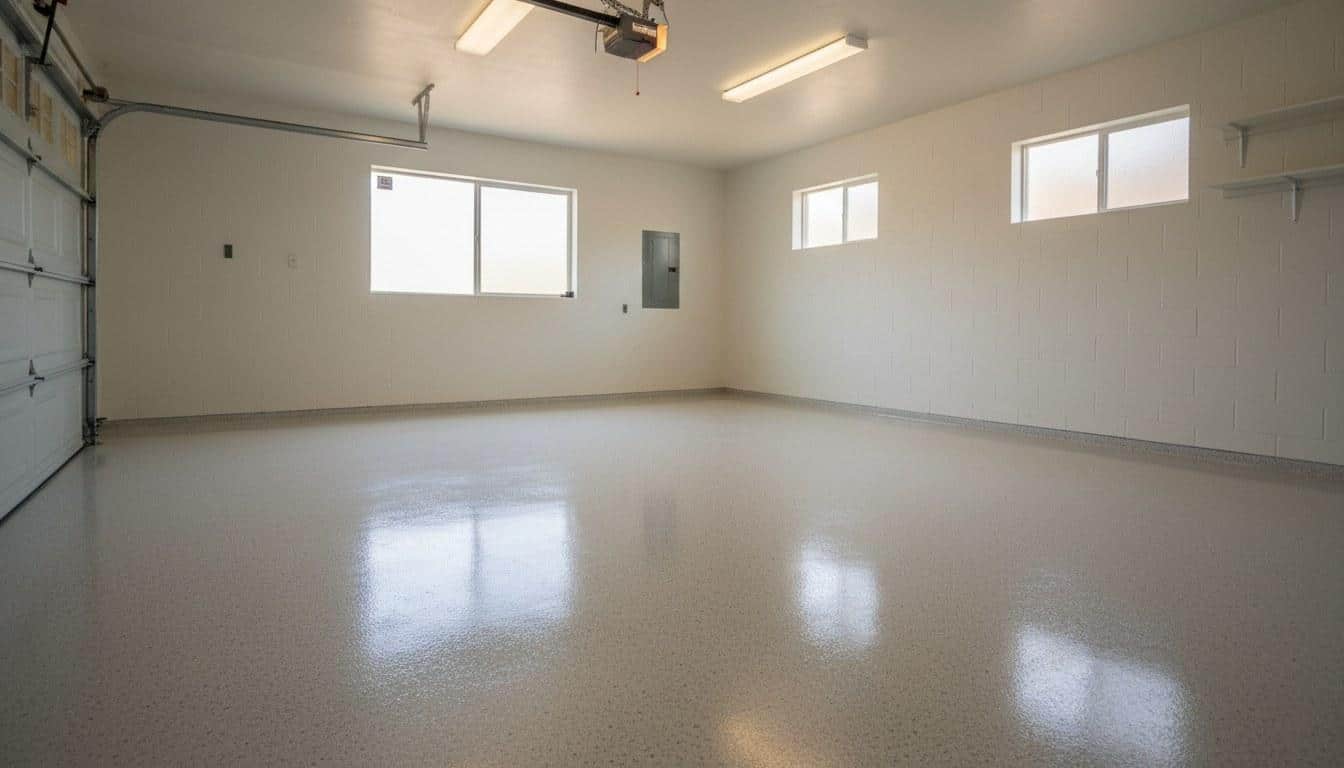
Chip and flake epoxy flooring, sometimes called broadcast or decorative flake systems, adds texture and slip resistance on top of the durability benefits. The flakes are broadcast into the wet epoxy base, then sealed with a clear topcoat, creating a surface that hides minor imperfections and holds up to heavy use.
| Coating Type | Typical Lifespan | Best For | UV Stable? |
|---|---|---|---|
| Epoxy with polyaspartic topcoat | 10–20 years | Garages, commercial floors, any setting | Yes |
| Chip & flake epoxy system | 10–20 years | Garages, showrooms, retail, residential | Yes (with UV topcoat) |
| Solid color epoxy (no topcoat) | 5–10 years | Light-duty interior use | No |
| Concrete sealer or paint | 2–5 years | Low-budget, light-use surfaces | Varies |
| Polished concrete | 10–20 years | Commercial interiors with low chemical exposure | Yes |
| Polyurea coating | 10–15 years | Fast-cure needs, temperature-sensitive installs | Yes |
A full epoxy system from a qualified epoxy coating company is the right choice for most California homeowners and business owners who want a floor that looks great and lasts. The combination of a properly prepared base, a broadcast flake or solid color layer, and a UV-stable topcoat delivers the best balance of durability, appearance, and cost.
How Do You Maintain Epoxy Flooring to Maximize Its Lifespan?
Routine cleaning and a few simple habits can add years to an epoxy floor’s life. Most epoxy floors need nothing more than a weekly sweep and an occasional damp mop with a pH-neutral cleaner.
Avoid harsh chemicals like bleach, ammonia-based cleaners, or acidic degreasers. These can break down the topcoat over time and dull the finish. Mild soap and water handle most messes without any damage.
Here are the maintenance habits that matter most:
- Sweep or dust-mop weekly: Grit and sand act like sandpaper underfoot and accelerate surface wear.
- Clean spills quickly: Automotive fluids and harsh chemicals should be wiped up within minutes, not left to sit.
- Use floor mats at entry points: Catching dirt and moisture at the door significantly reduces abrasion in high-traffic zones.
- Add felt pads under heavy equipment: Metal legs and sharp edges can gouge the surface under concentrated weight.
- Avoid rubber-backed mats long-term: Some rubber compounds react with epoxy and cause discoloration or soft spots over time.
- Schedule a professional inspection every 3 to 5 years: A trained concrete floor coating contractor can spot early wear and apply a maintenance topcoat before damage reaches the base layer.
California’s climate adds one more consideration. Inland areas with large temperature swings between summer and winter can cause minor concrete movement. Checking for hairline cracks at control joints once a year and sealing them early prevents moisture from migrating under the coating.

How Much Does It Cost to Install or Recoat an Epoxy Floor in California?
In the Southern California market, epoxy flooring installation typically ranges from $3 to $12 per square foot, depending on the system chosen, the condition of the existing concrete, and the complexity of the project. A basic single-color epoxy with a topcoat sits at the lower end, while a full chip and flake broadcast system with a premium polyaspartic topcoat lands toward the higher end.
Several factors move the price within that range:
- Square footage: Larger areas generally cost less per square foot due to setup efficiencies.
- Concrete condition: Cracks, spalling, or previous coatings that must be removed add to prep time and cost.
- Coating system: A three-layer system with primer, broadcast, and topcoat costs more than a single-coat application but lasts significantly longer.
- Topcoat type: Polyaspartic topcoats cure faster and offer better UV resistance than standard polyurethane, and they typically add to the project cost.
- Decorative options: Custom flake blends, metallic pigments, or multi-color designs increase material and labor time.
Recoating an existing floor that is still in good structural condition typically costs 30% to 50% less than a full installation, since the prep work is lighter and no base coat is needed. As of 2026, recoat projects in the Los Angeles area market generally range from $1.50 to $4 per square foot for a topcoat refresh alone.
Recoating an existing floor that is still in good structural condition typically costs 30% to 50% less than a full installation.
It is worth noting that the U.S. Department of Energy and ENERGY STAR both highlight the role of well-maintained building surfaces in reducing long-term facility costs, which is a real consideration for commercial property owners evaluating flooring investments. Contractors working on commercial projects in California should also be Licensed by the California Contractors State License Board (CSLB) to protect your investment and ensure work meets state standards.
For an accurate number on your specific project, the only reliable path is a custom quote based on your actual square footage, concrete condition, and coating goals. Contact Five Star Epoxy & Coatings at (818) 355-3804 for a no-obligation estimate.
Ready to Get a Floor That Lasts? Talk to Five Star Epoxy & Coatings
Whether you are planning a new garage floor, refreshing a worn commercial surface, or trying to figure out how long does epoxy flooring last in your specific situation, the right coating system and installation quality make all the difference.
Schedule your consultation with Five Star Epoxy & Coatings, serving homeowners and businesses across Southern California. Call (818) 355-3804 to get a written quote before any work begins. Same-day assessments are available for most projects throughout the region.
Frequently Asked Questions
How much does it cost to install an epoxy garage floor?
In the Southern California market, epoxy garage floor installation typically ranges from $3 to $12 per square foot depending on the coating system, the size of the garage, and the condition of the existing concrete. A standard two-car garage of around 400 to 500 square feet generally falls between $1,500 and $5,000 for a full chip and flake system with a polyaspartic topcoat. Getting a custom quote from a licensed contractor is the best way to get an accurate number for your specific floor.
How long does epoxy flooring last in a garage?
A properly installed epoxy garage floor typically lasts 10 to 20 years with routine maintenance. The biggest factors are how well the concrete was prepared before coating, the thickness of the system applied, and whether a UV-stable topcoat was used. Floors that see heavy vehicle traffic or frequent chemical spills may need a topcoat refresh every 5 to 7 years to stay in top condition.
Can epoxy floors be repaired without redoing the whole floor?
Yes, in many cases a worn or lightly damaged epoxy floor can be refreshed with a new topcoat rather than a full tear-out and reinstallation. A concrete floor coating contractor will first test whether the existing base layer is still well-bonded to the concrete. If it is, applying a fresh polyaspartic or polyurethane topcoat can restore the appearance and protection at a fraction of the full installation cost.
Does epoxy flooring hold up to hot tire marks from cars?
Standard epoxy coatings can be vulnerable to hot tire pickup, where the heat from a recently driven vehicle softens the coating and causes it to peel when the tire pulls away. A polyaspartic or polyurethane topcoat applied over the epoxy base significantly reduces this risk. If hot tire pickup is a concern, ask your coating contractor specifically about a topcoat rated for thermal resistance.
How do I know if my epoxy floor was installed correctly?
A correctly installed epoxy floor should have no bubbles, peeling edges, or soft spots when you press on it firmly. The surface should feel uniformly hard and adhere tightly to the concrete with no hollow sounds when tapped. If the floor was installed by a contractor Licensed by the California Contractors State License Board (CSLB), you also have recourse if the work fails prematurely due to improper installation.