Why Skipping Spring Epoxy Maintenance Destroys Your Investment
Every spring in Porter Ranch, homeowners discover the same costly mistake: ignoring epoxy flooring services in Porter Ranch maintenance after winter. Even in Southern California’s mild climate, accumulated road grime, tire residue, and seasonal debris create an invisible abrasive layer that grinds into your coating with every vehicle entry. Within months, this neglect transforms a pristine garage floor coating into a dull, scratched surface that requires professional refinishing—an expense five times higher than preventive spring cleaning. The difference between a floor that lasts 15 years versus one needing recoating at year seven often comes down to a single seasonal maintenance habit.
📋 In This Guide
Understanding Winter’s Hidden Impact on Porter Ranch Garage Floors
Porter Ranch’s winter season might lack the harsh freeze-thaw cycles of northern climates, but it presents unique challenges for garage floor epoxy. The combination of winter rainfall, fluctuating temperature patterns, and increased moisture tracked into garages creates a perfect environment for contaminant buildup. Road oils and automotive fluids become more viscous in cooler temperatures, allowing them to bond more stubbornly to epoxy surfaces.
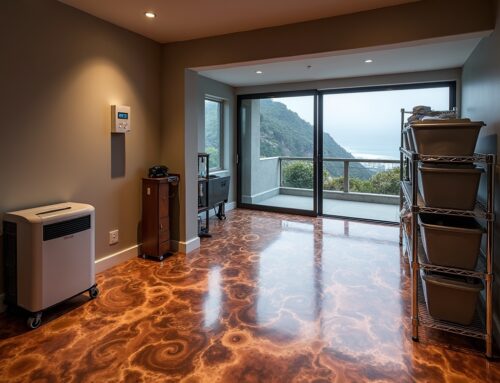
Between November and March, your garage floor accumulates layers of fine particulate matter that settles into the textured surface of decorative flake finishes. This debris acts like sandpaper under vehicle tires, accelerating wear patterns in high-traffic zones. The metallic epoxy installations popular throughout The Vineyards and Porter Ranch neighborhoods are particularly vulnerable to this micro-abrasion, as their glossy finishes show dulling more readily than matte alternatives.
Spring represents the optimal window for deep cleaning because warmer temperatures improve chemical reaction rates in cleaning solutions while allowing proper drying before summer’s intense heat arrives. Addressing winter damage now prevents the permanent etching that occurs when contaminants bake into the coating during Porter Ranch’s 90-degree summer days.
Deep Cleaning Protocols: Solutions That Won’t Damage Your Coating
The first rule of spring epoxy maintenance is understanding what not to use. Citrus-based cleaners contain acids that can strip your epoxy flooring of its glossy finish, while soap-based products leave a hazy film that dulls the surface and creates slippery conditions when wet. Many Porter Ranch homeowners unknowingly damage their garage floor coating by using the same multi-surface cleaners they apply to kitchen counters.
Recommended Cleaning Solutions for Residential Epoxy Flooring
Diluted ammonia is the best epoxy floor coating cleaning solution, made by adding half cup of ammonia to a gallon of hot water. This pH-balanced mixture effectively cuts through oil films and tire marks without compromising the chemical bonds in your coating. Alternatively, diluted Simple Green works effectively by mixing half cup to 1 gallon of hot water.
For stubborn winter stains on your garage floor epoxy, saturate the area with a concrete degreaser product and leave it for 5-10 minutes before scrubbing with a nylon-bristle brush. Avoid steel wool or abrasive pads that create microscratches visible under garage lighting. The goal is lifting contaminants without degrading the protective topcoat that shields your concrete substrate.
Pressure Washing: PSI Guidelines for Safe Spring Cleaning
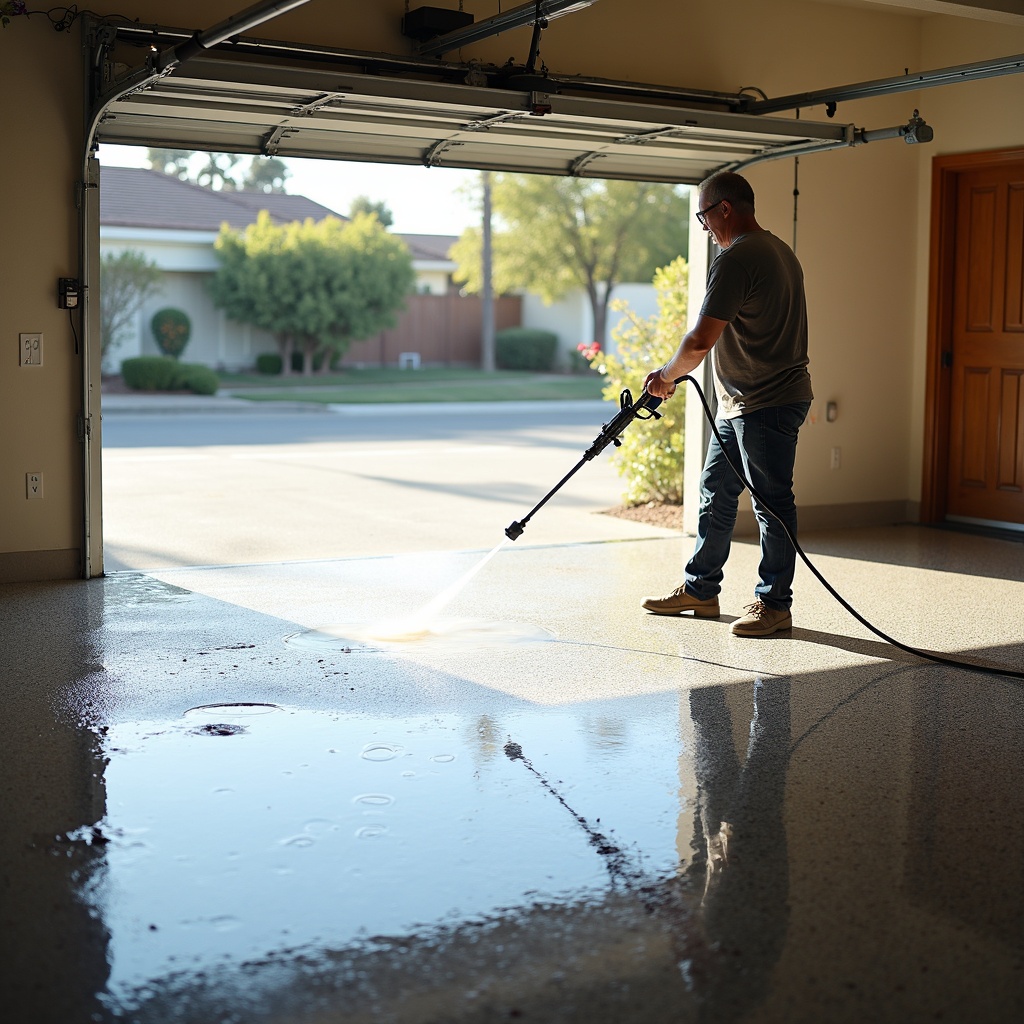
Pressure washing offers the most efficient method for spring restoration, but incorrect settings destroy coatings faster than years of foot traffic. Use 1,500 to 2,000 PSI for epoxy floors—anything higher risks chipping or peeling, especially along edges and seams. Use the 45-degree angle tip and keep the spray nozzle at least 18 inches off the floor to distribute pressure evenly across the surface.
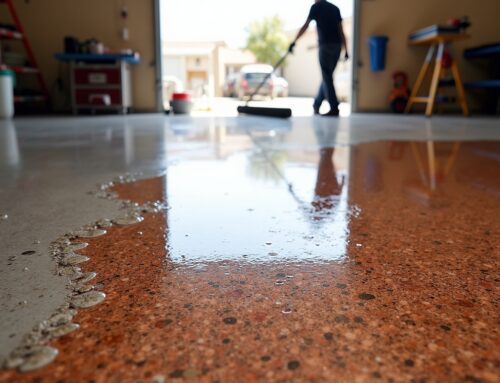
Begin by sweeping or blowing loose debris from your garage, then wet the entire floor with a garden hose. Apply your chosen cleaning solution with a low-pressure setting or foam applicator, allowing 5-10 minutes of dwell time before pressure rinsing. Work from the back of your garage toward the door, following the natural slope that drains water toward the driveway. Porter Ranch’s water conservation guidelines make spring the ideal time for this deep clean, as winter rains replenish local reserves.
| Cleaning Method | Best For | Frequency |
|---|---|---|
| Dust Mopping | Weekly maintenance, light debris | 1-2 times weekly |
| Ammonia Solution Mopping | Monthly cleaning, general grime | Monthly |
| Degreaser Treatment | Oil stains, tire marks | As needed |
| Pressure Washing (1,500-2,000 PSI) | Deep spring/fall cleaning | Twice yearly |
Spring Inspection Checklist: Identifying Winter Damage
Spring cleaning provides the perfect opportunity to assess your coating’s condition while the surface is freshly cleaned and fully visible. Start at your garage entrance where vehicle traffic concentrates wear patterns, looking for these specific indicators:
Gloss reduction in traffic lanes: Compare the sheen in tire paths versus unused corners. Significant dulling indicates topcoat wear that may require resealing within the next year. Micro-scratching visible under direct light: Shine a flashlight at a low angle across the floor. Fine scratches that catch light suggest abrasive particle accumulation exceeded safe thresholds during winter months. Discoloration or yellowing: UV exposure through garage windows or certain automotive chemicals can cause color shifts. While cosmetic, this signals coating degradation that accelerates with age.
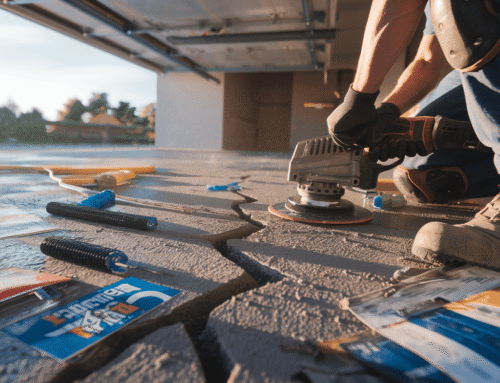
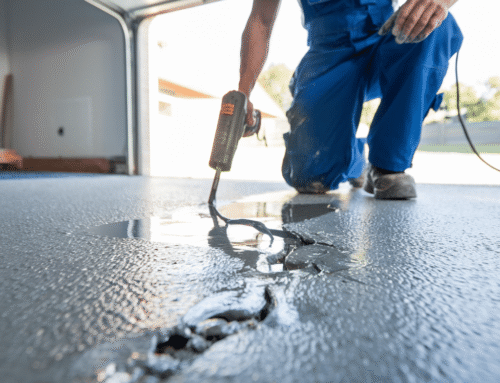
Check expansion joints and perimeter edges where concrete cracks before epoxy installation may have propagated through the coating. Porter Ranch homes built on expansive clay soils experience subtle foundation movement that can telegraph through garage slabs. Small cracks caught early prevent moisture intrusion that leads to epoxy floor bubble formation during summer heat.
Document your findings with smartphone photos taken from consistent angles each spring. This visual record helps track degradation rates and provides valuable information for Five Star Epoxy & Coatings professionals when planning maintenance schedules.
Resealing Timelines and Spring’s Ideal Application Window
Most residential epoxy floor installer professionals recommend evaluating resealing needs based on traffic intensity rather than arbitrary timelines. High-traffic areas may need resealing every 2-3 years, while low-use garages can extend intervals to 5-7 years. Porter Ranch’s climate offers a distinct advantage: spring temperatures between 65-75°F create optimal curing conditions without the complications of extreme heat or humidity.
The decision to reseal depends on topcoat integrity rather than the base epoxy system. Professional concrete coating company assessments examine gloss retention, chemical resistance, and mechanical bonding. If your spring inspection reveals widespread dulling, persistent staining despite aggressive cleaning, or texture changes where the surface feels rougher than original installation, resealing should occur before next winter.
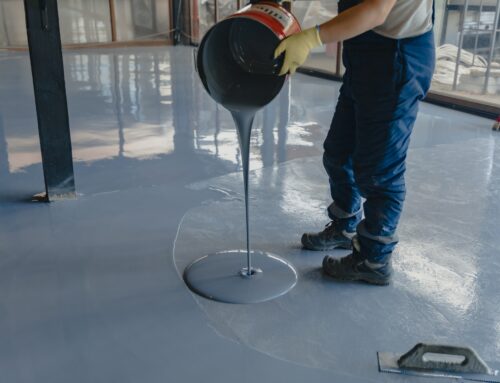
Spring application allows the fresh topcoat to cure fully before summer’s thermal stress tests its adhesion. The process typically requires 3-5 days from surface preparation through final curing, with garage access restricted during this period. Porter Ranch homeowners often schedule resealing during spring break weeks when family vehicles can park in driveways without disrupting daily routines.
Advanced polyaspartic topcoats offer faster cure times and superior UV resistance compared to traditional epoxy sealers, making them increasingly popular for Porter Ranch installations. These coatings achieve full hardness within 24 hours while providing enhanced chemical resistance against the automotive fluids common in residential garages.
Professional Partnership for Long-Term Floor Performance
While homeowner maintenance preserves day-to-day appearance, professional assessment every 3-5 years ensures your investment reaches its full lifespan potential. Five Star Epoxy & Coatings provides comprehensive spring evaluations that identify issues invisible to untrained eyes—subsurface delamination beginning at concrete interfaces, chemical exposure damage requiring specialized treatment, or wear patterns indicating improper installation that warranty coverage may address.
Spring represents the perfect time to establish this professional relationship because contractors maintain more flexible schedules before summer’s peak demand. Porter Ranch’s proximity to neighboring Epoxy flooring in Northridge and Epoxy flooring in Granada Hills service areas means faster response times for urgent repairs discovered during spring cleaning.
Don’t wait until minor wear becomes major damage. Contact Five Star Epoxy & Coatings at (818) 355-3804 to schedule your spring floor assessment. Our certified technicians provide detailed condition reports with specific maintenance recommendations tailored to Porter Ranch’s unique environmental factors, ensuring your garage floor coating delivers maximum return on investment for years to come.
❓ Frequently Asked Questions
How often should I deep clean my epoxy garage floor in Porter Ranch?
Deep cleaning with pressure washing should occur twice yearly—spring and fall. Weekly dust mopping and monthly wet mopping with diluted ammonia or pH-neutral cleaners maintain appearance between deep cleans and prevent abrasive buildup that accelerates wear.
Can pressure washing damage my garage epoxy floor?
Pressure washing is safe when limited to 1,500-2,000 PSI with a 25-40 degree nozzle held at least 12-18 inches from the surface. Higher pressures or zero-degree tips can chip or peel the coating, especially along edges and previously damaged areas.
What are signs my Porter Ranch garage floor needs resealing?
Key indicators include widespread gloss loss in traffic areas, persistent stains that resist cleaning, visible micro-scratching under direct light, and texture changes where the surface feels rougher. These typically appear after 3-5 years in moderate-use residential garages.
Why should I hire Five Star Epoxy & Coatings for spring maintenance?
Professional assessment identifies subsurface issues invisible to homeowners, provides warranty-covered repair solutions, and ensures proper resealing techniques that maximize coating lifespan. Call (818) 355-3804 for expert spring floor evaluations tailored to Porter Ranch's climate conditions.
📖 More Tips for Porter Ranch
-
 How Porter Ranch's Unique Heat Patterns Change Garage Floor Epoxy Prep
Porter Ranch's higher elevation creates distinct temperature swings that demand specialized epoxy preparation techniques. Learn how professional installers…
-
Fix Metallic Pearl Separation: Porter Ranch Epoxy Guide
Metallic epoxy separation leaves blotchy patches instead of stunning swirled finishes—but targeted repairs can salvage your investment. This…
-
Should You Repair Concrete Cracks Before Epoxy? What Porter Ranch Homeowners Need to Know
Epoxy coatings require proper crack repair to last—but not all cracks are created equal. Learn how to assess…
-
Porter Ranch Epoxy Floor Bubble Repair: A Step-by-Step Troubleshooting Approach
Discovered bubbles in your Porter Ranch garage's epoxy floor? This troubleshooting guide explains why bubbles form, how to…