Why Winter Moisture Control Matters Now for Malibu Basement Floors
Winter in Malibu brings unpredictable moisture challenges that threaten metallic epoxy basement floors in ways most homeowners don’t anticipate. While coastal properties in Point Dume and Malibu Canyon enjoy mild temperatures year-round, winter precipitation peaks between December and February, and temperature fluctuations between cool Pacific marine air and warmer inland conditions create the perfect storm for basement condensation. Waiting until you notice clouding, bubbling, or delamination means the damage has already penetrated beneath your metallic coating—and repairs can easily exceed the cost of preventive maintenance. The time to act is before Malibu’s winter rains saturate the soil around your foundation and before holiday storage items, wet winter gear, and seasonal furniture placement compromise your floor’s protective seal.
📋 In This Guide
8 Essential Winter Protection Steps for Metallic Epoxy Basement Floors
1. Establish Baseline Humidity Readings Before Winter Arrives
The first critical step requires installing a digital hygrometer in your basement to track relative humidity levels throughout winter months. Ideal basement humidity should remain between 30% and 50% year-round, with winter targets between 30-40% depending on outdoor temperatures. Malibu’s coastal proximity means outdoor humidity averages around 50% in winter, but basement microclimates can spike significantly higher when temperature differentials occur. Place your hygrometer near floor level, away from vents or windows, and check readings weekly. Smart models with phone alerts notify you immediately when levels climb above safe thresholds, allowing you to intervene before moisture vapor transmission causes bubbles, blisters, peeling, or delamination that weakens adhesion over time. An experienced Epoxy Contractor in Malibu can recommend commercial-grade monitoring systems that integrate with existing HVAC controls for basements with high-value metallic installations.
2. Implement Strategic Dehumidification During Peak Moisture Months
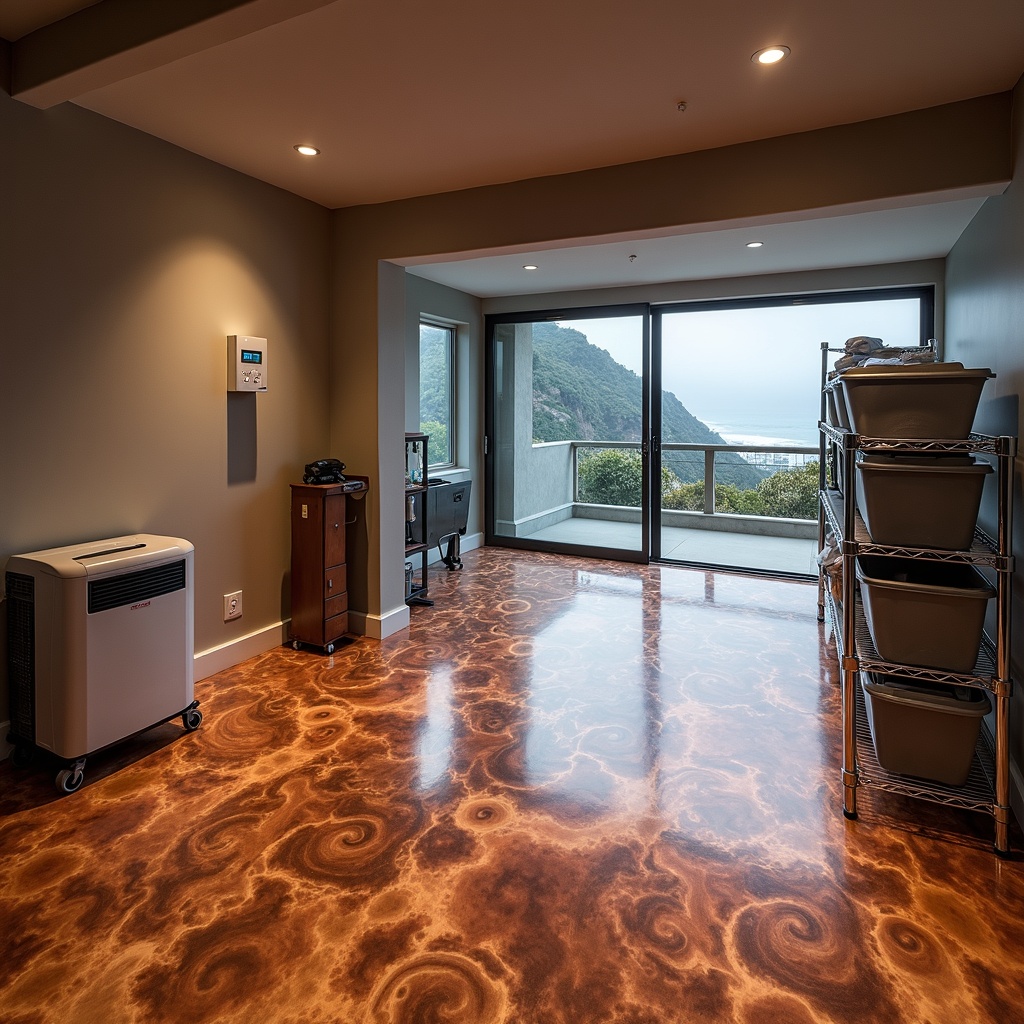
Installing a basement dehumidifier costs between $1,300 and $2,800 for most homeowners, with installation labor adding $400 to $1,200 depending on job complexity, with HVAC technicians charging $75 to $150 per hour for installation that typically takes a two-person team 3 to 6 hours. For Malibu basements with metallic epoxy floors, choosing a unit rated for 50-70 pints per day provides adequate capacity for typical 800-1,200 square foot spaces. Position the dehumidifier centrally for optimal air circulation, ensure continuous drainage to a floor drain or sump pump to eliminate manual emptying, and run the unit whenever humidity exceeds 45%. Winter operation differs from summer use—you’re not fighting extreme heat but rather managing condensation from temperature swings between cool concrete slabs and warmer indoor air during occasional Santa Ana wind events or post-storm warming periods.
3. Inspect and Maintain Moisture Barriers Monthly
Metallic epoxy installations in below-grade spaces depend on intact moisture vapor barriers beneath the concrete slab to prevent hydrostatic pressure from pushing water through foundation walls. Condensation can cause big problems for epoxy floors when warm, moist air meets a cool surface and turns into water droplets, often occurring in basements or areas with poor airflow. Schedule monthly visual inspections around basement perimeter walls looking for dampness, water rings at wall bases, or efflorescence (white salt deposits that indicate moisture migration). The plastic sheet test provides a simple diagnostic: tape an 18-inch square of clear plastic sheeting to your floor overnight, and after sixteen hours, if any condensation is found on the underside of the plastic or if the concrete surface is darkened, the concrete is considered too wet. Properties in Coral Canyon and Encinal Bluffs built on hillside lots face additional groundwater pressure during winter rains that can overwhelm aging vapor barriers.
4. Create Dedicated Wet-Gear Zones Away from Metallic Finishes
Winter activities bring wet boots, rain jackets, surfboards, and beach gear into basements, and standing water from these items poses direct threats to metallic epoxy coatings. Designate a tile or vinyl-floored entryway zone near basement stairs where wet items can drip without contacting your metallic floor. Install commercial-grade boot trays with raised edges that contain water, and position industrial floor mats with moisture-wicking properties at transition points. The three-dimensional depth and movement effects that make metallic epoxy visually stunning also mean the coating relies on perfectly bonded layers—prolonged moisture exposure creates weak points where delamination can start. For homes using basements as surf gear storage or workout spaces, consider adding a small floor drain in the wet-gear zone to handle seasonal moisture loads without risking your primary flooring investment.
5. Adjust Holiday Storage Practices to Protect Floor Integrity
December and January bring holiday decorations, seasonal furniture, and storage containers into basements, but improper placement damages metallic finishes in subtle ways. Never place cardboard boxes directly on metallic epoxy—cardboard absorbs moisture from air and acts as a wick that traps condensation against your floor surface. Use plastic storage bins with sealed lids elevated on plastic or metal shelving units that allow air circulation beneath. When moving heavy furniture onto basement floors for seasonal storage, place felt pads or rubber coasters under all legs to distribute weight and prevent point-load stress that can crack epoxy coatings. Avoid stacking items against perimeter walls where condensation tends to form during temperature swings. Professional epoxy flooring services in Malibu frequently repair floors damaged by holiday storage mistakes that could have been prevented with proper spacing and elevation.
6. Monitor and Control Temperature Fluctuations
Malibu’s Mediterranean climate creates unique challenges—winter daytime temperatures may reach 65-70°F while overnight lows drop to 45-50°F, and this daily cycling causes concrete slabs to remain cooler than ambient air temperature. When there’s a substantial temperature change, the slab will be much cooler than the outdoor air, and the surface of the slab is where the different temperatures collide and water condenses on the warm side. Maintain consistent basement temperatures between 60-68°F using programmable thermostats that prevent dramatic swings. Insulate cold water pipes running through basement spaces to prevent condensation drips onto floor surfaces. Consider installing foundation vent covers during winter months to reduce cold air infiltration that exacerbates temperature differentials. Our process includes thermal imaging assessments that identify cold spots where condensation risk concentrates.
7. Conduct Professional Coating Inspections Before and After Winter
Schedule inspections with a qualified contractor in November before winter moisture challenges intensify and again in March after seasonal risks subside. Professional assessments identify early warning signs invisible to untrained eyes: subtle hazing indicating moisture trapped beneath topcoats, microscopic pinhole formations that invite water infiltration, or slight texture changes signaling adhesion weakness. Problems range from minor bubbles, blisters and discoloration to mildew, mold and softening of the surface overall, with moisture accumulation that fosters mold or mildew colonization compromising the building’s overall air quality and causing health problems. Catching these issues early allows for spot repairs using moisture-tolerant primers and metallic touch-up applications that cost hundreds rather than complete floor replacement running into thousands. Five Star Epoxy & Coatings provides comprehensive winter readiness assessments for Malibu properties that include moisture testing, barrier integrity verification, and preventive maintenance recommendations.
8. Document Conditions and Maintain Detailed Maintenance Logs
Create a winter maintenance log tracking weekly humidity readings, monthly inspection findings, dehumidifier runtime hours, and any moisture events (leaks, flooding, excessive condensation). Photograph your floor quarterly from consistent angles to document appearance changes over time. This documentation serves multiple purposes: it helps you identify patterns (humidity spikes after specific weather events, condensation in particular zones), provides warranty compliance evidence if coating issues arise, and creates valuable records for property resale. Note any changes in how your metallic floor reflects light—shifts in the three-dimensional visual effects often indicate subsurface moisture accumulation before obvious damage appears. Detailed logs also help contractors diagnose problems more efficiently if professional intervention becomes necessary, potentially saving diagnostic fees and reducing repair timelines.
When to Call Professional Help
If you notice persistent humidity above 55% despite dehumidifier operation, visible water beading on floor surfaces, musty odors, or any changes in your metallic finish’s appearance, contact a specialist immediately. Waiting allows minor moisture intrusion to escalate into major structural concerns requiring complete coating removal and replacement. Properties throughout Malibu Beach, Point Dume, and surrounding neighborhoods benefit from professional moisture assessments that use calcium chloride testing and relative humidity probes to quantify vapor transmission rates and determine whether your existing services require enhancement. Early intervention protects both your flooring investment and your basement’s air quality, preventing the mold growth and respiratory issues that accompany uncontrolled moisture in coastal environments.
Protecting Your Investment Through Coastal Winters
Metallic epoxy basement floors represent significant investments in both aesthetics and functionality, and Malibu’s unique coastal climate demands proactive winter moisture management. By implementing these eight essential protection steps—from establishing baseline humidity monitoring to scheduling professional inspections—you ensure your stunning metallic finishes withstand seasonal challenges and maintain their dramatic visual effects for years. The combination of consistent environmental controls, strategic storage practices, and professional maintenance creates a comprehensive defense against the moisture threats that peak during Southern California’s winter months. For homeowners in nearby Santa Monica, Calabasas, Topanga, Pacific Palisades, and Westlake Village facing similar coastal moisture challenges, these protocols provide proven protection strategies adaptable to various basement configurations and climate microclimates. Don’t wait until damage appears—establish your winter moisture control plan now to safeguard your metallic epoxy investment through this season and beyond.