Chip & Flake Epoxy Flooring: The Complete Installation Guide for 2026 in Northridge, CA
Chip & flake epoxy flooring transforms dull garage and commercial floors into durable, attractive surfaces. This complete guide covers installation, costs, mistakes to avoid, and tips for Northridge homeowners.
Your garage floor has seen better days. Years of oil drips, tire marks, and Southern California heat have left the concrete looking cracked and stained. If you live in Northridge, CA, you have probably noticed that bare concrete just does not hold up well through hot summers and heavy use. That is exactly why so many local homeowners and business owners are turning to chip & flake epoxy flooring. This guide covers how the system works, what the installation process looks like, what mistakes to avoid, and how to compare your options so you can make a confident decision in 2026.
What Is Chip & Flake Epoxy Flooring and How Does It Work?
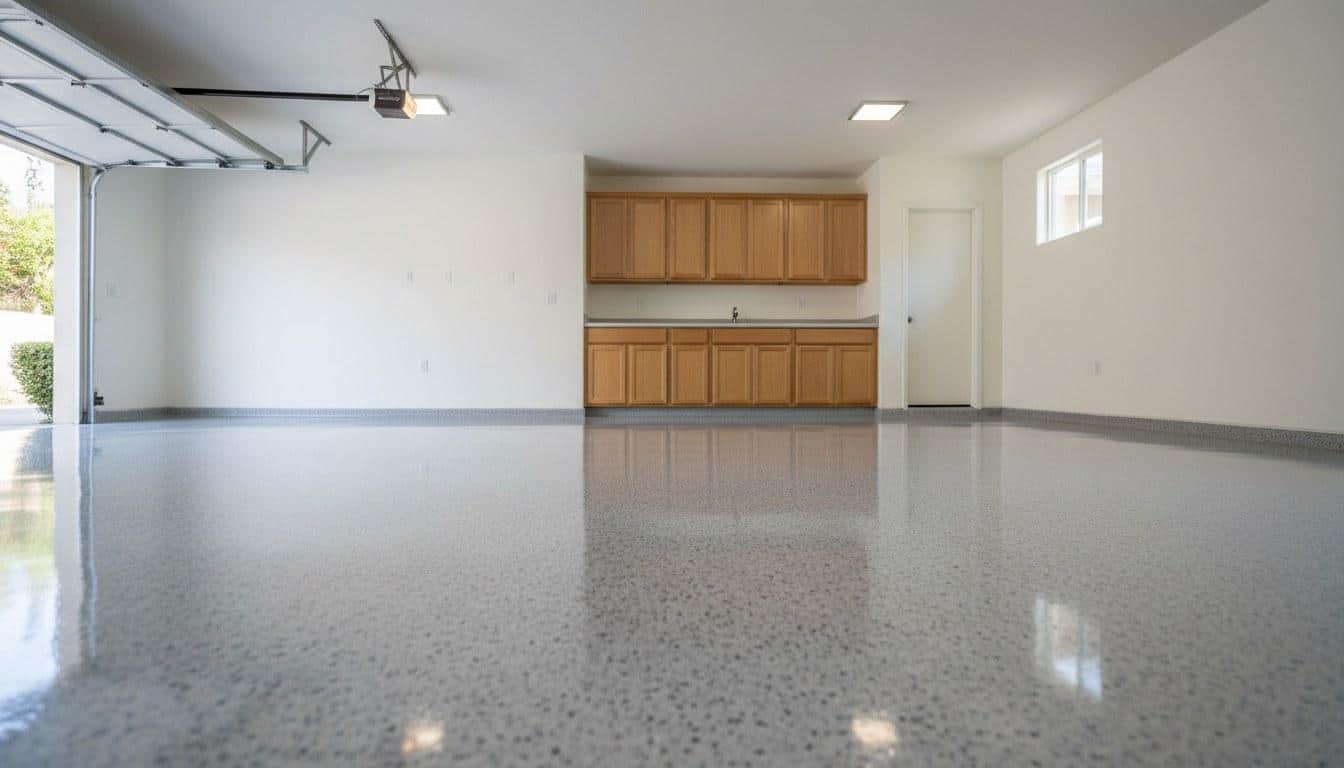
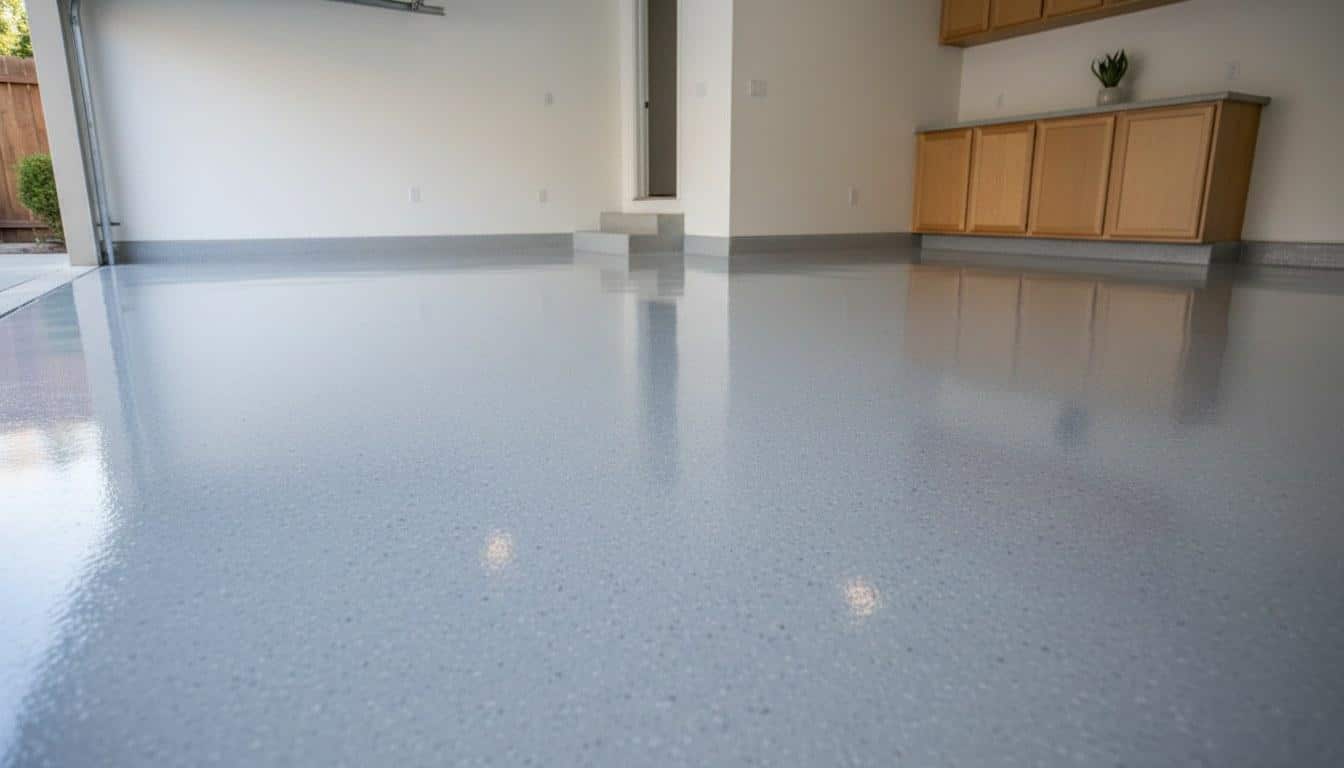
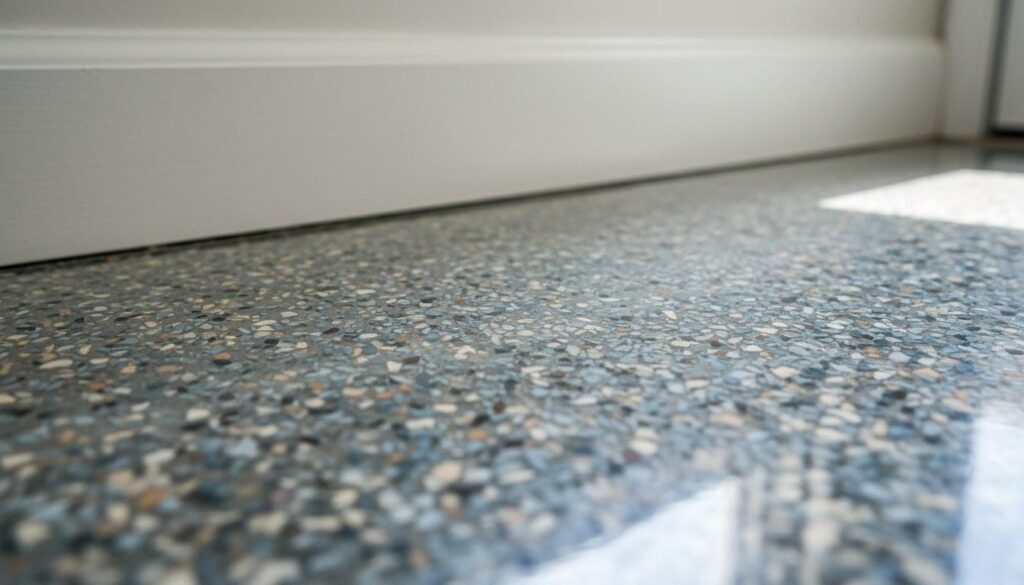
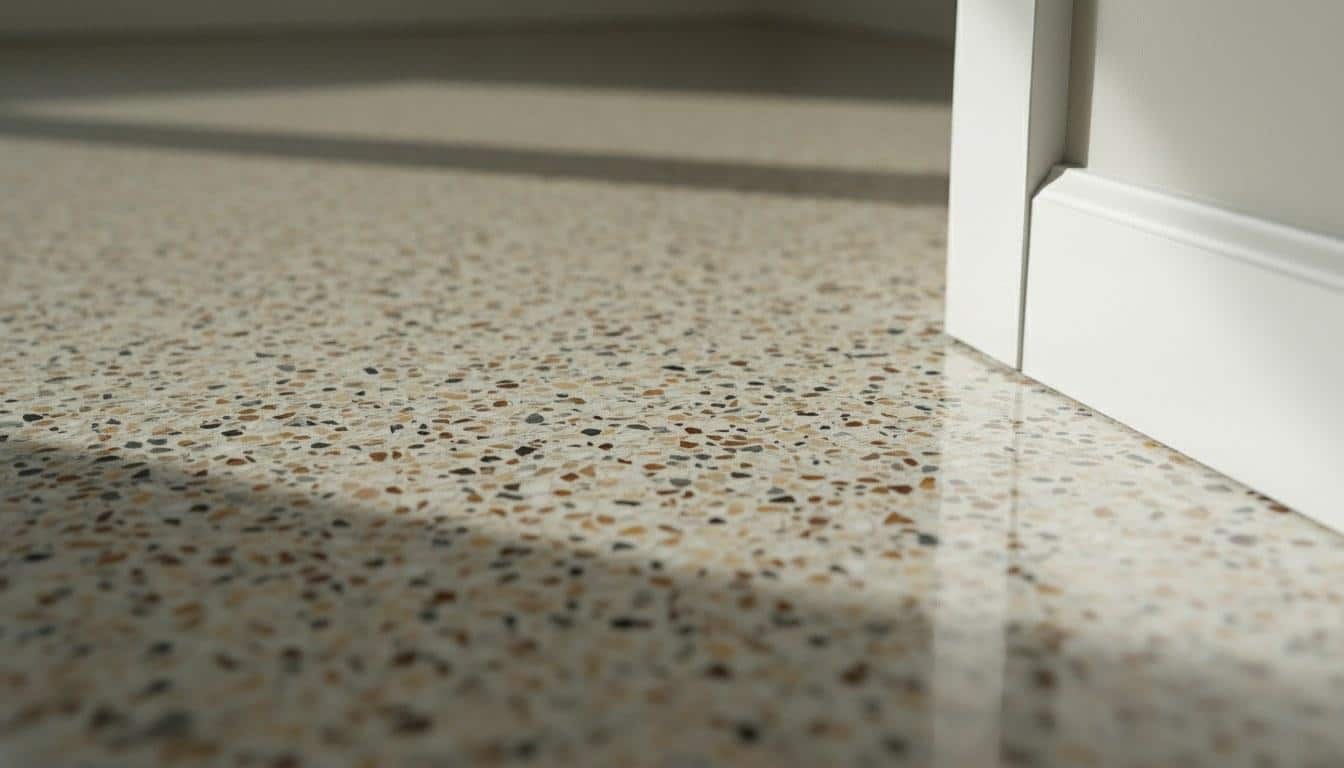
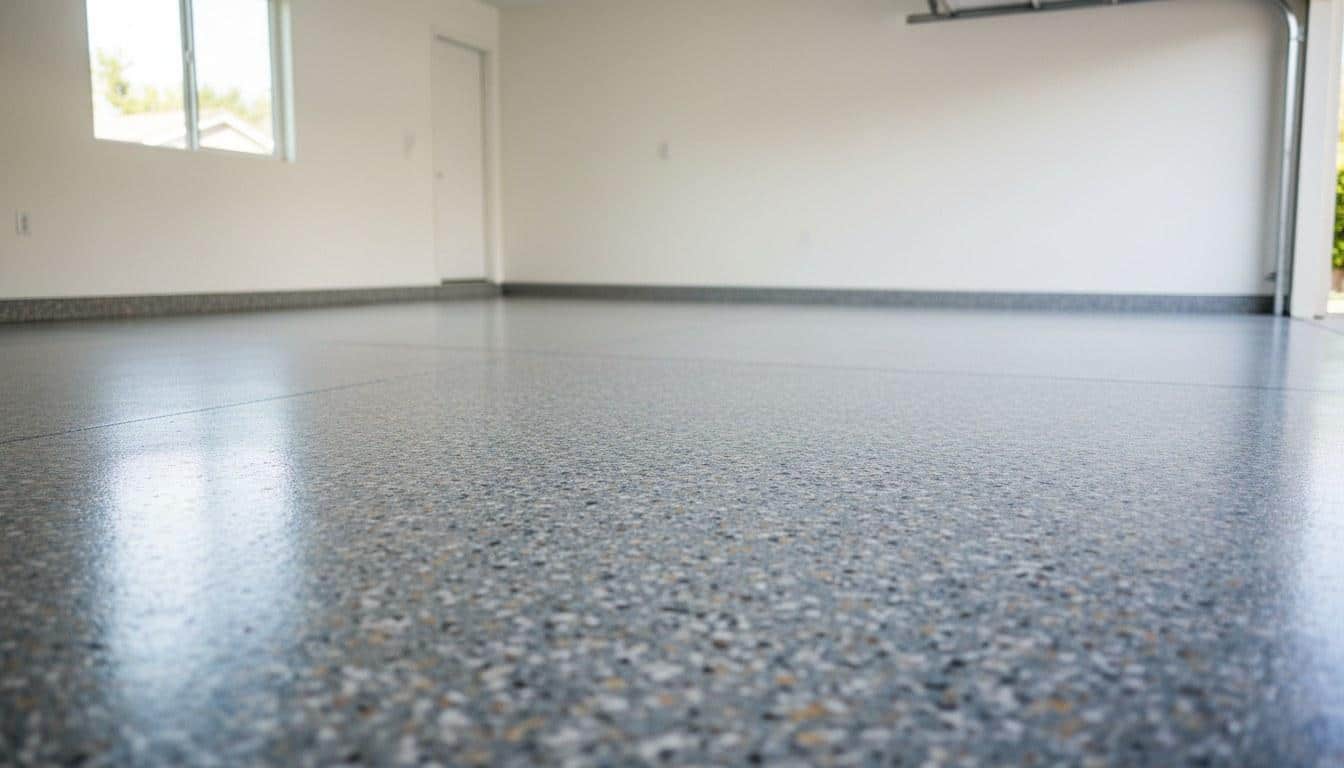
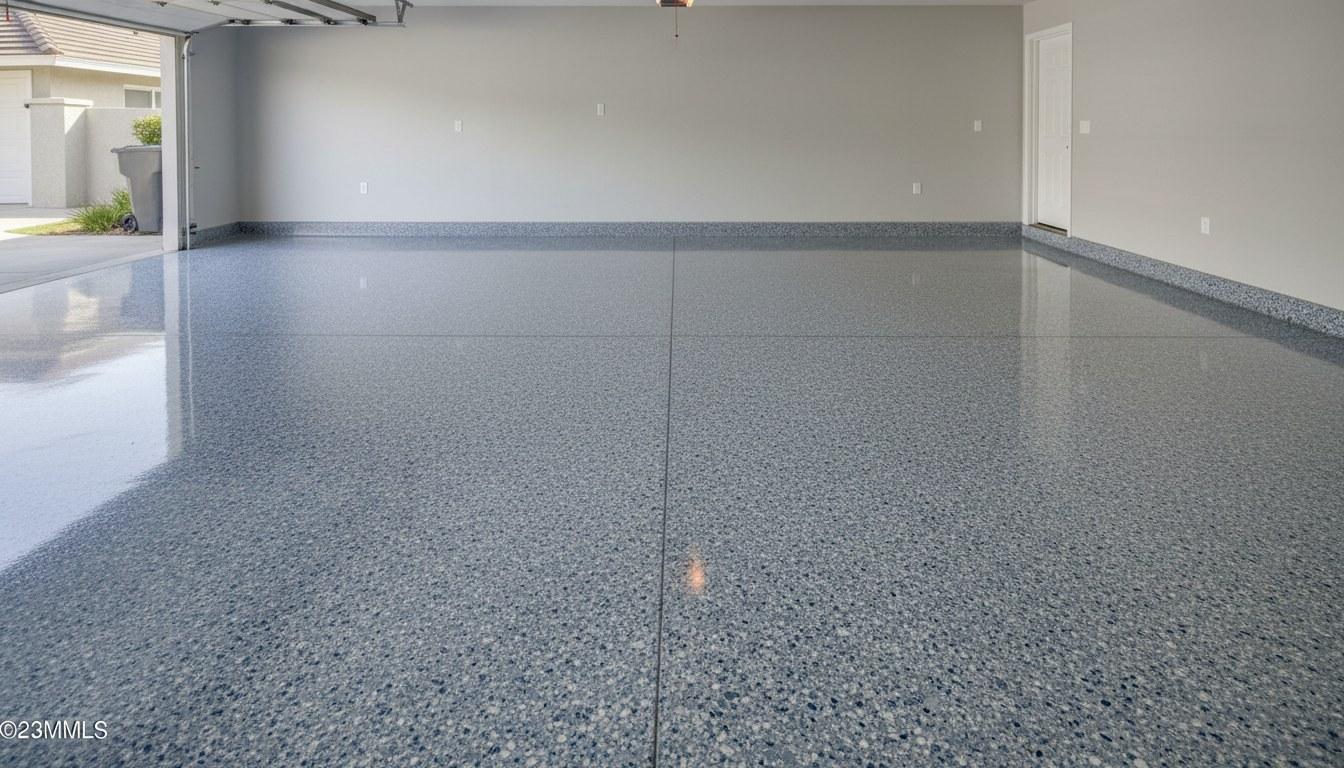
Chip & flake epoxy flooring is a multi-layer coating system where colored vinyl flakes or chips are broadcast into a wet epoxy base coat, then sealed under a clear polyurethane or polyaspartic topcoat. The result is a hard, seamless surface with a decorative speckled pattern that hides dirt, resists chemicals, and grips foot traffic safely.
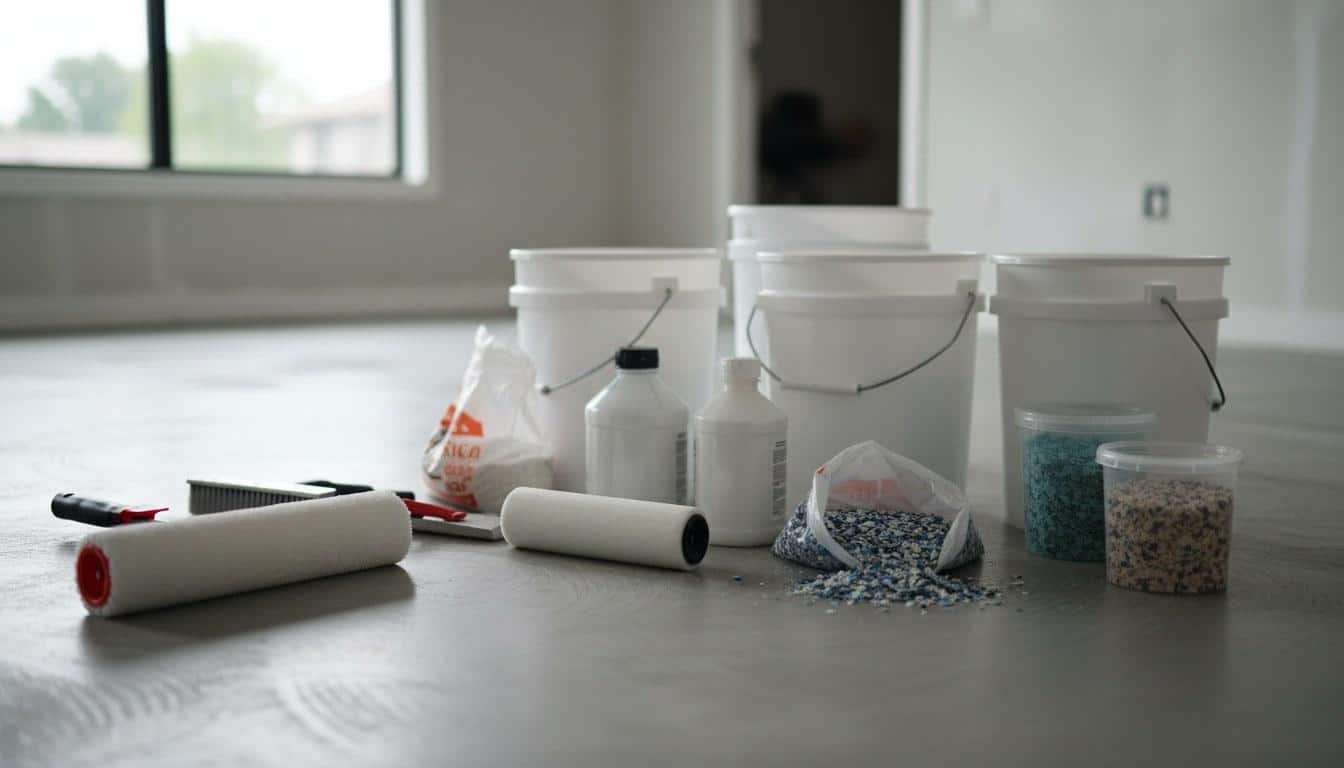
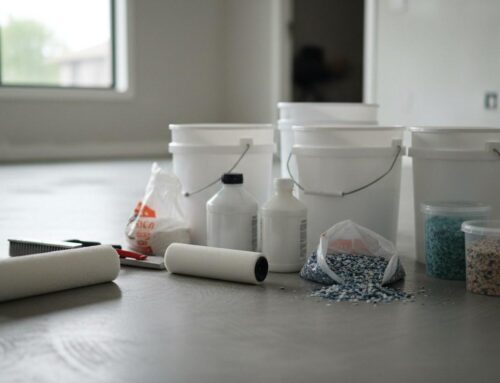
The system has three main layers. First, a primer or base epoxy coat bonds directly to the concrete. Second, vinyl color flakes — typically between 1/16 inch and 1/4 inch in size — are scattered across the wet base. Third, one or two clear topcoats lock everything in and determine the final sheen level, from matte to high gloss.
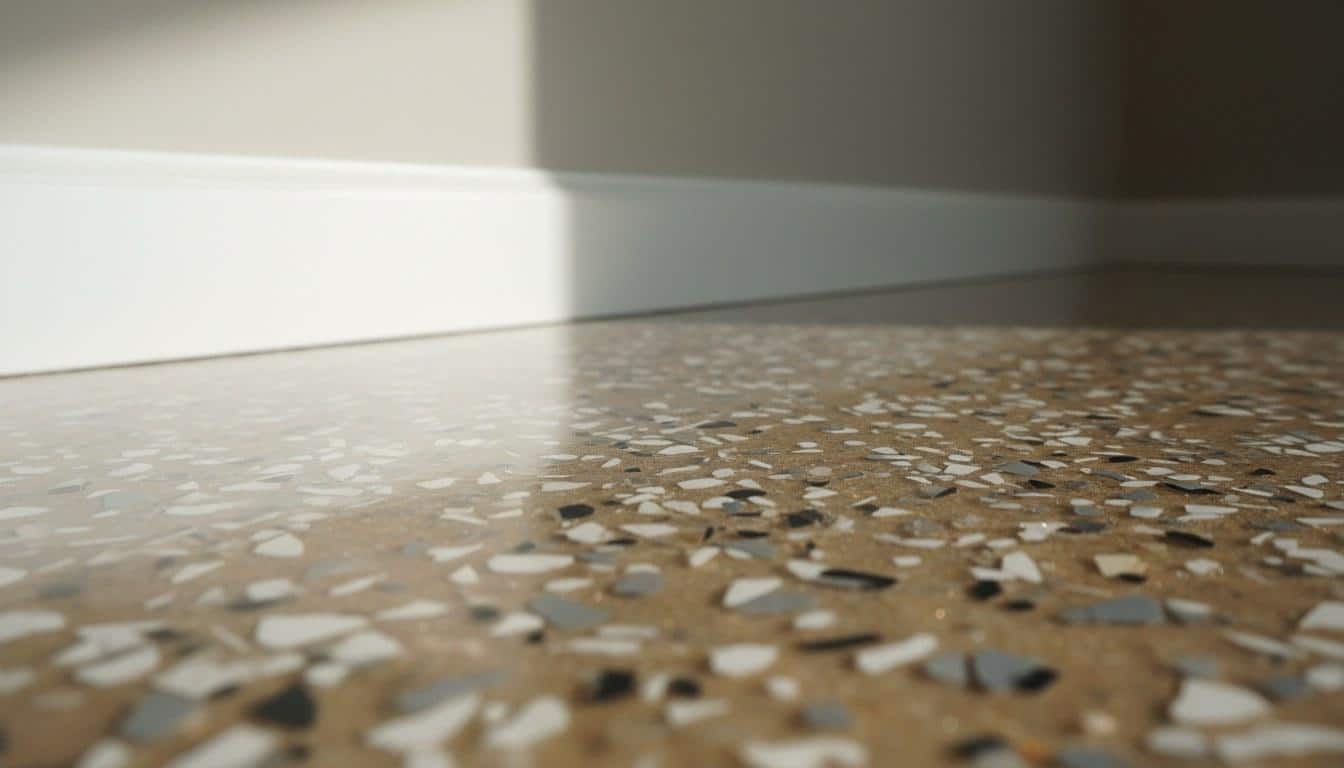
The flakes serve two purposes. They add visual texture that masks minor surface imperfections, and they create a slightly rough profile that improves traction, which matters a lot in garages and commercial kitchens where wet floors are common.
Color blends range from neutral grays and tans to bold blues and greens. Most installers offer dozens of pre-mixed blends, and some allow fully custom combinations. The chip size and broadcast density also affect the final look, from a light sprinkle to a full-broadcast style where flakes cover nearly 100 percent of the surface.
What Should You Think About Before Installing Chip & Flake Epoxy Flooring in Northridge?
The three biggest factors that affect how well a chip & flake epoxy floor performs are concrete condition, moisture levels, and topcoat selection. Skipping any of these during the planning stage is the fastest way to end up with a floor that peels within a year.
Concrete condition: Epoxy bonds to concrete mechanically, which means the surface must be clean, structurally sound, and properly profiled. Cracks wider than 1/8 inch typically need to be filled before coating. Oil stains must be degreased and removed, not just covered.
Moisture is a particular concern in Northridge. Southern California’s climate includes dry Santa Ana wind events in fall and significant temperature swings that cause concrete to expand and contract. Slabs on grade can also wick moisture from below. A simple calcium chloride moisture test or a relative humidity probe test — both industry-standard methods — should be done before any coating is applied. Moisture vapor emission rates above 3 pounds per 1,000 square feet per 24 hours can cause epoxy to delaminate.
Topcoat selection matters for longevity. Polyaspartic topcoats cure in as little as 1 to 4 hours and offer strong UV resistance, which is important for Northridge spaces exposed to direct sunlight. Standard polyurethane topcoats take 24 hours or longer to cure but are often more cost-effective for interior spaces. ENERGY STAR-rated reflective coatings can also reduce heat absorption in sun-exposed garages.
| Factor | What to Check | Why It Matters |
|---|---|---|
| Concrete moisture | Calcium chloride or RH probe test | High moisture causes delamination |
| Surface cracks | Inspect for cracks wider than 1/8 inch | Unfilled cracks telegraph through the coating |
| Oil contamination | Degrease and test adhesion | Oil prevents epoxy from bonding |
| Topcoat type | Polyaspartic vs. polyurethane | Affects cure time, UV resistance, and cost |
| Flake size and density | Review samples in your lighting | Determines final appearance and traction level |
What Are the Most Common Mistakes Homeowners Make with Flake Epoxy Floors?
The most common mistake is skipping mechanical surface preparation and going straight to coating — this leads to peeling within 6 to 18 months. It is an easy trap to fall into, especially with big-box DIY kits that promise a one-day install.
- Using acid etching instead of diamond grinding: Acid etching is faster and cheaper, but it does not open the concrete pores as effectively as a diamond grinder or shot blaster. Industry standards from the ACCA and concrete coating associations consistently recommend mechanical prep for any coating expected to last more than 3 to 5 years.
- Applying epoxy in temperatures below 50°F or above 90°F: Epoxy is temperature-sensitive during the cure window. In Northridge summers, garage temperatures can exceed 95°F by midday, which shortens the working time and causes bubbling. Morning application is strongly preferred during June through September.
- Assuming one coat is enough: Many DIY kits include only a single epoxy layer. A professionally installed chip & flake system typically uses a minimum of 3 layers — base coat, flake broadcast, and at least one clear topcoat — for a total dry film thickness of around 20 to 30 mils.
- Not sealing the edges and expansion joints: Leaving these areas uncoated creates entry points for water and chemicals that can undermine the entire floor over time.
Our team sees delamination calls most often in late summer, after a season of heat cycling on floors that were installed without proper prep. In the past two summers, roughly 7 out of 10 repair calls we received in Northridge involved floors that had been etched rather than ground before coating.
In the past two summers, roughly 7 out of 10 repair calls we received in Northridge involved floors that had been etched rather than ground before coating.
How Is Chip & Flake Epoxy Flooring Actually Installed? A Step-by-Step Overview
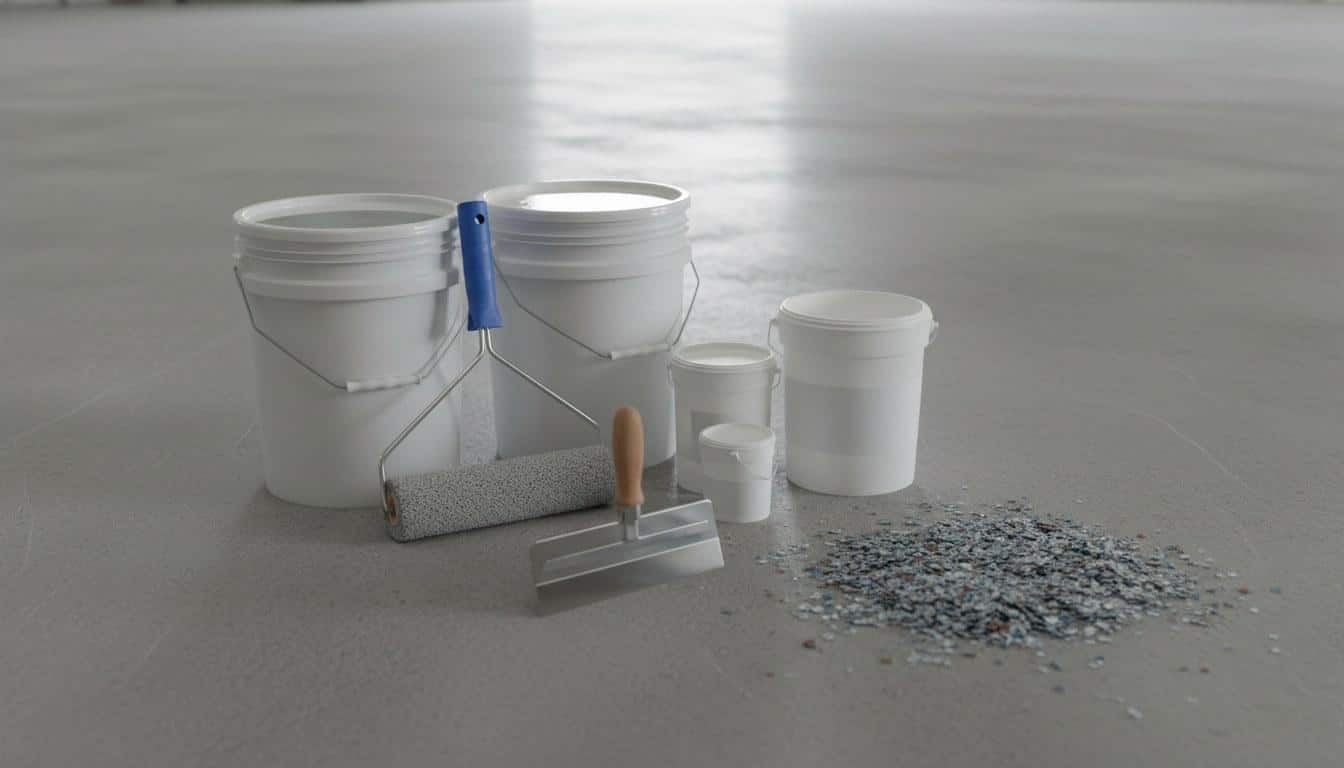
A professional chip & flake epoxy floor installation typically takes 1 to 2 days for a standard 2-car garage of 400 to 500 square feet, with a full cure window of 5 to 7 days before heavy vehicle traffic. Here is what the process looks like from start to finish.
- Surface inspection and repair: The installer evaluates the concrete for cracks, spalling, and moisture. Cracks are filled with polyurea or epoxy filler. Oil stains are treated with a degreaser and mechanical scrubbing.
- Mechanical grinding: A walk-behind diamond grinder or shot blaster opens the concrete surface to a concrete surface profile (CSP) of 2 to 3, which is the standard range for epoxy adhesion.
- Primer coat application: A penetrating epoxy primer is rolled on and allowed to cure for 4 to 8 hours. This layer seals the slab and prevents outgassing bubbles.
- Base coat and flake broadcast: The colored epoxy base coat is applied, and vinyl flakes are broadcast by hand or with a broadcast tool. Full-broadcast coverage uses roughly 30 to 50 pounds of flakes per 1,000 square feet.
- Scraping and vacuuming: Once the base coat cures, loose flakes are scraped flat and vacuumed to create a uniform surface.
- Topcoat application: One or two clear coats of polyaspartic or polyurethane are rolled on. Each coat adds hardness, chemical resistance, and gloss.
- Cure and inspection: Light foot traffic is typically safe after 24 hours. Full cure for vehicle traffic takes 5 to 7 days, depending on temperature and humidity.
Market pricing for professional chip & flake epoxy flooring in the Southern California region typically ranges from around $3 to $7 per square foot, depending on scope, surface condition, number of coats, and custom flake blends. Complex repairs, moisture mitigation, or premium polyaspartic topcoats move the cost toward the higher end of that range. For an accurate number, request a custom quote from Five Star Epoxy & Coatings.
How Does Chip & Flake Epoxy Compare to Other Flooring Options?
Chip & flake epoxy flooring outperforms plain epoxy paint, polished concrete, and floor tile in most garage and light commercial settings when durability, maintenance, and traction are the top priorities.
| Option | Durability | Slip Resistance | Maintenance | Best For |
|---|---|---|---|---|
| Chip & flake epoxy | High (10-20 year lifespan with proper care) | Excellent | Low — sweep and mop | Garages, commercial floors, patios |
| Epoxy paint (1-part) | Low (peels in 2-5 years) | Poor without additive | Moderate — recoating needed | Low-traffic interior use only |
| Polished concrete | High | Moderate (slippery when wet) | Low — periodic sealing | Retail, showrooms |
| Ceramic tile | Moderate | Varies by tile | High — grout maintenance | Bathrooms, kitchens |
For Northridge homeowners dealing with hot summers and UV-heavy conditions, chip & flake epoxy with a UV-stable polyaspartic topcoat is generally the most practical long-term choice. Polished concrete is a strong alternative for showroom-style spaces, but it does not offer the same traction or chemical resistance without additional sealer layers.
Why Hire a Local Epoxy Flooring Pro in Northridge, CA?
A local installer who works regularly in Northridge understands the specific conditions that affect epoxy performance here — concrete slab ages, summer heat, and the moisture behavior common in the San Fernando Valley.
Local pros also know the best application windows. Northridge summers regularly push afternoon temperatures past 90°F, which compresses epoxy working time significantly. A local crew schedules early-morning starts and adjusts mix ratios for the ambient conditions — details that matter for adhesion and finish quality.
Accountability matters too. A contractor licensed by the California Contractors State License Board (CSLB) is legally required to stand behind their work and carry proper insurance. That protects you if anything goes wrong after installation. Out-of-area or unlicensed crews often disappear when warranty issues come up months later.
Five Star Epoxy & Coatings is based in Northridge, CA and serves homeowners and businesses across the San Fernando Valley. Our installers work with the local slab conditions and climate daily, and we apply mechanical prep on every job — not just when it is convenient.
Get a Free Estimate for Chip & Flake Epoxy Flooring in Northridge, CA
Ready to upgrade your garage, patio, or commercial floor? Schedule a free on-site estimate with Five Star Epoxy & Coatings and get a written quote before any work begins. There is no pressure and no obligation.
Call (818) 355-3804 today to book your consultation. We serve all Northridge ZIP codes, including 91324, 91325, and 91326, as well as surrounding neighborhoods throughout the San Fernando Valley. Summer booking slots fill up fast, so reach out now to lock in your preferred date.
Frequently Asked Questions
How long does chip and flake epoxy flooring last in a Northridge garage?
A professionally installed chip and flake epoxy floor typically lasts 10 to 20 years with proper maintenance. In Northridge, heat cycling and UV exposure can shorten the lifespan if a UV-stable polyaspartic topcoat is not used. Regular sweeping and occasional mopping are all that is needed to keep the floor looking good. Avoid harsh chemical cleaners, which can dull the topcoat over time.
Can I install chip and flake epoxy flooring myself, or do I need a professional?
DIY kits are available, but most homeowners underestimate the importance of surface preparation. Without mechanical grinding, the epoxy is likely to peel within a few years. A professional installer in Northridge will use diamond grinders, proper primers, and commercial-grade coatings that bond far more reliably than retail kits. For a floor you want to last a decade or more, professional installation is the better investment.
How much does chip and flake epoxy flooring cost in Northridge?
In the Southern California regional market, professional chip and flake epoxy flooring typically ranges from about $3 to $7 per square foot, depending on the size of the space, the condition of the concrete, the number of coats, and the topcoat type selected. Moisture mitigation or extensive crack repair can add to that range. Contact Five Star Epoxy and Coatings at (818) 355-3804 for a custom quote based on your specific floor.
How soon can I park my car on a new epoxy floor?
Light foot traffic is usually safe within 24 hours of the final topcoat. However, vehicle traffic should wait at least 5 to 7 full days to allow the epoxy to reach its full hardness. Parking a car too soon can leave tire marks or cause surface impressions, especially in warm Northridge temperatures that can slow or alter the cure slightly.
What colors and flake styles are available for chip and flake epoxy floors?
Most professional installers offer dozens of pre-mixed vinyl flake blends in colors ranging from neutral grays and beiges to vibrant blues, greens, and reds. Flake size typically ranges from 1/16 inch to 1/4 inch, and broadcast density can go from a light scatter to full coverage where flakes cover nearly the entire surface. Five Star Epoxy and Coatings in Northridge can show you physical samples so you can see exactly how the blend will look under your lighting before committing.