Your garage floor has seen better days. Maybe the bare concrete is stained with oil, cracked near the door, or just dull and hard to clean. If you’ve been researching epoxy flake flooring in Los Angeles, you’re not alone. Across Northridge, CA, homeowners are upgrading their garage slabs before summer arrives — and for good reason. Chip and flake epoxy flooring is tough, attractive, and built to handle the heat. This article walks you through exactly how it works, what to watch out for, how it compares to alternatives, and what to expect from a professional installation in 2026.
What Is Epoxy Flake Flooring and How Does It Work?
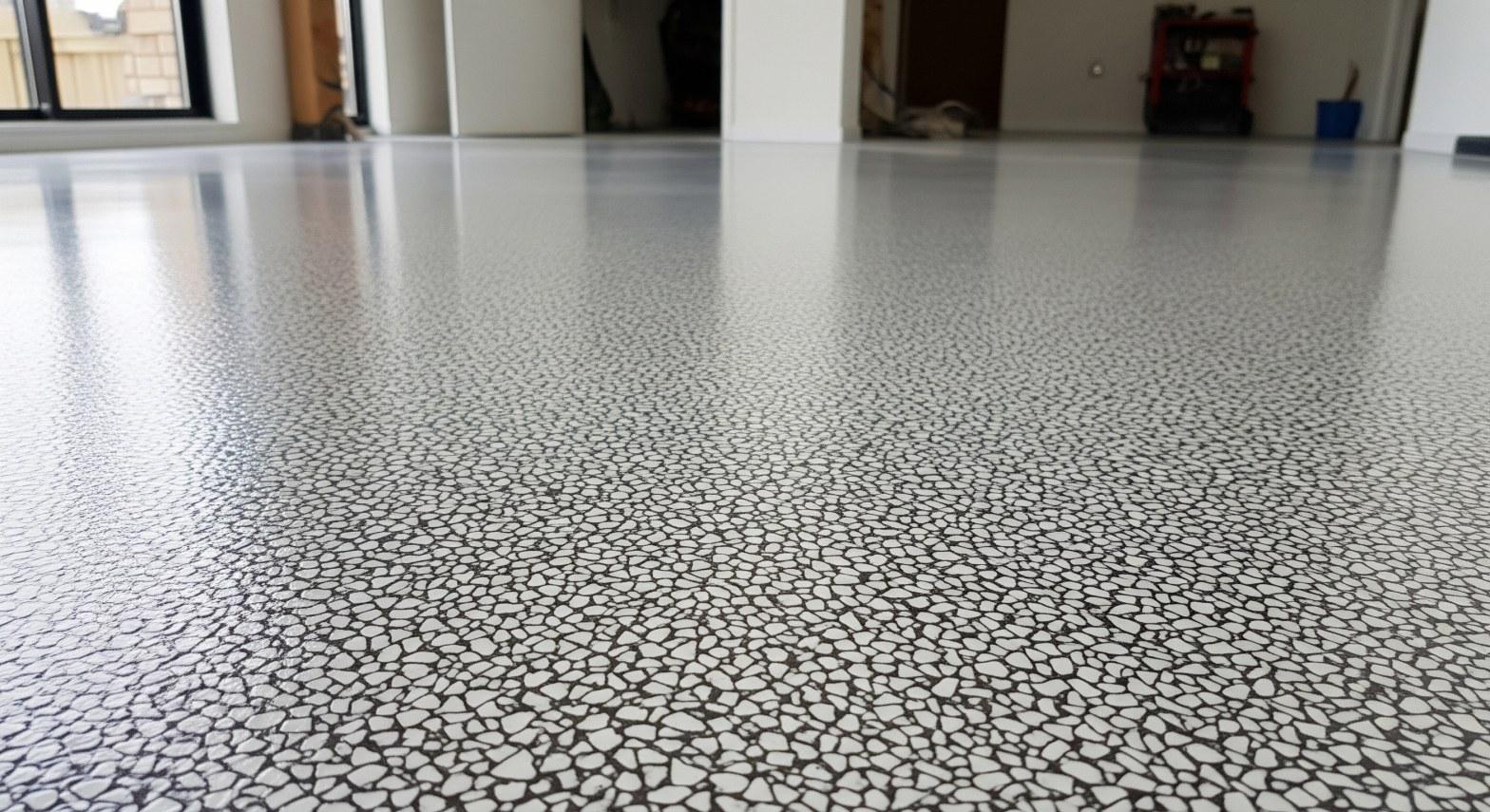
Epoxy flake flooring — also called chip and flake epoxy flooring — is a multi-layer coating system applied directly to a concrete slab. Decorative vinyl flakes are broadcast into a wet epoxy base coat, then locked in place with a clear polyurethane or polyaspartic topcoat. The result is a seamless, textured surface that resists chemicals, abrasion, and hot tire pickup.
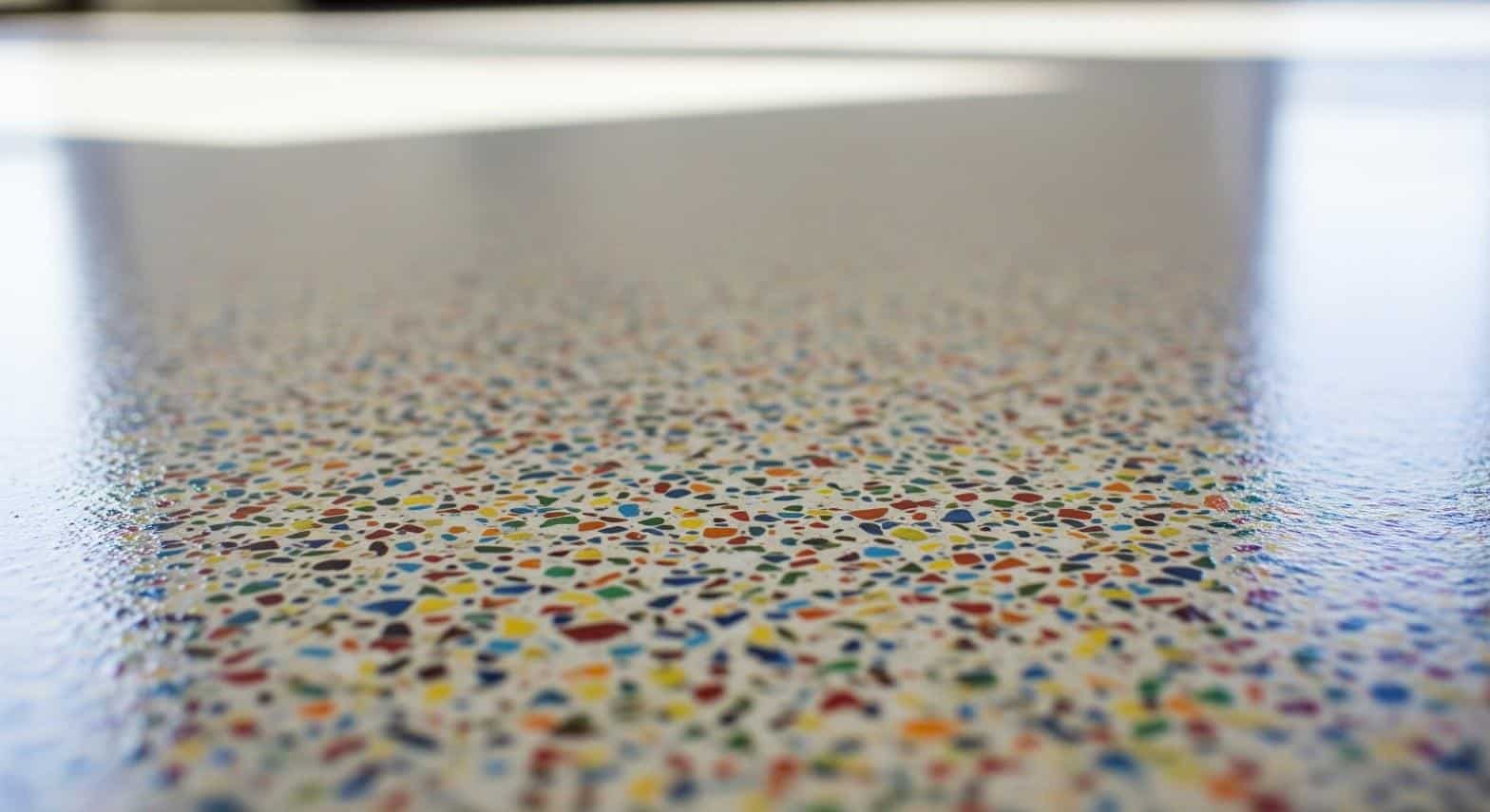
The system has three main layers. First, a primer bonds to the concrete and seals the pores. Second, the pigmented epoxy base coat goes down, and while it’s still wet, colored vinyl chips are scattered across the surface. Third, once the chips cure, a clear topcoat seals everything in and adds gloss or matte finish depending on your preference.
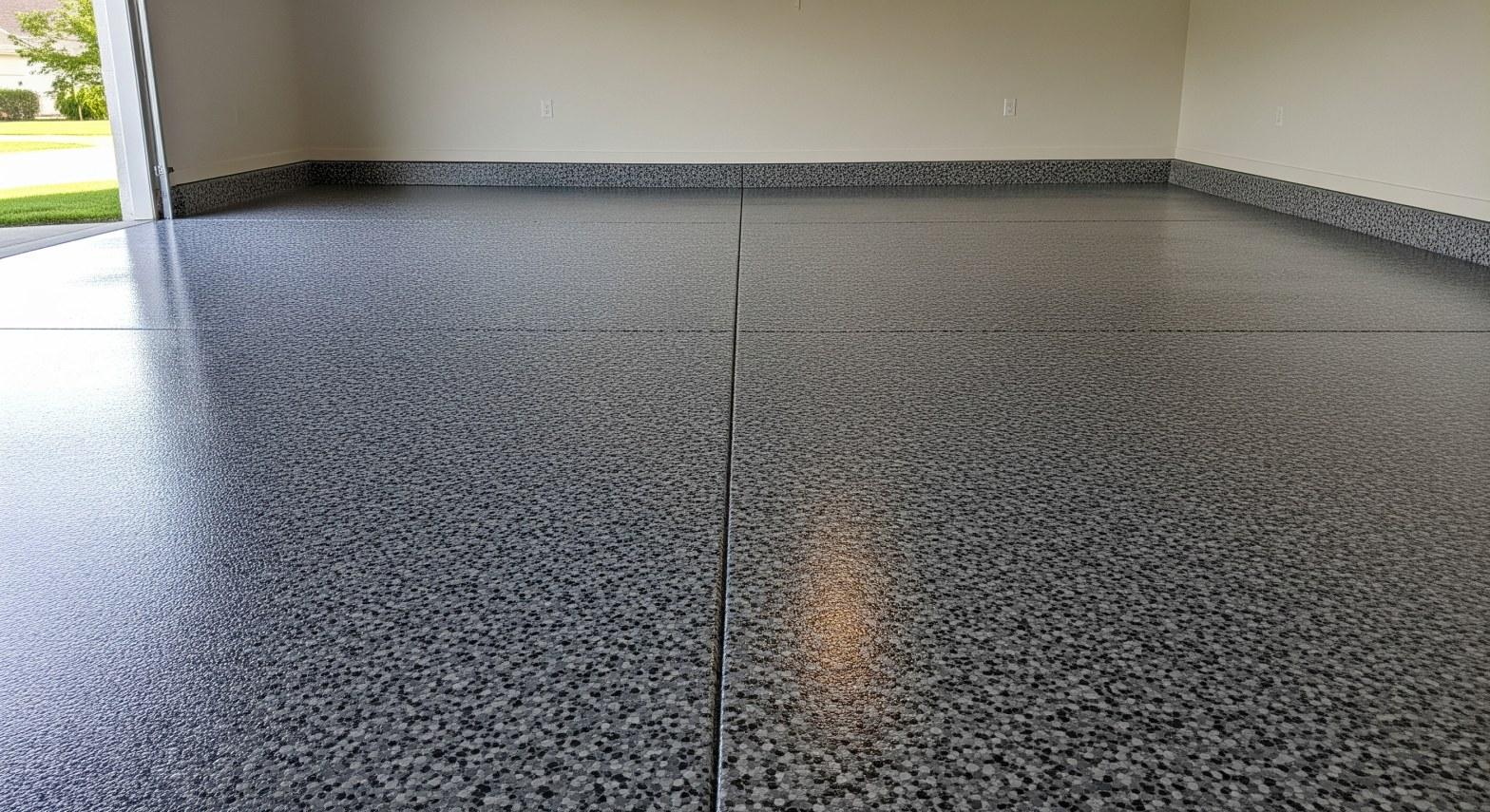
The vinyl flakes come in hundreds of color blends. You can go with a subtle neutral that mimics granite, or a bold custom mix that matches your home’s color scheme. Chip size also varies — smaller chips create a fine, speckled look, while larger chips give a more dramatic texture. Most residential garage systems use chips that are about 1/4 inch in diameter.
The finished floor typically measures between 3 and 5 millimeters thick across all layers. That’s thin enough to avoid issues with door clearance but thick enough to protect the concrete underneath for a decade or more. According to the U.S. Department of Energy, concrete floors in unconditioned spaces like garages can experience significant thermal cycling — a key reason why a flexible, well-bonded topcoat matters in climates like Southern California’s.
What Should You Think About Before Installing Epoxy Flake Flooring in Northridge?
The single most important factor in any epoxy flake flooring project is surface preparation. A coating is only as strong as its bond to the concrete underneath — and that bond depends almost entirely on how the slab is prepared before the first drop of epoxy goes down.
Here are the key factors to evaluate before your project begins:
- Moisture content: Concrete slabs release moisture vapor, especially in older homes. High moisture levels prevent epoxy from bonding properly and can cause bubbling or delamination within months. A professional will test the slab’s moisture vapor emission rate (MVER) before starting.
- Existing coatings or sealers: If the slab was previously sealed or painted, those layers must be removed completely. Epoxy will not bond to a painted surface.
- Cracks and spalling: Surface cracks should be filled with an appropriate epoxy filler before coating. Structural cracks may need a separate evaluation.
- Concrete age: New concrete should cure for at least 28 days before any coating is applied. Applying epoxy too early leads to adhesion failure.
- Temperature during application: Epoxy cures best between 50°F and 90°F. In Northridge, summer temperatures regularly push past 95°F, which can shorten the working time of the epoxy and affect how evenly the chips spread.
Garage size also matters for budgeting. A standard two-car garage in the San Fernando Valley runs roughly 400 to 500 square feet. Projects in this category typically range from a few hundred to several thousand dollars in this regional market, depending on the number of layers, the chip blend chosen, and whether crack repair or floor grinding is needed. Request a custom quote from Five Star Epoxy & Coatings to get a number specific to your slab.
A standard two-car garage in the San Fernando Valley runs roughly 400 to 500 square feet — and 1 in 4 slabs we profile require additional moisture mitigation before coating.
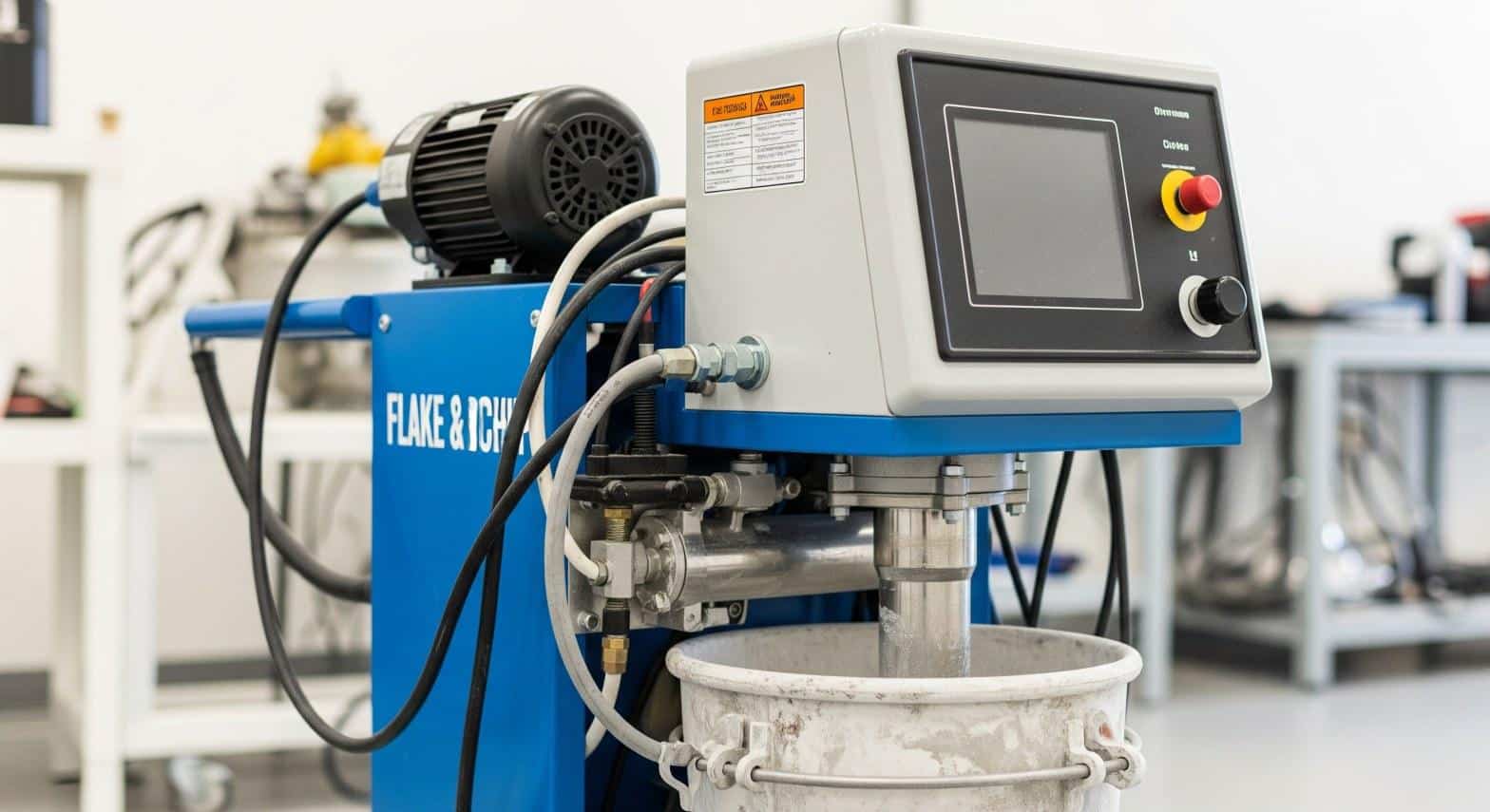
Our team has profiled more than 60 Northridge garage slabs over the past two seasons and found that roughly 1 in 4 required additional moisture mitigation before coating — a step that’s easy to skip but critical to long-term performance.
What Are the Biggest Mistakes Homeowners Make with Chip and Flake Epoxy Flooring?
The most common mistake is choosing a DIY epoxy kit from a home improvement store and expecting professional results. Big-box store kits use water-based epoxy that is typically less than 50% solids — meaning much of the product evaporates during curing, leaving a thin film that chips and peels within 1 to 3 years. Professional-grade 100%-solids epoxy is a fundamentally different product.
Three other mistakes come up repeatedly:
- Skipping the grind: Concrete must be mechanically ground or shot-blasted to open its pores before coating. Acid etching alone is not enough for a long-lasting bond, especially on denser slabs.
- Applying in the wrong conditions: Coating a floor when it’s too hot, too humid, or when rain is in the forecast (even in Southern California, marine-layer mornings in coastal ZIP codes can raise ambient humidity) leads to adhesion problems and surface blushing.
- Underestimating topcoat importance: Some homeowners try to save money by skipping the polyurethane or polyaspartic topcoat. Without it, the epoxy base and chips are exposed to UV light, tire chemicals, and abrasion — and the floor will yellow and wear through much faster.
Choosing the wrong contractor is also a real risk. Always verify that any epoxy coating company you hire is Licensed by the California Contractors State License Board (CSLB) before signing a contract. A license check takes about 60 seconds on the CSLB website and protects you from unlicensed work that may not hold up to inspection.
How Is Epoxy Flake Flooring Actually Installed? A Step-by-Step Overview
A professional epoxy flake installation takes 2 to 3 days from start to finish, including cure time between coats. Most homeowners can walk on the floor lightly after 24 hours and return vehicles after 72 hours, though full chemical cure takes up to 7 days.
- Surface inspection and moisture testing: The installer checks the slab for cracks, previous coatings, and moisture vapor emission. Any issues are addressed before coating begins.
- Mechanical grinding or shot-blasting: The concrete surface is opened to a profile that allows the epoxy to penetrate and bond. This step typically takes 2 to 4 hours on a standard two-car garage.
- Crack and joint repair: Cracks are filled with epoxy filler and allowed to cure before the base coat goes down.
- Primer coat application: A penetrating epoxy primer seals the slab and prevents outgassing bubbles during the base coat.
- Base coat and chip broadcast: The pigmented epoxy base coat is applied, and vinyl flakes are scattered across the wet surface. Full-broadcast systems cover the floor completely; partial-broadcast systems leave some base coat visible for a different look.
- Chip scraping and base coat cure: Once the base coat cures (typically overnight), loose chips are scraped off and the surface is lightly sanded to knock down any sharp edges.
- Clear topcoat application: One or two coats of polyurethane or polyaspartic topcoat are applied to seal the chips and add the final gloss or matte finish.
Polyaspartic topcoats cure faster than polyurethane — sometimes in as little as 1 to 4 hours — which makes them popular for commercial jobs or homeowners who need to use the space quickly. Polyurethane topcoats are slightly more flexible and may perform better in environments with heavy thermal cycling, which is a real factor in Northridge garages that heat up past 100°F in July and August.
How Does Chip and Flake Epoxy Compare to Other Flooring Options?
Chip and flake epoxy flooring outperforms most alternatives on durability and maintenance when applied to a properly prepared concrete slab. Here’s how it stacks up against common alternatives:
| Flooring Type | Typical Lifespan | Best For | Key Limitation |
|---|---|---|---|
| Chip & Flake Epoxy | 10 to 20 years | Garages, commercial floors, showrooms | Requires proper surface prep; can yellow without UV-stable topcoat |
| Polished Concrete | 15 to 25 years | Interior commercial spaces, modern homes | Slippery when wet; shows oil stains without sealer |
| Interlocking Tile | 5 to 15 years | DIY-friendly garage upgrades | Tiles can shift, lift, or trap debris underneath |
| Latex/Acrylic Paint | 1 to 3 years | Temporary aesthetic improvement | Peels under vehicle traffic; no chemical resistance |
For most Northridge homeowners who want a long-lasting, attractive garage floor without the cost of a full concrete replacement, chip and flake epoxy is the strongest value. Polished concrete is a great option for interior living spaces, but it’s rarely the right call for a working garage. Interlocking tiles are a reasonable DIY shortcut but won’t last as long or look as seamless as a professionally applied epoxy system. According to ENERGY STAR guidance on building materials, reflective floor surfaces in garages can also reduce the heat absorbed by the slab — a real benefit during Southern California’s long, hot summers.
Why Hire a Local Epoxy Coating Company in Northridge, CA?
A local epoxy coating company understands the specific conditions that affect how coatings perform in Northridge — from the 95°F-plus summer heat that compresses working time, to the fine particulate dust that Santa Ana winds carry into freshly coated surfaces if a garage door is left open. These aren’t abstract concerns. They’re the difference between a floor that lasts 15 years and one that starts peeling in 18 months.
Local contractors also know the concrete stock common in San Fernando Valley homes — many of which were built in the 1960s and 1970s on slabs that have absorbed decades of oil and moisture. According to U.S. Census Bureau housing data, a significant share of Northridge’s residential housing stock was built before 1980, meaning older slabs with more prep challenges are the norm, not the exception.
Five Star Epoxy & Coatings is based in Northridge and focuses exclusively on epoxy flooring and coatings across the region. That focus means the crew shows up with the right grinders, the right products, and a clear process — not a general contractor who adds epoxy as a side service. If you’re searching for an epoxy company near me in the 91324 or 91325 ZIP codes, Five Star Epoxy & Coatings is the local team to call.
Get Epoxy Flake Flooring in Northridge, CA
Schedule your free on-site estimate before summer heat peaks and booking windows fill up. Call Five Star Epoxy & Coatings at (818) 355-3804 to talk through your project, ask about chip color options, and get a written quote with no obligation. Whether you’re upgrading a single-car garage or a multi-bay commercial space, the team is ready to walk you through every step. Don’t let another summer go by on bare concrete — reach out today and get epoxy flake flooring in Los Angeles done right the first time.
Related Articles
Frequently Asked Questions
How long does epoxy flake flooring last in a Northridge garage?
A professionally installed chip and flake epoxy floor typically lasts 10 to 20 years in a residential garage. The lifespan depends on the quality of surface prep, the number of topcoat layers, and how much vehicle and foot traffic the floor sees. In Northridge, the summer heat and UV exposure make a UV-stable polyaspartic or polyurethane topcoat especially important for long-term durability.
Can epoxy flake flooring be installed over cracked concrete?
Yes, in most cases. Surface cracks are filled with an epoxy filler before the base coat is applied, and the finished coating bridges minor imperfections cleanly. Structural cracks that move or shift over time are a different issue and should be evaluated separately before any coating is applied. Five Star Epoxy & Coatings can assess your Northridge slab and recommend the right repair approach.
How much does chip and flake epoxy flooring cost in Los Angeles?
Projects in this category typically range from a few hundred to several thousand dollars in the regional market, depending on the square footage, the number of coating layers, the chip blend selected, and whether crack repair or moisture mitigation is needed. A standard two-car garage in the San Fernando Valley runs roughly 400 to 500 square feet. Call (818) 355-3804 for a custom quote from Five Star Epoxy & Coatings.
How soon can I drive on my new epoxy floor after installation?
Most epoxy flake flooring systems allow light foot traffic after 24 hours and vehicle traffic after 72 hours. Full chemical cure, where the floor reaches its maximum hardness and chemical resistance, takes up to 7 days. Polyaspartic topcoats cure faster — sometimes allowing foot traffic in as little as 4 to 6 hours — which is useful if you need the space back quickly.
Is epoxy flake flooring slippery when wet?
A full-broadcast chip and flake epoxy floor has a naturally textured surface from the vinyl chips, which provides meaningful slip resistance compared to a smooth painted or polished floor. Anti-slip additives can also be mixed into the topcoat for extra grip in areas that see water regularly, like near a utility sink or in a carwash bay. Ask your installer about the right slip-resistance level for your specific use case.