Does Pattern Complexity Really Impact Metallic Epoxy Costs?
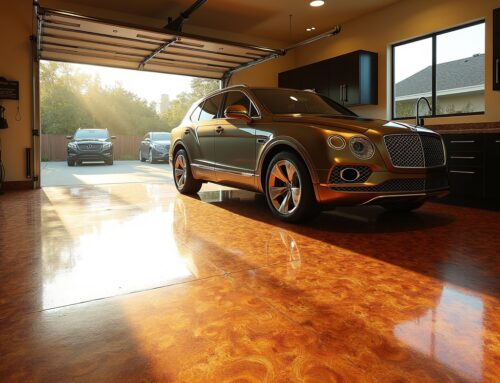
The most common misconception Granada Hills homeowners hold about metallic epoxy flooring is that all swirl patterns cost roughly the same because they use identical materials. This assumption leads many property owners to underestimate their project budgets by 40-60% when they request custom artistic designs without understanding the labor intensity involved. The reality is far more nuanced: while a basic linear swirl pattern typically ranges from $7 to $12 per square foot for installation, complex designs with two-tone patterns and basic swirls cost $12 to $18 per square foot, while high-end custom work ranges from $18 to $30 per square foot. The difference stems not from material costs—which remain relatively consistent—but from the specialized skill, time commitment, and artistic expertise required to create intricate three-dimensional effects that shift dramatically under Granada Hills’ abundant natural lighting.
📋 In This Guide
💰 Typical Metallic Epoxy Pattern Cost Ranges (2025)
- Simple Linear Swirls: $7–$12 per sq ft
- Organic Marble Patterns: $10–$15 per sq ft
- Multi-Tone Geometric Designs: $12–$18 per sq ft
- Fully Custom Artistic Installations: $18–$30 per sq ft
- Designer Consultation Fees: $150–$500 (one-time)
What Makes Some Metallic Swirl Patterns More Expensive Than Others?
Understanding the pricing structure for metallic epoxy patterns requires examining the labor hour differences across complexity levels. Color blends, swirls, logos, and 3D effects are more time-consuming and specialized, with artistic patterns costing more than simple ones. A standard 400-square-foot garage with a basic single-color metallic swirl requires approximately 8-10 installation hours from a qualified Epoxy Contractor in Granada Hills, while the same space featuring custom multi-color marble veining or geometric patterns demands 14-18 hours due to the meticulous manipulation techniques required during the epoxy’s limited working window.
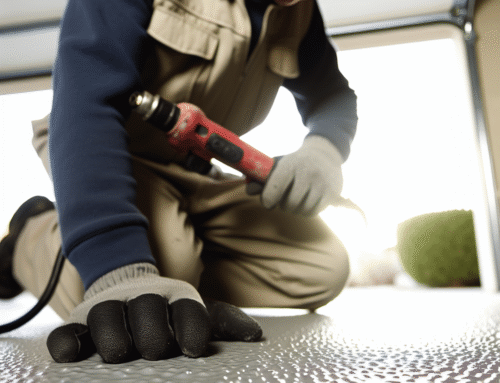
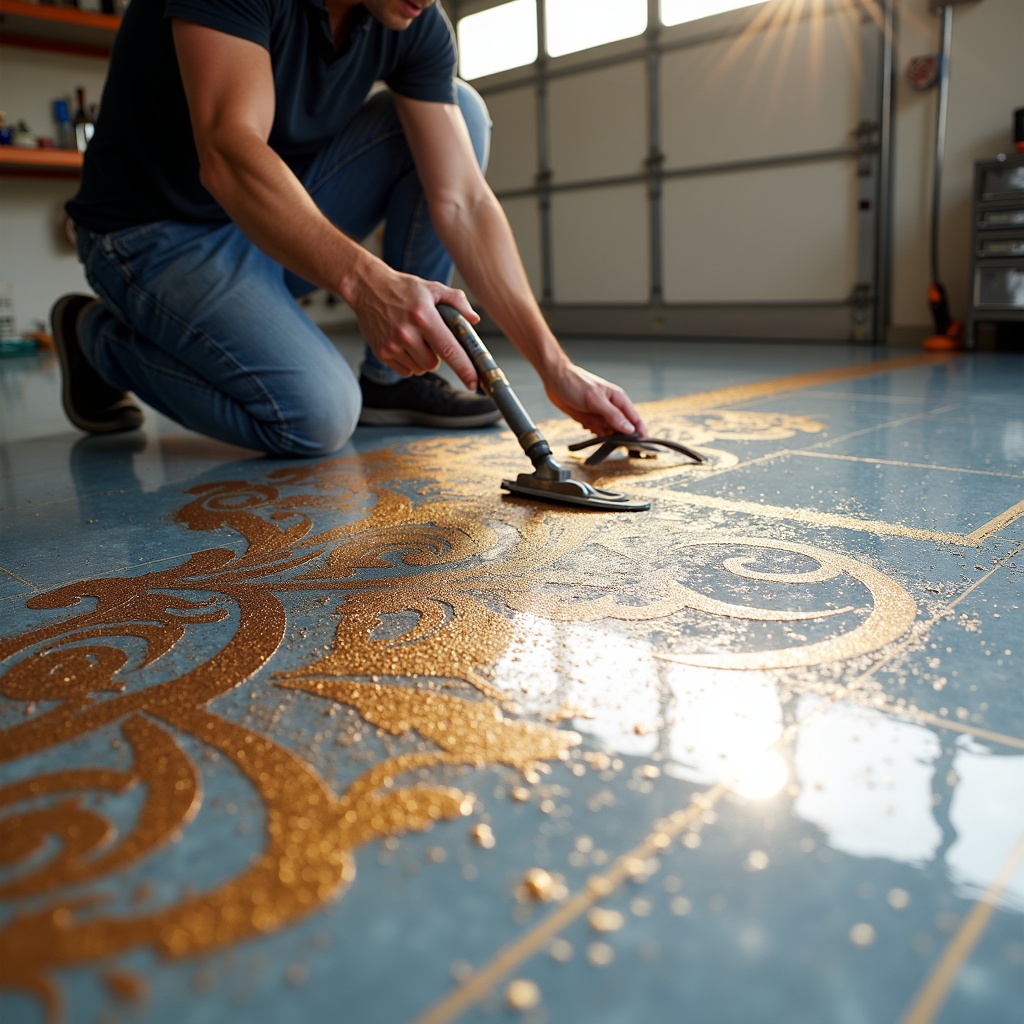
The installation process itself reveals why complexity drives costs. The mixed metallic epoxy is poured onto the floor in sections and spread using a squeegee or roller, requiring quick work as the epoxy sets relatively fast, with installers using tools to create desired swirl, marble, or fluid patterns. Simple linear patterns follow predictable application paths with consistent roller techniques, while custom designs require constant real-time adjustments, multiple pigment applications at precise timing intervals, and advanced manipulation methods including strategic alcohol broadcasting or heat gun techniques to achieve specific visual effects.
Skill Level Requirements Across Pattern Types
Not all epoxy installers possess the artistic training necessary for complex metallic work. Basic swirl patterns can be executed by technicians with 6-12 months of epoxy experience, but custom artistic installations demand craftspeople with 3-5 years of specialized metallic experience and often formal training in decorative concrete arts. This expertise commands premium labor rates in Granada Hills’ competitive market, where experienced metallic specialists charge $75-$125 per hour compared to $50-$75 for standard epoxy technicians.
Material Consumption Rate Variations
Pattern complexity also affects material usage beyond the base epoxy system. Premium pigments like copper, pearl, or holographic increase costs, while standard colors like silver, black, or blue are more budget-friendly. Custom multi-tone designs typically consume 20-35% more metallic pigments than single-color applications because installers must create distinct color zones, blend transitions, and achieve depth through layered pigment applications. A 500-square-foot installation with a simple silver swirl might use 2-3 pigment containers, whereas a custom copper-and-bronze geometric pattern could require 5-8 containers at $45-$85 each.
How Do Basic Linear Swirls Compare to Organic Marble Patterns?
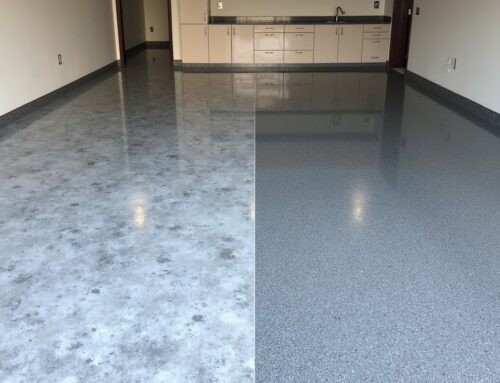
Basic linear swirl patterns represent the entry point for metallic epoxy aesthetics in Granada Hills homes. These designs feature directional flow patterns created by pulling the epoxy in consistent, parallel movements across the floor surface. The resulting effect resembles brushed metal or flowing water, with predictable light reflection that works well in epoxy flooring services in Granada Hills garage and workshop applications where durability matters more than dramatic visual impact.
Installation methodology for linear swirls follows straightforward protocols: after spreading the metallic epoxy base, installers use wide squeegees or specialty rollers to create uniform directional patterns in 4-6 foot sections, maintaining consistent pressure and speed throughout. The process typically requires one skilled installer working systematically across the space without complex color transitions or artistic decision-making during application.
| Pattern Characteristic | Basic Linear Swirls | Organic Marble Patterns |
|---|---|---|
| Installation Time (400 sq ft) | 8–10 hours | 12–16 hours |
| Installer Skill Required | Intermediate (6–12 months) | Advanced (2–4 years) |
| Pigment Consumption | 2–3 containers | 4–6 containers |
| Cost Per Square Foot | $7–$12 | $10–$15 |
| Typical Applications | Garages, workshops, utility spaces | Living areas, showrooms, luxury garages |
Organic marble patterns elevate the artistic complexity significantly. Marble effects achieve the elegant look of polished marble with swirling patterns in whites, grays, and blacks, with the dynamic movement mimicking natural marble veining but with enhanced durability. Creating authentic marble replication requires installers to study natural stone patterns, then recreate vein structures, color transitions, and depth variations through carefully timed pigment applications and manipulation techniques. The process demands artistic judgment throughout installation as each section must flow naturally into adjacent areas while maintaining realistic geological characteristics.
What Square Footage Pricing Should Granada Hills Homeowners Expect?
Project scale significantly influences per-square-foot pricing due to material economies and labor efficiency factors. Larger projects benefit from economies of scale, with small bathrooms or foyers costing more per square foot while expansive spaces like basements and showrooms may qualify for bulk material pricing and streamlined labor, slightly lowering the per-square-foot rate. This pricing dynamic particularly affects Granada Hills homeowners with the area’s median home value of $818,900, where properties often feature 2-3 car garages ranging from 400-750 square feet.
Small Space Premium (Under 300 Square Feet)
Compact installations including entryways, powder rooms, or single-car garages typically command $12-$18 per square foot even for moderate complexity patterns. This premium reflects fixed costs including mobilization, minimum material purchases, and the inability to achieve installation rhythm in confined spaces. Many professional installers in Granada Hills maintain 300-square-foot project minimums ranging from $2,400-$3,600 regardless of actual square footage.
Mid-Range Projects (300-800 Square Feet)
Standard residential garages and basement spaces fall into the optimal pricing zone where standard flake or solid epoxy coatings range from $6 to $9 per square foot in Southern California, while decorative finishes like metallic cost between $8 and $15+ per square foot depending on design, materials, and complexity. A typical 500-square-foot two-car garage in Granada Hills’ Knollwood neighborhood would cost $4,000-$7,500 for basic metallic swirls and $6,000-$12,000 for custom artistic patterns including professional surface preparation and premium topcoats.
Large-Scale Installations (800+ Square Feet)
Expansive residential basements, commercial showrooms, or combined garage-workshop spaces leverage volume advantages. While simple patterns might drop to $6-$10 per square foot on projects exceeding 1,000 square feet, custom artistic work rarely falls below $12 per square foot regardless of scale because the labor-intensive nature of complex pattern creation doesn’t significantly decrease with square footage increases.
Do Geometric Designs and Custom Artistic Installations Justify Premium Pricing?
Geometric metallic patterns represent a distinct category requiring precision layout, mathematical planning, and exacting execution standards. Unlike organic swirls that accommodate natural flow variations, geometric designs demand crisp borders, symmetrical repetition, and precise color separation achieved through masking techniques, staged application sequences, and multiple curing periods. Custom designs featuring veins, swirls, or multi-tone effects increase labor costs substantially because installers must work in smaller sections to maintain pattern integrity, often extending project timelines from 2 days to 4-5 days for complex geometric installations.
Fully custom artistic metallic floors push beyond standard pattern categories into bespoke territory. These installations might incorporate company logos, custom color matching to interior design palettes, three-dimensional depth illusions, or unique artistic concepts developed through collaborative design processes. The investment begins with designer consultation fees of $150-$500 for initial concept development, followed by material sampling, test panel creation, and potentially multiple site visits before installation commences. Many homeowners considering this work for garage floor epoxy installations discover that artistic consultation adds significant value to final results.
Designer Consultation and Custom Color Development
Professional metallic epoxy projects increasingly involve pre-installation design services. Experienced contractors provide digital renderings, physical sample boards showing proposed color combinations, and detailed pattern mockups helping homeowners visualize final results. These services typically cost $200-$500 for residential projects but prevent costly disappointments and change orders. Custom pigment mixing to match specific paint colors, fabric samples, or brand standards adds $150-$350 to material costs but ensures cohesive integration with existing interior design elements throughout Granada Hills homes.
What ROI and Resale Value Do Different Pattern Complexities Deliver?
Metallic epoxy flooring investments generate returns through both immediate functional benefits and long-term property value considerations. The financial analysis differs substantially between basic and custom pattern selections, particularly in Granada Hills’ competitive real estate market where unique high-end finishes influence buyer perceptions and pricing negotiations.
Basic metallic swirl patterns deliver strong functional ROI through durability and maintenance cost reductions. With proper care, metallic epoxy floors can last 10-20 years or more, eliminating repeated refinishing costs associated with traditional garage coatings or basement flooring. A Granada Hills homeowner investing $5,000 in a basic metallic garage floor realizes approximately $250-$400 annual savings in maintenance and replacement costs compared to alternative flooring systems, achieving payback within 12-15 years while enjoying superior aesthetics and performance throughout the floor’s lifespan.
Resale Value Considerations for Custom Patterns
Custom artistic metallic installations present more complex value propositions. While dramatic patterns create memorable first impressions during property showings and differentiate listings in competitive markets, highly personalized designs may not align with all buyer preferences. Real estate professionals serving Granada Hills’ neighborhoods including Granada Hills North and Granada Hills South report that tasteful custom metallic floors in neutral color palettes (grays, blacks, whites with subtle bronze or copper accents) typically add $3,000-$6,000 to perceived home value, while bold or highly specific artistic patterns may appeal strongly to 20-30% of buyers but potentially concern others about replacement costs.
Commercial and Luxury Residential Applications
For high-end residential installations in Granada Hills homes valued above $1 million or commercial showroom applications, custom artistic metallic floors deliver marketing and branding value exceeding direct cost recovery. Luxury homeowners report that distinctive flooring becomes a conversation centerpiece and personal satisfaction driver worth premium investment regardless of strict financial ROI. Commercial clients note that stunning metallic floors generate social media content, customer engagement, and brand differentiation justifying costs through marketing value rather than traditional return calculations.
How Do Surface Preparation and Existing Conditions Affect Pattern Pricing?
Concrete substrate quality fundamentally influences total metallic epoxy project costs regardless of pattern complexity selected. Floor condition and prep work significantly impact final costs, with cracks, oil stains, moisture issues, or uneven slabs often requiring extra labor and materials as professional contractors grind the surface, repair damage, and possibly apply moisture barriers before laying epoxy. These preparatory requirements add $1–$3 per square foot depending on effort needed and can disproportionately affect complex pattern installations where substrate imperfections telegraph through finished surfaces more visibly than in simple designs.
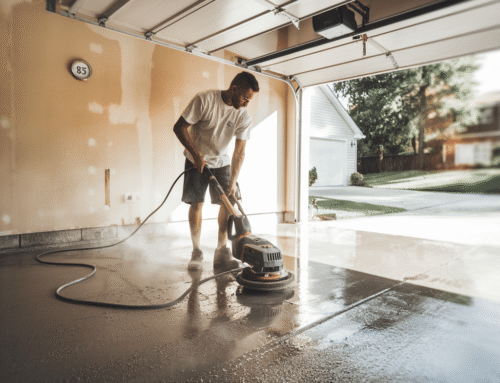
Granada Hills properties built before 1990 frequently present concrete slabs with settlement cracks, surface deterioration, and oil contamination requiring extensive remediation. Professional epoxy floor preparation protocols include diamond grinding to open concrete pores, crack routing and filling with flexible epoxy compounds, acid etching or mechanical profiling to achieve proper surface texture, and thorough degreasing with industrial solvents. Custom pattern installations demand higher preparation standards because any remaining contamination or surface irregularity disrupts metallic pigment flow patterns and creates visual defects in finished floors.
Moisture Mitigation Requirements
Southern California’s climate creates unique moisture challenges despite Granada Hills’ relatively dry conditions. Concrete slabs in contact with soil can develop moisture vapor transmission issues compromising epoxy adhesion. Professional installers perform calcium chloride or relative humidity testing before metallic applications, particularly for basement or ground-level installations. When testing reveals moisture levels exceeding epoxy tolerance thresholds, moisture mitigation primers or vapor barrier systems add $2-$4 per square foot to project costs but remain essential for long-term performance regardless of pattern complexity chosen.
What Budget Planning Approach Works Best for Granada Hills Homeowners?
Developing realistic metallic epoxy budgets requires homeowners to balance aesthetic aspirations against financial constraints and property value considerations. Given Granada Hills’ median household income of $99,742, most homeowners approach flooring investments with cost-consciousness while maintaining quality standards appropriate for homes averaging $818,900 in value. The strategic budgeting process begins with establishing total project parameters including square footage, substrate condition assessment, and desired outcome visualization before requesting professional estimates.
Working backward from available budgets often proves more effective than starting with dream pattern selections. A homeowner with $8,000 allocated for a 500-square-foot garage floor can realistically achieve mid-range organic marble patterns ($10-$14 per square foot installed) after accounting for standard preparation work, while the same budget applied to a 700-square-foot space necessitates basic linear swirls ($7-$10 per square foot) to remain financially feasible. Professional contractors including Five Star Epoxy & Coatings provide detailed breakdowns separating preparation costs, material expenses, labor charges, and optional upgrades enabling informed decision-making aligned with budget realities.
Phased Installation Strategies
Budget-conscious Granada Hills homeowners increasingly adopt phased approaches for larger projects. Initial installations might cover high-visibility areas like main garage bays with custom patterns while deferring workshop or storage zones to future phases, or beginning with basic patterns throughout with provisions for future artistic enhancement through additional metallic layers or decorative saw-cut borders. This strategy spreads costs across multiple years while delivering immediate functional benefits and allowing homeowners to assess installer quality and pattern preferences before committing to comprehensive custom work.
For Granada Hills property owners ready to transform concrete surfaces with stunning metallic epoxy patterns matched to your budget and aesthetic vision, Five Star Epoxy & Coatings brings specialized expertise in both simple swirl applications and complex custom artistic installations. Our team provides transparent pricing, detailed pattern consultations, and professional execution ensuring your investment delivers maximum visual impact and long-term durability. Contact us at (818) 355-3804 to schedule a free on-site assessment and discuss pattern options perfectly suited to your space and budget. We serve all Granada Hills neighborhoods including Knollwood, Granada Hills North, and Granada Hills South, plus nearby communities in Epoxy flooring in Northridge and Epoxy flooring in Porter Ranch.