Epoxy Flooring Maintenance Checklist for Woodland Hills Homes in 2026
A complete 2026 maintenance checklist for epoxy floors in Woodland Hills, CA. Covers seasonal tasks, warning signs, pro inspection details, and care tips for chip-and-flake and solid-color coatings.
A lot of Woodland Hills homeowners spend good money on epoxy flooring installation in Woodland Hills and then forget about it until something goes wrong. The floor looks great for a year or two, then slowly loses its shine, starts showing scuffs, or develops small chips near the garage door. Most of that damage is preventable with a simple maintenance routine. This checklist covers everything you need to keep your epoxy coating in top shape through 2026 — season by season, task by task, with clear guidance on what you can handle yourself and when to call a pro.
Why Does Epoxy Flooring Maintenance Matter in Woodland Hills, CA?
Epoxy coatings in Woodland Hills face a specific set of stresses that homeowners in cooler climates simply don’t deal with. Summer temperatures in the San Fernando Valley regularly push past 95°F, and concrete slabs absorb and hold that heat for hours. That thermal cycling — heating up and cooling down repeatedly — puts stress on the bond between the epoxy and the concrete below. Over a season, it adds up.
The NOAA climate data for the greater Los Angeles basin shows average July highs well above 90°F inland, which is exactly what Warner Center and Vista de Oro neighborhoods experience. Santa Ana wind events in fall also bring dry, abrasive air that can dull an unprotected topcoat faster than normal wear.
On top of heat, UV exposure is a real factor. Garage doors open for hours at a time, and south- or west-facing patios get direct sun through most of the day. Without UV-stable topcoats, epoxy can amber or chalk within a few years. Good maintenance habits slow that process significantly and extend the life of your epoxy flooring installation in Woodland Hills by years.
What Should You Do Each Season to Protect Your Epoxy Floor?
Seasonal maintenance for epoxy floors takes less than 30 minutes per quarter. The key is consistency — small tasks done on schedule prevent the larger repairs that cost real money. Here is what each season calls for in the Woodland Hills climate.
Spring (March through May)
- Deep clean the surface: Use a pH-neutral cleaner and a soft mop to remove any winter grime, tire marks, or oil drips that built up over cooler months.
- Inspect the topcoat: Look for dull patches, micro-scratches, or areas where the sheen has faded. Early dullness is easier to buff out than to recoat.
- Check expansion joints and edges: Winter moisture, even mild Southern California rain, can work into unsealed edges. Reseal any gaps wider than 1/16 inch.
- Test drainage: Pour a small amount of water on the floor and watch where it flows. Pooling near the garage door threshold can undermine the coating over time.
Summer (June through August)
- Increase sweep frequency: Grit and sand tracked in from dry summer landscaping act like sandpaper underfoot. Sweep at least twice per week.
- Use floor mats under vehicles: Hot tires sitting on epoxy for hours can cause tire marks or, on older coatings, slight surface softening. A mat under each tire prevents contact.
- Avoid harsh chemical spills: Summer projects — painting, staining, fertilizing — bring more chemicals into the garage. Wipe up any spill within 10 minutes.
- Check for hot-tire pickup: Run your hand across areas where vehicles park. If you feel any tackiness, the topcoat may need attention before the next summer season.
Fall (September through November)
- Rinse after Santa Ana events: Wind-blown dust and debris during fall Santa Ana conditions carries fine abrasive particles. A quick rinse and dry mop after major wind events protects the topcoat.
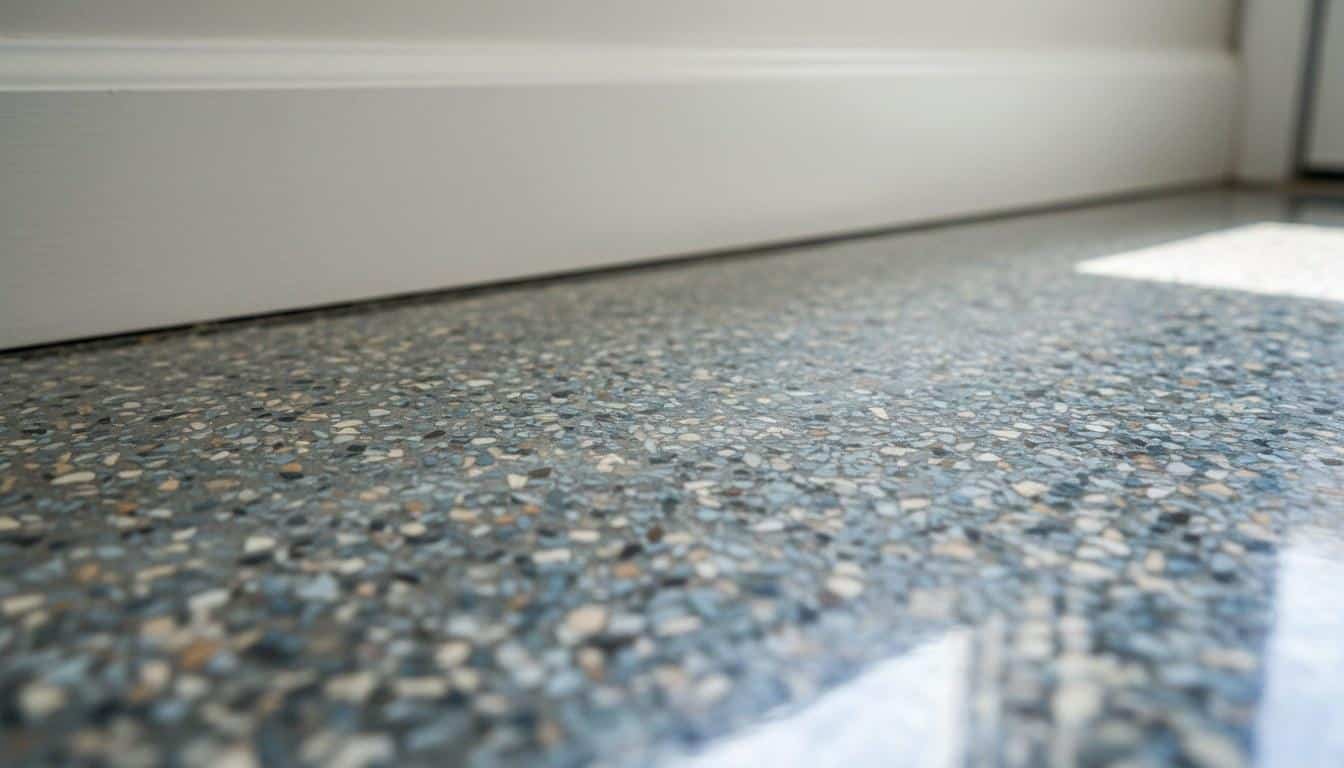
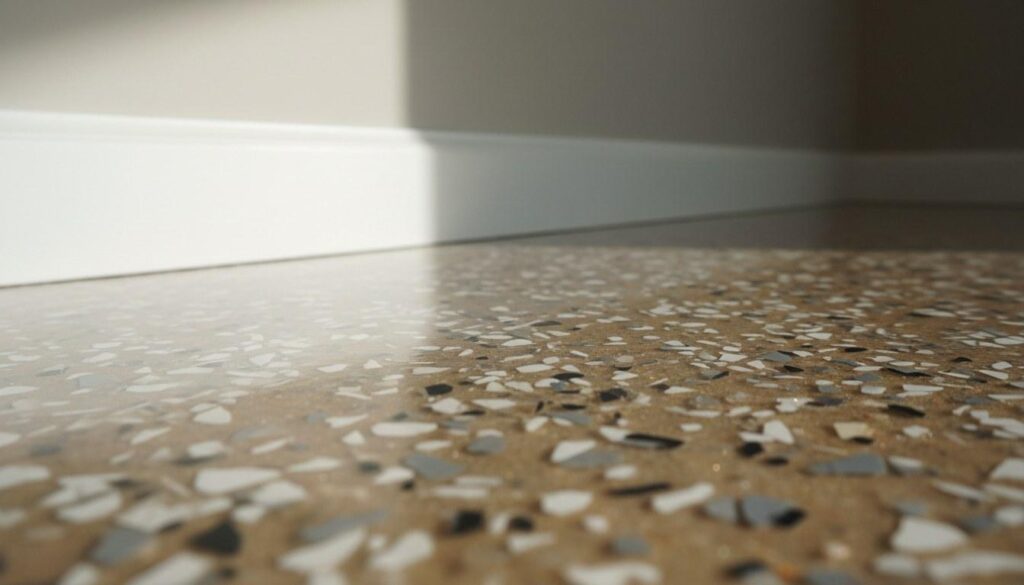
- Inspect chip-and-flake areas: Decorative chip and flake epoxy flooring can trap grit along flake edges. A stiff-bristle brush (not metal) clears embedded debris before it scratches.
- Reapply floor wax or polish if needed: Some homeowners apply a compatible floor polish once a year. Fall is a good time — temperatures are mild and the garage is less busy.
Winter (December through February)
- Watch for moisture intrusion: Even light Southern California rain can push water under garage doors. A door threshold seal keeps moisture off the slab.
- Schedule your annual pro inspection: Winter is typically the slowest season for contractors, which often means faster scheduling and more flexible appointment windows.
- Clean under stored items: Boxes and equipment stored on the floor can trap moisture underneath. Lift and clean beneath them at least once during winter.
Epoxy Floor Maintenance Task Table: Frequency and Who Does It
This table covers the 10 most important maintenance tasks for epoxy-coated garage and patio floors. Use it as a quick reference throughout the year.
| Task | Frequency | DIY or Pro? |
|---|---|---|
| Dry sweep or dust mop | Weekly (twice weekly in summer) | DIY |
| Damp mop with pH-neutral cleaner | Monthly | DIY |
| Spot-clean chemical spills | Immediately after any spill | DIY |
| Inspect topcoat for dullness or scratches | Every 3 months | DIY |
| Check and reseal expansion joints | Annually | DIY or Pro |
| Apply compatible floor polish or wax | Annually (if applicable to your coating) | DIY |
| Deep clean with scrubber or low-pressure rinse | Every 6 months | DIY or Pro |
| Professional topcoat inspection | Every 1-2 years | Pro |
| Topcoat reapplication or touch-up | Every 3-7 years depending on traffic | Pro |
| Full system assessment (base coat, topcoat, substrate) | Every 5-10 years | Pro |
What Does an Annual Professional Epoxy Coating Service Include?
A professional annual inspection for epoxy floors typically takes 45 to 90 minutes and covers the coating system from the substrate up. The technician checks adhesion, topcoat integrity, UV stability, and any areas of mechanical wear. It is not just a visual check — a trained eye catches early delamination and micro-cracking that most homeowners miss.
Our team has seen that chip-and-flake systems installed in garages with high daily vehicle traffic show measurable topcoat wear at the 3-year mark if they are never professionally serviced. Catching that wear at year 3 means a simple topcoat refresh rather than a full recoat at year 5 or 6.
A thorough professional service typically includes:
- Adhesion test: Checks that the coating is still bonded to the concrete and has not begun to delaminate at edges or seams.
- Topcoat hardness check: Identifies any surface softening from heat exposure or chemical contact.
- UV and color stability review: Flags any ambering, chalking, or uneven fading — especially important for patios and areas near garage openings.
- Crack and joint inspection: Looks for new cracks in the substrate that could telegraph through the coating over time.
- Cleaning recommendation: The pro identifies the right cleaner and method for your specific coating type, since chip-and-flake epoxy, solid-color epoxy, and polyurea topcoats all have slightly different care needs.
- Written condition report: Documents the current state of the floor and flags anything that needs attention in the next 6 to 12 months.
If your floor was installed before California’s 2024 building energy efficiency updates went into effect, a pro can also advise whether your coating materials meet current low-VOC standards for any future recoat work.
What Warning Signs Should You Watch for Between Services?
Most epoxy floor problems give you 4 to 8 weeks of warning before they become expensive. Catching these signs early is the difference between a simple repair and a full recoat. If you notice any of the following, stop waiting for your next scheduled inspection and call a professional.
- Peeling or bubbling sections: This usually signals moisture vapor pushing up through the slab. It needs professional attention quickly. (For a full breakdown of this issue, see our epoxy peeling and bubbling troubleshooting guide.)
- White haze or cloudiness: Called blushing, this happens when moisture gets into the coating during or after application. It can also appear years later as the topcoat ages.
- Deep scratches that expose the base coat: Surface scratches are cosmetic. Scratches deep enough to show a different color below mean the topcoat is compromised.
- Soft or tacky spots: Especially common in summer, these indicate the topcoat has been chemically or thermally weakened.
- Visible cracks running in a straight line: These usually follow cracks in the concrete below and will grow if left unaddressed.
- Persistent staining that won’t clean off: If a stain won’t lift after two cleaning attempts with the correct cleaner, the topcoat has been penetrated and the area needs professional attention.
Common Mistakes Woodland Hills Homeowners Make With Epoxy Care
Even homeowners who care about their floors make a few consistent mistakes that shorten the life of their epoxy coating. These are the three most common ones.
Using the Wrong Cleaner
Bleach, ammonia-based cleaners, and acidic degreasers all damage epoxy topcoats over time. They strip the surface sheen and, with repeated use, can soften the coating itself. Always use a pH-neutral cleaner rated for epoxy or polyurea surfaces. When in doubt, plain warm water and a microfiber mop is safer than the wrong product.
Ignoring Small Chips Near the Garage Door
The zone just inside the garage door takes the most abuse — tire impact, temperature swings, and direct sun exposure. Small chips in this area are easy to dismiss, but they expose the base coat and concrete to moisture. A chip left unrepaired for one rainy season in a 91364 or 91367 ZIP code home can turn into a delaminating section by the following spring.
Assuming Epoxy Is Maintenance-Free
Epoxy flooring installation in Woodland Hills is a long-lasting investment, but no floor coating is truly maintenance-free. Homeowners who skip annual inspections for five or more years often face a full recoat rather than a simple topcoat refresh. The U.S. Department of Energy‘s guidance on protective coatings notes that routine maintenance is the single most cost-effective way to extend the service life of any surface coating.
How Does Epoxy Flooring Compare to Other Garage Floor Options?
Epoxy is not the only option for garage and patio floors, but it consistently outperforms alternatives on the combination of durability, maintenance ease, and appearance over a 10-year window. Here is how it stacks up against the two most common alternatives.
| Feature | Epoxy Coating | Concrete Sealers | Interlocking Tiles |
|---|---|---|---|
| Expected lifespan (residential) | 10-20 years with maintenance | 2-5 years before reapplication | 10-15 years |
| Heat and UV resistance | High (with UV-stable topcoat) | Moderate | Moderate to high |
| Chemical resistance | High | Low to moderate | Moderate |
| Maintenance frequency | Weekly sweep, monthly mop | Weekly sweep, frequent resealing | Weekly sweep, joint cleaning |
| Appearance options | Solid color, chip-and-flake, metallic | Clear or tinted only | Limited patterns |
| Best fit | Any garage or patio, any size | Light-use spaces | Temporary or rental installs |
Concrete sealers need reapplication every 2 to 5 years and offer little protection against oil and chemical spills. Interlocking tiles are easy to install but trap debris in joints and can shift under heavy vehicle loads. A properly installed epoxy system — especially one with a polyurea or polyaspartic topcoat — handles the Woodland Hills summer heat better than either alternative.
Schedule Epoxy Flooring Maintenance in Woodland Hills, CA
Your epoxy floor is one of the most visible and hardworked surfaces in your home. A consistent maintenance routine costs almost nothing and protects an investment that can last two decades. If your floor is overdue for a professional inspection, or if you are planning new epoxy flooring installation in Woodland Hills and want to start with a solid maintenance plan from day one, Five Star Epoxy & Coatings is ready to help.
Five Star Epoxy & Coatings serves homeowners across Woodland Hills, CA, including the Warner Center and Carlton Terrace neighborhoods in ZIP codes 91364 and 91367. Whether you need a quick topcoat assessment, a seasonal cleaning recommendation, or a full system evaluation, the team brings the local climate knowledge and coating expertise to give you straight answers.
Call (818) 355-3804 to schedule your inspection or request a custom quote. Same-week appointments are typically available, and there is no pressure — just honest guidance on what your floor actually needs.
Frequently Asked Questions
How much does it cost to install an epoxy garage floor in Woodland Hills?
Epoxy garage floor installation in the Woodland Hills area typically ranges from a few dollars per square foot for basic single-coat systems to higher ranges for multi-layer chip-and-flake or metallic finishes. The main factors that move the price are the size of the slab, the condition of the concrete, the number of coating layers, and the type of topcoat. For an accurate number on your specific garage, contact Five Star Epoxy & Coatings at (818) 355-3804 for a custom quote.
How long does epoxy flooring last in a Woodland Hills garage?
A properly installed epoxy floor in Woodland Hills can last 10 to 20 years with regular maintenance. The Woodland Hills climate — hot summers, Santa Ana winds, and UV exposure from open garage doors — does accelerate wear compared to cooler climates, so annual inspections and a consistent cleaning routine make a real difference in how long the coating holds up.
Can I mop my epoxy garage floor with regular household cleaners?
You should avoid bleach, ammonia-based products, and acidic degreasers on epoxy floors — they strip the topcoat over time and can cause dullness or softening. A pH-neutral cleaner designed for coated concrete is the right choice. When in doubt, warm water and a microfiber mop is safe for routine cleaning between deeper washes.
How do I know if my epoxy floor needs to be recoated or just cleaned?
If the floor looks dull but still feels smooth and has no peeling, chips, or soft spots, a deep clean and a compatible floor polish may restore the appearance. If you see peeling sections, exposed base coat, soft or tacky areas, or cracks following the concrete below, those are signs the topcoat needs professional attention. A pro inspection takes less than 90 minutes and gives you a clear answer.
Is epoxy flooring a good choice for a patio in Woodland Hills?
Epoxy and polyurea coatings work well on patios in Woodland Hills when the right UV-stable topcoat is used. South- and west-facing patios get intense direct sun, so a UV-resistant polyaspartic or polyurea topcoat is important to prevent ambering and chalking. A local pro familiar with the Southern California climate can recommend the right system for your specific patio orientation and use.