Residential Epoxy Flooring Cost: A Complete 2026 Pricing Breakdown
Residential epoxy flooring typically runs between $3 and $12 per square foot in the California market, depending on the finish type, floor prep needed, and project size. This guide breaks down every cost factor so you know exactly what to expect before you call a contractor.
What Does Residential Epoxy Flooring Cost in 2026?
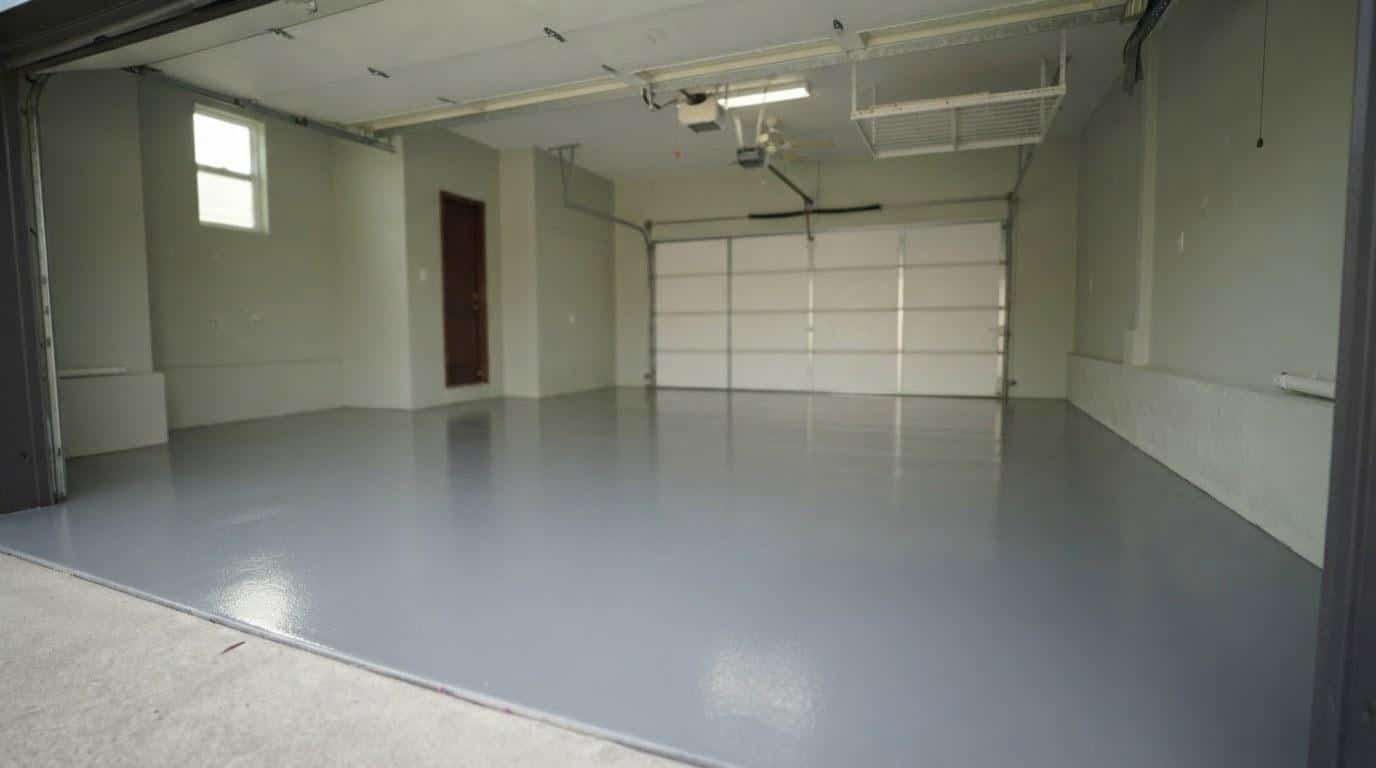
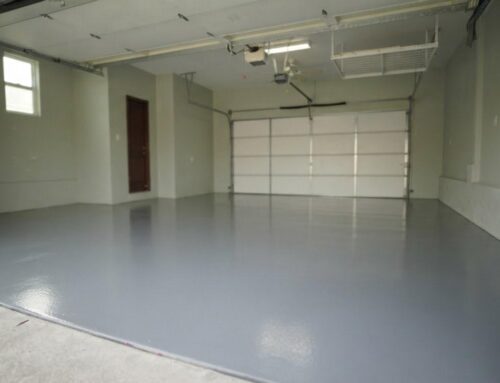
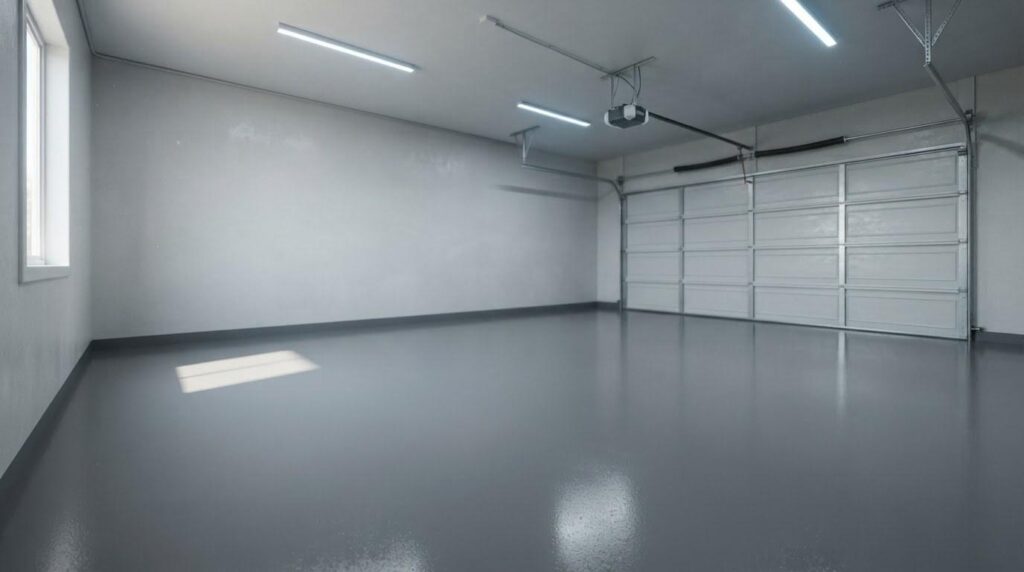
Professionally installed residential epoxy flooring cost in the California regional market typically ranges from $3 to $12 per square foot, with most residential projects totaling between $1,500 and $6,000. Decorative systems such as metallic epoxy or full-broadcast chip and flake epoxy flooring can reach $8 to $12 per square foot depending on complexity. A basic solid-color epoxy floor coating on a well-prepared 400-square-foot garage generally lands in the $1,500 to $2,500 range in this market. Larger spaces, custom artistic finishes, and floors that need significant concrete repair will move costs toward the upper end.
These figures reflect the regional market as of 2026 and are not quotes from any specific epoxy coating company. Actual pricing depends on the specific scope of your project. Use these ranges as a planning baseline, then request a written quote before committing to any work.
What Factors Drive the Price Up or Down?
Concrete condition is the single largest variable in any epoxy floor coating project. A slab with cracks, oil stains, or moisture issues requires grinding, patching, and sometimes moisture mitigation before any coating can be applied, which adds both labor hours and materials cost. Understanding each factor helps you anticipate where your project falls on the pricing spectrum.
- Square footage: Larger areas generally bring a lower per-square-foot rate because setup and mobilization costs are spread across more surface. A 200-square-foot laundry room costs more per square foot than a 600-square-foot garage.
- Concrete condition: Floors with deep cracks, spalling, or heavy oil contamination require diamond grinding, acid etching, or shot blasting before coating. Prep work alone can add $1 to $3 per square foot to the total.
- Finish type: Solid-color epoxy is the most affordable system. Chip and flake epoxy flooring (also called broadcast systems) adds a decorative layer and a clear topcoat. Metallic and artistic epoxy finishes involve multiple pours and pigment manipulation, making them the most labor-intensive option.
- Number of coats: A two-coat system (primer plus topcoat) costs less than a three-coat or four-coat system. High-traffic residential areas like garages or workshops often benefit from thicker build-up, which affects price.
- Moisture testing and mitigation: California slabs poured before updated moisture standards became common sometimes require a moisture barrier coat. Testing and mitigation can add $0.50 to $2 per square foot depending on vapor emission levels.
- Access and obstacles: Floors with built-in cabinetry, water heaters, or parked equipment that cannot be moved require more masking and detail work, adding labor time.
- Topcoat type: Polyaspartic and polyurea topcoats cure faster and resist UV yellowing better than standard epoxy clears. They typically add $0.50 to $1.50 per square foot compared to a standard clear topcoat.
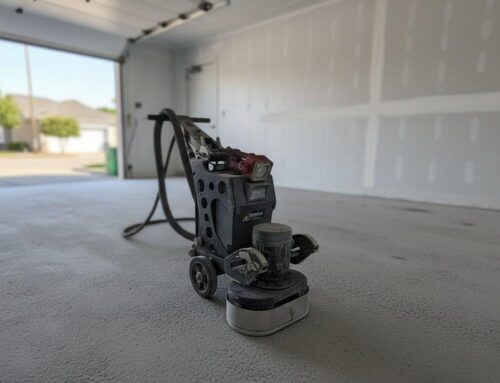
Our crews perform diamond grinding on roughly 70 percent of residential jobs in the Los Angeles area, because most existing garage slabs have surface contamination or laitance that prevents proper adhesion without it. Skipping this step is the leading cause of peeling floors within the first two years.
Our crews perform diamond grinding on roughly 70 percent of residential jobs in the Los Angeles area, because most existing garage slabs have surface contamination that prevents proper adhesion without it.
How Do Different Epoxy Finish Types Compare in Cost?
The finish type you choose affects both material cost and labor time, sometimes by a factor of three or more between the simplest and most decorative systems. The table below shows typical regional market ranges for the most common residential epoxy floor options as of 2026.
| Finish Type | Typical Market Range (per sq ft) | What Is Usually Included |
|---|---|---|
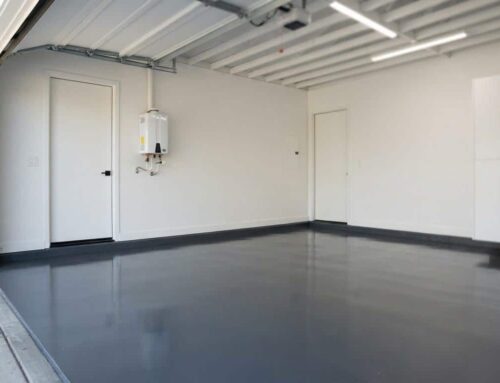
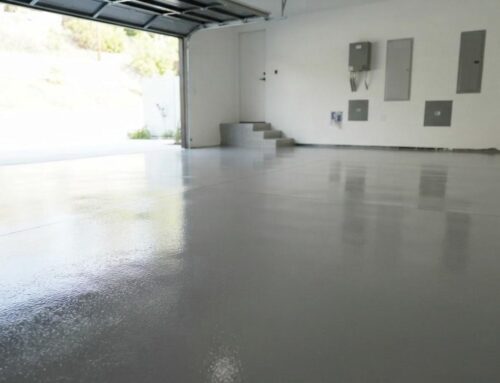
| Solid Color Epoxy | $3 to $5 | Surface prep, primer coat, solid pigmented epoxy, clear topcoat |
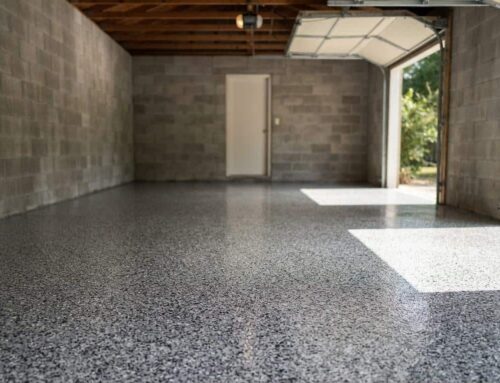
| Chip and Flake Epoxy Flooring | $4 to $7 | Surface prep, base coat, vinyl flake broadcast, clear polyaspartic or epoxy topcoat |
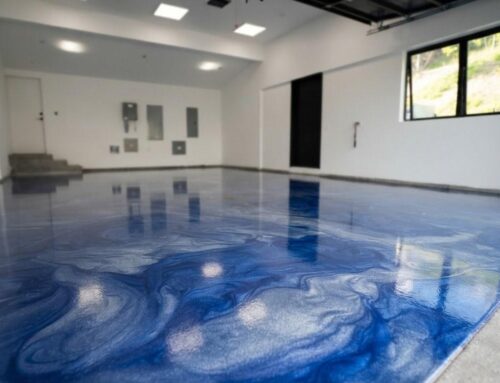
| Metallic and Artistic Epoxy | $7 to $12 | Surface prep, primer, metallic pigment pour, artistic manipulation, two-coat clear finish |
| Concrete Coating with Anti-Slip Additive | $4 to $6 | Surface prep, base coat, aluminum oxide or shark-grip additive, clear seal |
| Full Flake System (100% broadcast) | $5 to $8 | Surface prep, base coat, full-coverage flake broadcast, grout coat, topcoat |
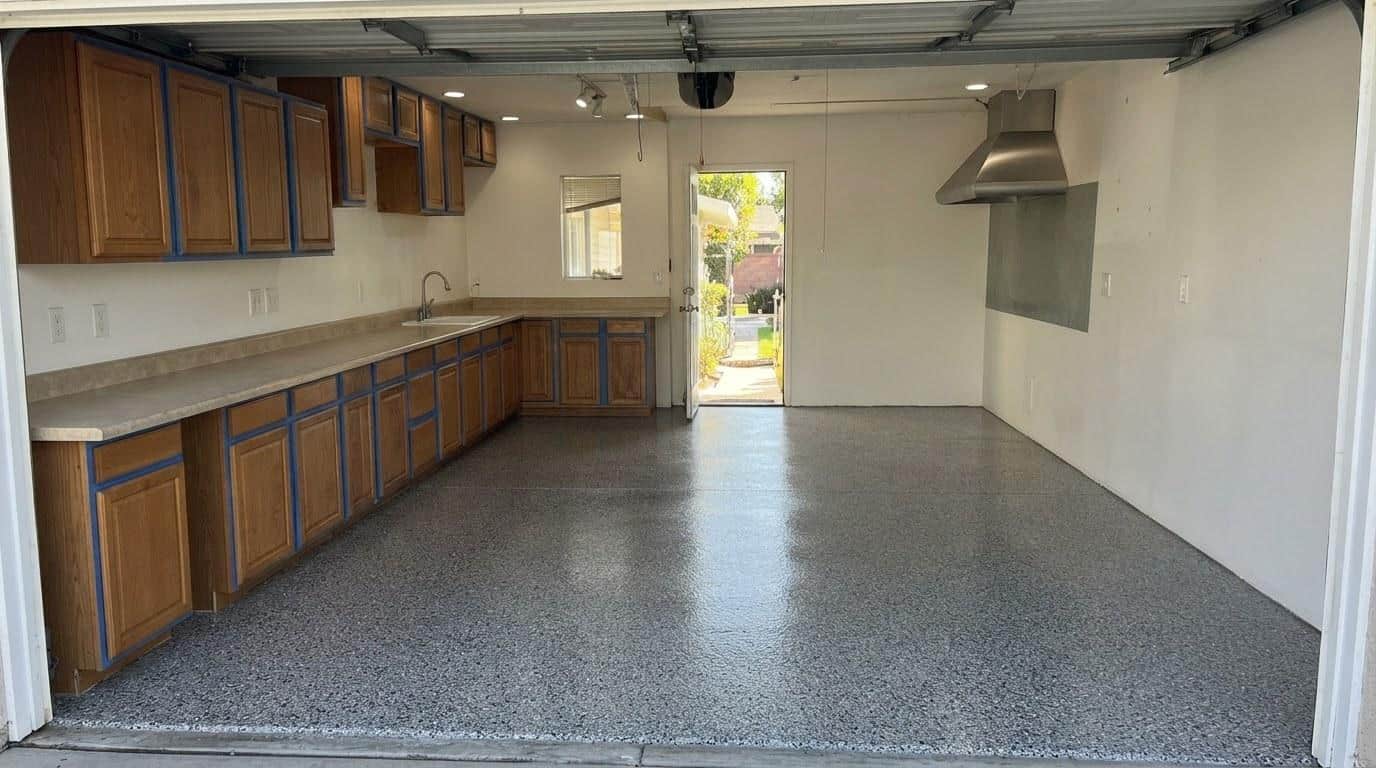
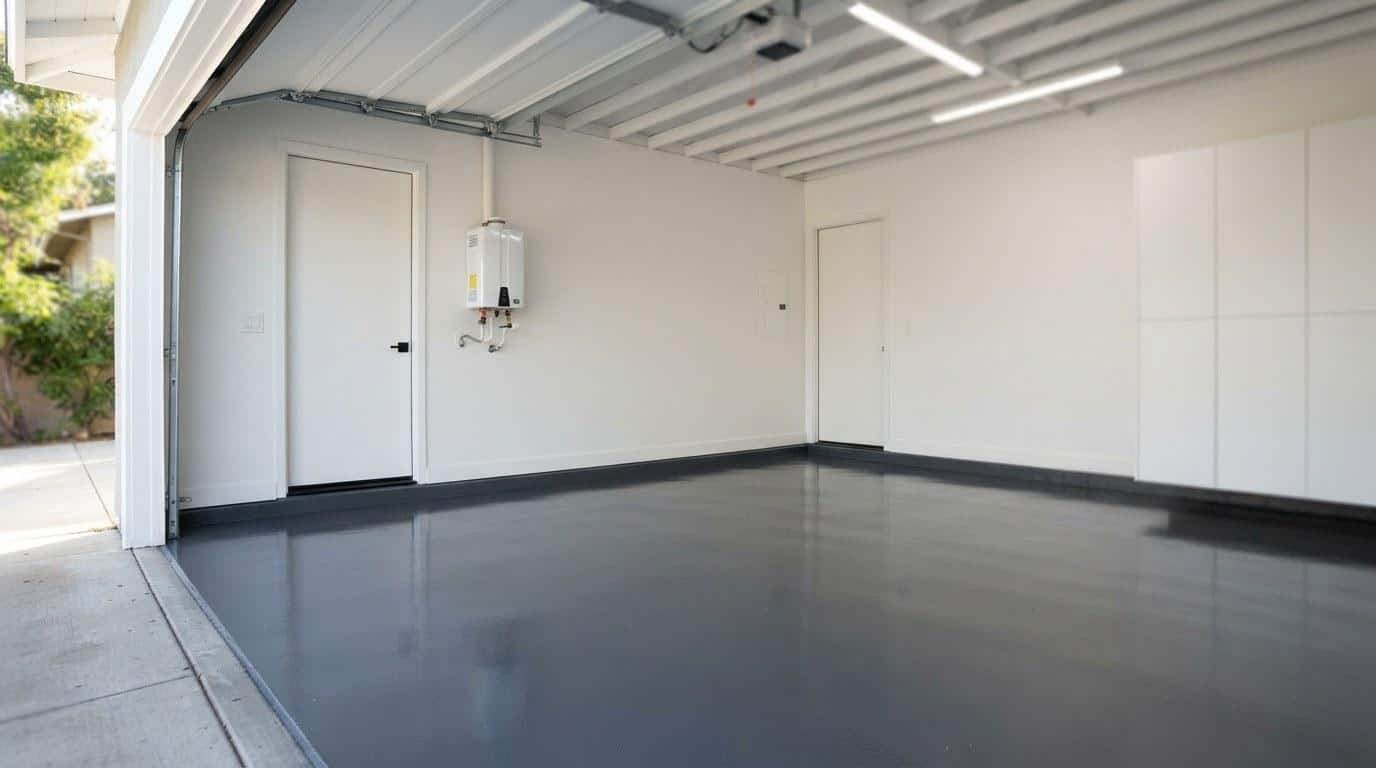
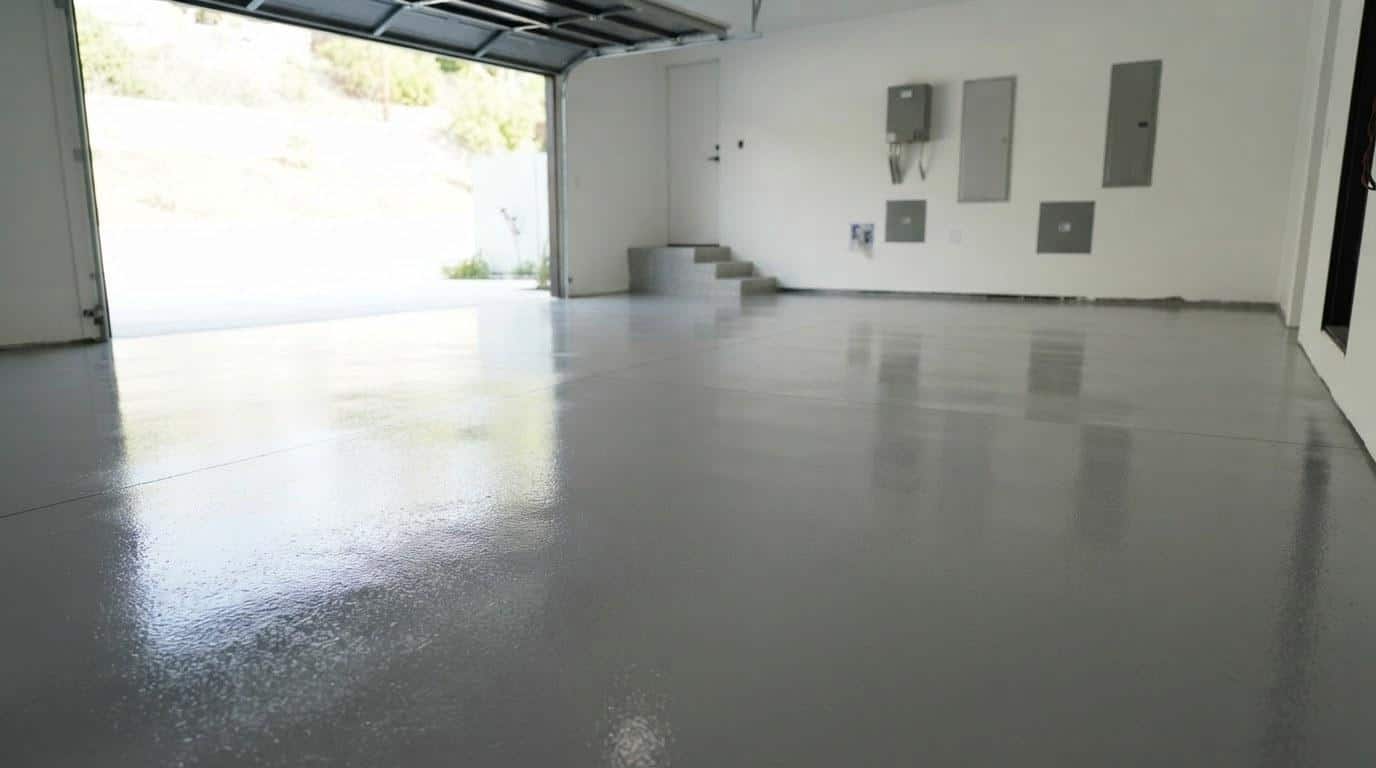
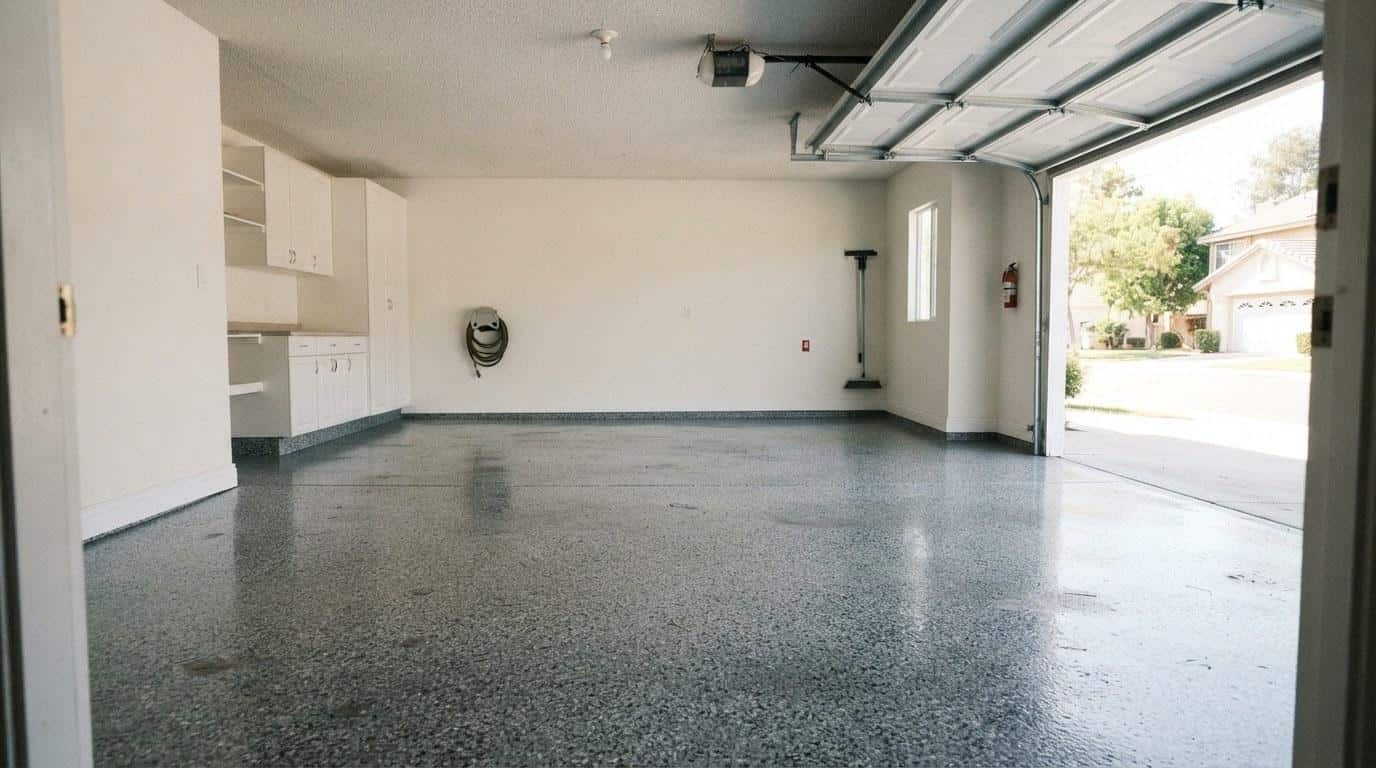
Chip and flake epoxy flooring is the most popular choice for residential garages in the California market. The decorative chips hide minor imperfections, add texture for slip resistance, and hold up well under vehicle traffic. Full-broadcast flake systems, where chips completely cover the base coat, are slightly more expensive but produce a cleaner, more uniform look that many homeowners prefer.
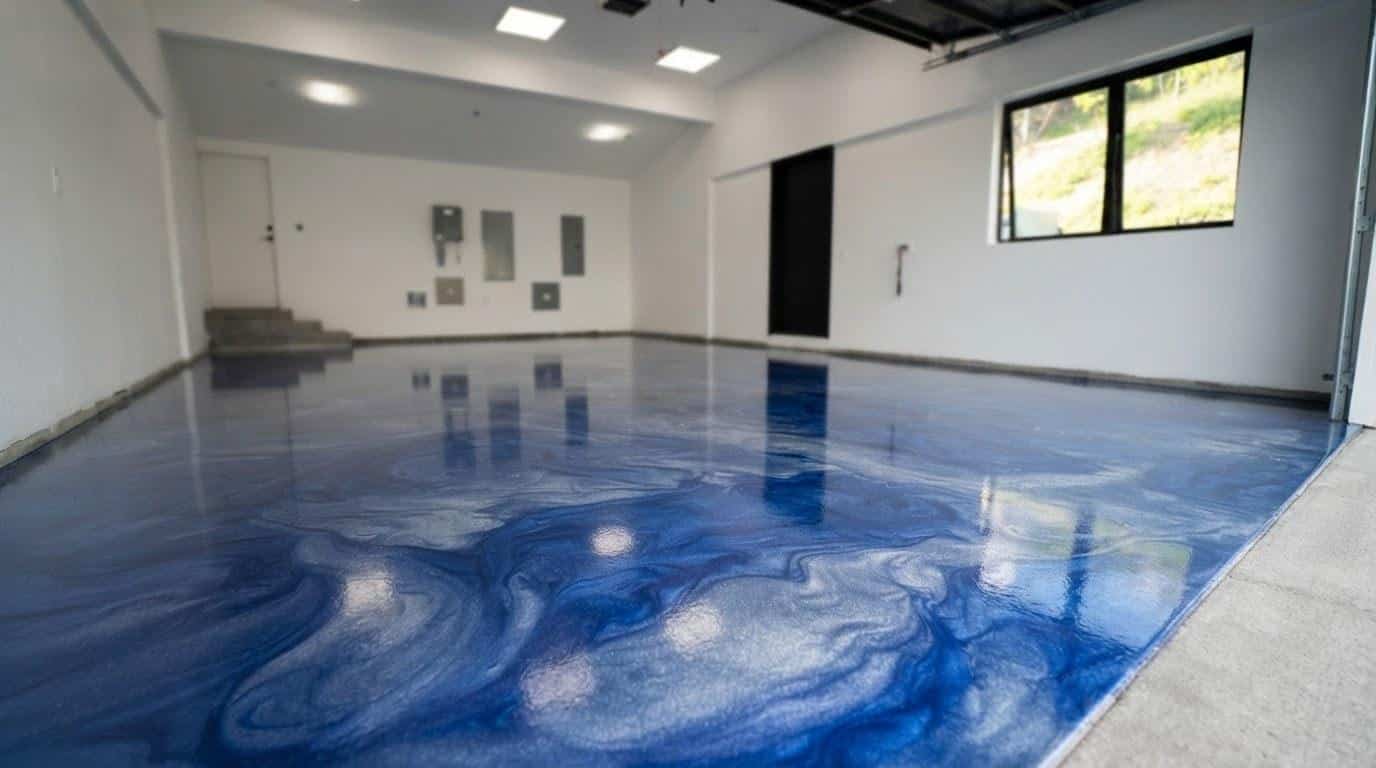
Metallic and artistic epoxy finishes are the premium tier. These systems use pigmented epoxy poured in layers and manipulated with tools or compressed air to create marbled, ocean-wave, or lava-flow effects. They work well in living rooms, kitchens, and showrooms where the floor is a design feature rather than just a utility surface.
What Is NOT Included in a Standard Epoxy Floor Quote?
Most standard epoxy floor coating quotes cover surface prep, materials, and installation for a floor in average condition. Several common add-ons are billed separately and can surprise homeowners who did not ask about them upfront.
- Crack and spall repair: Filling cracks wider than 1/8 inch or repairing spalled areas typically costs extra, often billed per linear foot or per square foot of damaged area.
- Moisture mitigation: If vapor emission testing shows readings above the coating manufacturer’s threshold (commonly 3 pounds per 1,000 square feet per 24 hours), a moisture barrier coat is required and billed separately.
- Oil stain removal: Heavy oil contamination from vehicles requires chemical degreasers and additional grinding passes. Some contractors include one degreasing pass; multiple passes are often extra.
- Moving appliances or equipment: If a water heater, freezer, or workbench cannot be moved by the homeowner before the crew arrives, labor to relocate it may be added to the invoice.
- Cove base or wall base: A coved epoxy base where the floor meets the wall (common in laundry rooms and utility spaces) is a separate line item in most quotes.
- Return visits after cure: If a second inspection coat or touch-up is needed after the floor cures (typically 24 to 72 hours for foot traffic, 5 to 7 days for vehicle traffic), confirm whether that is included.
Always ask the contractor to walk you through what the quote includes and excludes before signing. A written, itemized quote protects both parties and prevents billing disputes after the job is done.
DIY Epoxy Floor vs. Professional Installation: Which Actually Saves Money?
DIY epoxy floor kits from home improvement stores typically cost $50 to $200 for a two-car garage, which sounds like a significant savings compared to professional installation. However, the majority of DIY epoxy floors fail within two to four years because of inadequate surface preparation, which requires renting or purchasing equipment most homeowners do not own.
The majority of DIY epoxy floors fail within two to four years because of inadequate surface preparation, which requires renting equipment most homeowners do not own.
A proper diamond grinder rental runs $150 to $300 per day in the California market. Add acid etching chemicals, safety gear, patching compounds, and a second coat of clear, and the true DIY cost for a 400-square-foot garage often reaches $600 to $1,000 before counting your time. If the floor peels, removing a failed epoxy coating and starting over costs more than doing it right the first time.
| Factor | DIY Epoxy Kit | Professional Installation |
|---|---|---|
| Upfront material cost (400 sq ft) | $50 to $200 (kit only) | $1,500 to $2,500 (full system) |
| Surface prep equipment | Rented or purchased separately ($150 to $300/day) | Included in quote |
| Coating thickness | 3 to 5 mils (thin consumer-grade) | 8 to 20 mils (commercial-grade systems) |
| Typical lifespan | 2 to 5 years before peeling or fading | 10 to 20+ years with proper prep |
| Failure risk | High without professional prep | Low with proper concrete prep |
| Finish options | Limited (solid color or basic chip) | Full range including metallic and custom artistic |
Professional-grade epoxy systems used by licensed concrete coating contractors are not available in retail stores. These commercial formulations bond at a molecular level to properly prepared concrete and cure to a thickness that consumer kits cannot match. The California Energy Commission also notes that moisture in concrete slabs is a significant factor in coating adhesion, something most DIY kits do not test for.
We see roughly 3 out of every 10 new residential calls involve a homeowner asking us to remove and redo a failed DIY or low-bid epoxy job. The removal process, which involves grinding off the old coating, typically adds $0.75 to $1.50 per square foot to the project cost before the new system can even begin.
How Do You Get an Accurate Quote for Your Project?
An accurate residential epoxy flooring cost estimate requires an in-person or detailed photo assessment of the concrete, not just a square-footage calculation over the phone. The more information you gather before contacting an epoxy coating company, the faster and more accurate the quote process will be.
Here is what to have ready before you call or schedule a site visit:
- Measure the space: Know the approximate square footage of the area you want coated. For irregular rooms, break the space into rectangles, calculate each, and add them together.
- Note existing damage: Walk the floor and note any visible cracks, chips, oil stains, or areas where previous coatings have peeled. Take photos if possible.
- Identify moisture history: Has the floor ever shown efflorescence (white chalky deposits), dampness after rain, or condensation? Moisture history affects prep requirements significantly.
- Choose a finish direction: Decide whether you want a solid color, a chip and flake system, or a decorative metallic finish. Having a preference narrows the quote to the right material tier.
- Clarify the timeline: Epoxy floors need 24 to 72 hours before foot traffic and 5 to 7 days before vehicle traffic. Know when you need the space back in use.
- Ask about prep method: A reputable concrete floor coating contractor will specify whether they use diamond grinding, shot blasting, or acid etching. Diamond grinding is the industry standard for residential concrete in California and produces the best adhesion profile.
When comparing quotes from multiple epoxy services, make sure each quote specifies the same scope: prep method, number of coats, coating system brand and mil thickness, and what happens if additional damage is found during prep. Quotes that omit these details often grow after the job starts.
Contractors licensed by the California Contractors State License Board (CSLB) are required to carry liability insurance and workers’ compensation, which protects you if something goes wrong on your property. Always verify a contractor’s CSLB license number before signing any agreement. You can check license status directly on the CSLB website at no cost.
For projects involving new construction or significant renovation, note that California’s Title 24 building energy standards may affect how the surrounding space is ventilated during coating application, particularly in attached garages. A qualified contractor will handle the necessary ventilation setup as part of the job.
Request a Custom Residential Epoxy Flooring Quote in Los Angeles
The market ranges in this guide give you a solid planning baseline, but your actual project cost depends on the specific condition of your concrete, the finish you choose, and the square footage involved. None of the ranges above are rates charged by any specific contractor.
Five Star Epoxy and Coatings installs residential epoxy flooring across Los Angeles County and surrounding communities in CA, including garage floors, interior living spaces, balconies, and driveways. Every project starts with a concrete assessment so you get a quote based on your actual floor, not a generic estimate.
Call (818) 355-3804 to schedule your on-site assessment and get a written, itemized quote for your project. Bring your square footage, photos of any damage, and your finish preference, and the team at Five Star Epoxy and Coatings will walk you through every line item before any work begins.
Frequently Asked Questions
How much does it cost to epoxy a two-car garage floor?
A standard two-car garage is typically around 400 to 500 square feet. In the California regional market, a professionally installed epoxy floor coating for that size space generally runs between $1,500 and $3,500 depending on the finish type and concrete condition. Decorative chip and flake systems or metallic finishes push toward the higher end of that range.
How long does a residential epoxy floor last?
A professionally installed epoxy floor coating on properly prepared concrete typically lasts 10 to 20 years in a residential setting. The biggest factors are the quality of the surface prep, the thickness of the coating system, and the amount of traffic and chemical exposure the floor sees. DIY kits applied without diamond grinding tend to peel within two to five years.
Is epoxy flooring worth it for a home garage?
For most homeowners, professionally installed epoxy flooring is worth the investment because it protects the concrete from oil, chemicals, and abrasion while making the space easier to clean. The coating also resists tire marks and hot-tire pickup better than bare concrete. The upfront cost is typically recovered in reduced maintenance and longer concrete life.
Can epoxy flooring be installed over existing concrete cracks?
Minor hairline cracks can often be filled and coated over as part of the prep process. Cracks wider than about 1/8 inch, or cracks that show active movement, need to be routed out and filled with a flexible polyurea or epoxy filler before the coating system is applied. A contractor should assess crack type before quoting, because structural cracks require different treatment than shrinkage cracks.
How long do I have to stay off an epoxy floor after it is installed?
Most professional epoxy floor systems allow foot traffic after 24 hours and vehicle traffic after 5 to 7 days, depending on the specific coating system and ambient temperature during cure. In cooler California weather, cure times can extend slightly. Your contractor should give you a specific timeline based on the products used.