How to Choose the Right Epoxy Coating Contractor: A 2026 Buyer's Guide
Hiring the wrong floor coating contractor can mean a peeling floor in less than a year. This guide walks you through every step of finding, vetting, and choosing the right epoxy professional for your project.


What Should You Know Before Hiring Floor Coating Contractors?
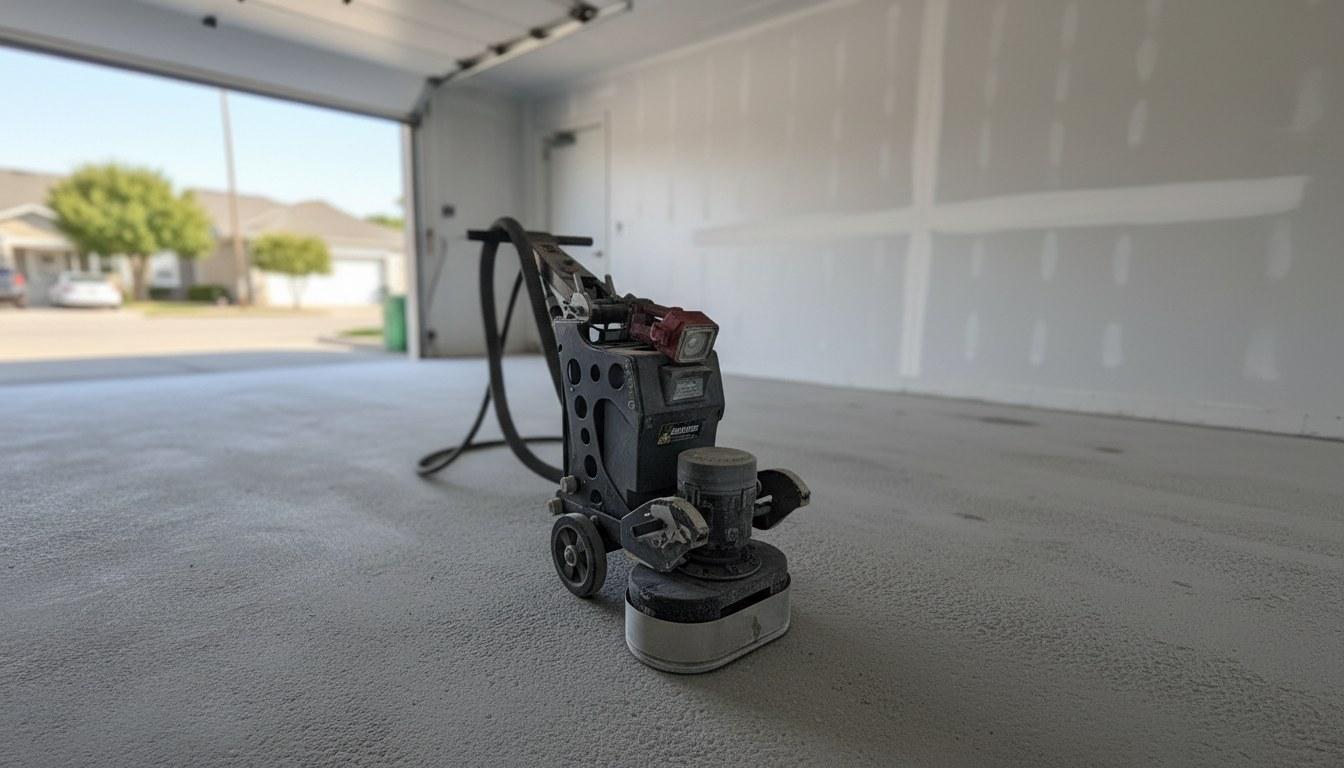
The single most important thing to know before hiring floor coating contractors is that surface preparation determines whether the coating lasts 2 years or 20. No amount of premium product fixes a floor that was not properly ground, shot-blasted, or acid-etched before application. This floor coating contractors guide is designed to help homeowners, business owners, and facility managers in California make a confident, informed decision before spending a dollar.
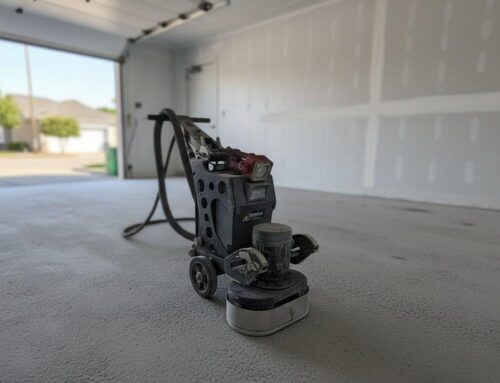
Epoxy coatings bond chemically to concrete. If the surface has oil contamination, existing sealers, or moisture vapor pushing up from below, the coating will delaminate. A qualified contractor tests for all three before mixing a single batch of epoxy.
California’s construction market has no shortage of contractors who will pour a thin coat over an unprepped slab and be gone before the problems show. Knowing how to screen them out is the core skill this guide teaches.
What Types of Epoxy Floor Coatings Are Available?
There are five main epoxy and concrete coating systems used in residential, commercial, and industrial settings. Each one has a different performance profile, appearance, and installation requirement. Understanding the differences helps you match the right product to your space and hold your contractor accountable for recommending the right system.
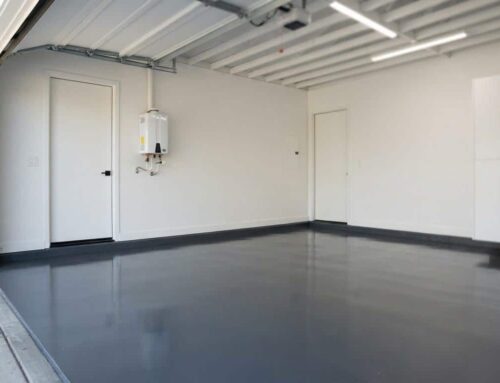
- Solid epoxy: A 100-percent solids formulation with no solvents. It produces a hard, glossy surface that holds up under heavy foot and vehicle traffic. Typical dry film thickness runs 8 to 12 mils per coat.
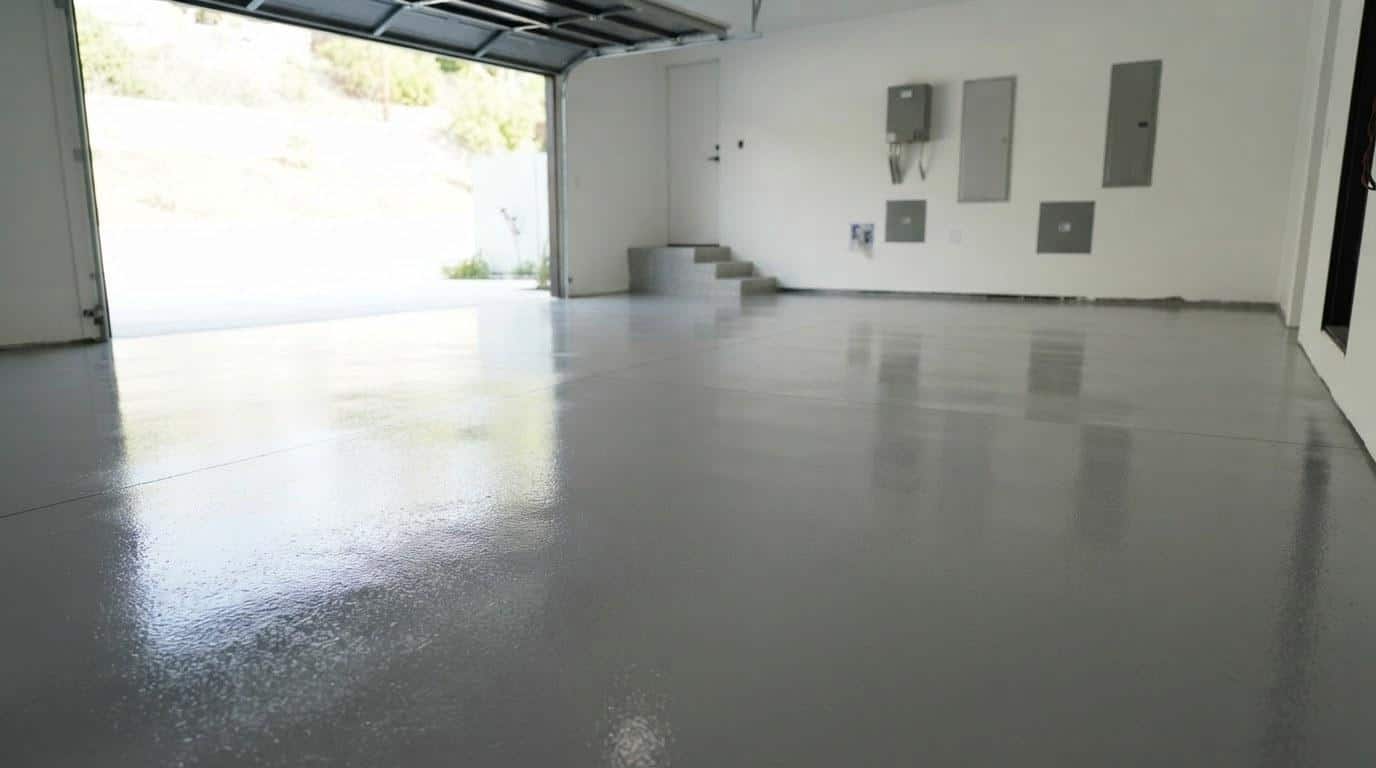
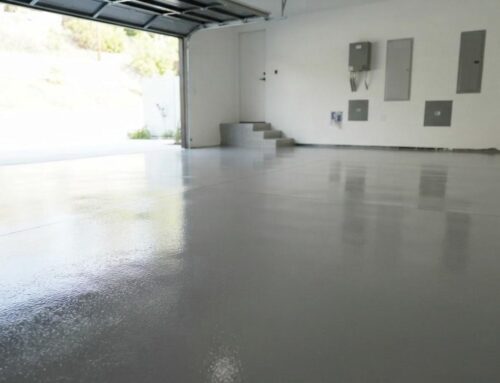
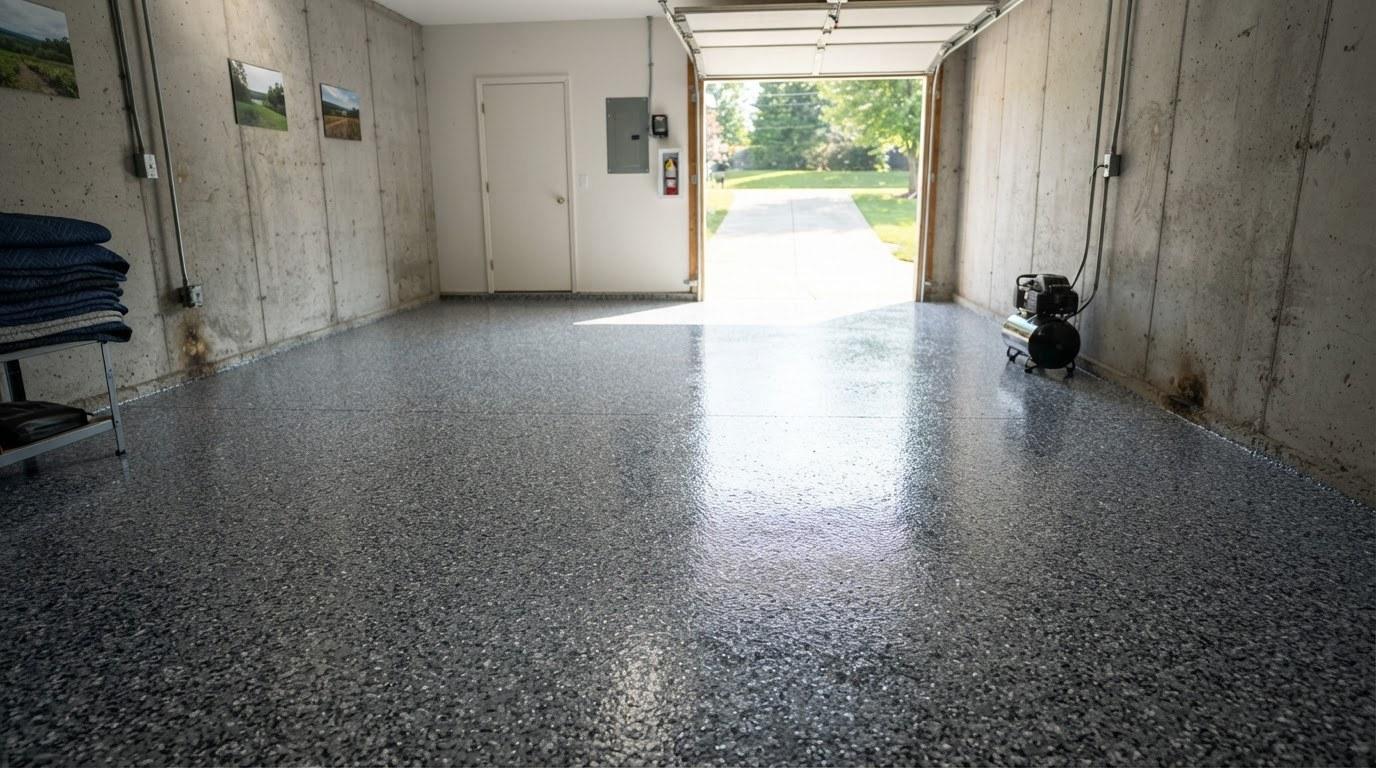
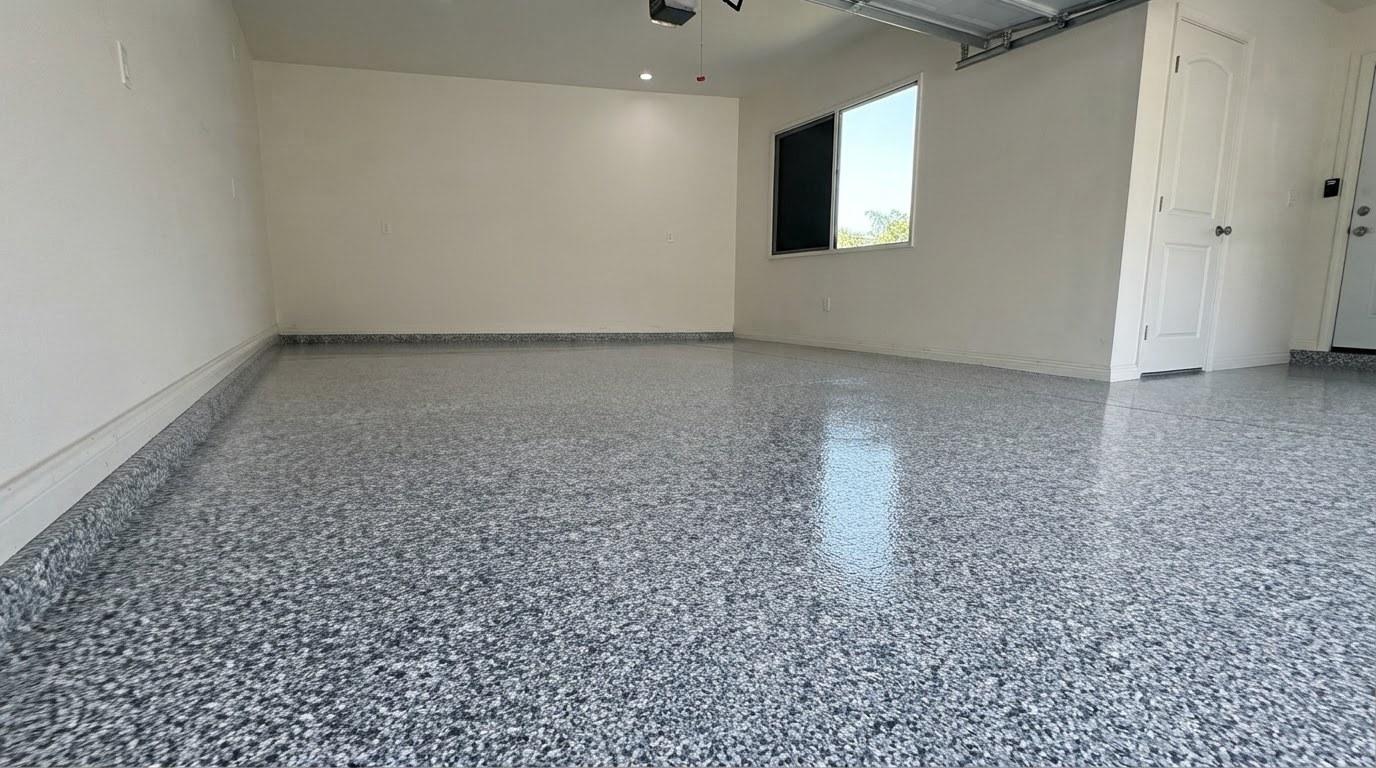
- Flake and chip epoxy: A base coat of colored epoxy is broadcast with vinyl color flakes, then sealed with a clear topcoat. This system hides surface imperfections well and is the most popular choice for garage floors and retail spaces.
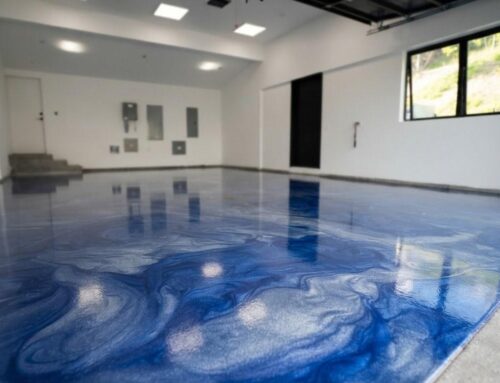
- Metallic epoxy: Metallic pigments suspended in a clear or tinted epoxy base create a three-dimensional, marbled look. It is the most visually striking option and is common in showrooms, lobbies, and high-end residential spaces.
- Polyurea and polyaspartic topcoats: These are often used as a clear protective layer over an epoxy base. They cure faster than standard epoxy (sometimes in under 2 hours at 70 degrees Fahrenheit) and resist UV yellowing better than standard epoxy alone.
- Concrete coatings and sealers: Penetrating sealers and densifiers protect the surface without building a thick film. They are common in warehouses, driveways, and balconies where a natural look is preferred.
How Do You Qualify a Contractor Before Getting a Quote?
Every concrete floor coating contractor you seriously consider should be able to answer five specific questions before you schedule a site visit. Contractors who cannot or will not answer them are not ready for your project.
Start by confirming their license. In California, flooring and coating work falls under the California Contractors State License Board (CSLB). You can verify a license number on the CSLB website in about 60 seconds. A valid, active license is a non-negotiable baseline.
Beyond the license, ask these questions:
- What surface preparation method do you use? The correct answer is diamond grinding or shot blasting. Acid etching alone is not adequate for most epoxy systems.
- Do you test for moisture vapor emission? Concrete slabs on grade in California can emit enough moisture to fail a coating. A professional uses a calcium chloride test or an in-situ relative humidity probe per ASTM F1869 standards.
- What is the total dry film thickness of the system? A complete residential system should be at least 20 to 30 mils. Commercial and industrial systems often run 40 to 60 mils or more.
- Who does the actual installation? Some contractors subcontract the labor. Know whether the crew showing up is the same one with the track record.
- Can you provide references from similar projects completed in the last 12 months? Recent references matter more than older ones because products and crews change.
Our team has reviewed dozens of project callbacks over the past two years, and in roughly 8 out of 10 cases the root cause was a contractor who skipped the moisture test or used a single-coat system where a multi-coat build was required.

What Does Epoxy Floor Coating Typically Cost in California?
In the California market, epoxy floor coating projects generally range from $3 to $12 per square foot installed, depending on the system type, floor condition, and project size. Industrial-grade systems for large commercial or warehouse floors can run higher when specialized coatings or extensive prep work are required.
The table below shows typical market ranges by project type as of 2026. These are regional market figures, not quotes from any specific contractor.
| Project Type | Typical System | Market Range (per sq ft) | Key Cost Drivers |
|---|---|---|---|
| Residential Garage (400-600 sq ft) | Flake or solid epoxy | $4 to $8 | Crack repair, number of coats, topcoat type |
| Commercial Retail or Office | Metallic or flake epoxy | $5 to $10 | Design complexity, cure-time windows, furniture moving |
| Industrial or Warehouse | High-build solid epoxy or polyurea | $4 to $12 | Film thickness spec, chemical resistance needs, square footage |
| Balcony or Driveway | Concrete coating or polyaspartic | $3 to $7 | Sun exposure, slope, drainage prep |
| Decorative Metallic or Artistic | Metallic epoxy with custom design | $7 to $14 | Design complexity, number of layers, color blending |
Several factors push a project toward the higher end of these ranges: significant crack or spall repair, oil stain removal, multiple color or design layers, and tight scheduling windows that require fast-cure products. Projects priced far below these ranges often signal a thin single-coat system or skipped prep steps.
Projects priced far below these ranges often signal a thin single-coat system or skipped prep steps.
For an accurate number on your specific floor, request a custom quote from a qualified contractor who has seen the slab in person. Call Five Star Epoxy and Coatings at (818) 355-3804 to schedule a site assessment.
What Mistakes Should You Avoid When Hiring a Floor Coating Contractor?
The most expensive mistake homeowners and facility managers make is choosing a contractor based on price alone. A low bid almost always means a thinner system, less prep time, or both, and the floor will show it within the first year. Here are the most common pitfalls this floor coating contractors guide is designed to help you avoid.
- Skipping the license check: An unlicensed contractor in California has no bond, no required insurance, and no accountability to the CSLB if the job goes wrong. Always verify at cslb.ca.gov before signing.
- Accepting a verbal quote: Every detail of the scope, the product system, the number of coats, the prep method, and the timeline should be in writing. Verbal agreements are unenforceable.
- Ignoring moisture testing: Skipping the moisture vapor emission test is the leading cause of epoxy delamination in California’s climate. Slabs near coastal areas or on grade are especially at risk.
- Choosing the wrong system for the use case: A decorative metallic finish is not built for a forklift bay. A thin garage coating is not appropriate for a commercial kitchen. Match the system to the actual traffic and chemical exposure.
- Not asking about recoat windows: Epoxy systems have specific recoat windows, often 12 to 24 hours. If a contractor rushes or delays between coats outside the manufacturer’s spec, intercoat adhesion fails.
- Assuming all epoxy is the same: Water-based epoxy, solvent-based epoxy, and 100-percent solids epoxy perform very differently. A professional explains which product they are using and why it fits your floor.
- Overlooking post-installation care instructions: Most epoxy systems need 24 to 72 hours of cure time before foot traffic and up to 7 days before vehicle traffic. Ignoring this shortens the floor’s life significantly.
Which Epoxy Coating Is Right for Your Space?
The best coating system depends on three things: how the space is used, what the concrete slab looks like today, and how long you need the floor to last without major maintenance. Use the framing below to match your situation to the right starting point.
For Homeowners with a Garage or Driveway
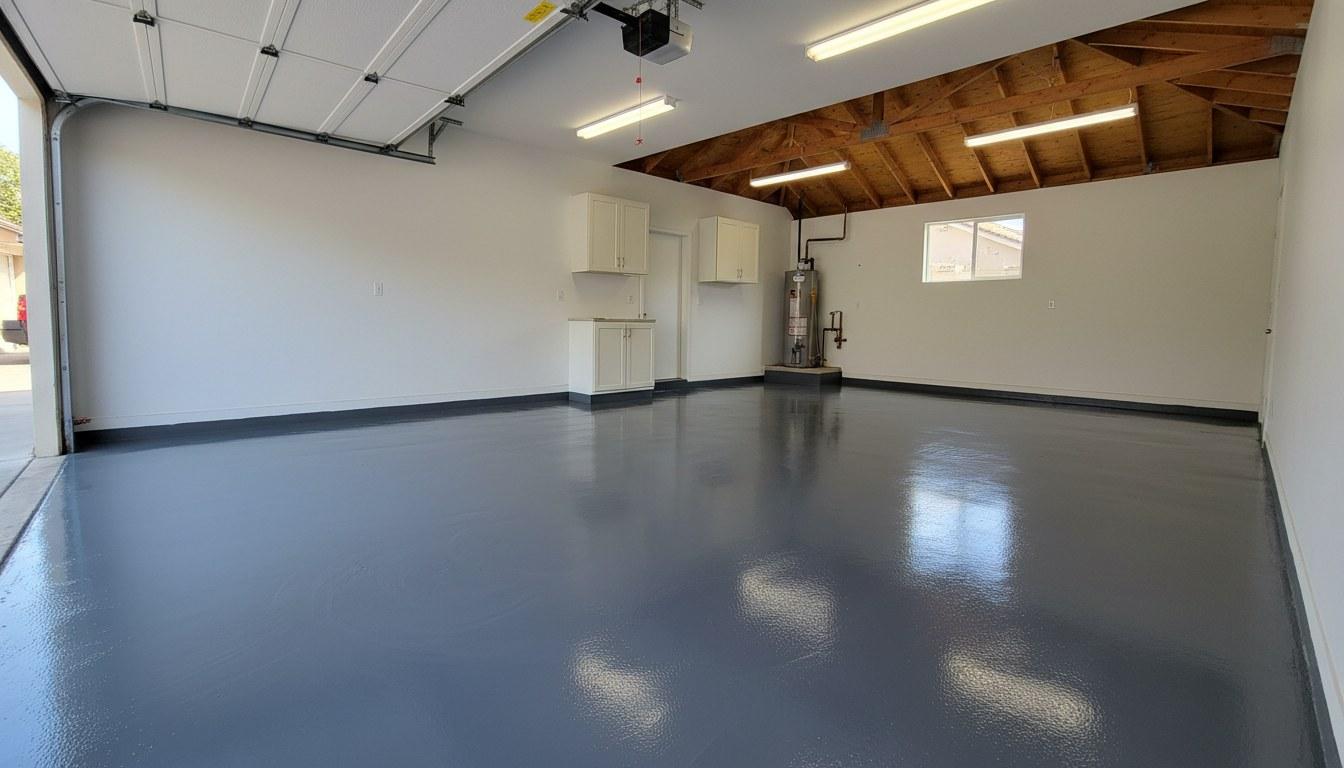
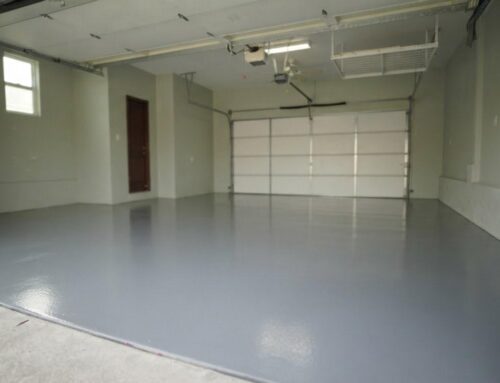
A flake and chip epoxy system with a polyaspartic topcoat is the most practical choice for residential garages. The flake layer hides tire marks and surface texture, the polyaspartic topcoat resists UV yellowing, and the system can handle daily vehicle traffic for 10 or more years with basic cleaning. Driveways and balconies exposed to full sun benefit from a UV-stable polyaspartic or concrete coating rather than standard epoxy, which can yellow and chalk outdoors.
For Commercial Spaces and Retail Floors
Commercial floor coating contractors typically recommend a metallic or decorative flake system for customer-facing spaces, combined with a high-gloss topcoat that is easy to clean and reflects light. The ENERGY STAR program notes that highly reflective interior surfaces can reduce lighting energy use, which makes a high-gloss floor a practical choice in large retail or warehouse spaces. For commercial kitchens or food-service areas, a slip-resistant broadcast finish and a coating rated for chemical exposure is the standard.
For Industrial and Warehouse Floors
Industrial floor coating contractors working in warehouses, manufacturing plants, or auto shops need a high-build system, typically 40 to 100 mils of total film thickness, with chemical resistance matched to the specific substances on the floor. Forklift traffic requires a harder topcoat than foot traffic, and some facilities need line-striping or safety markings integrated into the coating system. We see industrial projects where the spec calls for a two-component polyurea topcoat over a 100-percent solids epoxy base, a combination that handles both impact and chemical exposure better than either product alone.
For Artistic and High-End Residential Finishes
Metallic and artistic epoxy finishes use layered pigments and specialty tools to create a one-of-a-kind floor. No two metallic epoxy floors look identical. These systems are applied in 3 to 5 distinct layers and require a skilled installer who understands how the pigments move during the pour. The result is a floor that looks like polished stone or flowing metal and is fully seamless, with no grout lines or joints to trap dirt.
Frequently Asked Questions
How much does it cost to install an epoxy garage floor?
Epoxy garage floor installation in California typically ranges from $4 to $8 per square foot for a standard flake or solid epoxy system on a 400 to 600 square foot garage. The final number depends on the condition of the existing slab, the number of coats, and whether crack repair or oil stain removal is needed. A site visit is the only way to get an accurate figure for your specific floor. Call (818) 355-3804 to schedule an assessment with Five Star Epoxy and Coatings.
How do I find and hire commercial floor coating contractors near me?
Start by verifying any commercial floor coating contractor's license on the California Contractors State License Board website at cslb.ca.gov. Then ask for references from commercial projects completed in the last 12 months and request a written scope of work that specifies the product system, film thickness, and prep method. Contractors who cannot provide these details in writing are a risk. Five Star Epoxy and Coatings serves commercial clients across Southern California and can walk you through the full process.
How long does an epoxy floor coating last?
A properly installed epoxy floor coating on a well-prepared slab typically lasts 10 to 20 years in residential settings and 5 to 15 years in commercial or industrial environments, depending on traffic volume and maintenance. The biggest factor in longevity is surface preparation before installation. Coatings applied over unprepped or contaminated concrete often begin delaminating within 12 to 24 months.
Can I walk on or drive on my epoxy floor right after it is installed?
Most epoxy systems require at least 24 hours of cure time before light foot traffic and 5 to 7 days before vehicle traffic at standard California temperatures around 70 degrees Fahrenheit. Fast-cure polyaspartic topcoats can be ready for foot traffic in as little as 4 to 6 hours. Your contractor should give you a written cure schedule based on the specific products used and the expected temperature during the cure window.
What is the difference between epoxy and polyurea floor coatings?
Epoxy is a two-part system that bonds strongly to concrete and builds excellent film thickness, making it ideal as a base coat. Polyurea and polyaspartic coatings cure much faster, resist UV yellowing better, and are more flexible, which makes them the preferred topcoat in many professional systems. Most high-performance floors use both: an epoxy base for build and adhesion, and a polyurea or polyaspartic topcoat for durability and appearance.