Why Porter Ranch’s Summer Heat Creates Unique Epoxy Installation Challenges
Porter Ranch sits at a higher elevation than neighboring Northridge and Granada Hills, which means your garage floor experiences distinct temperature swings that don’t happen just a few miles away. While Chatsworth valleys stay consistently hot, Porter Ranch homes—especially in The Vineyards and the northern hillside neighborhoods—can see morning temperatures 10-15 degrees cooler than midday peaks. This thermal variation directly impacts epoxy curing chemistry, moisture evaporation rates, and surface preparation timing. Professional installers who treat Porter Ranch garages the same as valley floor properties often face adhesion failures, premature curing, or surface defects that cost homeowners thousands to repair.
📋 In This Guide
Summer epoxy installation in Porter Ranch requires understanding how concrete absorbs and releases heat differently at elevation. Your $946,500 home deserves preparation techniques calibrated to local microclimates, not generic valley-wide approaches. The key is working with temperature patterns rather than fighting them—which means adjusting every phase of prep work to match what your specific garage floor will experience throughout the day.
Temperature Windows That Actually Work for Porter Ranch Garages
Epoxy chemistry performs optimally between 60-85°F, but Porter Ranch summer days routinely hit 95-100°F by noon. The elevation advantage gives you a critical morning window: concrete surfaces in The Vineyards typically measure 68-75°F between 6:00-9:00 AM, even when afternoon temperatures will climb 25 degrees higher. Professional installers use infrared thermometers to map your garage floor’s exact temperature zones, identifying cool spots near north-facing walls and hot zones where afternoon sun penetrates.
The challenge isn’t just ambient air temperature—it’s concrete substrate temperature. A garage floor that feels cool to your hand might measure 85°F one inch below the surface, which accelerates epoxy cure times and reduces working time by 40%. Porter Ranch’s decomposed granite base soil retains heat differently than the clay soils common in Northridge, meaning your slab releases stored thermal energy more slowly overnight. This affects moisture vapor transmission rates and demands different diamond grinding techniques than standard valley floor installations.
Experienced epoxy services in Porter Ranch schedule application windows by substrate temperature, not clock time. They’ll test your concrete’s thermal profile at multiple times across several days to identify the optimal prep and pour schedule for your specific property. For homes in south-facing Porter Ranch neighborhoods, this often means starting surface prep at 5:30 AM to complete grinding before concrete temperatures exceed 80°F.
Moisture Testing When Heat Accelerates Vapor Drive
Summer heat forces moisture through concrete at rates that invalidate standard testing protocols. Porter Ranch’s low humidity—often 15-25% during July and August—creates extreme vapor drive conditions where moisture races toward the surface. A calcium chloride test performed at 95°F will show dramatically different results than the same test at 75°F, potentially indicating “passing” moisture levels that will cause epoxy delamination within months.
The elevation factor matters here too. Porter Ranch garages experience greater diurnal temperature swings than valley floor properties, which means your concrete goes through more extreme wet-dry-wet cycles. Morning condensation forms on cool surfaces, then flash-evaporates by 10:00 AM, leaving behind salts and contaminants that compromise epoxy adhesion. Professional preparation includes testing at multiple temperatures across 24-hour periods to capture the full moisture behavior cycle your floor will experience.
Installers who understand Porter Ranch conditions use relative humidity probes embedded in the slab, not just surface tests. These probes remain in place for 72 hours minimum, recording moisture fluctuations through multiple heat cycles. For homes near Aliso Canyon Park, where morning marine layer influence can push humidity temporarily higher, this extended testing catches moisture spikes that shorter tests miss. The investment in proper moisture documentation protects your $946,500 home’s value by preventing the adhesion failures that plague rushed summer installations.
Surface Preparation Strategies for Warm Concrete
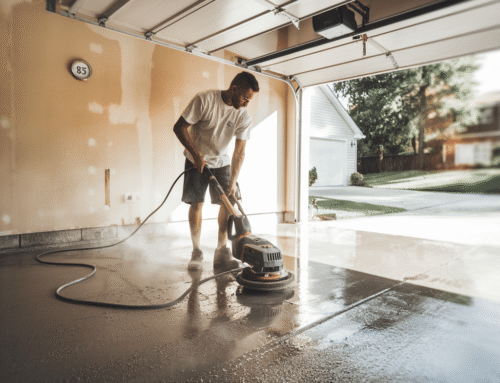
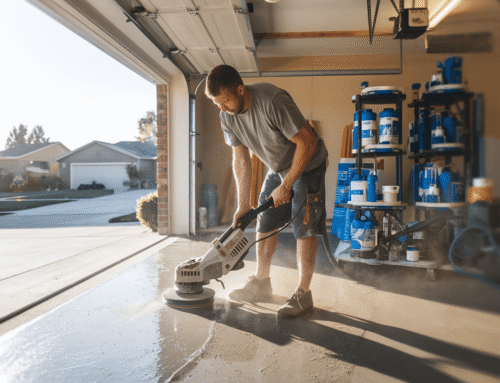
Diamond grinding concrete above 80°F generates different dust patterns, wear rates, and profile depths than grinding at moderate temperatures. The resin bonds in grinding disks break down faster, metal segments glaze over more quickly, and concrete paste smears rather than fracturing cleanly. Porter Ranch installers compensate by using harder bond matrices and adjusting traverse speeds based on real-time substrate temperature readings.
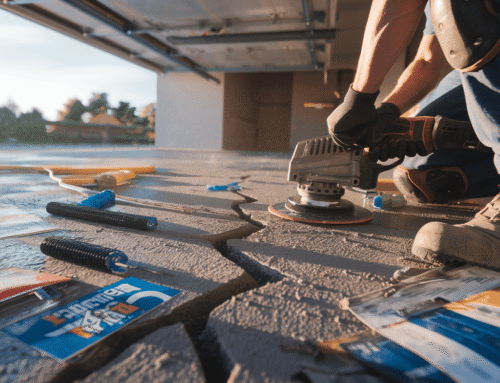
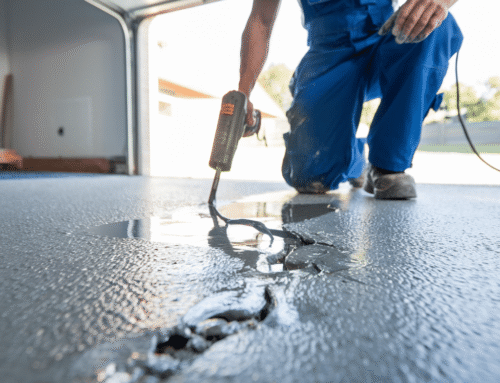
The thermal expansion coefficient of your concrete also changes preparation requirements. Porter Ranch slabs expand measurably between morning and afternoon temperatures, which affects crack repair timing and joint treatment. Repairs performed on cool morning concrete will stress differently when the slab heats and expands by afternoon. Professional contractors like Five Star Epoxy & Coatings schedule crack filling and joint sealing during thermal stability windows—typically late afternoon when temperatures have peaked and begun their evening descent.
Contamination removal becomes more critical in summer heat. Oil, coolant, and hydraulic fluid penetrate warm concrete more deeply than cold surfaces. Standard degreasing that works in Granada Hills valley properties may need multiple applications and longer dwell times for Porter Ranch hillside garages where solar gain heats slabs throughout the day. Acid etching solutions also behave differently above 85°F, requiring dilution adjustments and careful timing to prevent over-etching that weakens surface integrity.
Curing Protocols That Account for Porter Ranch’s Evening Temperature Drops
Porter Ranch’s elevation advantage becomes a curing challenge when afternoon temperatures drop 20-30 degrees by 10:00 PM. Epoxy mixed and applied at 85°F that suddenly cures at 65°F develops different cross-linking patterns, potentially reducing final hardness by 15-20%. The chemistry doesn’t stop when temperature drops—it just changes in ways that affect long-term durability.
Professional installers monitor ambient and substrate temperatures throughout the cure cycle, using the afternoon-to-evening transition strategically. For our process, this means timing the final topcoat application so initial cure happens during stable evening temperatures rather than peak afternoon heat. The goal is consistent cure conditions for at least 8-12 hours, which often means finishing application by 2:00 PM and allowing the cooler evening to provide stable curing conditions.
Humidity fluctuations during overnight curing also demand attention. Porter Ranch’s dry summer air can pull moisture from curing epoxy, creating surface defects that appear weeks later as the coating fully hardens. Contractors sometimes use temporary enclosures or misting systems to maintain humidity around 40-50% during critical cure windows, especially for high-value installations in neighborhoods like Porter Ranch North where homeowners expect premium results matching their home’s value.
If you’re planning a garage floor upgrade for your Porter Ranch property, working with installers who understand these elevation-specific challenges will determine whether your investment delivers lasting value or becomes a costly re-do. Five Star Epoxy & Coatings brings Porter Ranch-specific expertise to every summer installation, adjusting preparation and application protocols to match your property’s unique thermal and moisture conditions. Call (818) 355-3804 to discuss how we’ll customize our approach for your specific location and schedule installation during optimal temperature windows.
❓ Frequently Asked Questions
What time should epoxy installers start work in Porter Ranch during summer?
Professional installers in Porter Ranch typically begin surface preparation between 5:30-6:00 AM to complete diamond grinding before concrete substrate temperatures exceed 80°F. The elevation advantage gives Porter Ranch homes cooler morning temperatures than valley floor properties, but this window closes quickly as the sun heats exposed garage slabs. Starting early ensures optimal adhesion conditions and proper working time for epoxy application.
How does Porter Ranch's elevation affect epoxy curing compared to nearby cities?
Porter Ranch sits higher than Northridge and Granada Hills, creating 20-30 degree temperature drops between afternoon and evening that change epoxy cross-linking patterns during cure. This diurnal variation requires installers to time final topcoat application so initial cure happens during stable evening temperatures rather than peak heat, ensuring consistent hardness and durability throughout the coating thickness.
Can moisture tests performed at different temperatures show conflicting results?
Yes—calcium chloride moisture tests performed on Porter Ranch garage floors at 95°F versus 75°F can show dramatically different vapor emission rates, potentially missing moisture problems that cause delamination. Professional contractors use relative humidity probes embedded in the slab for 72+ hours to capture moisture behavior across multiple temperature cycles, especially important for Porter Ranch's extreme day-night temperature swings that accelerate vapor drive through concrete.
What makes Porter Ranch garage floor preparation different from standard San Fernando Valley techniques?
Porter Ranch's elevation creates unique thermal profiles where morning concrete temperatures run 10-15 degrees cooler than valley floor properties, but afternoon solar gain heats slabs more intensely. This requires adjusted diamond grinding speeds, different crack repair timing to account for thermal expansion, and modified degreasing protocols since warm concrete absorbs contaminants more deeply. Five Star Epoxy & Coatings at (818) 355-3804 calibrates preparation techniques to Porter Ranch's specific microclimate conditions for optimal adhesion.
📖 More Tips for Porter Ranch
-
 Spring Garage Floor Care: Porter Ranch Epoxy Prep Guide
Discover why spring cleaning your Porter Ranch garage floor epoxy prevents costly damage and extends coating life. Learn…
-
Fix Metallic Pearl Separation: Porter Ranch Epoxy Guide
Metallic epoxy separation leaves blotchy patches instead of stunning swirled finishes—but targeted repairs can salvage your investment. This…
-
Should You Repair Concrete Cracks Before Epoxy? What Porter Ranch Homeowners Need to Know
Epoxy coatings require proper crack repair to last—but not all cracks are created equal. Learn how to assess…
-
Porter Ranch Epoxy Floor Bubble Repair: A Step-by-Step Troubleshooting Approach
Discovered bubbles in your Porter Ranch garage's epoxy floor? This troubleshooting guide explains why bubbles form, how to…