Epoxy Coatings for Luxury Garage, Driveway, and Balcony Surfaces: A Complete Guide
Luxury properties demand flooring that looks as refined as the home itself, and epoxy coatings deliver that while standing up to decades of daily use. This guide covers every finish type, honest cost ranges, and how to choose the right contractor.

What Are Epoxy Coatings and Why Do They Work So Well on Concrete?
Epoxy coatings are a two-part system made of a resin and a hardener that chemically bond to concrete when mixed and applied. The result is a surface that is 3 to 5 times harder than bare concrete and nearly impervious to oil, water, and most household chemicals. This is why this epoxy coatings services Bel Air guide begins here: understanding the chemistry helps property owners make smarter decisions about finish type, thickness, and maintenance.
Bare concrete is porous. It absorbs motor oil, fertilizer runoff, and water, which leads to staining, spalling, and freeze-thaw cracking over time. Epoxy fills those pores and creates a non-porous shell over the slab. A properly installed system bonds at the molecular level, which is why adhesion preparation matters more than the coating itself.
Epoxy is also UV-stable when a polyaspartic or polyurethane topcoat is added. Without a topcoat, standard epoxy will amber or yellow in direct sunlight within 12 to 18 months. For driveways and balconies exposed to Southern California sun, a UV-resistant clear topcoat is not optional; it is a core part of any durable system.
What Finish Types Are Available for Garages, Driveways, and Balconies?
The four most common professional epoxy systems for residential and commercial surfaces are solid color epoxy, chip and flake epoxy, metallic epoxy, and polyaspartic coatings. Each serves a different aesthetic goal and performance profile. Matching the right system to the surface and the property’s design language is where an experienced concrete epoxy contractor earns their fee.
Solid Color Epoxy
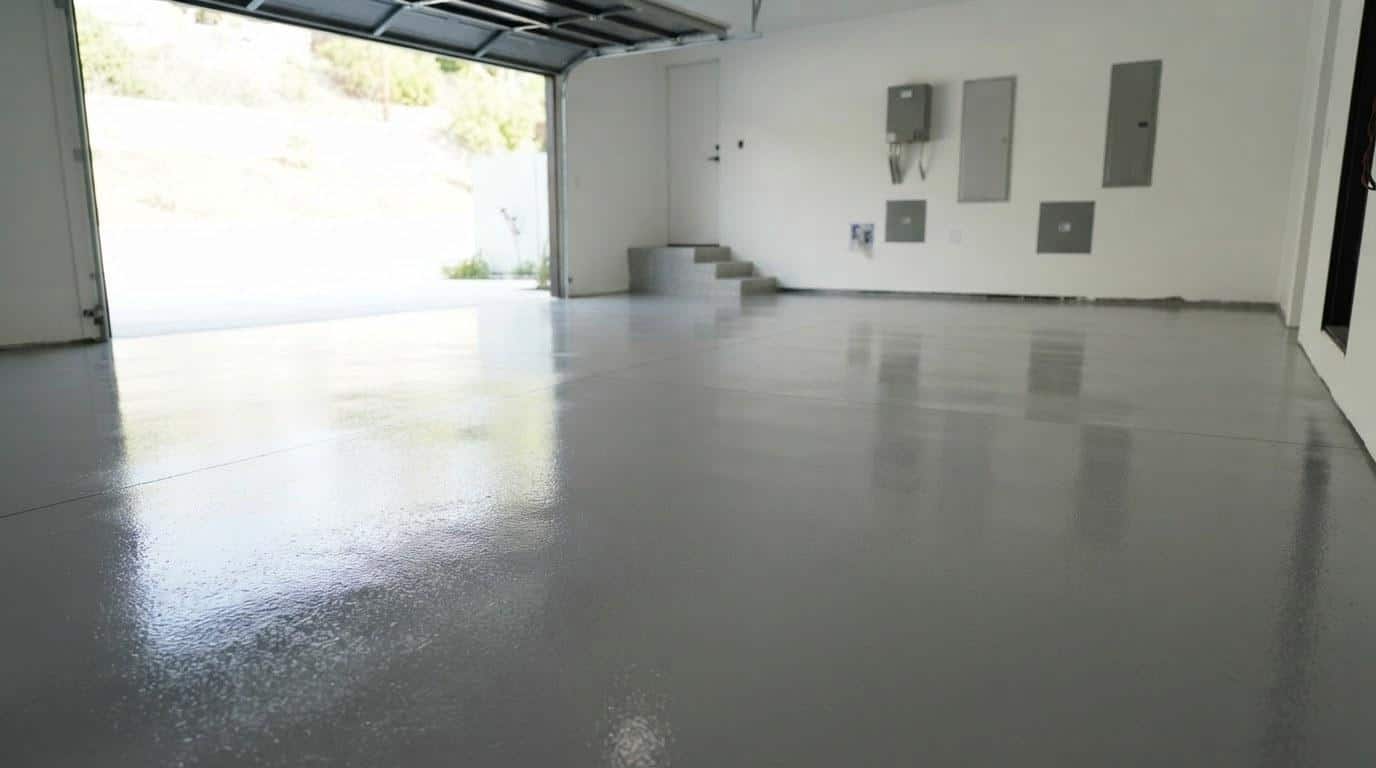
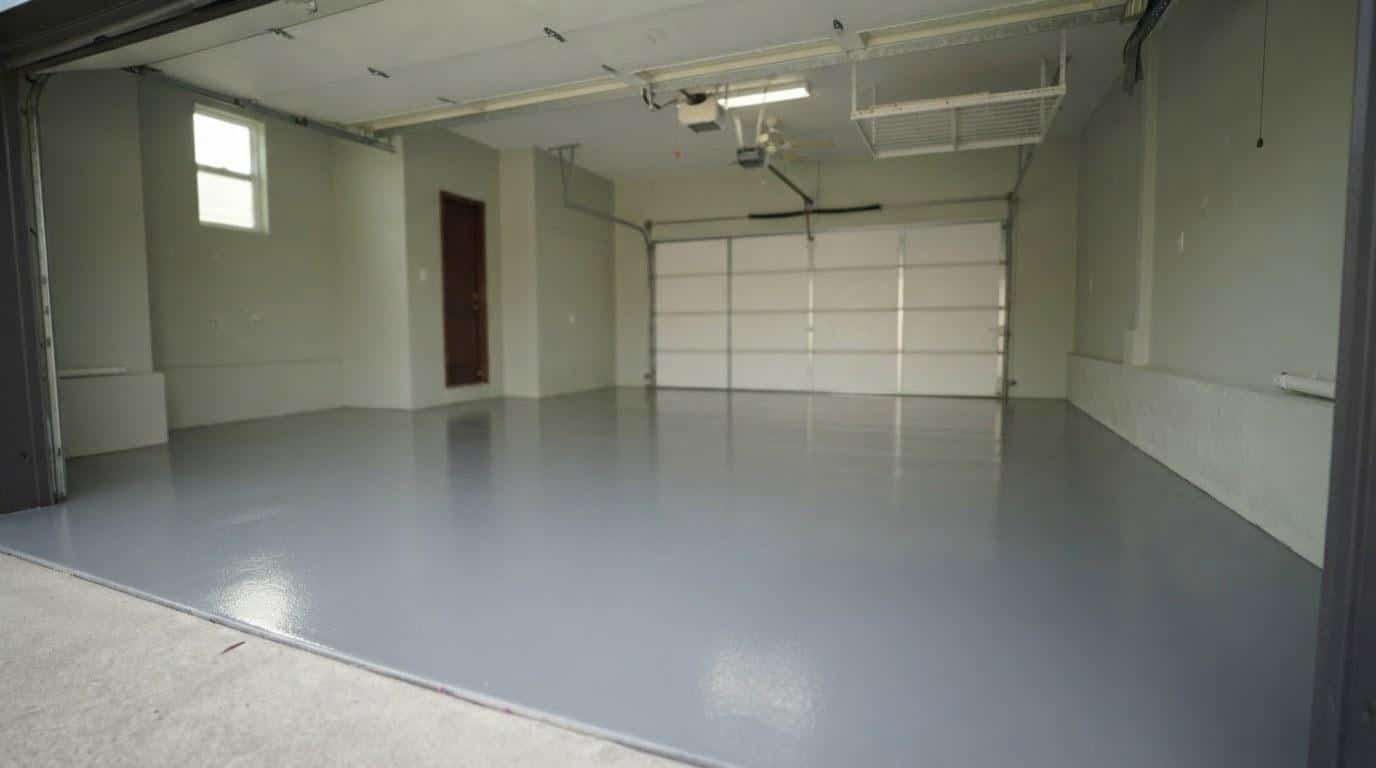
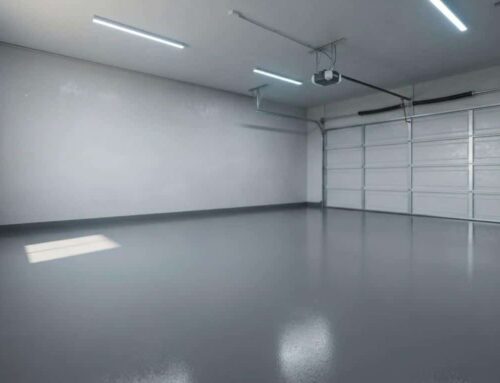
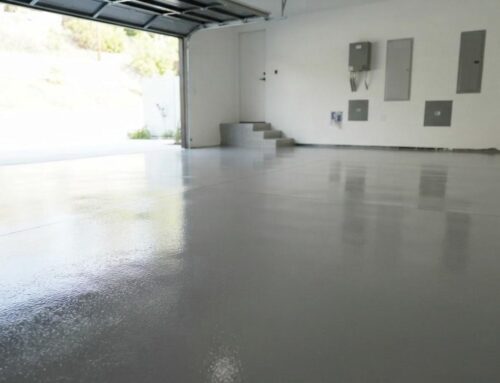
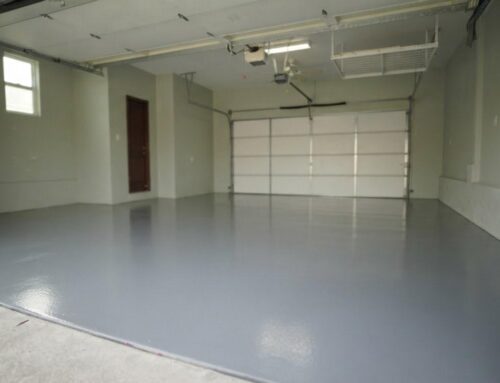
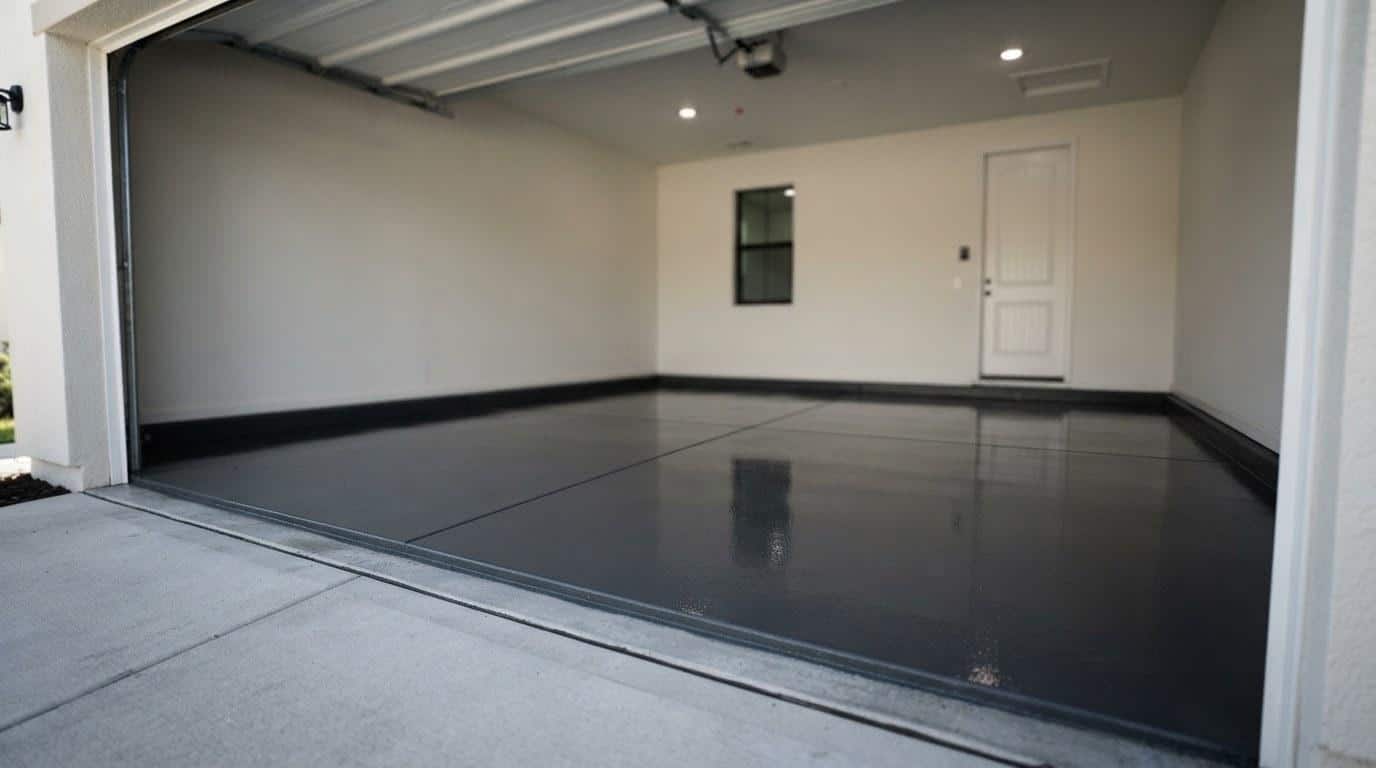
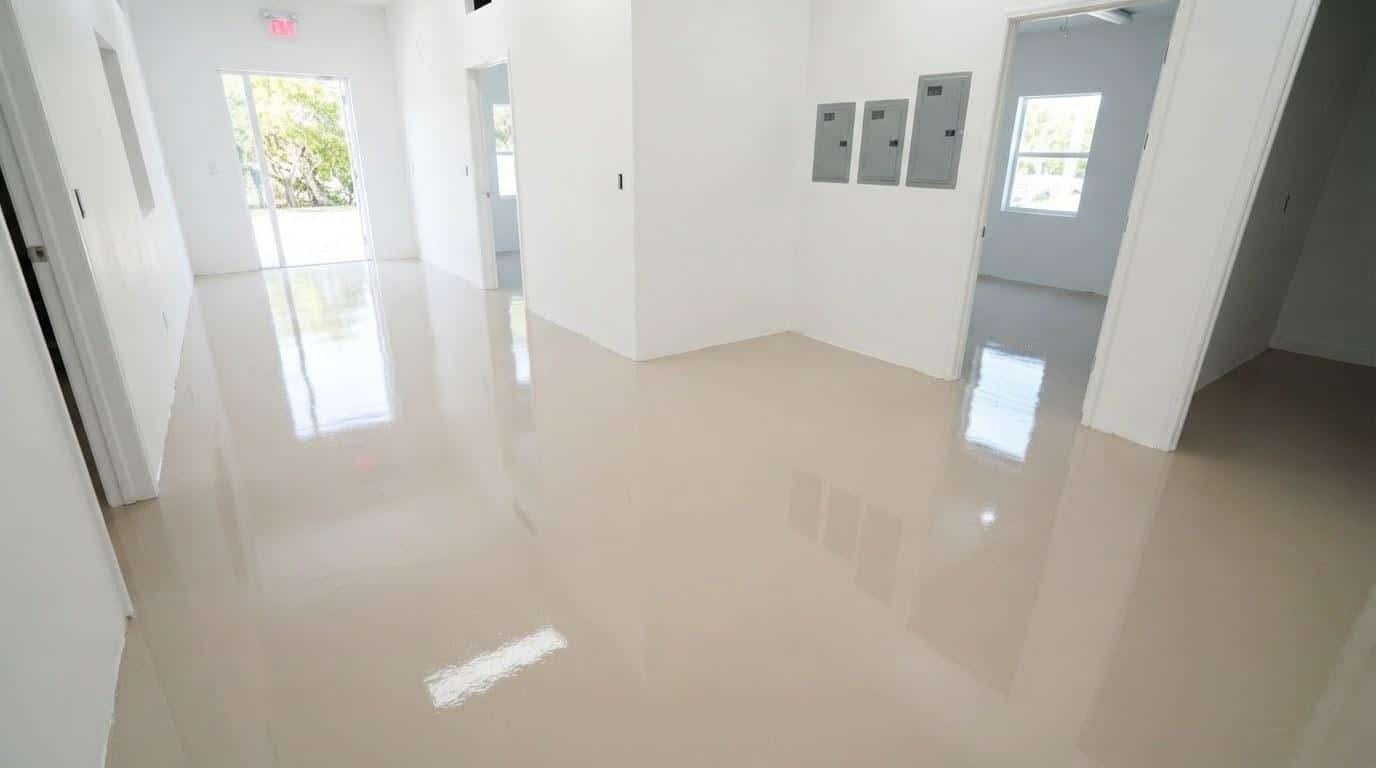
A solid epoxy finish delivers a clean, uniform look in any color. It is the most common choice for commercial spaces and is increasingly popular in minimalist luxury interiors. The surface is smooth, easy to clean, and shows imperfections in the underlying slab more readily than textured systems, so surface prep must be flawless.
Chip and Flake Epoxy Flooring
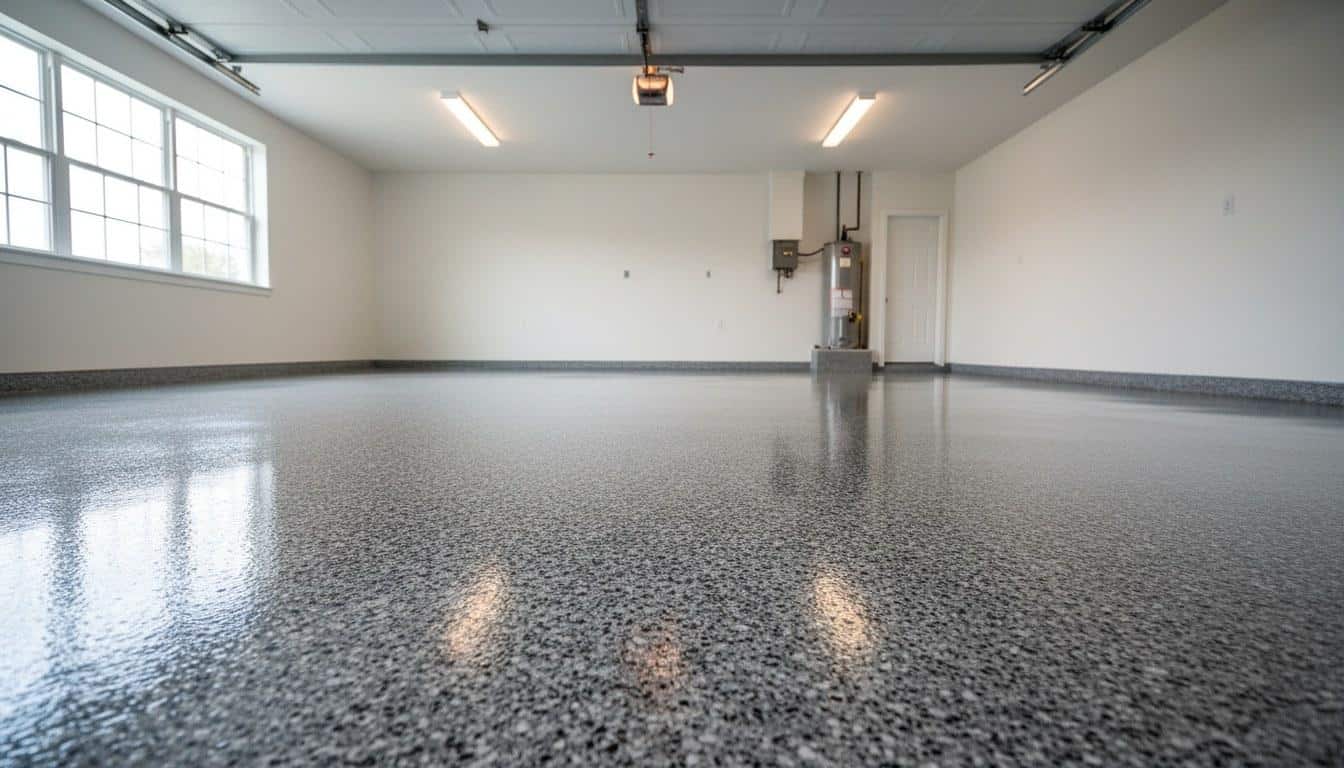
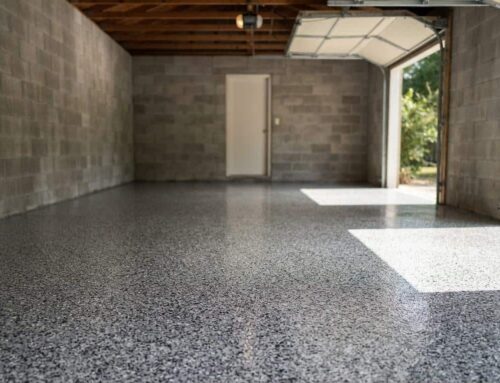
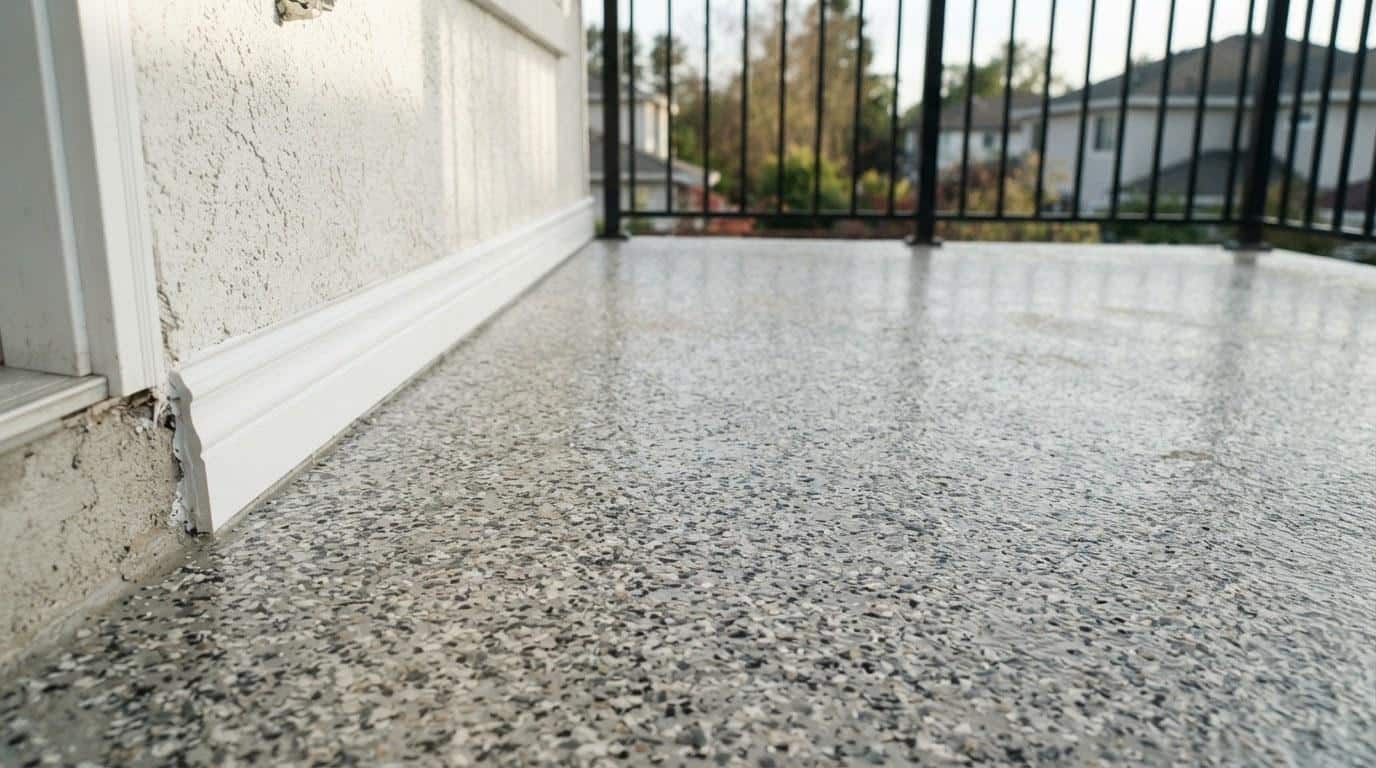
Chip and flake epoxy flooring, sometimes called broadcast flake, involves scattering vinyl color chips into a wet epoxy base coat and then sealing with a clear topcoat. The chips hide surface irregularities, add slip resistance, and create a terrazzo-like appearance. Our team sees chip and flake systems installed on roughly 60 percent of the garage projects we complete, largely because the texture hides tire marks and dust between cleanings.
- Slip resistance: The chip texture adds grip, making it a smart choice for driveways and garage ramps where wet concrete can be hazardous.
- Design variety: Chips come in hundreds of color blends, from neutral stone tones to bold custom palettes.
- Durability: A full-broadcast chip system with a polyaspartic topcoat typically handles 10,000 to 15,000 pounds of vehicle weight per axle without cracking.
Metallic and Artistic Epoxy Finishes
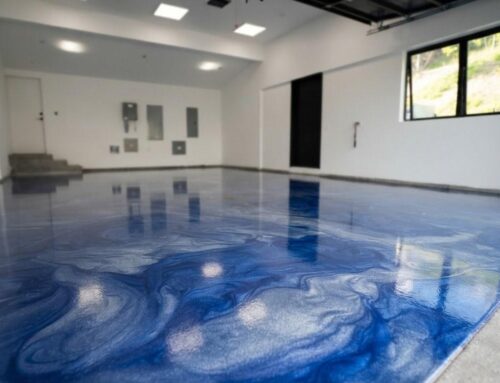
Metallic epoxy uses pearlescent pigments suspended in a clear epoxy base to create flowing, three-dimensional patterns that resemble polished stone, molten metal, or ocean water. No two floors look identical. This system is the premium choice for showcase garages, wine cellars, and high-end interior spaces where the floor is meant to be a design statement.
Balcony and Driveway Coatings
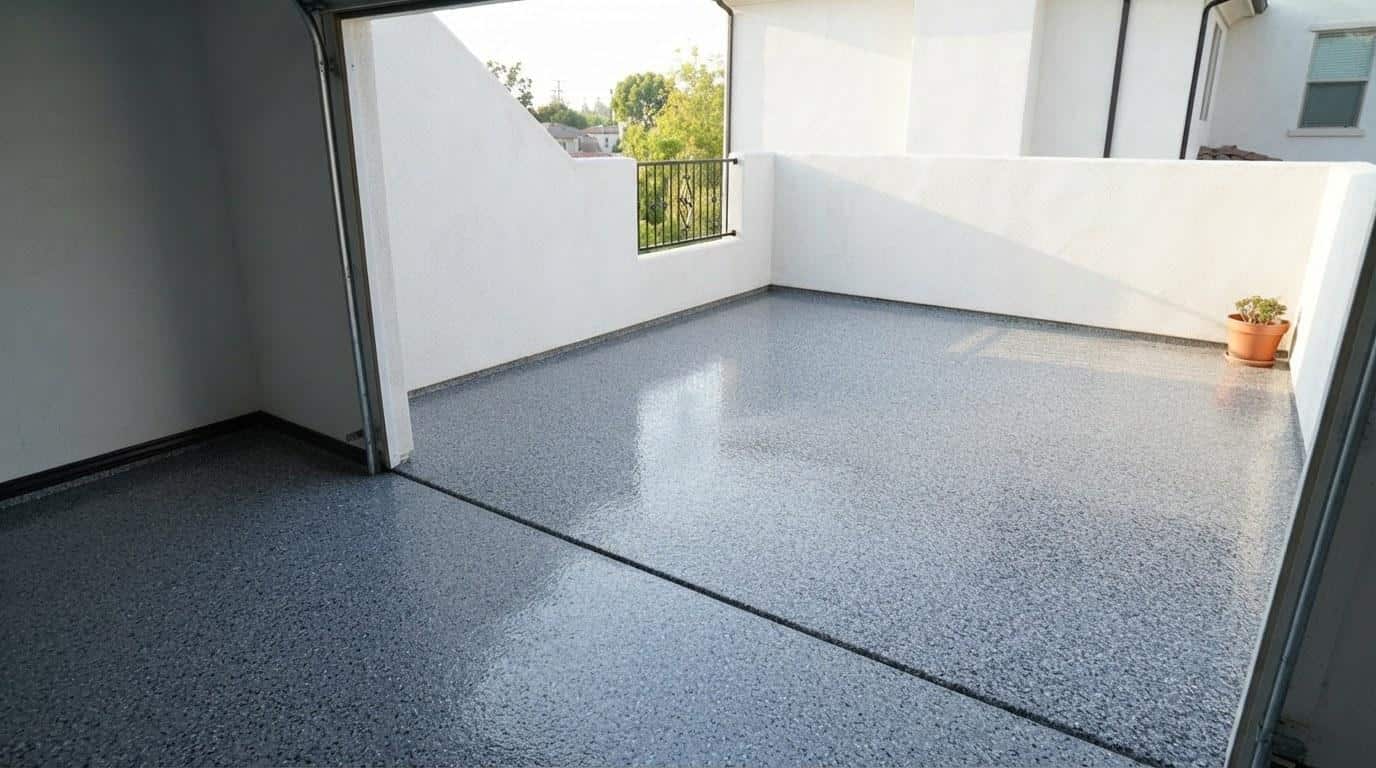
Balconies and driveways face exposure that garage interiors do not: direct sun, standing water, and thermal cycling as temperatures swing between day and night. The right system for these surfaces combines an epoxy base with a polyaspartic or polyurethane topcoat rated for exterior use. California’s Title 24 building energy standards do not directly regulate coating materials, but they do govern waterproofing assemblies on occupied balconies, which affects how the coating system must integrate with the existing waterproofing membrane.
How Much Do Professional Epoxy Coatings Cost?
In the Southern California market, professional epoxy coating projects typically range from $3 to $12 per square foot installed, depending on the system, the surface condition, and the complexity of the design. A standard two-car garage of roughly 400 square feet with a chip and flake system generally falls between $1,200 and $2,800. A full metallic finish or a multi-zone driveway project can reach $5,000 to $15,000 or more depending on scope.
| Surface and System | Typical Size | Estimated Market Range | Key Cost Drivers |
|---|---|---|---|
| Garage: Chip and Flake Epoxy | 400-600 sq ft | $1,200 to $3,600 | Surface prep, flake density, topcoat type |
| Garage: Metallic Epoxy | 400-600 sq ft | $2,800 to $5,500 | Design complexity, pigment layers, labor time |
| Driveway Coating | 600-1,200 sq ft | $2,500 to $9,000 | Crack repair, UV topcoat, surface porosity |
| Balcony Coating | 150-400 sq ft | $900 to $3,500 | Waterproofing integration, drain detailing, slope |
| Solid Epoxy: Commercial or Large Residential | 1,000+ sq ft | $3,000 to $12,000+ | Multi-coat system, aggregate, custom color |
Surface condition is the single biggest cost variable. A slab with active cracks, oil contamination, or previous coating failure requires grinding, patching, and possibly acid etching before any new coating can bond. That prep work can add $0.50 to $2.00 per square foot to the total. Skipping it is the most common reason epoxy fails early.
For an accurate number on your specific project, request a custom quote from a qualified epoxy coating company rather than relying on per-square-foot averages. Call Five Star Epoxy & Coatings at (818) 355-3804 to schedule an on-site assessment.
DIY Epoxy Floor vs. Professional: What Is the Real Difference?
The core difference between a DIY epoxy floor and a professional installation is surface preparation and coating thickness. Box-store kits apply at roughly 4 to 6 mils dry film thickness; professional systems are typically 20 to 40 mils across multiple coats. That thickness difference directly determines how long the floor holds up under vehicle traffic, UV exposure, and thermal movement.
Box-store kits apply at roughly 4 to 6 mils dry film thickness; professional systems are typically 20 to 40 mils across multiple coats.
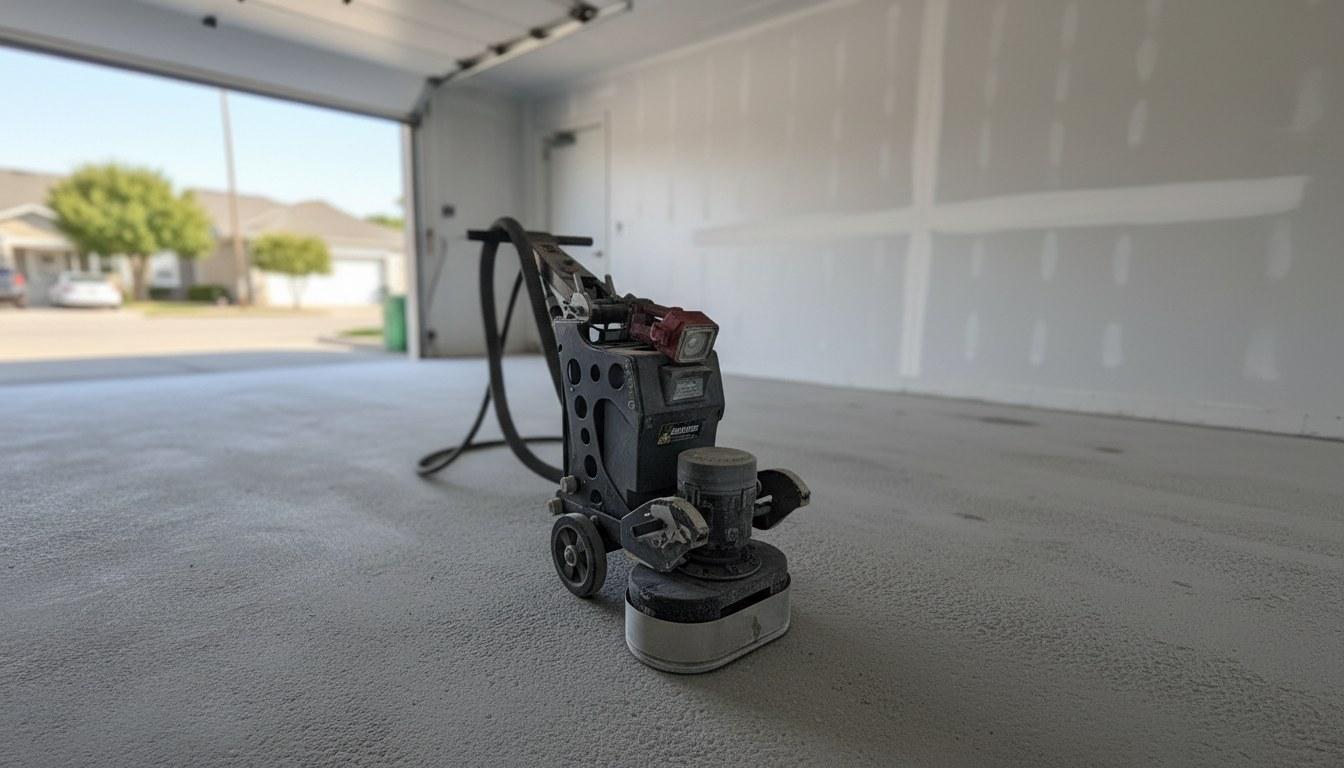
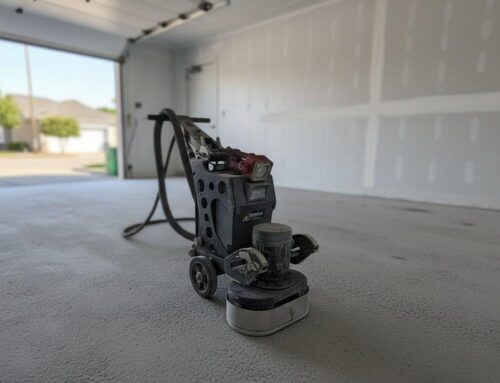
DIY kits also use water-based epoxy, which bonds poorly to concrete that has not been mechanically abraded. Professional installers use diamond-grinding equipment to open the concrete’s pores before applying a 100-percent solids or high-solids epoxy. The EPA’s Safer Choice program has certified lower-VOC professional epoxy formulations that meet California’s strict air quality rules without sacrificing bond strength.
Here is a direct comparison of the two approaches:
- Surface prep: DIY kits rely on acid etching, which opens roughly 30 percent of the pores that diamond grinding opens. Professional grinding creates a surface profile that maximizes mechanical adhesion.
- Coating thickness: DIY systems average 4 to 6 mils; professional multi-coat systems reach 20 to 40 mils, which resists hot tire pickup and impact chipping.
- Pot life management: Two-part epoxy has a working window of 20 to 45 minutes depending on temperature. Professionals mix in calibrated batches to avoid premature hardening that causes fisheyes and delamination.
- Topcoat: Most DIY kits do not include a UV-stable polyaspartic topcoat. Without one, the floor yellows and dulls within one to two seasons in direct sunlight.
- Warranty and recourse: A professional installation from a licensed contractor gives you a documented record and a contact for any warranty claim. A failed DIY floor has no recourse beyond buying more product.
Across projects we have assessed after a DIY attempt, delamination at the slab edge is the most common failure point, appearing in as many as 4 out of 5 cases where the concrete was not mechanically ground before coating.
How Do You Choose a Qualified Epoxy Coating Company?
The most important credential to verify is a valid CSLB license. Concrete coating work in California falls under the C-33 (Painting and Decorating) or C-61/D-40 (Service Station Equipment and Maintenance) contractor classifications depending on scope, and every contractor must be licensed by the California Contractors State License Board (CSLB). You can verify any license number at cslb.ca.gov in under two minutes.
Beyond licensing, look for these qualifiers when evaluating concrete floor coating contractors:
- Diamond-grinding equipment: Ask whether the contractor owns or rents a planetary grinder. Contractors who rely solely on acid etching are not set up for professional-grade prep.
- Product data sheets: A reputable epoxy coating company will provide the manufacturer’s technical data sheet for every product they plan to use. This lists the dry film thickness, pot life, cure time, and chemical resistance ratings.
- Portfolio of similar surfaces: A contractor who has coated garage floors may not have experience with sloped driveways or balconies with existing waterproofing membranes. Ask for photos of comparable projects.
- Written scope of work: The quote should specify the number of coats, the products used, the prep method, and the cure time before the surface can be driven on. Vague quotes lead to disputes.
- Insurance: General liability and workers’ compensation coverage protect you if something goes wrong on your property. Ask for a certificate of insurance before work begins.
This epoxy coatings services Bel Air guide is designed to help property owners in high-end communities ask the right questions before signing any contract. The luxury market attracts contractors who charge premium prices but do not always deliver premium preparation. The questions above separate the two groups quickly.
What Does the Installation Process Actually Look Like?
A professional epoxy coating installation follows a consistent sequence: surface inspection, mechanical preparation, crack and joint repair, primer coat, base coat, decorative broadcast (if applicable), and one or two topcoats. The full process typically takes two to three days from prep to final cure. Rushing any stage, especially cure time between coats, is the leading cause of premature delamination.
- Surface inspection: The contractor checks for moisture vapor transmission, existing coatings, oil contamination, and active cracks. A moisture reading above 75 percent relative humidity at the slab surface requires a moisture-mitigating primer before any epoxy is applied.
- Mechanical grinding: A diamond-cup grinder or planetary grinder opens the concrete surface to a concrete surface profile (CSP) of 2 to 3, the standard recommended by the International Concrete Repair Institute for thin-film coatings.
- Crack and spall repair: Active cracks are routed, filled with a semi-rigid polyurea filler, and allowed to cure before coating. Surface spalls are patched with a fast-setting cementitious repair mortar.
- Primer coat: A penetrating epoxy primer seals the slab and creates a chemical bridge for the base coat. Cure time is typically 8 to 12 hours at 70 degrees Fahrenheit.
- Base coat and broadcast: The base coat is applied at the specified mil thickness. For chip and flake systems, vinyl chips are broadcast to full rejection (complete coverage) while the coat is still wet.
- Topcoat application: One or two coats of polyaspartic or polyurethane sealer are applied over the cured base. Polyaspartic topcoats cure to light foot traffic in as little as 4 hours and to vehicle traffic in 24 hours, making them the preferred choice for driveways where access cannot be blocked for multiple days.
Total cure time before the surface reaches full chemical hardness is typically 7 days. During that window, avoid parking vehicles with hot tires, dragging heavy objects, or exposing the surface to standing water. Following the cure schedule is the single most important thing a property owner can do to protect the investment.
Total cure time before the surface reaches full chemical hardness is typically 7 days, and rushing any stage is the leading cause of premature delamination.
Get a Custom Quote for Your Property
Every concrete surface is different. Slab age, existing coatings, sun exposure, and the design goals of the property all affect which system is right and what it will cost. A phone call or on-site visit takes the guesswork out of the decision.
Five Star Epoxy & Coatings serves homeowners and commercial property owners across Southern California with garage epoxy flooring, driveway and balcony coatings, metallic and artistic finishes, and industrial-grade commercial systems. Whether you are planning a single-car garage refresh or a multi-surface luxury property project, the team can walk you through every option and provide a written quote.
Schedule your on-site assessment today. Call (818) 355-3804 to speak with a specialist and get a detailed scope of work before any commitment is made.
Frequently Asked Questions
How long does an epoxy garage floor coating last?
A professionally installed epoxy system with a polyaspartic topcoat typically lasts 15 to 20 years under normal residential use. The biggest factors are surface preparation quality, coating thickness, and how well the floor is maintained. DIY box-store kits generally last 2 to 5 years before peeling or yellowing because they apply at a much thinner film thickness and use lower-grade adhesion prep.
Can epoxy coatings be applied to an outdoor driveway or balcony?
Yes, but the system must be designed for exterior exposure. A UV-stable polyaspartic or polyurethane topcoat is required to prevent yellowing and surface degradation from direct sunlight. Balcony applications also need to account for existing waterproofing membranes and proper slope to drains. An interior-only epoxy product applied outdoors will fail within one to two seasons in Southern California's climate.
How soon can I park my car on a new epoxy floor?
Most professional epoxy systems with a polyaspartic topcoat allow vehicle traffic within 24 hours of the final coat. Full chemical cure, meaning the surface has reached its maximum hardness and chemical resistance, takes approximately 7 days. During that first week, avoid parking vehicles with hot tires directly on the surface, as heat can soften the coating before it fully hardens.
Is epoxy flooring slippery when wet?
A smooth, unseeded epoxy surface can be slippery when wet, similar to polished tile. For driveways, garage ramps, and balconies, contractors typically broadcast aluminum oxide grit or vinyl chips into the topcoat to add slip resistance. A full-broadcast chip and flake system provides significantly better traction than a smooth solid-color finish and is the standard recommendation for any exterior or high-traffic surface.
How do I find a licensed epoxy coating contractor in California?
You can verify any contractor's license status at cslb.ca.gov using their license number or business name. In California, contractors performing concrete coating work should hold a valid CSLB license under the California Contractors State License Board. Beyond the license, ask for a certificate of insurance, a written scope of work listing the specific products and number of coats, and photos of completed projects on similar surfaces before signing any agreement.