California OSHA Flooring Requirements for Industrial Facilities: Does Your Epoxy Coating Comply?
Cal/OSHA Title 8 sets specific flooring and slip-resistance standards for industrial spaces, and your epoxy coating must meet them to avoid citations and liability. This guide breaks down exactly what compliance looks like for facility managers across California.
What Does Cal/OSHA Title 8 Actually Require for Industrial Floors?
Cal/OSHA Title 8, General Industry Safety Orders (GISO) Section 3273 requires that industrial floors be maintained in a clean, dry, and slip-resistant condition. Floors must also be free of holes, loose boards, and hazardous irregularities that could cause trips or falls. These rules apply to warehouses, manufacturing plants, food processing facilities, auto shops, and any other space classified as an industrial workplace under California’s Division of Occupational Safety and Health regulations.
Section 3231 of Title 8 adds that floors must be capable of supporting the loads imposed on them, including equipment, stored materials, and foot traffic. For heavy industrial environments, this means the floor substrate and any applied coating must work together as a structural system, not just a decorative surface.
Title 8 Section 3270 specifically addresses wet process areas, requiring that floors in those zones be slip-resistant and, where practical, equipped with drainage. Facilities that handle liquids, oils, or cleaning chemicals face the strictest requirements under this section.
The California Division of Occupational Safety and Health (Cal/OSHA) enforces these standards through routine inspections and complaint-driven investigations. Citations for flooring violations fall under the serious or repeat categories, which carry penalties starting at several thousand dollars per violation as of 2024.
How Do Epoxy Coatings Measure Up Against Cal/OSHA Slip-Resistance Standards?
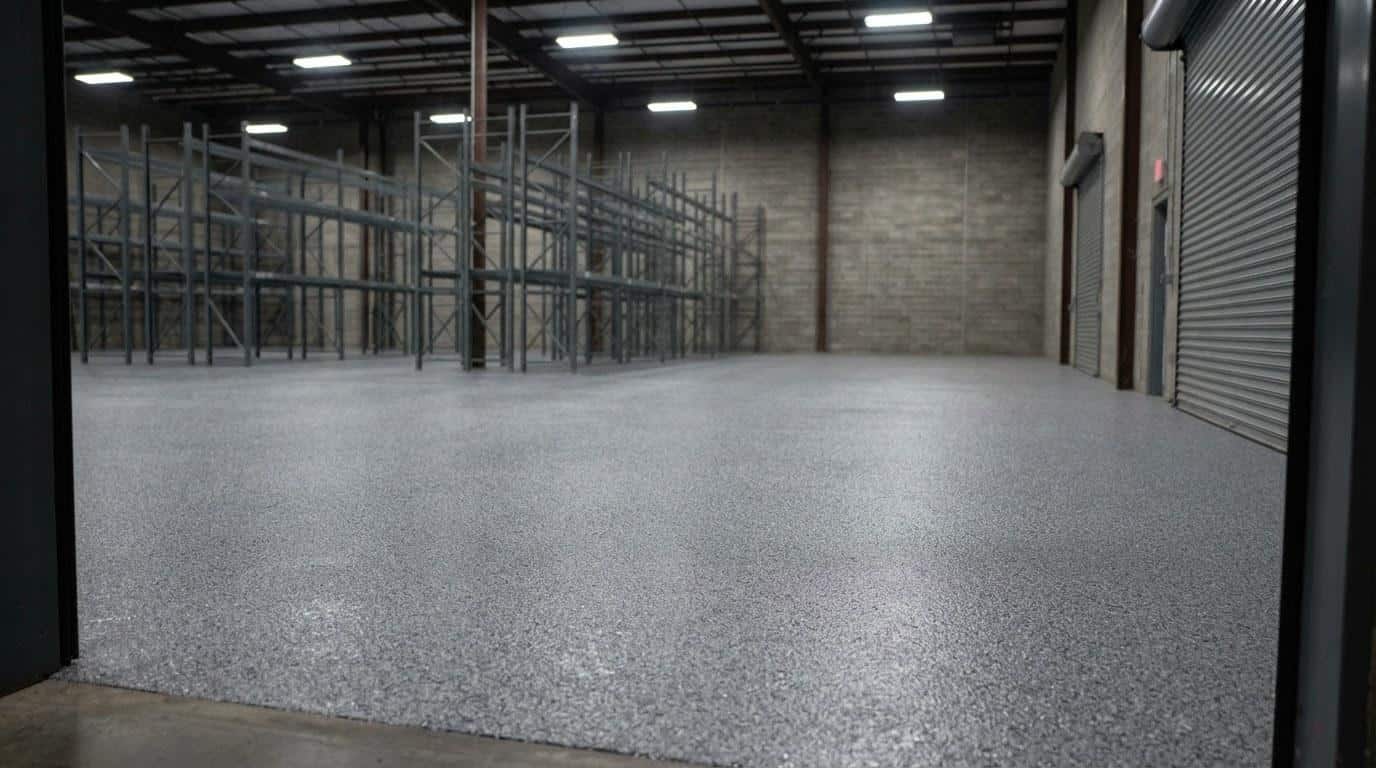
A properly specified epoxy coating can meet or exceed Cal/OSHA slip-resistance requirements. The key metric is the coefficient of friction (COF), and the American National Standards Institute (ANSI) and the Americans with Disabilities Act (ADA) both reference a minimum COF of 0.60 for level surfaces and 0.80 for ramps in industrial settings. A bare, smooth epoxy finish typically measures between 0.40 and 0.55 COF when wet, which falls below the threshold. That is why aggregate broadcast is critical in any compliance-focused installation.
A bare, smooth epoxy finish typically measures between 0.40 and 0.55 COF when wet, which falls below the Cal/OSHA compliance threshold.
When aluminum oxide, silica sand, or polymer grit is broadcast into the topcoat before it cures, the COF of the finished surface rises to the 0.70 to 0.90 range, depending on aggregate type and broadcast density. This is the standard approach used in compliant industrial epoxy floors across California.
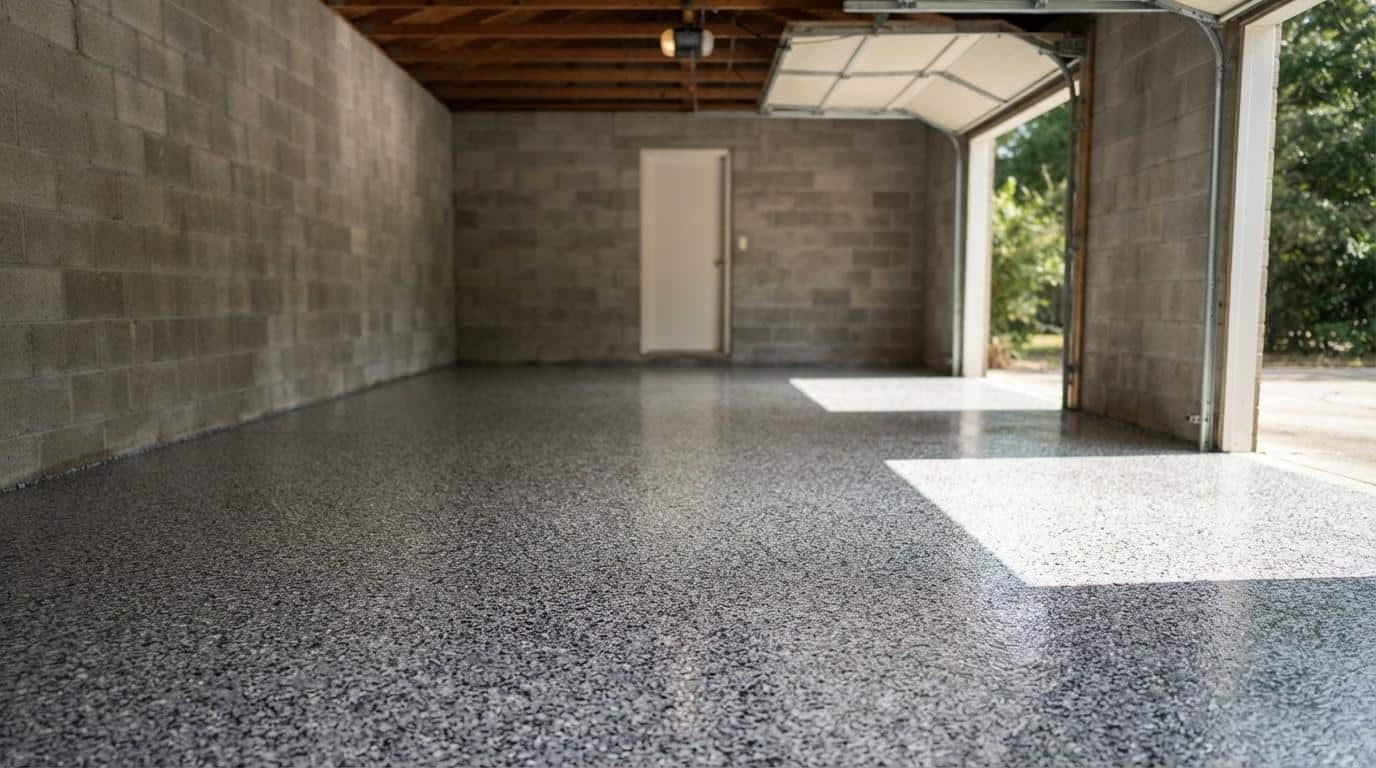
Chip and flake epoxy flooring systems, which embed colored vinyl flakes throughout the coating, also add measurable texture. On their own, flake systems typically reach a COF of 0.55 to 0.65. Adding a grit-infused topcoat over a flake system pushes that number above 0.75, making flake-and-grit combinations a popular choice for facilities that want both compliance and a clean appearance.
Our crews pay close attention to the topcoat broadcast rate on every industrial job, because too little aggregate leaves low-traction patches that show up clearly during a pendulum slip test, which is the method Cal/OSHA inspectors most commonly reference.
| Epoxy System | Typical Wet COF | Cal/OSHA Compliant (Level Floor)? | Best Use Case |
|---|---|---|---|
| Smooth solid epoxy (no aggregate) | 0.40 to 0.55 | No | Dry storage only, low-traffic areas |
| Solid epoxy with silica broadcast | 0.70 to 0.85 | Yes | Warehouses, manufacturing floors |
| Chip and flake epoxy (no grit topcoat) | 0.55 to 0.65 | Marginal | Light industrial, dry environments |
| Chip and flake with grit topcoat | 0.75 to 0.90 | Yes | Mixed-use industrial, food processing |
| Mortar epoxy (self-leveling, aggregate-filled) | 0.80 to 0.95 | Yes | Wet process areas, heavy equipment zones |
Which Epoxy Systems Work Best for Industrial Compliance?
The right epoxy system depends on the specific hazards in your facility, the presence of liquids or chemicals, and the load requirements of the space. Three system types cover the vast majority of Cal/OSHA compliance scenarios in California industrial facilities.
100% Solids Epoxy with Broadcast Aggregate
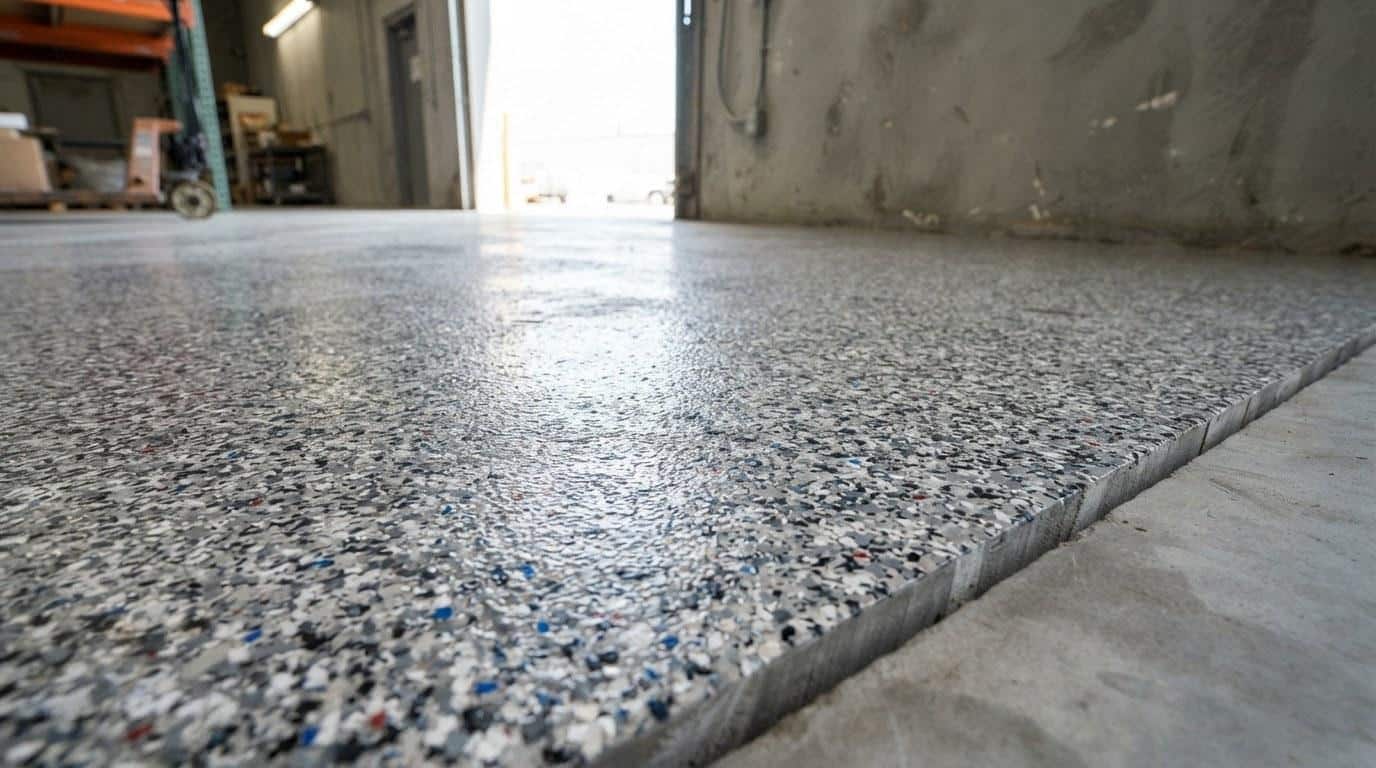
This is the most common compliant system for general industrial use. A 100% solids epoxy base coat is applied at a thickness of 10 to 30 mils, followed by a broadcast of aluminum oxide or silica sand, and sealed with a polyurethane or polyaspartic topcoat. The finished system resists forklift traffic, chemical spills, and point loads from racking systems. It is also easy to clean, which supports the Title 8 requirement to keep floors free of contaminants.
Epoxy Mortar Systems
For wet process areas and heavy-duty manufacturing environments, epoxy mortar systems provide a build thickness of 1/4 inch to 1/2 inch. The aggregate-filled matrix creates inherent slip resistance without a separate broadcast step. These systems handle thermal cycling, impact, and chemical exposure far better than thin-film coatings, making them the standard choice for food and beverage plants and chemical processing facilities in California.
Metallic and Decorative Epoxy with Grit Topcoat
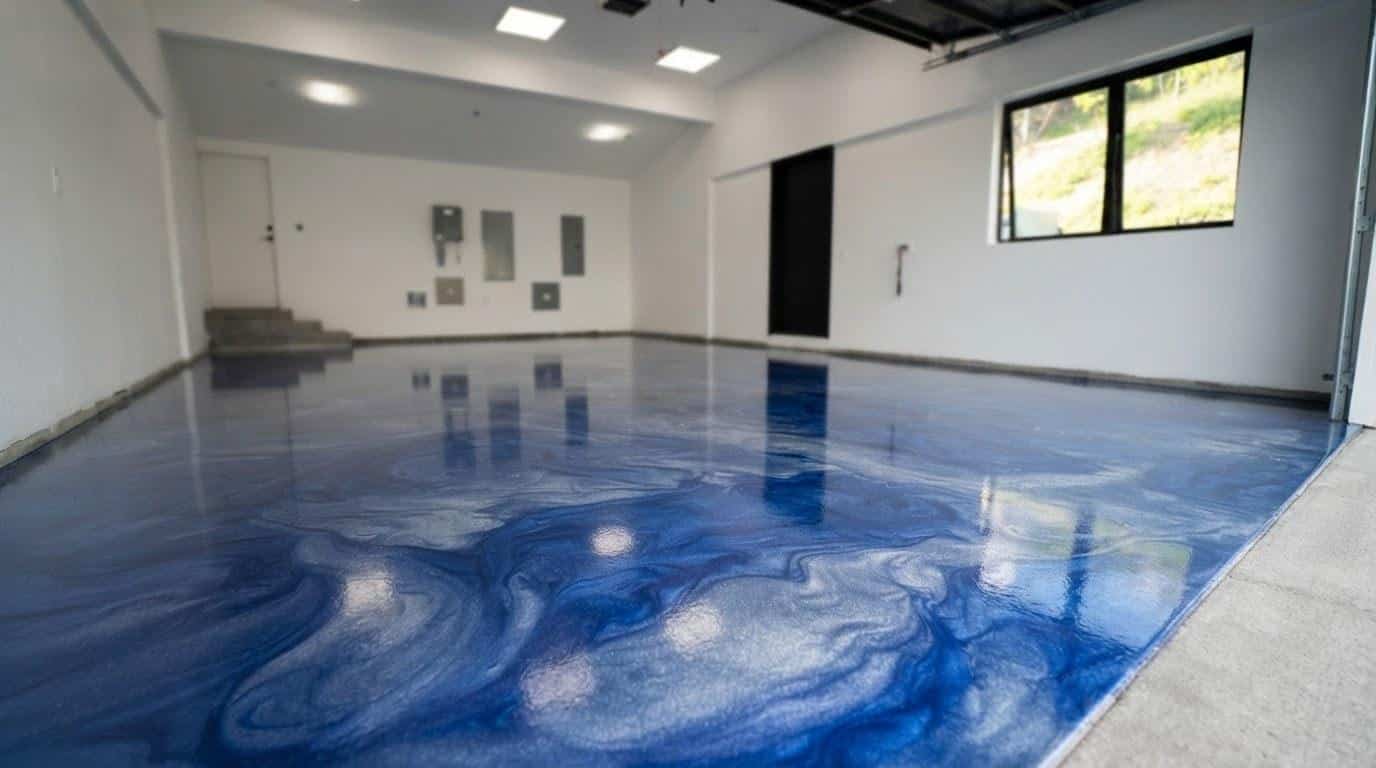
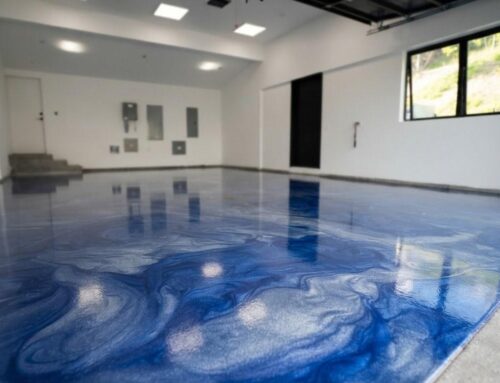
Metallic and artistic epoxy finishes are increasingly specified for showrooms and light industrial spaces that want visual appeal alongside compliance. A metallic base coat alone is smooth and non-compliant. However, applying a polyaspartic topcoat with aluminum oxide broadcast over the metallic layer produces a surface that meets the 0.60 COF threshold while preserving the visual effect. This combination is a practical solution for facilities that serve both production and client-facing functions.
What Does a Compliant Epoxy Installation Process Look Like?
A compliant industrial epoxy installation follows a defined sequence that starts well before the first coat is applied. Skipping any step in this process is the most common reason floors fail inspection or delaminate within the first two years.
- Concrete moisture testing: Concrete slabs in California can hold significant moisture, especially in coastal regions. ASTM F2170 in-situ relative humidity testing should confirm that slab RH is below 75 to 85 percent, depending on the epoxy manufacturer’s specification, before coating begins. Applying epoxy over a high-moisture slab leads to blistering and delamination within months.
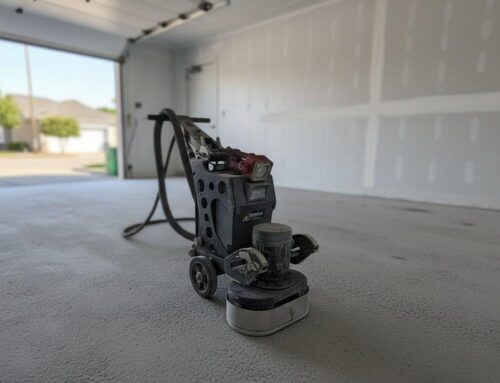
- Surface profile preparation: Cal/OSHA requires floors to be free of hazardous irregularities, which means existing damage, oil contamination, and laitance must be removed. Diamond grinding or shot blasting is used to achieve a concrete surface profile (CSP) of 3 to 5, as defined by the International Concrete Repair Institute (ICRI). This profile gives the epoxy mechanical adhesion to the slab.
- Crack and joint repair: Active cracks wider than 1/16 inch must be filled with an epoxy injection or semi-rigid filler before coating. Bridging over cracks with a thin-film coating creates a trip hazard and violates Title 8 Section 3273’s requirement for a hazard-free surface.
- Primer coat application: A penetrating epoxy primer is applied to seal the concrete and promote adhesion. On porous slabs, a second primer coat may be needed to prevent pinholes in the finish coat.
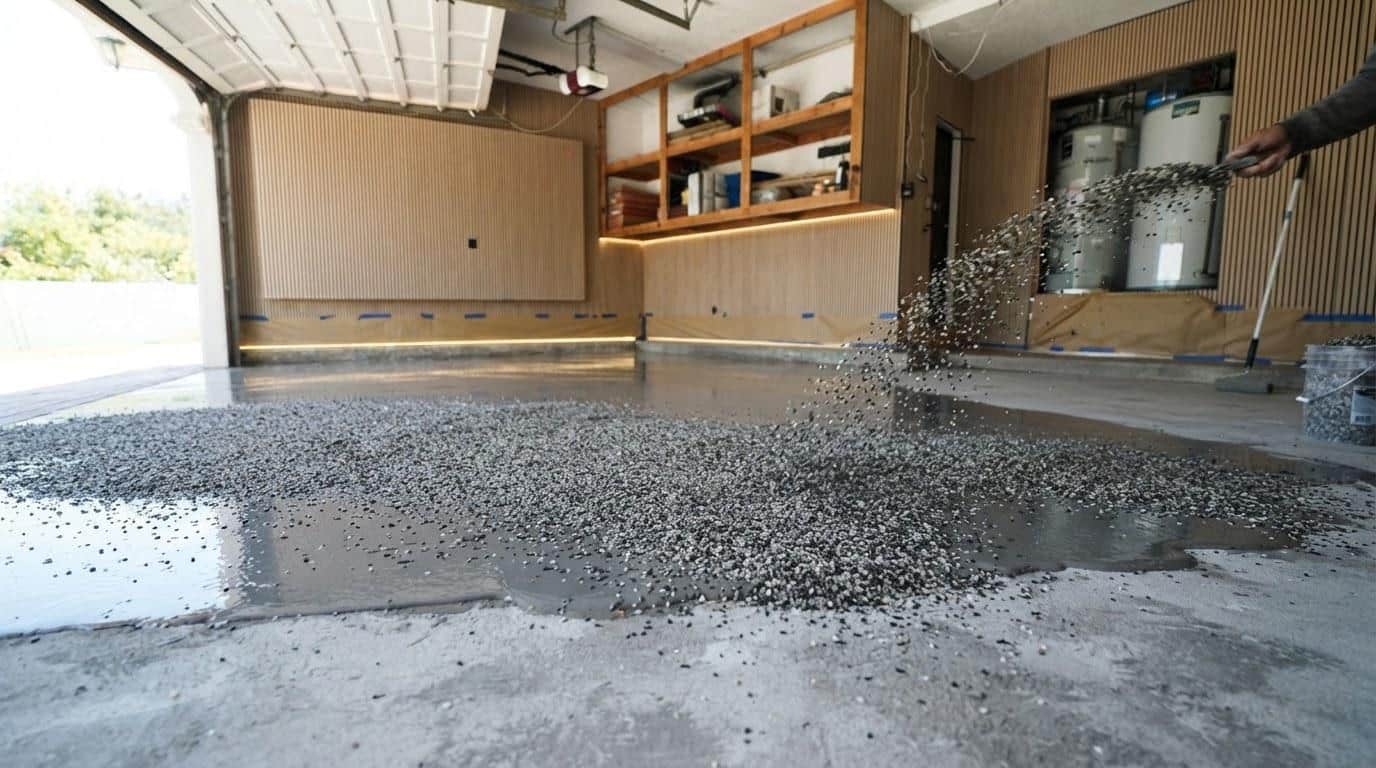
- Base coat and broadcast: The epoxy base coat is applied at the specified mil thickness. While the coat is still wet, the slip-resistant aggregate is broadcast to rejection, meaning until the surface can hold no more. Excess aggregate is swept away after cure.
- Topcoat seal: A clear polyurethane or polyaspartic topcoat locks the aggregate in place and provides chemical resistance. This layer is what Cal/OSHA inspectors see and test.
- Documentation: Retain the product data sheets, safety data sheets (SDS), and installation records. Inspectors may request these to confirm the system meets the specified COF and chemical resistance ratings.
We see delamination most often when the surface profile step is rushed, because even a visually clean slab can carry a thin layer of curing compound or contamination that breaks the bond between the epoxy and the concrete.
California OSHA Industrial Flooring Requirements Epoxy Guide: Common Compliance Mistakes
Most flooring citations in California industrial facilities trace back to a handful of recurring errors. Understanding them before your next inspection or installation can save significant time and money.
- Choosing a smooth decorative finish for a wet area: A smooth solid epoxy finish looks professional but provides inadequate traction when wet. Any area subject to water, oil, or cleaning solutions requires a grit-broadcast or mortar system to meet the 0.60 COF standard.
- Skipping the moisture test: California’s climate varies widely, from high-humidity coastal zones to dry inland valleys, but slab moisture is a risk everywhere. Coating over a slab with elevated RH leads to failure within months, requiring full removal and recoating at significant cost.
- Using a residential-grade product in an industrial setting: Residential epoxy kits sold at home improvement stores are typically 50 to 60 percent solids and cure to a film of 2 to 4 mils. Industrial applications require 100% solids systems that cure to 10 mils or more and carry the chemical resistance ratings needed for compliance.
- Ignoring joint and crack repair: Coatings bridge over cracks temporarily, but thermal movement and forklift traffic open those cracks back up within one to two years, creating trip hazards that violate Title 8 and expose the facility to liability.
- Failing to document the system: Cal/OSHA inspectors can ask for proof that the installed system meets the specified performance standards. Without product data sheets on file, a facility cannot demonstrate compliance even if the floor itself is performing correctly.
- Recoating without removing the failed layer: Applying a new coat over a delaminating or contaminated existing coating produces the same failure in a shorter time. Proper remediation requires grinding or blasting back to bare concrete before any new system is applied.
How Much Does a Compliant Industrial Epoxy Floor Cost in California?
In the California regional market, compliant industrial epoxy flooring typically ranges from $4 to $12 per square foot installed, depending on system type, surface condition, and facility size. Epoxy mortar systems for wet process areas generally fall at the higher end of that range, while broadcast-aggregate systems for dry warehouses fall toward the lower end.
The factors that move the price within that range include:
- Existing floor condition: Heavy contamination, multiple layers of old coating, or significant crack repair add to surface prep costs, which can represent 30 to 40 percent of the total project budget.
- System thickness and layers: A single-coat broadcast system is less expensive than a three-coat mortar system. Facilities with chemical exposure or heavy equipment typically need the thicker system regardless of upfront cost.
- Square footage: Larger projects benefit from economies of scale. A 50,000-square-foot warehouse floor will typically cost less per square foot than a 2,000-square-foot repair bay.
- Downtime constraints: Phased installations that keep portions of the facility operational add scheduling complexity and may increase labor costs. Fast-cure polyaspartic systems can return a floor to service in 24 hours, reducing downtime compared to standard epoxy systems that require 5 to 7 days for full cure.
- Aggregate and topcoat selection: Aluminum oxide aggregate costs more than silica sand but provides better long-term traction retention. Polyaspartic topcoats cost more than standard polyurethane but resist UV yellowing and cure faster.
How long does epoxy flooring last in an industrial setting? A properly installed 100% solids system in a California industrial facility typically lasts 10 to 20 years before requiring recoating, provided it receives routine cleaning and minor maintenance. That lifespan makes the upfront investment significantly more cost-effective than replacing bare concrete or vinyl tile every 5 to 7 years.
For an accurate quote based on your facility’s specific conditions, contact Five Star Epoxy & Coatings directly at (818) 355-3804. Market ranges are a starting point, but actual project cost depends on a site assessment.
Ready to Bring Your Facility Floor Into Compliance?
Cal/OSHA inspections do not come with advance notice, and flooring citations are among the most straightforward violations for inspectors to document on the spot. A floor that fails the slip-resistance standard or shows visible trip hazards creates both a regulatory liability and a workers’ compensation exposure that far exceeds the cost of a compliant coating installation.
Five Star Epoxy & Coatings installs industrial epoxy systems across Southern California that are specified to meet Cal/OSHA Title 8 requirements, including the correct aggregate broadcast rates, system thicknesses, and documentation to support your compliance records. Whether your facility needs a broadcast-aggregate system for a dry warehouse, a mortar system for a wet process area, or a chip and flake system with a grit topcoat for a mixed-use space, the right solution starts with a site assessment.
Schedule your compliance consultation today. Call (818) 355-3804 to speak with the Five Star Epoxy & Coatings team and get a written quote for your facility.
Frequently Asked Questions
Does Cal/OSHA require a specific slip resistance rating for industrial floors?
Cal/OSHA Title 8 does not cite a single numeric COF value in its text, but it requires floors to be slip-resistant and free of hazardous conditions. Inspectors and courts reference the ANSI and ADA standard of 0.60 COF for level surfaces as the practical benchmark. An epoxy coating with a properly broadcast aggregate layer typically achieves 0.70 to 0.90 COF when wet, which satisfies that standard.
Can I use a standard garage epoxy kit to coat my industrial facility floor?
No. Consumer-grade epoxy kits are typically 50 to 60 percent solids and cure to a film of only 2 to 4 mils, which is too thin for industrial traffic and chemical exposure. Cal/OSHA-compliant industrial floors require 100% solids systems that cure to 10 mils or more, with aggregate broadcast for traction. Using an undersized product creates a floor that will delaminate quickly and will not hold up to inspection.
How long does industrial epoxy flooring last before it needs to be replaced?
A properly installed 100% solids industrial epoxy system in California typically lasts 10 to 20 years before requiring recoating. The actual lifespan depends on traffic intensity, chemical exposure, and whether routine maintenance is performed. Facilities that clean floors regularly and address minor damage promptly consistently get the longer end of that range.
What happens if my industrial floor fails a Cal/OSHA inspection?
Cal/OSHA can issue a citation classified as serious or repeat, with penalties starting at several thousand dollars per violation as of 2024. The facility will also receive a correction deadline, typically 30 to 90 days, by which the floor must be brought into compliance. Failing to correct the violation within that window results in additional daily penalties. Beyond the fine, a documented floor hazard increases workers' compensation exposure if an employee is injured.
Do I need to shut down my facility to install a compliant epoxy floor?
Not necessarily. Many industrial facilities use phased installations, coating one section at a time while operations continue in other areas. Fast-cure polyaspartic topcoat systems can return a floor section to light foot traffic in as little as 24 hours, compared to 5 to 7 days for standard epoxy. A site assessment will determine the best sequencing plan for your facility's layout and operational schedule.