Concrete Coatings Cost: 2026 Price Ranges by Surface and System Type
Concrete coatings cost anywhere from a few hundred to several thousand dollars depending on the surface, system type, and prep work involved. This guide breaks down what drives those numbers so you can plan your project with realistic expectations.
What Is a Concrete Coating and What Does It Actually Do?
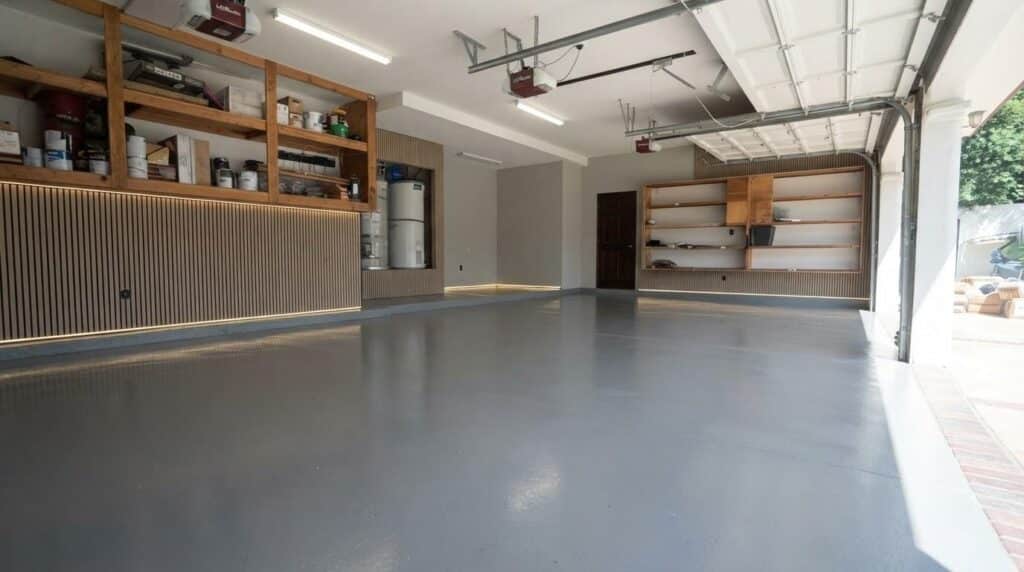
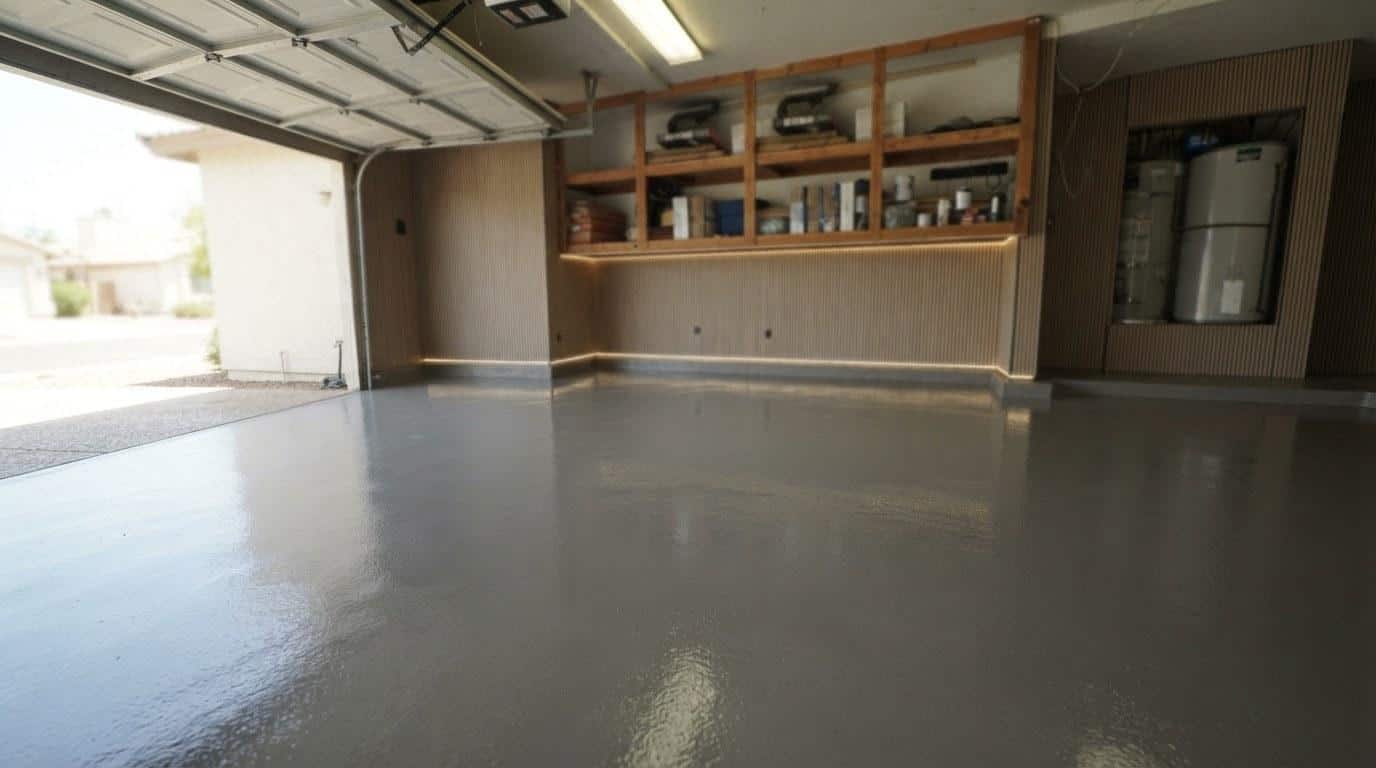
A concrete coating is a protective layer applied directly to a concrete surface to seal, strengthen, and improve its appearance. It bonds to the slab and creates a surface that resists stains, moisture, abrasion, and chemical damage.
Concrete on its own is porous. Without a coating, it absorbs oil, water, and household chemicals that slowly break it down. A quality coating system stops that absorption and gives the surface a finished, professional look that lasts for years.
Coating systems range from thin sealers applied in one pass to multi-layer epoxy systems built up over several coats. The right system depends on how the surface is used, how much traffic it sees, and what appearance you want to achieve.
What Does Concrete Coatings Cost in the California Market?
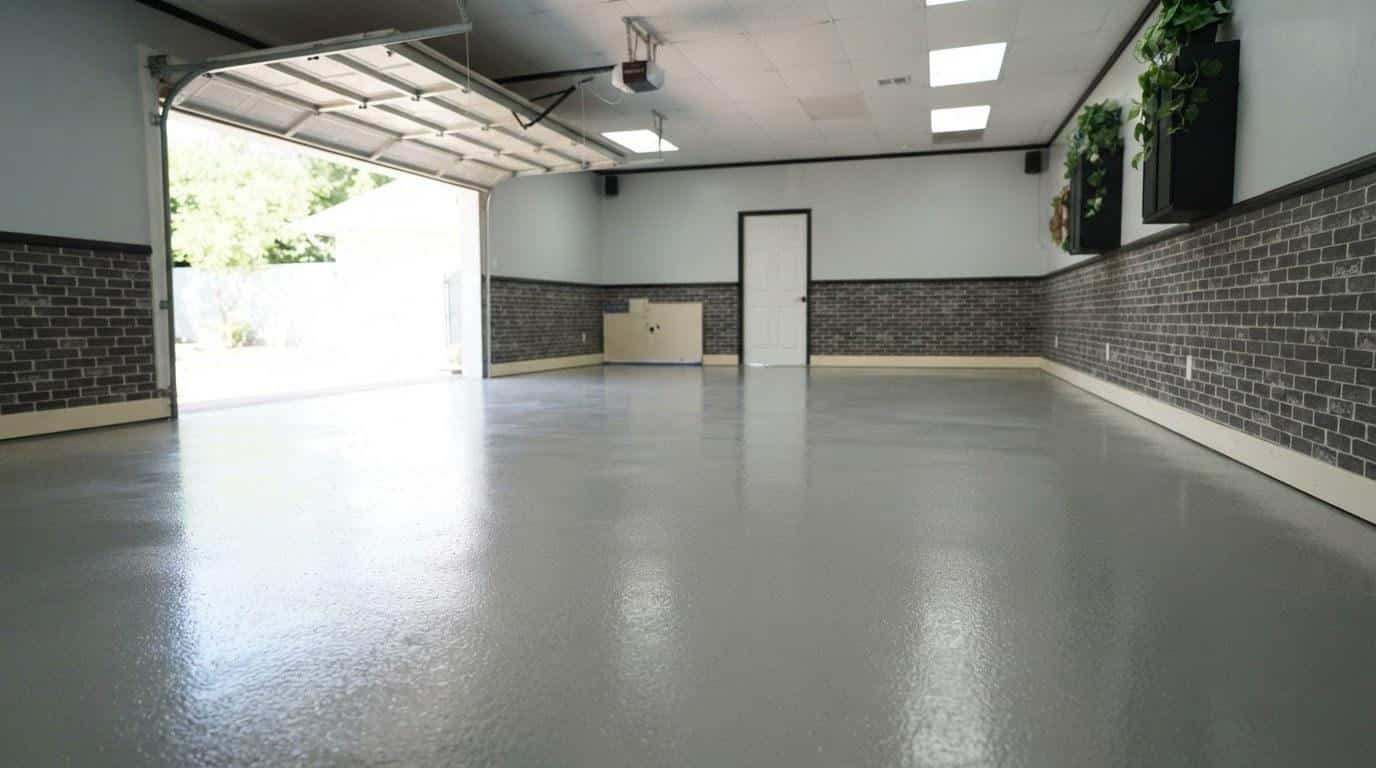
In the California regional market, concrete coatings cost typically falls between $3 and $12 per square foot, all-in for labor and materials. Most residential garage and driveway projects land between $1,500 and $5,000 total, while larger commercial or industrial floors can run considerably higher.
In the California regional market, concrete coatings cost typically falls between $3 and $12 per square foot, all-in for labor and materials.
Those numbers reflect 2026 market conditions in California, where labor rates, material costs, and permit requirements vary by county. The range is wide because the phrase “concrete coating” covers everything from a basic penetrating sealer to a fully broadcast chip-and-flake epoxy system with a topcoat.
The table below gives a clearer picture of what specific project types typically cost in this market.
| Project Scenario | Typical Market Range (CA) | What’s Usually Included |
|---|---|---|
| Single-car garage (400-500 sq ft), solid epoxy | $1,200 to $2,500 | Surface prep, primer coat, solid color epoxy, clear topcoat |
| Two-car garage (500-800 sq ft), chip and flake epoxy | $2,000 to $4,500 | Diamond grinding, base coat, broadcast flake, polyaspartic topcoat |
| Driveway (600-1,000 sq ft), concrete coating or sealer | $1,800 to $4,000 | Pressure washing, crack repair, coating application, UV-resistant sealer |
| Balcony or patio (200-400 sq ft), waterproof coating | $900 to $2,800 | Surface prep, waterproofing membrane, non-slip finish coat |
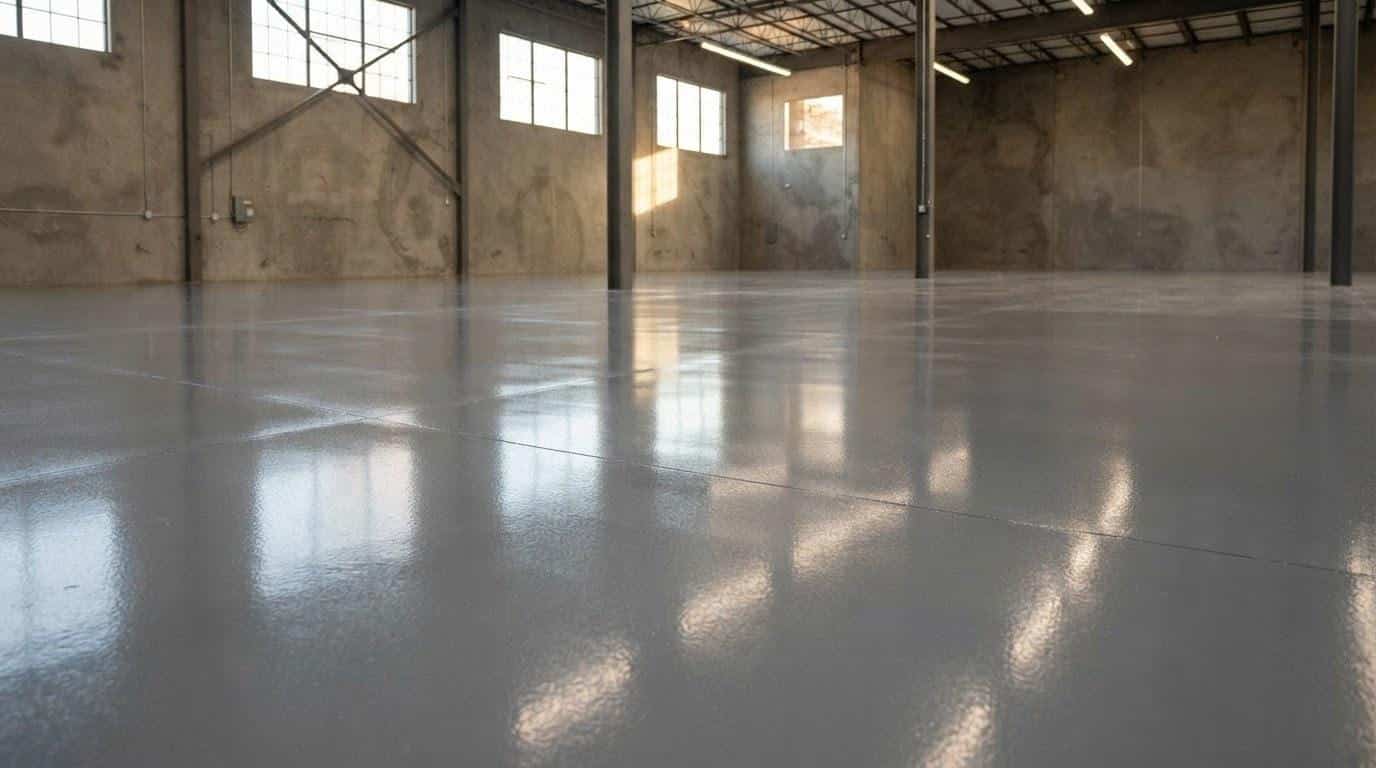
| Commercial or industrial floor (2,000+ sq ft), multi-layer epoxy | $6,000 to $25,000+ | Shot blasting, multi-coat epoxy system, chemical-resistant topcoat |
| Metallic or artistic epoxy, any residential space | $8 to $14 per sq ft | Custom color design, metallic pigment layers, high-gloss urethane topcoat |
These ranges reflect typical contractor pricing in the California market and are not a quote from any single provider. Actual costs depend on the factors described below.
What Factors Affect the Price of Concrete Coatings?
Six factors move the price of a concrete coating project more than anything else: surface condition, square footage, coating system type, number of coats, location, and the amount of prep work required.
- Surface condition: A slab with cracks, spalling, previous coatings, or moisture issues needs more prep before any coating can bond. Diamond grinding or shot blasting adds cost but is necessary for a coating that lasts. Skipping this step is the most common reason coatings fail within a few years.
- Square footage: Most contractors price per square foot, so larger areas cost more in total but often less per square foot. A 2,000-square-foot commercial floor typically gets a lower per-foot rate than a 300-square-foot patio.
- Coating system type: A basic penetrating sealer costs far less than a multi-layer chip-and-flake epoxy or a metallic artistic finish. Each system has different material costs and labor time.
- Number of coats: A single-coat sealer takes a few hours. A full system with a primer, base coat, broadcast layer, and polyaspartic topcoat can take one to two days, sometimes with a cure period between coats.
- Location and access: Projects in dense urban areas or properties with difficult vehicle or equipment access may carry higher labor costs. California’s Contractors State License Board (CSLB) licensing requirements also affect which contractors can legally perform this work.
- Custom design or color: Metallic epoxy finishes, multi-color flake blends, and decorative saw cuts add both material and labor time. These are the highest-cost options in the residential category.
How Do Costs Compare Across Different Coating Systems?
Epoxy-based systems are the most common choice for garage floors and commercial spaces, while polyaspartic and polyurea topcoats are increasingly used as finish layers because they cure faster and resist UV yellowing better than standard epoxy alone.
Understanding the main system types helps you match the right product to your budget and performance expectations.
Solid Epoxy Coatings
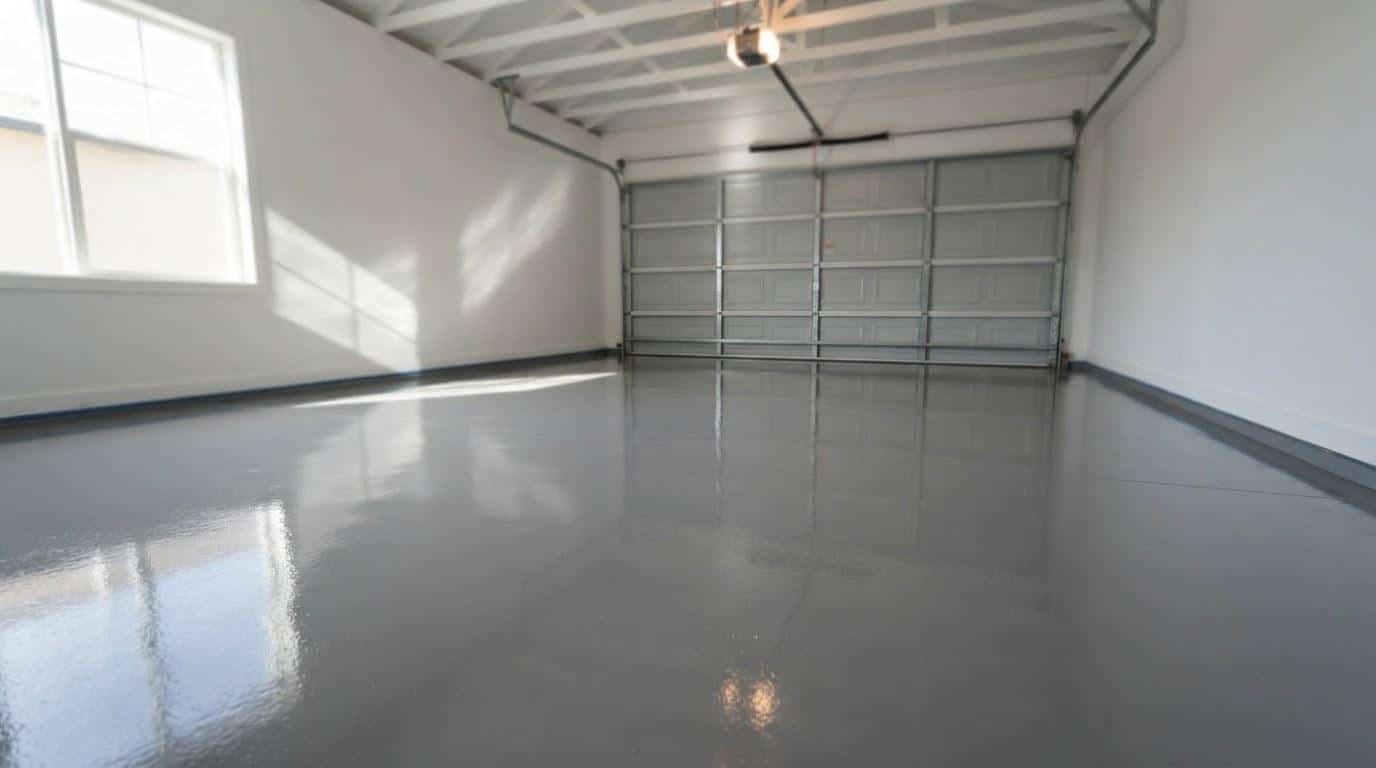
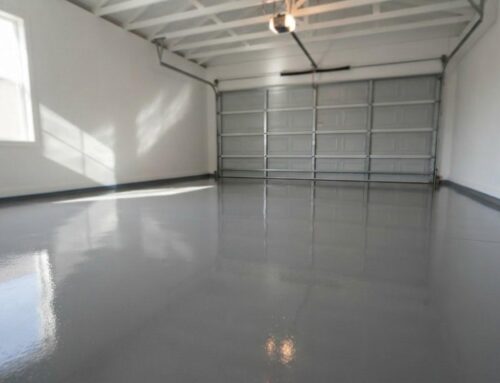
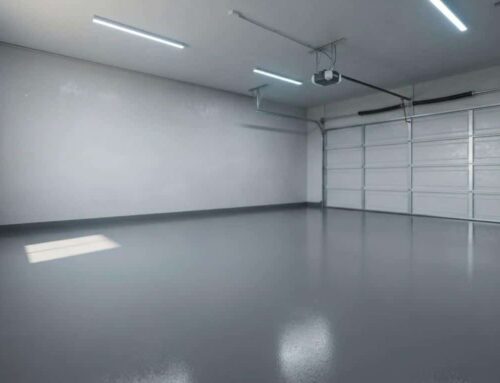
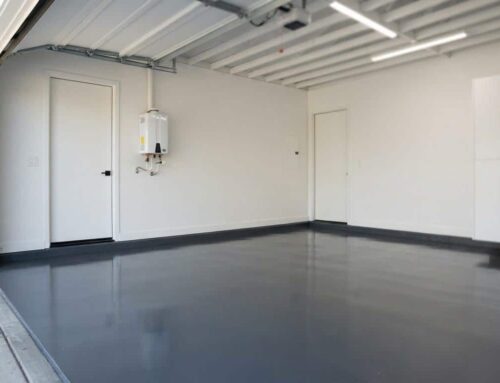
Solid color epoxy is the most widely installed system for residential garages. It gives a smooth, glossy surface and holds up well under vehicle traffic. Most solid epoxy systems consist of a primer, a pigmented epoxy coat, and a clear topcoat. Projects in this category typically range from $3 to $6 per square foot in this market, depending on prep requirements.
Chip and Flake Epoxy Flooring
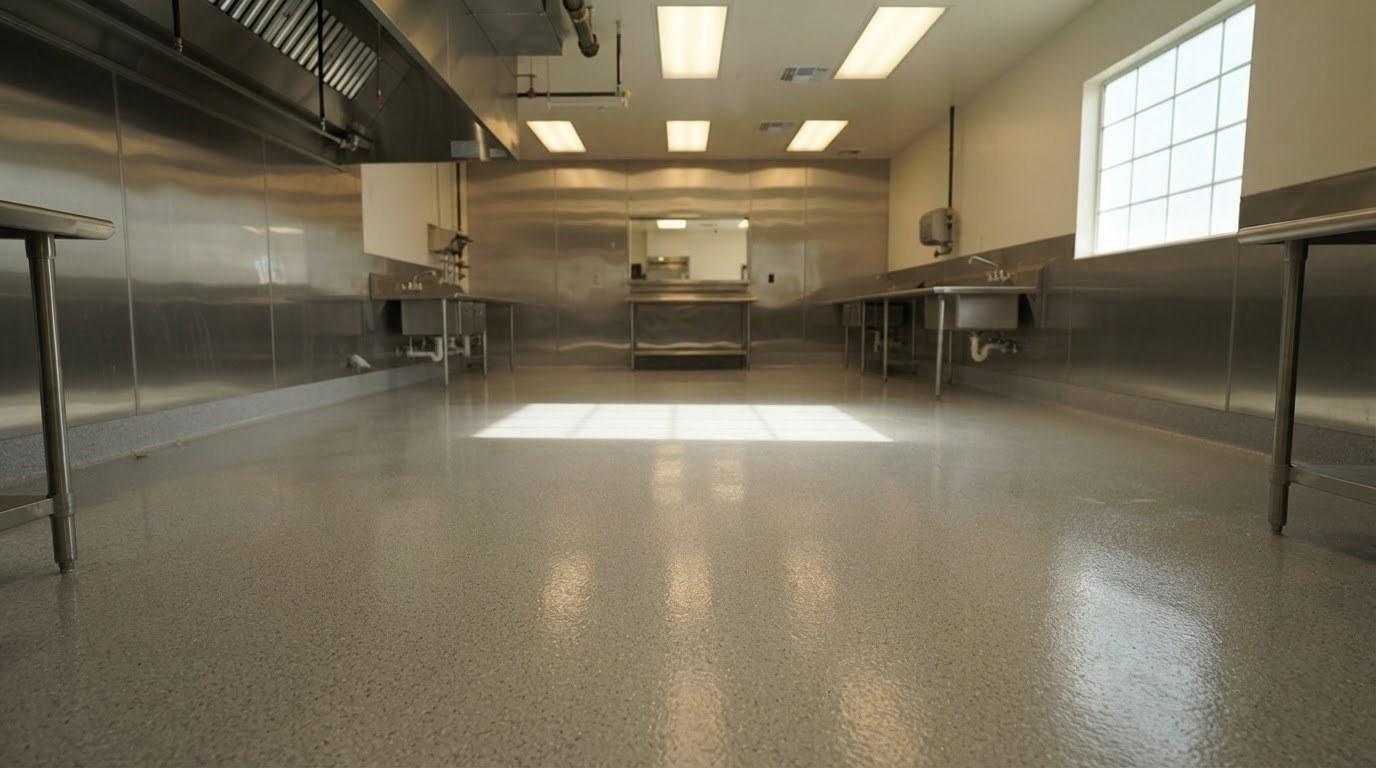
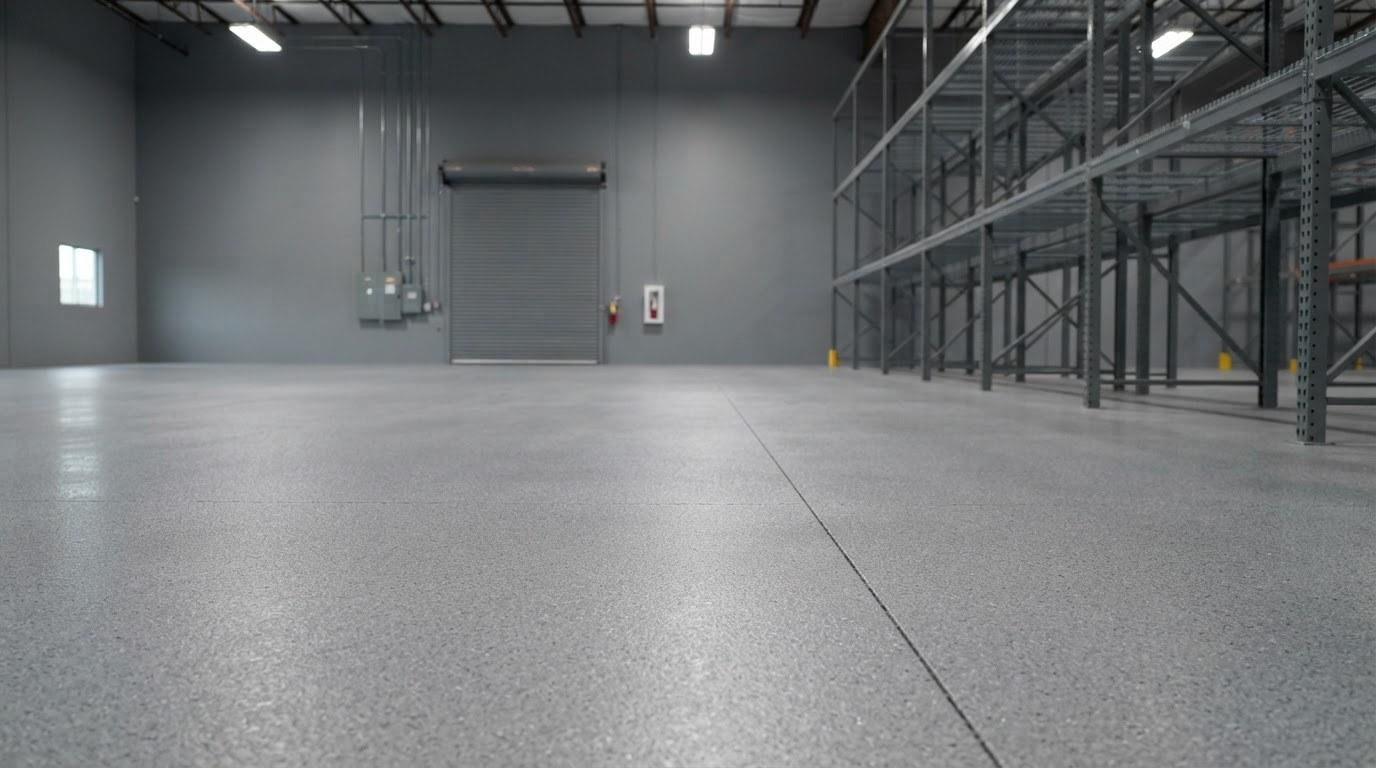
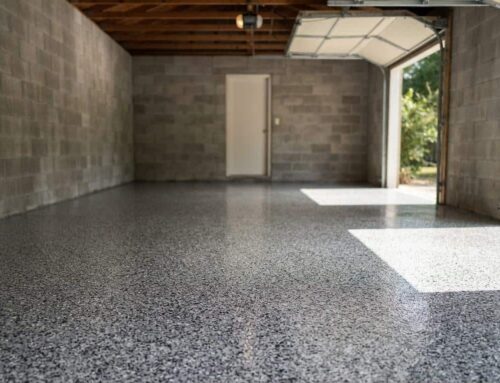
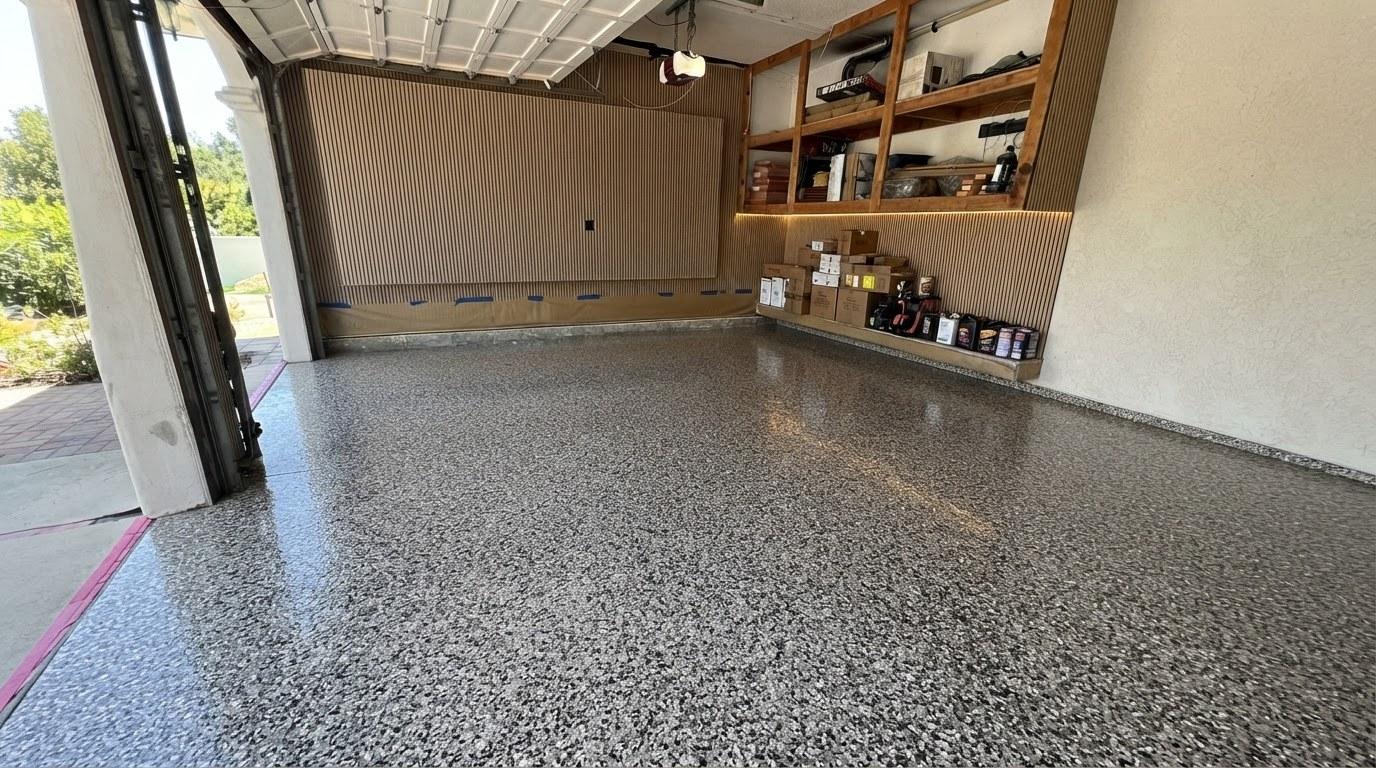
Chip and flake epoxy systems, sometimes called broadcast systems, add decorative vinyl flakes or chips to a wet base coat before sealing with a topcoat. This creates a textured, slip-resistant surface with a speckled appearance. The flake layer also hides minor surface imperfections better than a solid coat. Chip and flake epoxy flooring typically costs $4 to $7 per square foot installed. This is one of the most popular options for two-car garages and light commercial spaces across California.
Our crews find that the flake density and color blend chosen by the homeowner has a real effect on material cost, since full-broadcast (100% flake coverage) uses significantly more material than a partial broadcast.
Metallic and Artistic Epoxy Finishes
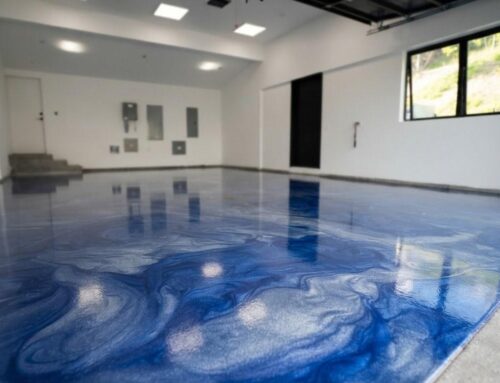
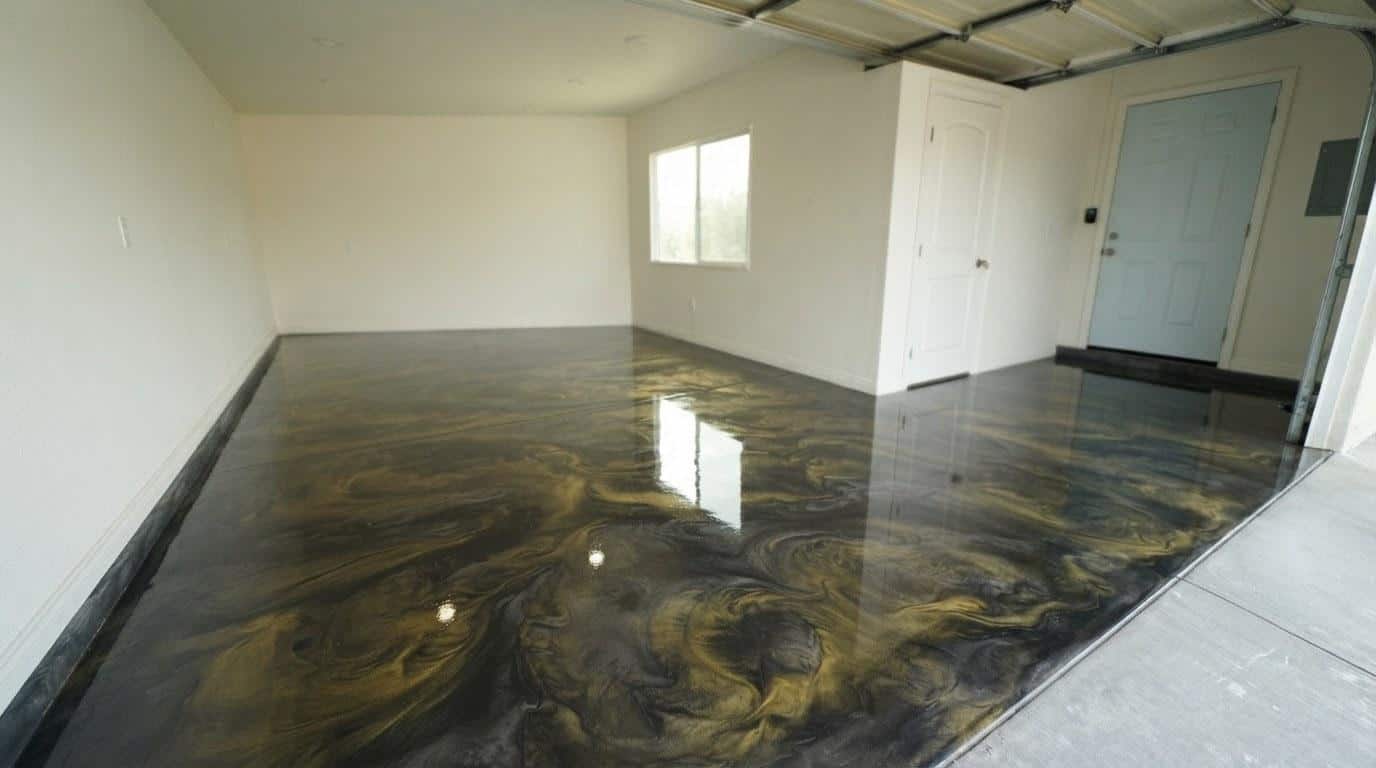
Metallic epoxy uses pigmented metallic powders suspended in a clear or tinted epoxy base to create a three-dimensional, flowing appearance. No two floors look exactly alike. These systems require more skill to apply and more time to complete, which pushes the cost to $8 to $14 per square foot in most California markets. They are popular for showrooms, retail spaces, and high-end residential interiors.
Polyaspartic and Polyurea Topcoats
Polyaspartic coatings are often applied as the final layer over an epoxy base. They cure in as little as one to two hours, resist UV yellowing, and handle temperature swings well, which matters in California’s climate where garage slabs can reach surface temperatures above 90 degrees Fahrenheit on summer afternoons. A polyaspartic-only system (without an epoxy base) can be installed in a single day, which reduces labor cost but may not provide the same build thickness as a full epoxy system.
Concrete Sealers and Surface Coatings
Penetrating sealers and topical sealers are the most affordable option, often ranging from $1 to $3 per square foot for materials and labor. They protect against moisture and light staining but do not add the same build, durability, or visual impact as a full epoxy system. Driveways and exterior concrete surfaces often use these as a cost-effective maintenance coating. The EPA’s Safer Choice program labels certain low-VOC concrete sealers, which is relevant for California projects subject to South Coast AQMD or Bay Area AQMD air quality rules.
How Long Does Epoxy Flooring Last?
A properly installed and maintained epoxy floor typically lasts 10 to 20 years in a residential garage. Commercial and industrial floors under heavy forklift or chemical exposure may need recoating after 5 to 10 years. Surface preparation quality is the single biggest factor in longevity. According to the U.S. Department of Energy, moisture vapor transmission through concrete slabs is a leading cause of coating delamination, which is why moisture testing before installation matters so much.
Surface preparation quality is the single biggest factor in longevity, and skipping it is the most common reason coatings fail within a few years.
A properly installed and maintained epoxy floor typically lasts 10 to 20 years in a residential garage.
What Is NOT Included in Most Concrete Coating Quotes?
Most baseline quotes cover surface prep, materials, and application labor for the agreed system. Several common add-ons are priced separately and can meaningfully change the total.
- Crack and spall repair: Filling cracks or grinding down spalled areas before coating is often quoted as a separate line item, especially when the damage is extensive.
- Moisture mitigation: If a slab tests positive for high moisture vapor emission, a vapor barrier primer or moisture mitigation system is typically an add-on cost. This is common on older slabs and ground-level garage floors throughout California.
- Moving or removing items: Most contractors expect the space to be cleared before they arrive. Moving heavy equipment, vehicles, or stored items may carry an additional labor charge.
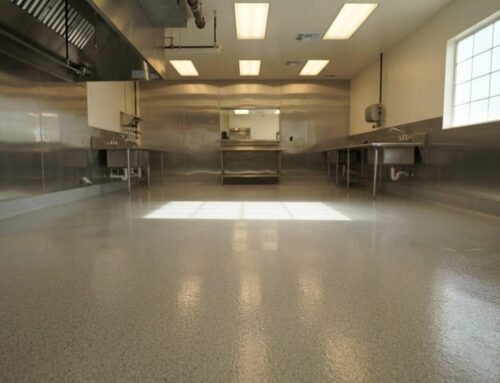
- Cove base or wall transitions: A coved epoxy base where the floor meets the wall is standard in commercial kitchens and food-service spaces but is usually a separate cost in residential quotes.
- Anti-slip additives: Broadcast silica sand or aluminum oxide for extra traction on wet surfaces is sometimes included but not always. Confirm this for balconies, driveways, and exterior applications.
- Permits: Most residential coating projects do not require a permit in California, but commercial tenant improvements and some industrial applications may. Check with your local building department before work begins.
- Removal of existing coatings: If a previous coating, paint, or adhesive residue is present, removing it adds time and cost. Shot blasting or chemical stripping is needed before a new system can bond properly.
How Do You Get an Accurate Concrete Coating Quote?
An accurate quote requires four pieces of information: the square footage of the area, the current condition of the slab, the coating system you want, and any special requirements like non-slip finish or chemical resistance.
Before contacting an epoxy flooring company or concrete coating contractor, gather the following so the estimate reflects your actual project:
- Measure the area. Length times width gives you square footage. For irregular spaces like L-shaped garages or patios with cutouts, break the area into rectangles and add them together.
- Note the slab condition. Look for cracks wider than a credit card, areas where the surface flakes or pits, stains from oil or chemicals, and any previous coating that is peeling or bubbling.
- Identify moisture concerns. Ground-level slabs and basement floors are more likely to have moisture issues. A reputable contractor will perform a moisture test, but flagging this upfront speeds the process.
- Choose a system type. Solid epoxy, chip and flake, metallic, or sealer. If you are unsure, ask to see samples. The system type is the biggest lever on both cost and appearance.
- Ask about topcoat options. A polyaspartic topcoat adds durability and UV resistance. Confirm whether it is included in the base quote or priced separately.
- Confirm what prep is included. Ask specifically whether diamond grinding, crack repair, and moisture testing are part of the quoted price. These are where surprise costs most often appear.
Contractors licensed by the California Contractors State License Board (CSLB) are required to provide a written contract for projects over $500. Always get the scope of work, materials, and payment schedule in writing before any work begins. You can verify a contractor’s license status at cslb.ca.gov.
Request a Custom Quote for Your Concrete Coating Project
Market ranges give you a useful starting point, but the only number that matters for your project is the one based on your actual slab, your square footage, and the system you choose. The ranges discussed above are regional market context, not a price list from any single contractor.
Five Star Epoxy and Coatings installs solid epoxy, chip and flake, metallic, and specialty coating systems for residential garages, commercial floors, driveways, and balconies across California. Get a project-specific quote before committing to any system or price.
Call (818) 355-3804 to schedule your on-site assessment and get a written estimate based on your exact space and goals.
Frequently Asked Questions
How much does concrete coating cost for an average garage?
For an average two-car garage in California, concrete coating cost typically falls between $2,000 and $4,500 for a chip and flake epoxy system with proper surface prep and a polyaspartic topcoat. A basic solid epoxy on a single-car garage can come in closer to $1,200 to $2,500. The final number depends on the slab's condition, the system chosen, and any crack or moisture repair needed before coating.
How long does epoxy flooring last on a concrete slab?
A properly installed epoxy floor on a residential concrete slab typically lasts 10 to 20 years with normal care. The biggest factor is surface preparation: slabs that are diamond ground and moisture tested before coating bond far better and last longer than those that are not. High-traffic commercial floors may need recoating sooner, often after 5 to 10 years.
What is the difference between a concrete sealer and a concrete coating?
A concrete sealer is a thin protective layer, often penetrating into the slab, that resists moisture and light staining but adds little visible finish. A concrete coating is a thicker, built-up system, like epoxy or polyaspartic, that bonds to the surface and creates a durable, decorative layer you can see and feel. Sealers cost less but offer less protection and visual impact than a full coating system.
Can you coat a concrete driveway the same way you coat a garage floor?
Yes, but the system needs to be chosen for outdoor exposure. Garage floors are usually coated with standard epoxy and a clear topcoat, but driveways need UV-stable and water-resistant products since they face direct sunlight and rain. Polyaspartic or polyurea-based systems are often preferred for driveways because they resist yellowing and handle temperature swings better than standard epoxy.
Do I need a permit to have a concrete coating installed in California?
Most residential concrete coating projects in California do not require a building permit, since the work involves applying a surface coating rather than altering the structure. However, commercial projects, tenant improvements, or applications in regulated food-service environments may require permits. Always check with your local building department before work starts, and make sure your contractor is licensed by the California Contractors State License Board (CSLB).