Why Is My Epoxy Floor Peeling or Bubbling? Troubleshooting Guide for Woodland Hills Homeowners
Epoxy floors can peel, bubble, or flake when moisture, heat, or poor prep get in the way. This guide helps Woodland Hills homeowners diagnose the problem and decide when to call a pro.
You spent good money on a beautiful garage floor, and now it is peeling up at the edges or bubbling in the middle. If you are dealing with a failing epoxy floor in Woodland Hills, CA, you are not alone. The combination of hot, dry summers, concrete slabs that absorb ground moisture, and the occasional Santa Ana wind event creates real stress on coatings. This troubleshooting guide covers the most common causes of epoxy flooring failure, what the warning signs look like, what you can safely check yourself, and exactly when to bring in a pro for proper epoxy flooring installation in Woodland Hills.
Why Does Epoxy Flooring Fail in Woodland Hills, CA?
Epoxy floors fail most often because of three things: moisture vapor pushing up through the slab, a concrete surface that was not properly prepared before coating, or extreme heat during or after application. All three of these problems are especially common in the San Fernando Valley.
Woodland Hills sits in ZIP codes 91364 and 91367, where summer temperatures regularly climb above 95°F. When concrete absorbs that heat, the slab surface can reach temperatures well above the 90°F ceiling that most epoxy products recommend for application. Heat causes the coating to cure too fast, trapping air and creating bubbles.
Moisture is the other major villain. Even in a dry Southern California climate, concrete slabs pull moisture up from the soil below — a process called moisture vapor transmission. The EPA notes that moisture intrusion is one of the leading causes of indoor surface failures. If the concrete was not tested for moisture vapor emission before the epoxy was applied, failure is almost inevitable.
Finally, surface prep matters more than almost any other factor. Concrete that was not mechanically ground or acid-etched before coating gives the epoxy nothing to grip. Over time, foot traffic, vehicle weight, and thermal cycling pull the coating away from the smooth surface underneath.
What Are the Warning Signs Your Epoxy Floor Needs Attention?
Catch these symptoms early and you may be able to repair the affected area rather than recoat the entire floor. Waiting too long turns a 50-square-foot repair into a full-floor project.
- Peeling at the edges or seams: The coating is lifting away from the concrete, usually starting near walls or control joints where moisture collects.
- Bubbles or blisters: Dome-shaped raised areas signal trapped air or moisture vapor pushing up from below the coating.
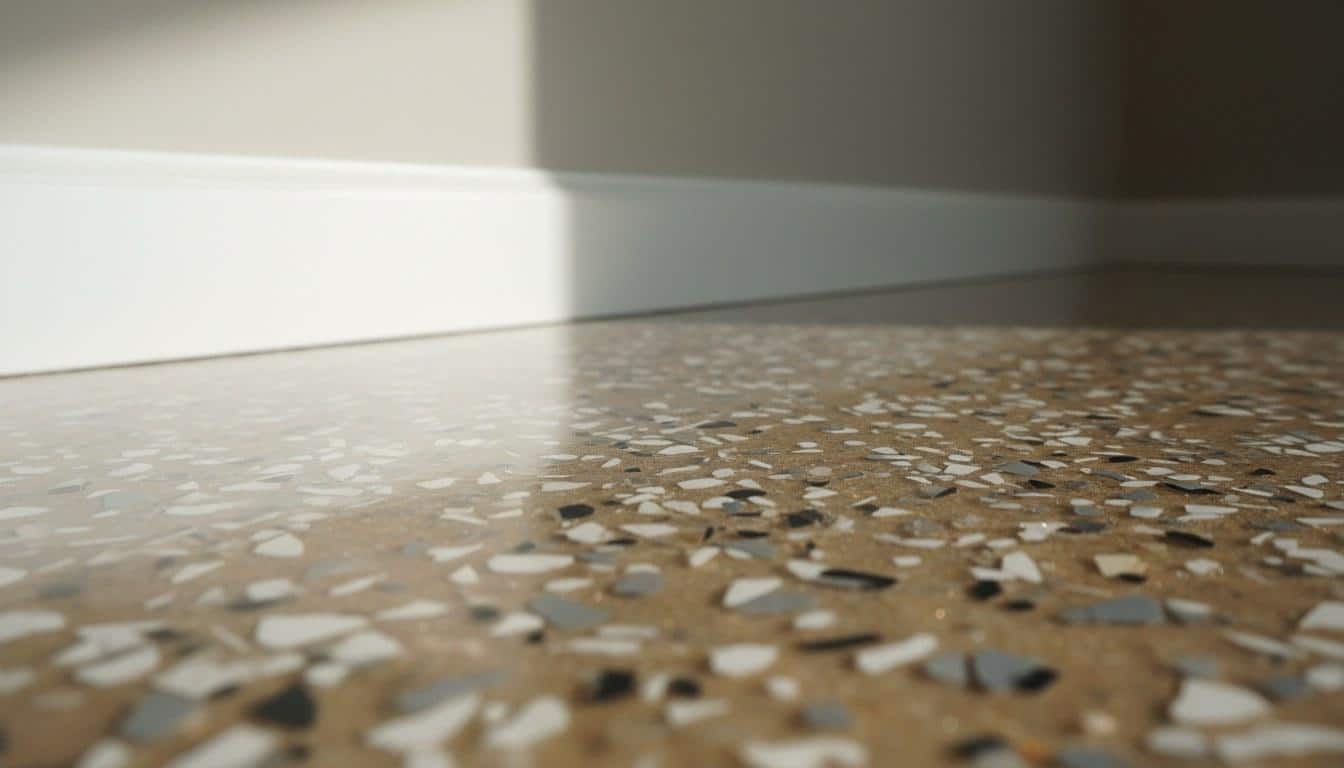
- Flaking chips: Small pieces of the topcoat or chip-and-flake epoxy flooring layer are breaking off, leaving raw concrete exposed.
- Discoloration or yellowing: UV exposure through garage doors or windows can cause non-UV-stable epoxy to yellow within 12 to 24 months of installation.
- Soft or tacky spots: Areas that feel slightly sticky underfoot usually mean the epoxy did not fully cure, often because the mixing ratio was off or temperatures dropped below 50°F during cure.
- White haze (amine blush): A milky, cloudy film that forms when moisture contacts uncured epoxy during application, common during marine-layer mornings near the coast.
- Delamination in tire tracks: Hot tire pickup is a well-documented failure mode where vehicle tires, heated by summer driving, bond to the topcoat and pull it off when the car moves.
Symptom, Likely Cause, and DIY or Pro?
| Symptom | Likely Cause | DIY or Pro? |
|---|---|---|
| Peeling at edges | Poor adhesion from inadequate surface prep | Pro — requires grinding and recoating |
| Bubbles or blisters | Moisture vapor transmission through slab | Pro — moisture test needed before any repair |
| Flaking chips | Topcoat too thin or UV degradation | DIY patch possible on small areas; Pro for widespread flaking |
| Yellowing or discoloration | Non-UV-stable epoxy exposed to sunlight | DIY topcoat possible; Pro for full recoat with polyaspartic finish |
| Soft or tacky spots | Improper mix ratio or cure temperature below 50°F | Pro — improperly cured epoxy must be mechanically removed |
| White haze (amine blush) | Moisture contact during cure | Pro — surface must be abraded before any recoat |
| Tire track delamination | Hot tire pickup on standard epoxy topcoat | Pro — upgrade to polyaspartic or polyurea topcoat recommended |
What Can You Check Yourself Before Calling Anyone?
Three quick checks can tell you a lot about what went wrong and help a contractor give you a more accurate quote. None of these require special tools.
- The tape test: Press a 6-inch strip of duct tape firmly onto a problem area. Leave it for 60 seconds, then pull it off fast. If coating comes with it, adhesion has failed. If only surface dust comes off, the bond may still be partially intact.
- The plastic sheet moisture test: Tape a 16-by-16-inch sheet of clear plastic to the bare concrete (if any is exposed) and seal all four edges with tape. Leave it for 24 hours. Condensation on the underside of the plastic means moisture vapor is actively moving through your slab. The National Ready Mixed Concrete Association recommends this as a simple field indicator before any coating project.
- Check the install date and season: Epoxy applied in Woodland Hills between June and September faces the highest risk of heat-related failure. If your floor was installed during a heat wave and began failing within 6 to 18 months, application temperature is likely the culprit.
- Look for a pattern: Failure only near the garage door suggests UV or thermal cycling. Failure only in tire tracks points to hot tire pickup. Failure spread evenly across the floor usually means a moisture or prep problem.
Our team has responded to dozens of service calls in the Warner Center and Vista de Oro areas where homeowners described widespread bubbling that started within the first summer after installation — in nearly every case, a plastic sheet test confirmed active moisture vapor emission that was never measured before the original coat went down.
When Should You Call a Professional for Epoxy Flooring Installation in Woodland Hills?
Call a professional when more than 10 to 15 percent of your floor surface shows failure, when moisture vapor is confirmed, or when the existing coating must be mechanically removed before any repair can hold. These situations go beyond what a patch kit from a hardware store can fix.
Mechanical removal typically means diamond grinding the entire slab down to bare concrete. This step is non-negotiable when the old coating has delaminated, because applying new epoxy over a failing layer just delays the next failure by 12 to 24 months. California’s Title 24 building energy standards also affect garage conversions and ADU projects, so if your floor repair is part of a larger renovation, a licensed contractor can help you stay compliant.
Moisture vapor problems require a professional-grade moisture mitigation primer — typically an epoxy moisture barrier rated to handle vapor emission rates above 3 pounds per 1,000 square feet per 24 hours. This product is not available in retail stores and must be applied by a trained installer.
Moisture vapor problems require a professional-grade moisture barrier rated to handle vapor emission rates above 3 pounds per 1,000 square feet per 24 hours — a product not available in retail stores.
Hot tire pickup requires upgrading the topcoat. Standard epoxy softens at temperatures above roughly 140°F, which a tire can easily reach after summer highway driving. A polyaspartic or polyurea topcoat handles heat significantly better and is the standard recommendation for Woodland Hills garages used as daily drivers. Across our service calls in Woodland Hills, we see hot tire pickup account for roughly 4 out of every 10 recoat requests on floors that are only 2 to 4 years old.
A polyaspartic or polyurea topcoat handles heat significantly better and is the standard recommendation for Woodland Hills garages used as daily drivers.
Across our service calls in Woodland Hills, we see hot tire pickup account for roughly 4 out of every 10 recoat requests on floors that are only 2 to 4 years old.
A contractor who is licensed by the California Contractors State License Board (CSLB) carries the accountability and insurance that a DIY repair simply cannot provide.
How Does Epoxy Compare to Other Flooring Options?
Epoxy remains one of the most durable and cost-effective garage and commercial floor coatings available, but it is not the only option. Understanding the alternatives helps you make a smart decision if a full recoat is needed.
| Option | Durability | Heat Resistance | Best For |
|---|---|---|---|
| Epoxy (standard) | High — 5 to 10 years with proper prep | Moderate — vulnerable to hot tire pickup | Garages, basements, light commercial |
| Polyaspartic / Polyurea topcoat | Very high — resists UV, heat, and abrasion | Excellent — handles temps above 200°F | Woodland Hills garages with daily vehicle use |
| Polished concrete | Very high — no coating to peel | Excellent — no topcoat to delaminate | Commercial spaces, modern interiors |
| Interlocking floor tiles | Moderate — individual tiles can crack | Good | Renters or temporary installs |
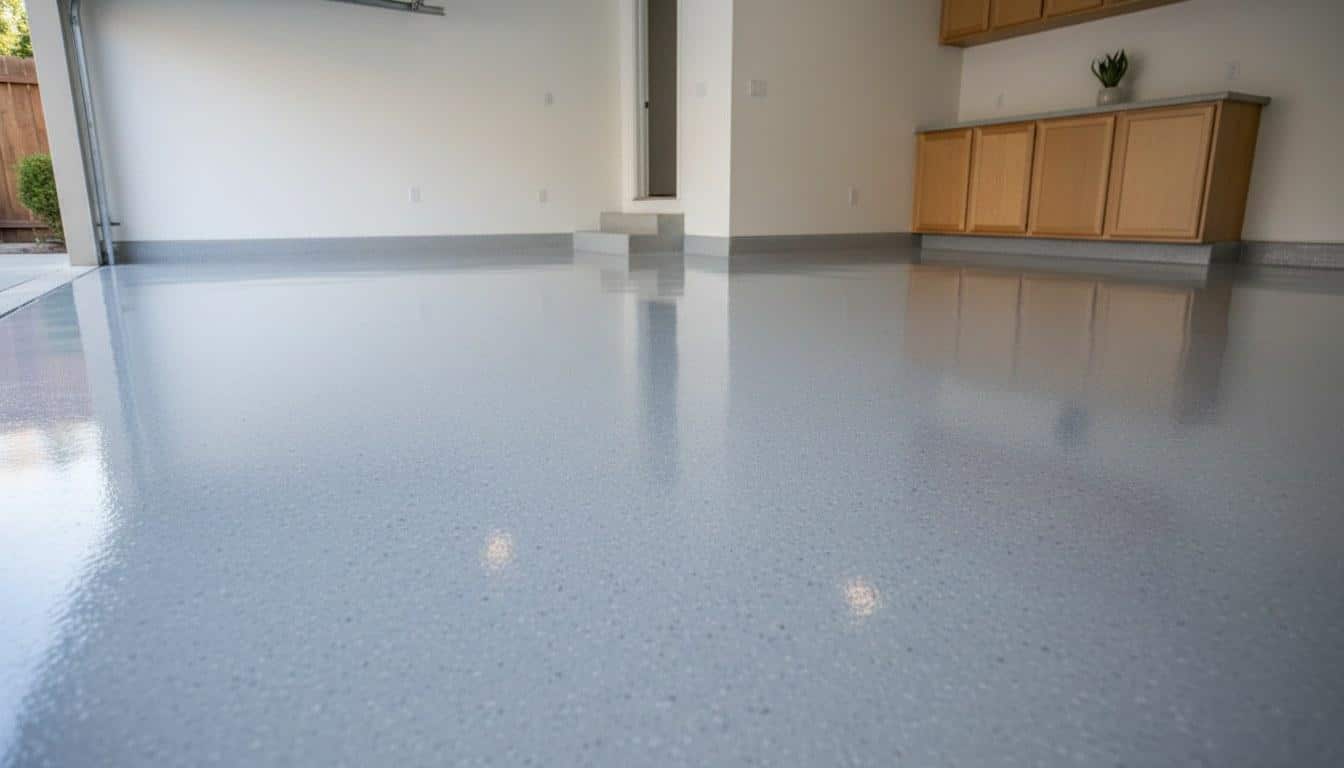
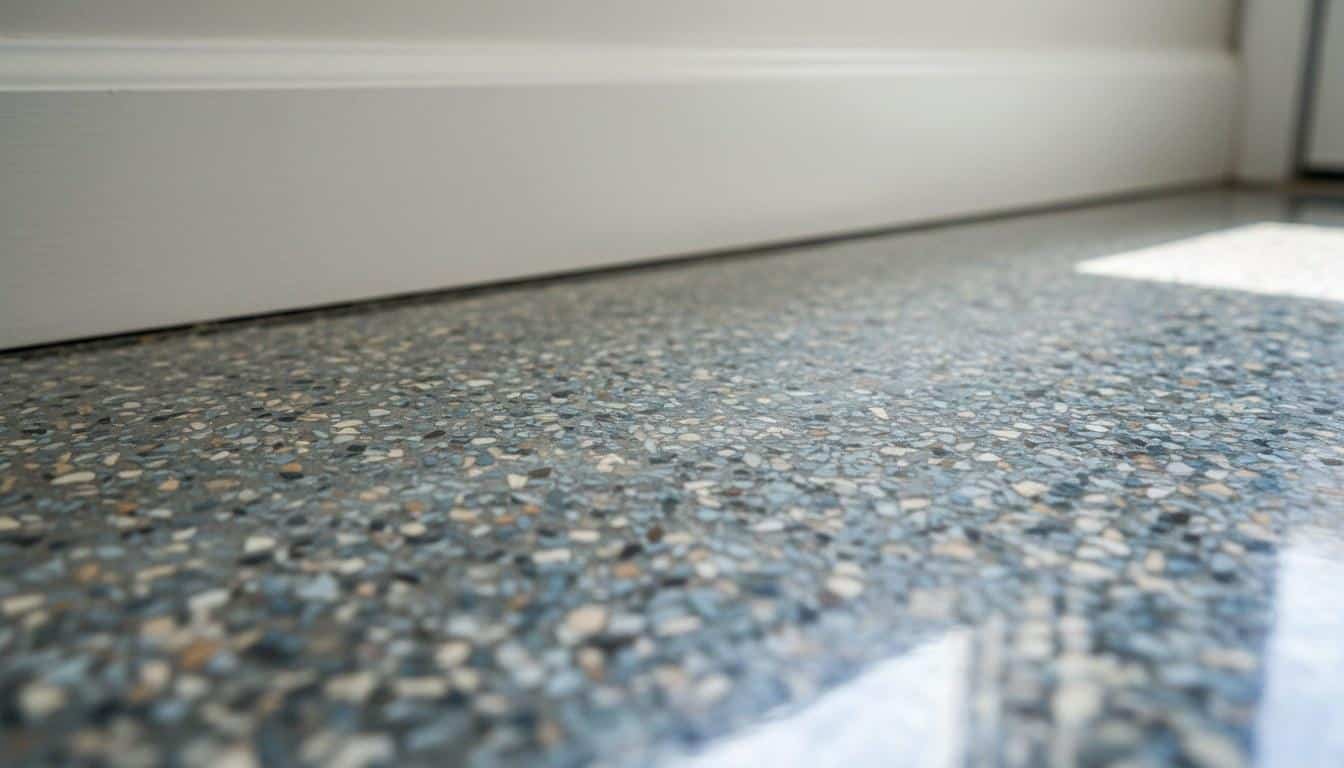
For most homeowners in Woodland Hills who want a seamless, easy-to-clean surface, a chip-and-flake epoxy flooring base coat topped with a polyaspartic finish gives the best combination of durability, heat resistance, and visual appeal. This system outperforms standard single-layer epoxy in Southern California’s climate by a wide margin.
Get Expert Epoxy Help in Woodland Hills, CA
Peeling and bubbling epoxy floors are frustrating, but they are fixable when the root cause is properly diagnosed. Whether your floor needs a targeted repair or a full recoat with a heat-resistant topcoat, getting the right diagnosis first saves you from paying for the same job twice.
Five Star Epoxy & Coatings specializes in epoxy flooring installation in Woodland Hills and the surrounding communities, including Warner Center and Carlton Terrace. The team understands how the local climate — hot summers, marine-layer mornings, and Santa Ana wind cycles — affects concrete coatings, and every project starts with a proper surface evaluation before any product touches the floor.
Schedule your on-site assessment today. Call (818) 355-3804 to speak with a local epoxy coating specialist or to request a written quote. Same-day consultations are available across the 91364 and 91367 ZIP codes. Get a clear answer on what went wrong and exactly what it will take to fix it — before committing to anything.
Frequently Asked Questions
How much does it cost to install an epoxy garage floor in Woodland Hills?
Epoxy garage floor installation in the Woodland Hills area typically ranges from a few dollars to several dollars per square foot depending on the system chosen, the condition of the existing concrete, and whether moisture mitigation is needed. A standard two-car garage with a chip-and-flake epoxy system and polyaspartic topcoat will cost more than a basic single-coat application. The best way to get an accurate number is to request a custom quote from a local epoxy coating company after an on-site assessment. Call Five Star Epoxy & Coatings at (818) 355-3804 for a written estimate.
Why is my epoxy garage floor bubbling after only one year?
Bubbling that appears within the first 12 to 18 months almost always points to moisture vapor pushing up through the concrete slab or application during temperatures above the product's recommended ceiling. In Woodland Hills, summer slab temperatures can easily exceed 90°F, which causes epoxy to cure too quickly and trap air. A professional can perform a moisture vapor emission test to confirm the cause before any repair is attempted.
Can I patch a peeling epoxy floor myself?
Small isolated areas of peeling — less than a square foot or two — can sometimes be addressed with a DIY patch kit if the surrounding coating is firmly bonded and no moisture issue is present. However, if more than 10 to 15 percent of the floor is affected, or if a tape test shows widespread adhesion failure, a professional recoat is the more cost-effective long-term solution. Patching over a moisture problem will fail again within one to two seasons.
How long does epoxy flooring last in Southern California's climate?
A properly installed epoxy floor with a UV-stable polyaspartic topcoat typically lasts 7 to 10 years or more in the Southern California climate. Standard epoxy without a UV-stable topcoat may yellow or degrade in as few as 2 to 3 years when exposed to direct sunlight. Proper surface preparation and using the right coating system for the local conditions are the two biggest factors in longevity.
What is hot tire pickup and how do I prevent it on my Woodland Hills garage floor?
Hot tire pickup happens when vehicle tires — heated by summer highway driving — bond to a standard epoxy topcoat and pull pieces of it off when the car moves. It is one of the most common recoat reasons in Woodland Hills. The best prevention is upgrading to a polyaspartic or polyurea topcoat, which handles heat significantly better than standard epoxy and resists this type of delamination even during the hottest San Fernando Valley summers.